
Fraunhofer Plastics Center Oberlausitz produces 3D-printed respiratory masks
The team from the Fraunhofer Plastics Center Oberlausitz (FKO) and colleagues from the HSZG have been working flat out over the past few days to develop an additively manufactured respiratory mask for regional needs.
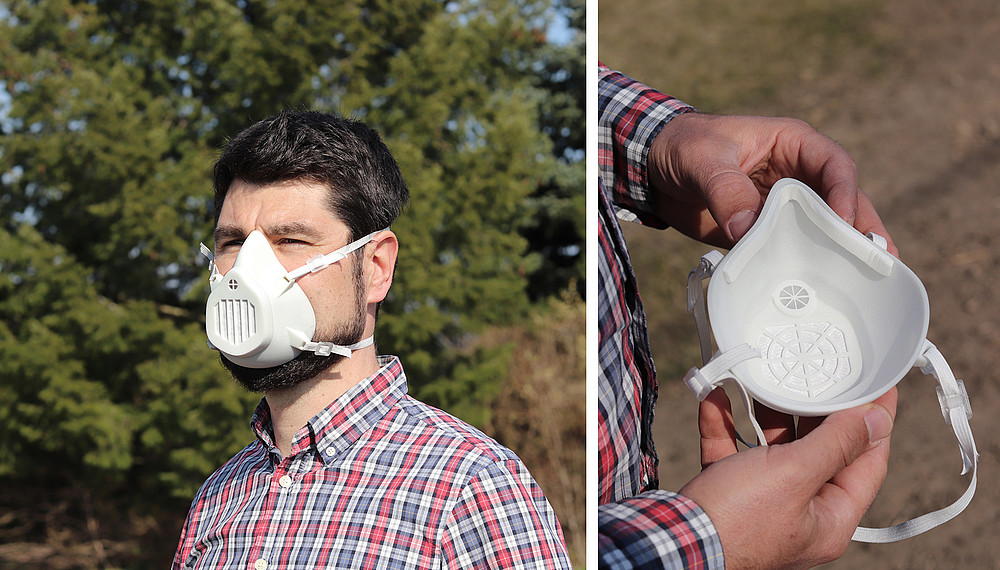
The supply situation for professional protective masks is very tight amid the current COVID-19 pandemic. Nursing staff, doctors, and paramedics, in particular, urgently need virus-proof FFP 2 or 3 masks. The team at the Fraunhofer Plastics Center Upper Lusatia (FKO) and colleagues at the HSZG have been working around the clock in recent days to develop an additively manufactured respirator mask. The mask is 3D-printed at the institute using the so-called selective laser sintering process from polyamide; it is skin-friendly, resistant to disinfectants, and—most notably—reusable. Unlike standard disposable FFP masks, only the filter fleece needs to be replaced (cost: < 5 cents per filter). To prevent the filter from becoming saturated with exhaled air too quickly—and thus losing its effectiveness—an exhalation valve is integrated into the mask. The filter fabric was developed by the Saxon Textile Research Institute (STFI) in Chemnitz and provides the same filtration efficiency for small particles (< 0.3 µm) as FFP3 half-masks.
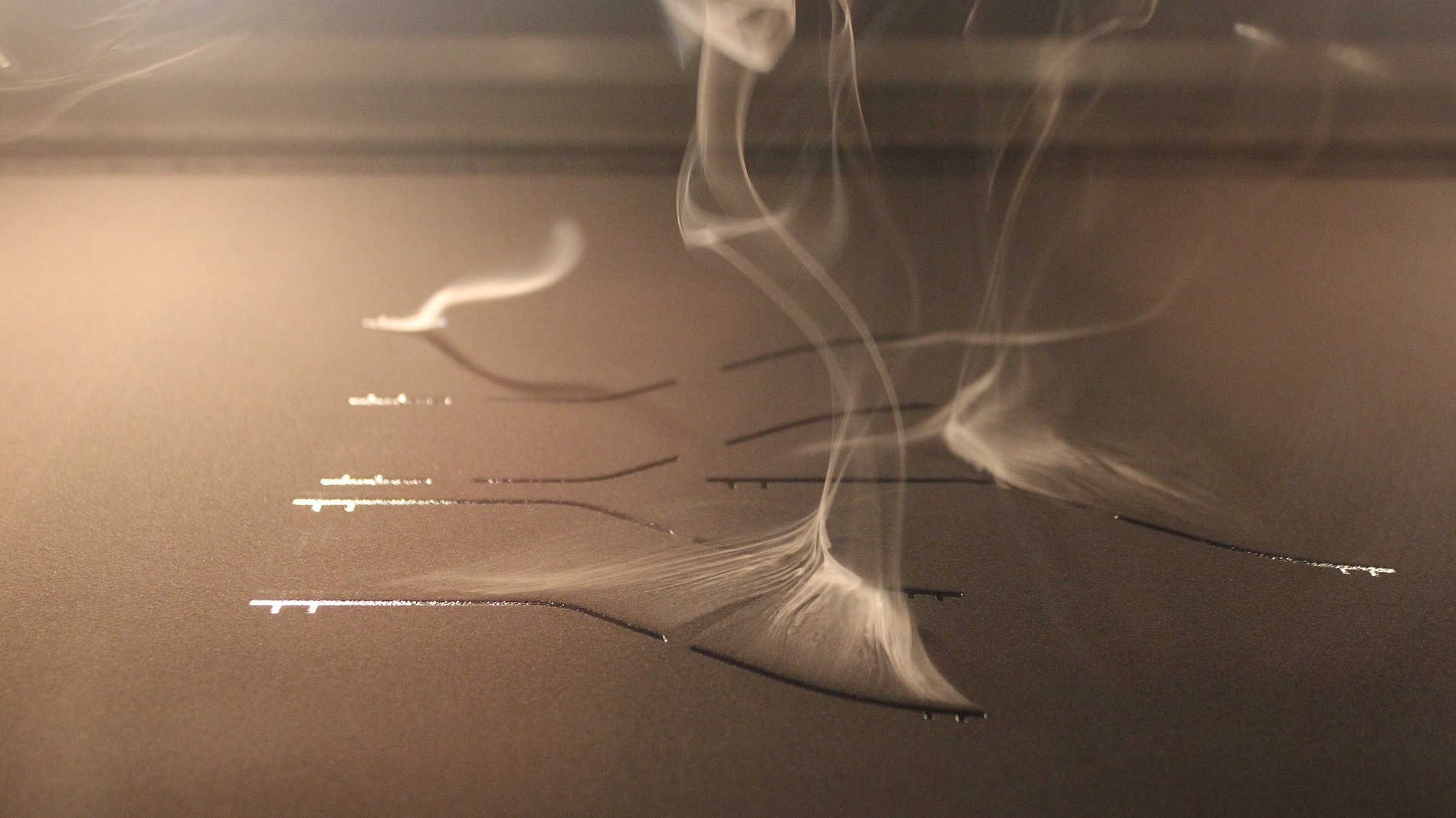
3D printing offers the decisive advantage that the masks can be produced quickly and without costly tooling expenses. In addition, changes to the geometry can be made easily, different sizes can be produced, and the masks can even be individually customized to fit the face. In selective laser sintering (SLS), a build chamber filled with plastic powder is partially melted layer by layer using a laser until the finished masks can be removed from the remaining powder. The advantage of this process lies in its higher production speed compared to the widely used FDM process, which is employed by most hobbyist 3D printers.
The 3D-printed protective mask is currently being tested for practical suitability at Zittau Hospital and by an outpatient nursing service (Johanniter) in order to make further optimizations. The primary goal is to meet the needs and fill supply gaps for medical staff and caregivers in and around Zittau. To this end, approximately 150 masks can be produced weekly at the FKO. A regional plastics company has already expressed interest in an injection-molding variant, which would allow for the production of entirely different quantities. But until then, the printers at Fraunhofer IWU are continuing to work diligently.
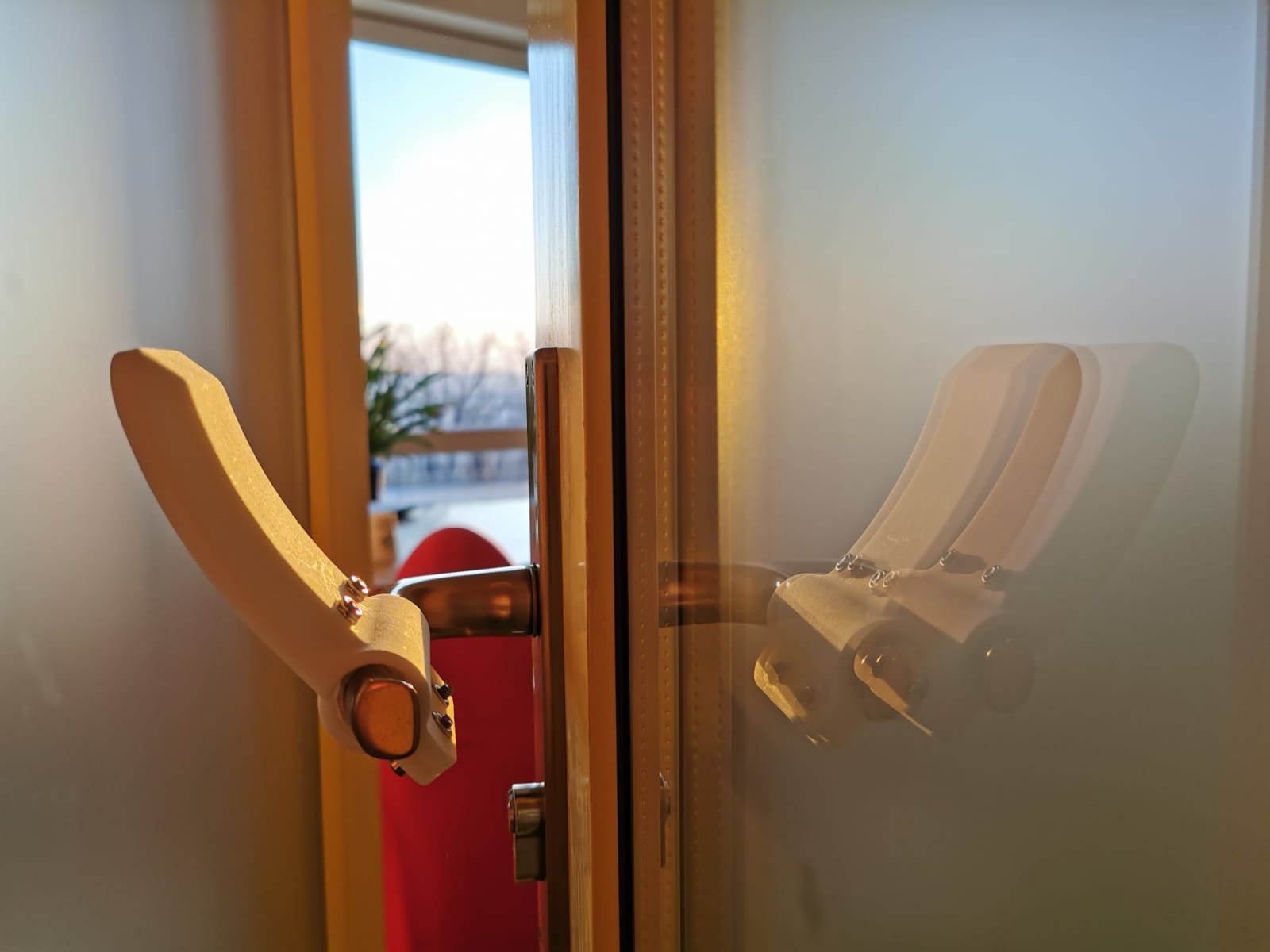
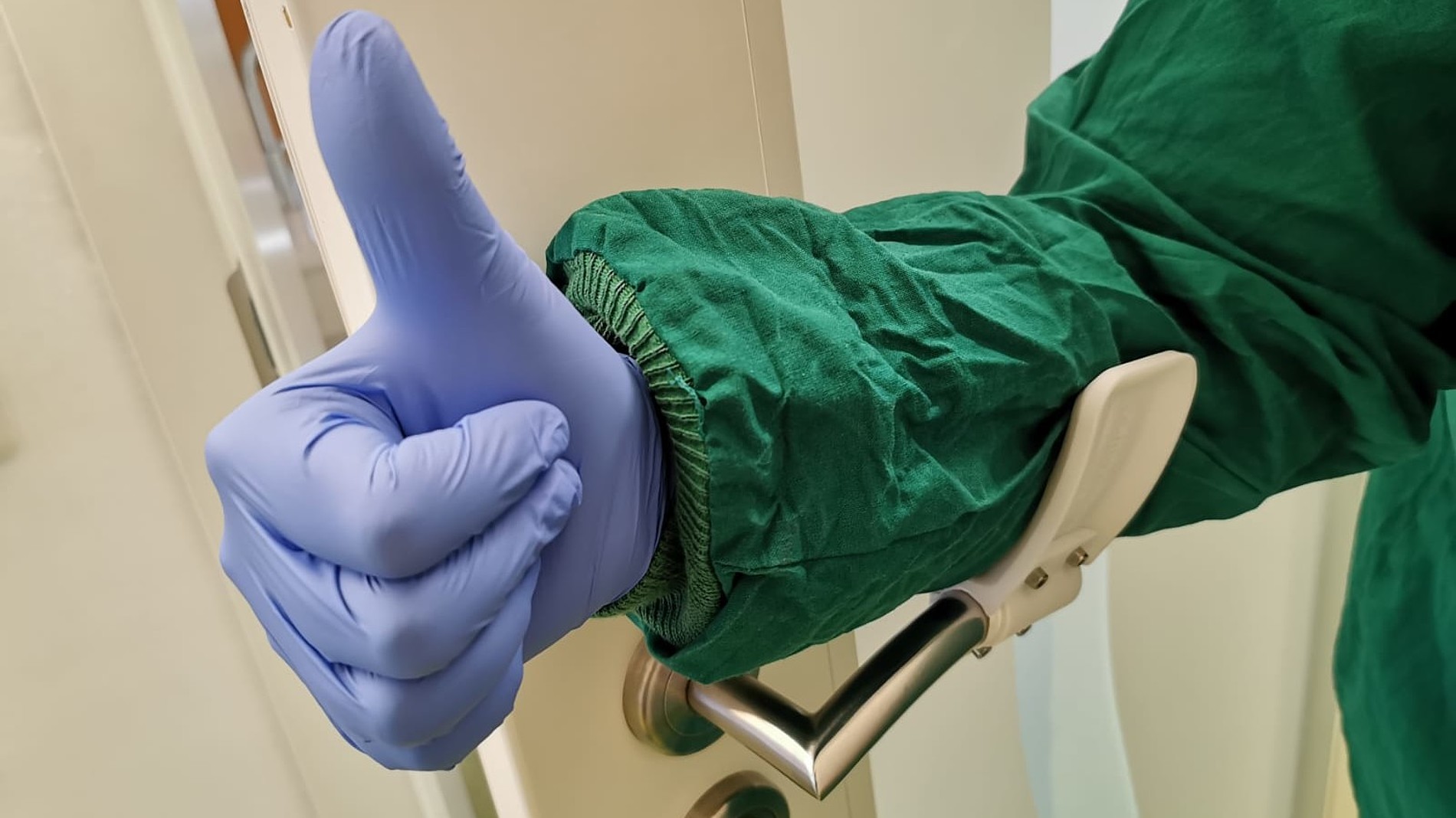
In addition to respiratory masks, the institute can also quickly produce other protective equipment against the COVID-19 virus as needed. For example, Fraunhofer researchers were able to successfully equip a medical practice in Dresden with 3D-printed door handle openers that allow the door to be opened without touching it.


2ND FLOOR
3RD FLOOR