

17. November 2016
"There will be no second attempt"
This time, the 5th IMS breakfast focused on "Consideration of mental stress in risk assessments".
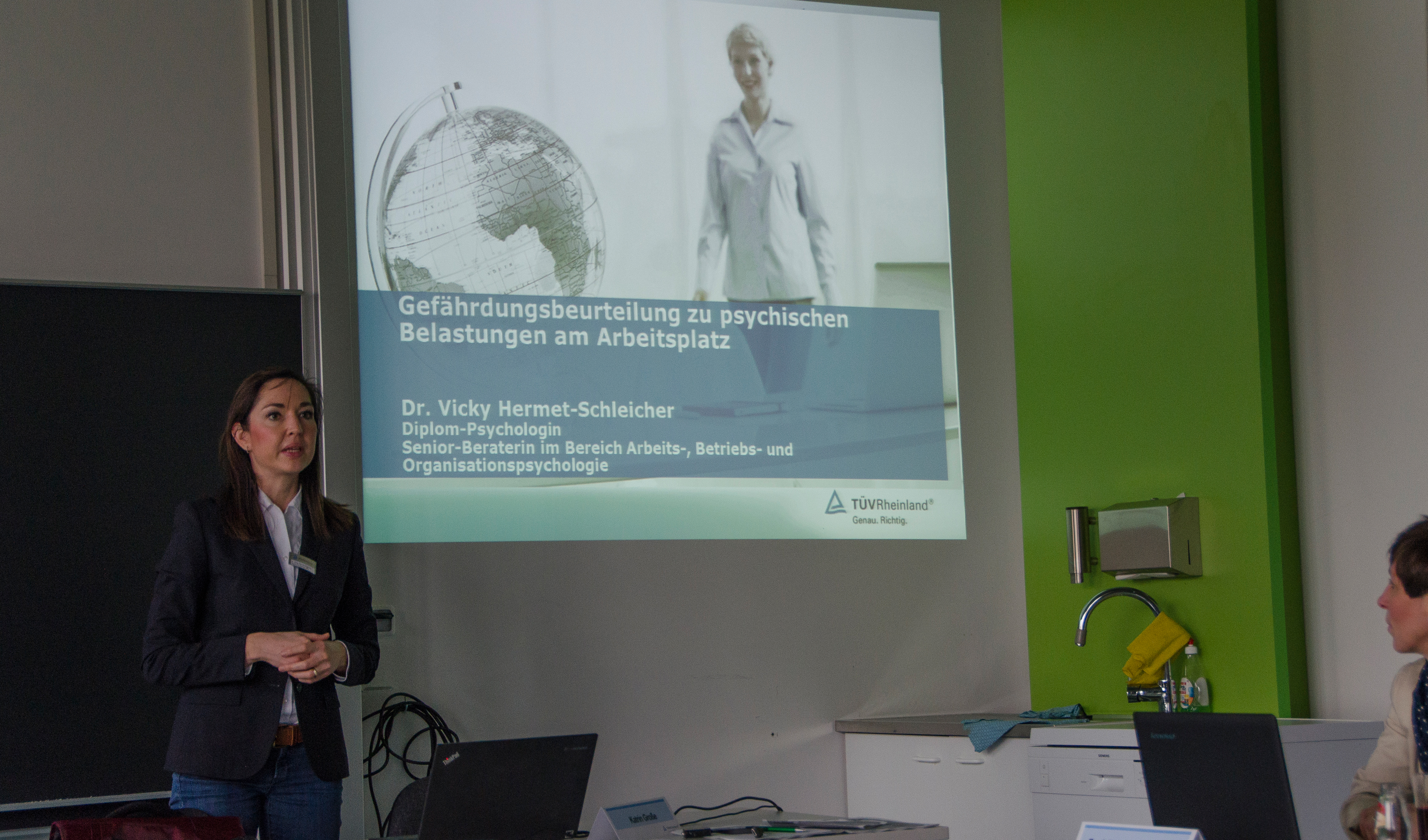
One of the goals of an organization’s health and safety management system is to maintain employees’ well-being, health, and performance. Risk assessment is a tool for identifying hazards in the workplace and minimizing them as effectively as possible through coordinated measures. In addition to preventing and reducing hazards caused by mechanical, electrical, or physical factors, it has been a legal requirement since September 2013 that companies must also include psychological hazards in their risk assessments. The legislature is thereby responding to the results of statistical studies showing that, over the past 10 years, mental health conditions have risen rapidly across all age groups and, compared to other illnesses, are also characterized by a significantly longer period of work disability.
The level of implementation in companies has so far been low for various reasons: a lack of awareness regarding the legal obligation or the methodological approach, as well as an often still negative perception of psychological stress, are just a few of them. Interest in the topic, however, is high. This was demonstrated by the representatives of the 10 companies who accepted the invitation to the 5th IMS Breakfast, which is traditionally organized by the Chair of integrated management systems in cooperation with TÜV Rheinland Akademie GmbH.
Fred Bader, Branch Manager for Saxony/Thuringia at the Occupational Health Service (AMD), and Dr. Vicky Hermet-Schleicher, a psychologist and senior consultant in occupational, organizational, and industrial psychology at the AMD’s Dresden branch, provided a technically sound explanation—using concise case studies from previous consulting projects—of the goals and procedures for addressing psychological stress in the context of risk assessments. Based on their experience, the following points are important for practical implementation:
- Building understanding among managers regarding the relevance of the topic
- Building awareness among employees and managers that risk assessments evaluate working conditions—not people—
- Involving managers and employees early in the risk assessment planning process
- A step-by-step approach, gaining experience through department-by-department implementation
The identification and assessment of psychological stress among employees can only succeed on the basis of a good relationship of trust in those conducting the assessment, the manner of implementation, and a high, representative participation rate. “This has to be a good preparation, because there’s no room for trial and error here,” says a company representative, summarizing the challenges facing businesses.
Under the “Did You Know” section, Ines Hirt, energy manager for the city of Zittau, and Anke Zenker-Hoffmann, a staff member in the Corporate Management division of the Faculty of Natural and Environmental Sciences, presented their experiences with the “Health and Environment Days” (GuT), which they have been co-hosting for the past two years. This concept can serve as a building block to raise awareness among employees and managers about health and well-being and encourage them to take active steps themselves. Based on the good experience with this year’s pedometer challenge, a corporate run is to be organized in collaboration with regional companies as a highlight for next year. The companies present have, in any case, signaled their willingness to participate…
Faculty of Natural and Environmental Sciences
02763 Zittau
Külzufer 2
Building Z VI,
Room 07
First floor
First floor
+49 3583 612-4752