
Deans introduce themselves!
Following this year's election, some new Deans took office in the faculties of the HSZG on September 1st. In this interview, they all talk about their wishes and goals for the coming term of office.
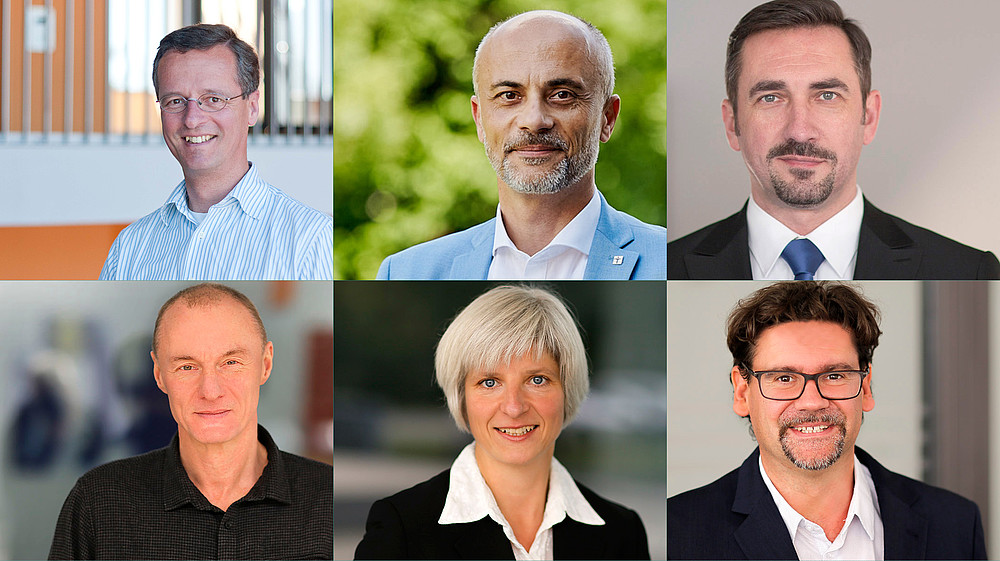
From September 1, 2024 and for a term of office of three years, the following people will take over the deanships in the faculties and lead their fortunes. In this interview, they talk about their motivation, their wishes and goals for the coming term of office and the importance of interdisciplinary collaboration.
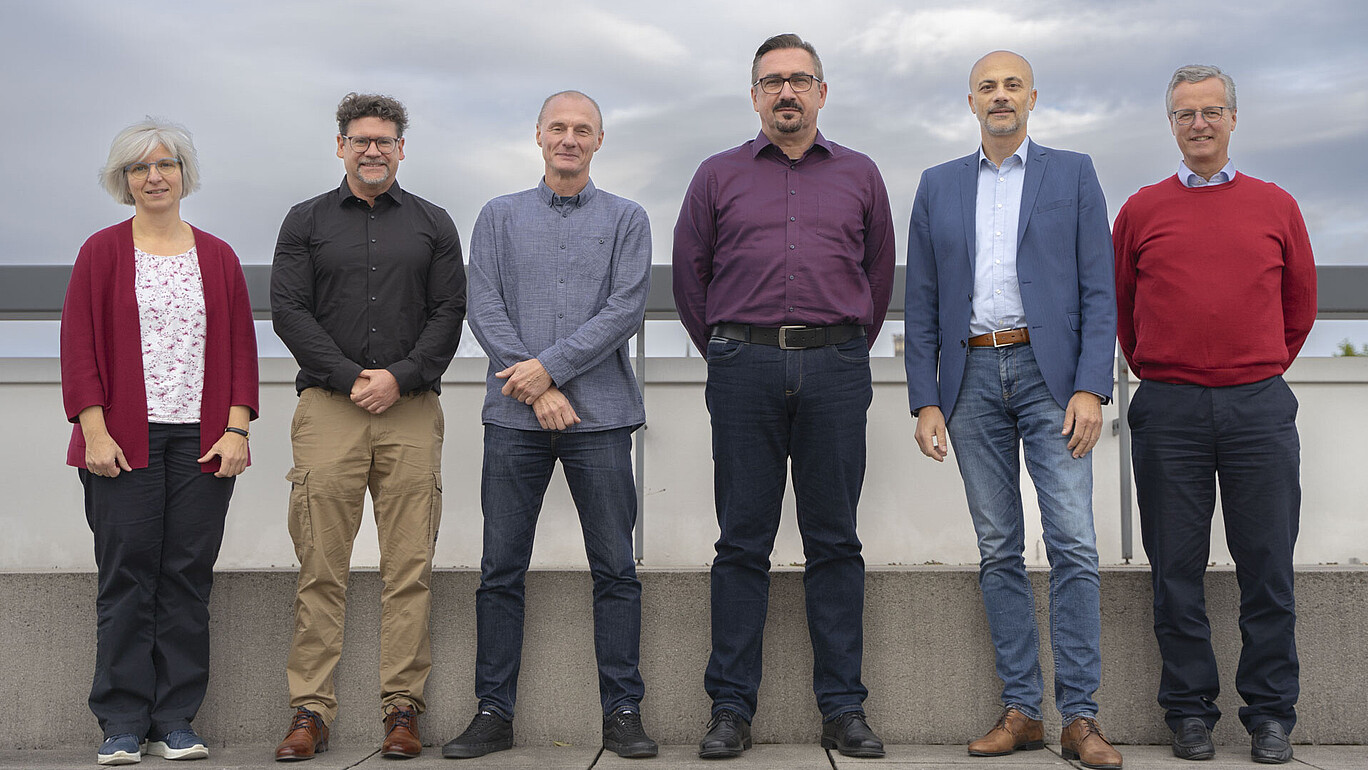
Prof. Dr.-Ing. Klaus ten Hagen Assumes Office as Dean of the Faculty of Electrical Engineering and Computer Science
Prof. ten Hagen, what are your top priorities for the Faculty of Electrical Engineering and Computer Science?
In the field of computer science, four of the nine professors have retired over the past four years. Two have accepted positions at Chemnitz University of Technology. One adjunct professor has been appointed to a professorship at Bautzen University of Applied Sciences. We are, of course, delighted by our colleagues’ success, but we must now ensure the continuity of our teaching and fill these vacancies. The good news is that one position has already been filled. We have created a new professorship in Human-Computer Interaction, which is currently being developed—for example, a new laboratory will be set up. A generational transition has also begun in the field of electrical engineering. A new female colleague will soon take up her position. With this, we have been able to recruit two women as professors who, as female role models for female students, will lower the barrier to entering a degree program in computer science or electrical engineering.
In theory, professors know everything, but in practice, very little gets done without lab engineers. A generational shift is also taking place among them. However, this is not only a lot of work but also an opportunity to tackle new tasks and topics. Here are a few examples of obvious challenges: Chips are of great importance for many products manufactured in Germany. The federal government and the state of Saxony are investing large sums in microelectronics production, for example in Dresden. Microelectronics is thus becoming a key focus for the region. We should contribute to this growth through our research and teaching. We need smart grids. For years, the master’s degree programme in computer science has offered a series of modules on machine learning, artificial intelligence, and deep learning. Many high school students use ChatGPT or AI notebooks for their homework. AI is on its way to transforming many areas of life. We have integrated AI into the new curriculum for the Bachelor degree programme in computer science. Now we must also integrate AI into the Applied Computer Science modules for non-computer science majors.
Progress is rapid; we must continue our education. We have developed continuing education programs, but people in the middle of their careers do not have time for a full-time program lasting several years. One alternative is enrolment in a degree programme—such as a master’s programme in computer science—and taking selected modules necessary for professional development, ideally while continuing to work. At the university, this type of professional development is classified as “dropout.” We need new structures to provide effective continuing education.
During the COVID-19 pandemic, we conducted “remote instruction” using laptops. This can be done much better with large monitors, good cameras, and proper acoustics in dedicated rooms. We have two campuses; we should explore this so that some modules can be offered in a hybrid format at both locations. “Remote” learning alone is difficult because the degree program consists not only of lectures but also of many other experiences, such as eating together in the student canteen. A group of fellow students helps you get through the program.
I have developed a number of new classes / courses, such as Business Process Modeling, which have become an integral part of our curriculum. Furthermore, I introduced the Economics and Computer Science degree programme, and recently I defined the field of Human-Computer Interaction, integrated it into the curricula, and appointed the first professor in this field. Progress is possible, but it requires a great deal of perseverance. I would like to draw on these experiences to help my new colleagues tackle major challenges and achieve sustainable progress.
How do you plan to further develop the faculty’s research priorities? Are there specific projects or topics you’d like to focus on in particular?
Our faculty conducts research on a wide range of topics, such as Prof. Kornhuber’s work on direct-current power grids, Prof. Meißner’s research on virtual reality in automation technology, and Prof. Lässig’s work on quantum computing and security in computer networks. My role as Dean is to create the conditions necessary for my colleagues to successfully carry out their research projects.
You have impressive expertise in areas such as data mining and machine learning. How do you plan to apply your research experience to your new role as Dean?
Of all my publications, a study on the impact of urban development on GPS accuracy—which emerged as a byproduct of research for a tour guide—has received the most attention. Presumably, our illustration of how GPS satellites rise and set in the sky clearly explained the loss of accuracy, and that was evidently relevant. I have been working with “big data” since 2001, initially with local databases and then increasingly with distributed databases in the cloud. This work led to a focus on data analytics in my course on relational databases.
I have applied traditional machine learning methods to predictive maintenance because—unfortunately—the number of errors, and thus the volume of training data, is limited. Deep learning requires a large amount of training data to train models with millions of parameters, but these models then develop truly remarkable capabilities. An AI model can only do what it has been trained to do; in other words, one must develop a comprehensive “curriculum” of training data so that it can handle real-world challenges. I am currently working on a new course, “Programming with Data,” for the bachelor’s degree programme in computer science to familiarize students with deep learning early on.
What challenges do you see for the faculty in the coming years, and how do you plan to address them?
The major challenge is the demographic trend in the region. In the field of computer science, we have managed to keep student enrollment steady over the past 20 years. In addition to the quality of our teaching and our projects with high school students, this is certainly also due to the growing importance of computer science as a result of digitalization, the ubiquitous apps on smartphones, and the use of the Internet. In the field of electrical engineering, we have succeeded in attracting many new students through the KIA Model / dual study program, which involves practical study phases at a local company. Furthermore, there are many international students from partner universities—for example, from China, Mexico, and Malaysia—who complete part of their studies with us.
How would you like to expand collaboration with national and international partner institutions?
There are several new research institutes in the region with which collaboration is a natural fit. BA Bautzen offers degree programs in electrical engineering and business informatics, so we should leverage synergies through collaboration. Internationally, we currently have nearby partners such as TU Liberec and TU Wroclaw, as well as distant partners in Mexico and China. These partnerships should be maintained and expanded. Entirely new ones—for example, with Canada and South Africa—will certainly be added.
What personally motivates you in your work as a researcher and now as Dean?
The progress in computer science during my career—and especially in recent years—has been dramatic. Intelligent agents are trained for specific tasks; their roles are defined, and they then work productively together as a team. That is incredibly fascinating. People have different experiences and priorities and therefore arrive at different solutions to current problems. So we do A and B—and, of course, a little bit of C as well. Team A tries to show that B doesn’t work, and vice versa. Nothing moves forward; everyone is frustrated. So we need a Dean who can bring everyone together, steer the discussion process, and bring about a decision. The EI Faculty has attracted many talented individuals. The challenge is to empower everyone to use their skills and interests to advance teaching and research at the EI Faculty.
Prof. Dr. rer. pol. Falk Maiwald on his reelection as Dean of the Faculty of Managerial and Cultural Studies
What aspects of your past term as Dean of the Faculty of Managerial and Cultural Studies do you look back on with particular satisfaction?
I am particularly pleased with the great commitment of all my colleagues to the further development of teaching, our degree programs, and the faculty as a whole. Sustained progress in the digitization of teaching gave us all a significant boost and also led to the introduction of new teaching formats. The faculty event “House of Managers,” conceived and carried out by students, attracted attention even beyond the HSZG and also sparked new momentum internally. The International Business Communication degree programme, launched in 2021, has successfully established itself, and for the other degree programmes, we have further refined our focus and optimized the portfolio. Most recently, many stakeholders have worked to ensure that the Applied Nursing Science degree programme —the first of its kind in Saxony and one of the first in Germany—complies with legal requirements within half a year and has now successfully launched for the winter semester.
I was also very pleased with the great commitment shown by many students on the Faculty Student Committee and in other committees—and, of course, with the many good and very good degree certificates from graduates that I had the privilege of signing as Dean. I would especially like to express my gratitude for the collegial and productive collaboration within my faculty, as well as among the deans, with the divisions and staff offices, the University Executive Board, and, last but not least, with our important partner, the IBS Academy Austria.
Do you have goals and visions for the coming years?
As early as 2022, we began shaping the long-term direction of our faculty. In several closed-door meetings, the entire faculty collectively defined the framework and incorporated our visions into the HSZG’s strategic process. These visions guide me. I am inspired by the commitment and passion that many stakeholders—both within and outside the university—demonstrate in shaping the scientific, economic, and social structures in Upper Lusatia and the tri-border region. Therefore, I will actively engage in the implementation of the HSZG strategy—and beyond—not only because of my office, but also out of personal and professional conviction.
Are there any new strategies, for example, to advance the internationalization of the faculty, intensify cooperation with foreign partner universities, or strengthen collaborations with industry partners?
International Affairs has been and remains a key factor in the faculty’s success. To become even more attractive to international students and partner universities, we are planning, together with Faculty W, to offer English-language modules as part of an “International Semester.” We are strengthening our existing partnerships in Europe and the Far East, while also seizing opportunities for new collaborations worldwide. We are particularly committed to innovative formats such as the Erasmus+-funded Blended Intensive Programs (BIP), which create unique bonding effects through the interaction of students from at least three EU countries. My goal is to build long-term and stable collaborations by creating and maintaining institutional networks in teaching and research through the participation of several faculty members.
At the same time, we are actively continuing to expand our networks with industry partners. This strengthens the integration of practical experience by providing students with valuable insights into real-world business challenges and enabling them to develop practical solutions. Our industry partners, in turn, benefit from innovative ideas and discover new talent and future professionals in the process.
What challenges do you foresee for the faculty in the coming years, and how do you plan to address them?
A key challenge will be defining and implementing our contribution to the university strategy mentioned earlier. In doing so, we will break new ground, which will entail both substantive and organizational changes. I am convinced that together we will succeed in this. I see a special opportunity in the unique chance to significantly influence the design of our new faculty building on Brückenstraße in Görlitz. We’ve already been able to incorporate many great ideas into the plans—and that’s just the beginning. I look forward to seeing this come to fruition, even though we still face some major challenges ahead.
How do you view the role of management sciences in so-called structural change?
In my view, strategies and tools from management sciences play a key role in the further development of companies, because they help these companies shape change through their own efforts. Innovation and a positive attitude toward entrepreneurship offer the opportunity to break new ground and develop sustainable business models in regional companies. Our graduates acquire practical skills that enable them to contribute new ideas and value-adding approaches. Our research and knowledge transfer also play a part in this.
Prof. Dr.-Ing. Jens Meinert on Taking Office as Dean of the Faculty of Mechanical Engineering
You are the new Dean of the Faculty of Mechanical Engineering. What motivated you to accept this position?
Since my appointment to the Faculty of Mechanical Engineering, I have already held various roles in academic self-governance, such as degree programme and research representative. In the run-up to the elections, there were intensive discussions regarding the future leadership of the faculty; during these discussions, many colleagues encouraged me to run for the office of Dean and, at the same time, expressed their confidence in me. Ultimately, this is what motivated me to accept this position.
Have you set any goals or priorities for yourself as Dean for the upcoming term?
I see a key priority for the upcoming term in further enhancing the appeal of our degree programmes through the needs-based development of course content and teaching units. The upcoming initial and reaccreditation processes are important milestones during this term. Of course, research and knowledge transfer, as well as the successful development of the faculty, are also high on the agenda.
Are there plans to further strengthen collaboration between the faculty and industry?
The Faculty of Mechanical Engineering is one of the strongest research faculties at our university. This has already led to close cooperation with regional companies. Even closer collaboration can help us better identify the needs of these companies and incorporate them into the design of our teaching units—not least to strengthen our KIA degree programmes.
In your view, what are currently the most important topics in Mechanical Engineering? How will your faculty respond to these?
Much has been accomplished at the faculty in recent years. Existing degree programmes have been updated, and new ones have been introduced (e.g., Green Engineering). As already mentioned, we must continue to enhance the appeal of all our degree programmes. In this regard, all faculty members have always been pulling in the same direction. In the area of research, the Faculty of Mechanical Engineering is exceptionally well-positioned, and I am confident that the commitment of everyone involved will not waver.
How does your faculty address the important aspects of sustainability and environmental protection in research and teaching?
One word really suffices here: comprehensively. Research projects on the material and energy use of biomass, sustainable energy supply and product development, as well as heat storage and energy efficiency technologies, address these issues, as does the curriculum of all our degree programmes—from energy and environmental engineering to green engineering and Mechanical Engineering.
In your view, what are the greatest challenges the faculty will face in the coming years, and how do you plan to address them?
I see a key challenge in maintaining the excellent conditions for study, research, and work at our faculty, as well as the spirit of trust and cooperation, a collegial culture of dialogue, and transparent and democratic decision-making processes. I myself have been benefiting from this pleasant and motivating environment for more than 11 years now and see it as the foundation for achieving all other goals.
Professor Dr. rer. nat. habil. Thomas Wiegert on assuming office as Dean of the Faculty of Natural and Environmental Sciences
Prof. Wiegert, you are the newly elected dean of the Faculty of Natural and Environmental Sciences. What motivated you to take on the role of dean?
In the Faculty of Natural and Environmental Sciences, over the past terms of office—with Prof. Weber as Dean, Prof. Brauweiler as Associate Dean, and Ms. Zenker-Hoffmann as Dean’s Advisor—we were in the fortunate position of having a very dedicated, consistently open, and collegial leadership team. A lot has happened during this time, and there has been an almost complete generational shift at the faculty. On the one hand, as now nearly the oldest member of the professorial staff, I felt it was my duty to stand for election. On the other hand, however, it is also an exciting challenge and a great responsibility to be able to actively participate in the diverse decision-making processes at HSZG. I would be happy to take on this challenge. Above all, because the Natural and Environmental Sciences are extraordinarily important for our future and must remain a central part of teaching and research at the HSZG. Even after more than 30 years of professional work in microbiology and biotechnology, I learn new, interesting, and sometimes fascinating things in this field every day. There is much to learn from nature, and protecting it is a top priority for our society. My greatest goal as Dean is to work with the F-N team to create the necessary conditions for imparting knowledge about nature and the environment to students, sparking their enthusiasm, and preparing them for an exciting yet challenging professional world.
How do you assess the current state of your faculty’s research output?
There are a multitude of research projects being carried out by highly dedicated colleagues—so many that I cannot possibly list them all here without doing them all justice. I have no doubt that the Faculty of Natural Sciences (F-N) will continue to be among the HSZG’s strongest research faculties in the future and that it will continue to provide important impetus.
Do you see a need to integrate current issues such as climate change and sustainable development even more clearly into the faculty’s educational programs?
I actually don’t care for politicized buzzwords like “climate change” and “sustainability.” In this day and age, climate protection and sustainable development should be a natural part of everything we do. You just have to understand why. I see it as a central mission of the HSZG to stand for a sound scientific education and to contribute to the ability to evaluate data and facts precisely and objectively, thereby creating transparency. For example, to understand the causes and effects of climate change, I need to know the fundamentals of physics, chemistry, biology, and mathematics. These are the cornerstones of the curriculum in the F-N degree programmes. Furthermore, with the bachelor’s program in Ecology and Environmental Protection, the topics of climate change and sustainable development have long been central components of the F-N’s educational program. With the current revision of the curriculum, this will become even more evident in the future.
Are you planning strategies to promote interdisciplinary research within the faculty and the university as a whole?
Interdisciplinarity in research is undoubtedly very important and is, in any case, explicitly required by many funding programs. Most research projects within the F-N, and those affiliated with the F-N, are interdisciplinary. However, it is still unclear to me at this point what resources and measures a faculty administration has at its disposal to provide supportive encouragement in this area. It is important to maintain a constant dialogue and exchange of information within the faculty and with the other faculties.
How important do you consider student engagement and participation to be in shaping the future of the faculty?
Student engagement and participation are, of course, of the utmost importance. The faculty’s very existence depends on the students—not the other way around. Student participation in bodies such as the Study Commission or the Faculty Council is not only required but also extremely important for evaluation, planning, and decision-making. I would hope that we can encourage even more students to become actively involved.
Are there measures in place to promote the transfer of knowledge and research findings to society?
I think it’s important that the HSZG, in addition to the usual—and often very specialized—academic events, has as comprehensive a strategy as possible for fulfilling this “third mission.” With projects such as the “Zukunftslernort Oberlausitz, ” I believe we are on a good track. F-N is actively involved in such projects.
On behalf of the University Executive Board, I would like to extend my heartfelt congratulations to the newly elected deans and wish them every success, energy, and, of course, good health as they take on their upcoming responsibilities. May their dedication and expertise continue to positively shape and advance the development of our university.
”Professor Dr. phil. habil. Andrea G. Eckhardt Re-elected as Dean of the Faculty of Social Sciences
What stands out as a particular highlight from your previous term, and are there specific goals you have set for yourself for your upcoming term as Dean of the Faculty of Social Sciences?
On November 23, 2022, the Faculty of Social Sciences celebrated its 30th anniversary with a special ceremony. It was a particular pleasure for me to welcome the faculty’s founding dean, Prof. Dr. rer. soc. Hermann Heitkamp, and to hear him speak about the origins, founding, and development of the Social Sciences degree programme. As the largest faculty at HSZG, we can look back on a successful history in teaching and research and are rising to current challenges.
Social change also requires the university to continuously evolve. Based on the “University Development 2030+” strategy, which was developed by the Senate Commission and adopted by the Senate in June 2023, we have initiated a discussion and strategy-development process within the faculty with the goal of modernizing the degree programmes, leverage synergies between degree programmes, and strengthen cohesion within the faculty. To achieve this, it will be necessary to critically evaluate the current degree programmes and adapt their content to meet new needs. The focus of the new term will be on intensive collaboration with the faculty’s academic staff, as well as on cooperation with neighboring faculties, particularly in the further development of the curricula.
Are there any specific projects or initiatives in the works that you’d like to share?
The Zittau/Görlitz University of Applied Sciences is developing, in collaboration with the University of Leipzig, a teacher training degree programme for secondary schools that includes special needs education. In the future, it will be possible to study mathematics, biology, German, economics, technology, home economics/social studies, and special education with a focus on learning at the HSZG. The first students are scheduled to enroll in the winter semester of 2025/26. The collaboration between universities of applied sciences and a research university in the field of teacher education represents a first. Given the good collaboration between the two campuses, I am confident that we will achieve this ambitious goal.
What role does interdisciplinary collaboration within the university play for you, and how do you intend to promote it?
As a small university campus facing declining student enrollment, it is essential to use all available potential in a good way. In teaching, the expertise of faculty members from the Faculty of Social Sciences is utilized in other schools. Thus, the development of the teacher education program can only succeed through cross-faculty / trans-faculty collaboration. In addition, some research projects involve interdisciplinary connections. I see the university’s interdisciplinary nature as an opportunity for its future viability.
How do you view the role of the Social Sciences in a rapidly changing society?
With their specialized expertise, graduates of the Faculty of Social Sciences play a central role in the process of social change. Due to demographic change and an increasing scope of responsibilities, there is an enormous demand for skilled professionals in the fields of education and social work. In their classes / courses, students gain theoretical and practical knowledge that they can apply in the field. In this respect, we as the Faculty of Social Sciences are actively contributing to the process of societal development.
What role does a practical focus play in education for you?
The integration of theory and practice is a central feature of degree programmes at universities of applied sciences. In the Social Work (BA) degree programme, Special Needs Education/Inclusion Studies (BA) degree programme, and Childhood Education degree programme, it is a key requirement for obtaining state recognition. In this respect, the practical focus is essential to students’ academic preparation.
What personally motivates you to continue your work as Dean?
The responsibilities of a dean are very diverse and varied. I have always found the collaboration and exchange with the university administration and the deans of the other faculties to be respectful and constructive. Many initiatives have been launched. In particular, university development is a process that will engage the entire university and the faculties for years to come. I would like to use my second term as dean of the Faculty of Social Sciences to support the university development process that has been initiated, further advance the development of the faculty’s curriculum as well as the establishment of the teacher education program planned jointly with the University of Leipzig, and thus make my contribution to this process of change.
Professor Dr. phil. Sebastian Zips on assuming office as Dean of the Faculty of Business Administration and Engineering Management
What goals have you set for your term as Dean of the Faculty of Business Administration and Engineering Management?
I can name three goals:
- To drive the internationalization of the faculty so that we can offer English-speaking incoming students the opportunity to study with us during the summer and/or winter semesters.
- With the programs“Sustainable Business Administration” and “EU Business,” we have introduced new degree programmes that could attract applications from outside the “Upper Lusatia” region as well. We must focus on these degree programmes to fully realize their potential.
- Consolidating the current range of degree programmes: further refining the profiles of the degree programmes, making improvements where necessary, and adapting them to current conditions in the labor market and society.
How do you plan to further develop the faculty, particularly with regard to digitalization and adapting to modern teaching methods?
The digital component—especially with regard to the applications of AI, which are constantly being optimized—presents us with major challenges. We must now closely monitor developments in this area and respond accordingly in our teaching units. One thing is certain: traditional in-person instruction alone no longer appeals to Generation Z, but simply moving lecture-based courses online is not a good alternative either. Project-based work or workshops with other universities (preferably from abroad), in which students can seek out and develop solutions to real-world business problems, would be one such approach.
What role do international collaborations and exchange programs play for the faculty in this context?
Globalization is bringing the world closer together, and digitalization is turning distance into proximity. Unfortunately, however, this virtual reality also creates a sense of proximity to the distant, and the experience one can gain from a stay abroad cannot be replaced by online participation. We have already created programs to take students to a partner university for as little as one or two weeks (for example, to Austria, Finland, Portugal, Greece, Latvia, and Kazakhstan), but I would like to see students take even more initiative to spend time abroad—including internships! —and gain these unique experiences.
We are constantly expanding our network of partner universities for incoming students, particularly in Southern, Northern, and Western Europe—not only as destinations for outgoing students but also to attract incoming students from those regions. The presence of international students in the faculty enriches the community in many ways: it broadens the cultural and linguistic horizons of both faculty members and fellow students.
How do you view the collaboration between the university and the regional business community? Is there potential for growth in this area?
Some colleagues already have good connections with local companies. This leads to supervised internships and final dissertations that address real-world problems and propose solutions. Not infrequently, this results in part-time student jobs that lead to full-time employment after obtaining a degree. There are already company tours, as well as keynote presentations and informal discussions with company representatives, but these could be expanded and made more regular.
What initiatives are you planning to make the faculty even more attractive to students?
As mentioned above: more digitalization in teaching, practice-oriented projects, and international mobility—but that is only ONE component. Another component is faculty life itself; so far, we’ve offered activities such as bike tours, hikes, air shows, study abroad trips, and barbecue events—activities that could attract even more participants. In Building Z II, we’ve set up seating areas to give students a space where they can get together after classes and “socialize offline.” This creates an atmosphere of togetherness.
The interviews were conducted by the Office of University development and communication, Public Relations Division.
1st floor