
Women's power in science at the HSZG
February 11th is International Day of Women and Girls in Science. HSZG female researchers talk about their scientific careers.
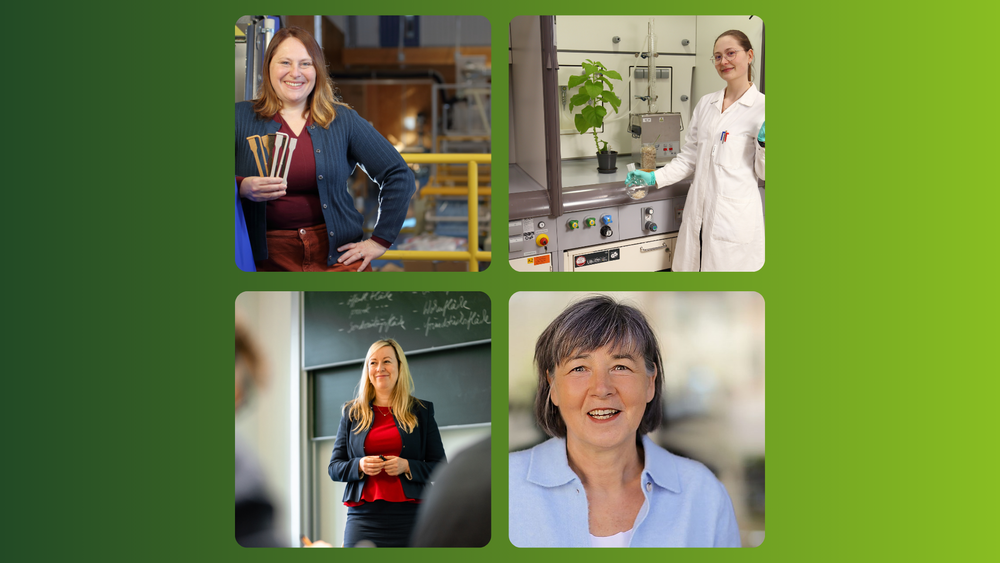
The International Day of Women and Girls in Science was adopted by the United Nations General Assembly on December 22, 2015. It is observed annually on February 11 and is intended to highlight the crucial role that girls and women play in science and technology.
According to the Austrian National Commission for UNESCO, a great deal of research potential is lost worldwide because too few highly qualified and good-educated women work in research. The goal of the day is therefore to promote the full and equal participation of women and girls in science and to highlight their crucial role in science and technology. In Germany, 22.7 percent of those employed in science are women. Although the proportion of women in research and development in Germany rose between 2011 and 2021, it still stands at just 2.6 percent, according to the Federal Statistical Office.
While women are often good representatives in the humanities and Social Sciences, they remain underrepresented in the natural sciences and engineering. The reasons for this often include stereotypical notions of gender roles, a lack of visibility of female role models in science, and family-unfriendly working conditions.
It therefore remains essential to focus on equal opportunity in science and to break down all structural barriers in order to pave the way for women and girls to enter science and actively promote their career opportunities there.
In the following, inspiring female researchers at the HSCG talk about their passion for science, their inspirations and what excites them most about their work.
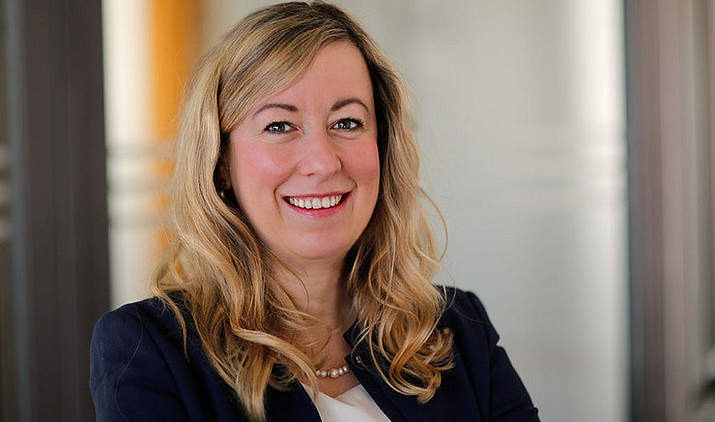
Prof. Dr. Sophia Keil
Vice President for Education and International Affairs at Zittau/Görlitz University of Applied Sciences and Professor of Business Administration
What inspired you to pursue an academic career?
My academic curiosity was sparked early on during my studies at Stralsund University of Applied Sciences. As early as my second semester, I began working as a student assistant in the Department of Mechanical Engineering. There, I was part of an interdisciplinary and international research team—and that fascinated me. It wasn’t just about applying theoretical knowledge, but about working as a team to develop solutions to complex problems, considering different perspectives, and arriving at new insights together. In particular, the opportunity to make a lasting contribution through research—whether in industry or in academia—motivated me to pursue this path. I was also guided by inspiring mentors who showed me just how enriching scientific work can be.
Was there a particular moment in your career that you’re especially proud of?
There are many moments I’m proud of, but one of the most formative was certainly the transition from industry to academia. After many years working in the semiconductor industry, I was able to contribute my experience to European research projects, thereby bridging the gap between theory and practice. I find it particularly fulfilling to pursue science not only as an end in itself, but also to create societal value through it. For example, my team and I are researching solutions for human-centered design of the future workplace in the context of digitalization.
What advice would you give to young researchers who are just starting their careers?
My most important piece of advice: Believe in yourself—you can achieve anything you set your mind to! Science requires passion, perseverance, and a willingness to continually take on new challenges.
I’ve always lived by the motto: “Shoot for the moon. Even if you miss, you’ll land among the stars.” Set high goals for yourselves and keep pushing beyond your comfort zone. Work consistently toward your dreams—for me, these are the key factors for a successful scientific career. Mentors and networks also play a major role in this. They help you avoid obstacles and gain new perspectives. Young researchers should be open to interdisciplinary collaboration and take every opportunity to network internationally.
What inspires you most about your work?
The diversity! No two days are alike—whether in research, teaching, or collaborating with international partners. I find it particularly rewarding to prepare young people for their future, to guide them on their path of development, and to open doors of opportunity for them. It also motivates me when research doesn’t remain purely theoretical, but has a practical impact and enables social progress.
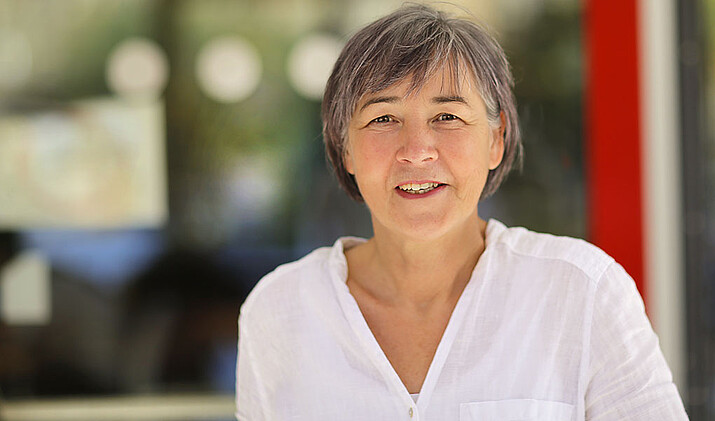
Cordula Lasner-Tietze
Deputy Equal Opportunities Officer at the HSZG
What inspired you to pursue an academic career?
It was more by chance that I set my sights on an academic career. I have many years of practical experience in child and youth welfare behind me. In addition, I devoted more than a decade to policy advocacy at the federal level. Upon returning to Upper Lusatia, I was looking for a new direction and received an offer from the university to teach in the field of applied Social Sciences. This opportunity perfectly combined my accumulated experience with the chance to support young people in their studies.
Was there a particular moment in your career that you’re especially proud of?
“Pride” is a word that means very little to me. Supporting young people in their academic—and thus professional—development and equipping them with the tools they need is simply wonderful. Reflecting with them on societal conditions and then discussing the challenges facing a human rights profession—such as Social Work—is important and meaningful.
What advice would you give to young researchers who are just starting their careers?
Unfortunately, it’s still the case that young women in particular remain stuck in social work practices, and girls don’t really see themselves—or take it for granted—as belonging in the natural sciences. Traditional stereotypes still play a major role in the choice of career paths. As a result, there is an imbalance in academia and in research. I hope young women will have the courage and confidence to pursue these paths and that they’ll encounter as many mentors and supporters as possible, so that these entrenched gender-based stereotypes can be broken.
What inspires you most about your work?
Observing and analyzing societal developments and social challenges, and using these insights to advocate for equal opportunities for all while simultaneously developing tools to achieve this goal, is a very fulfilling task.
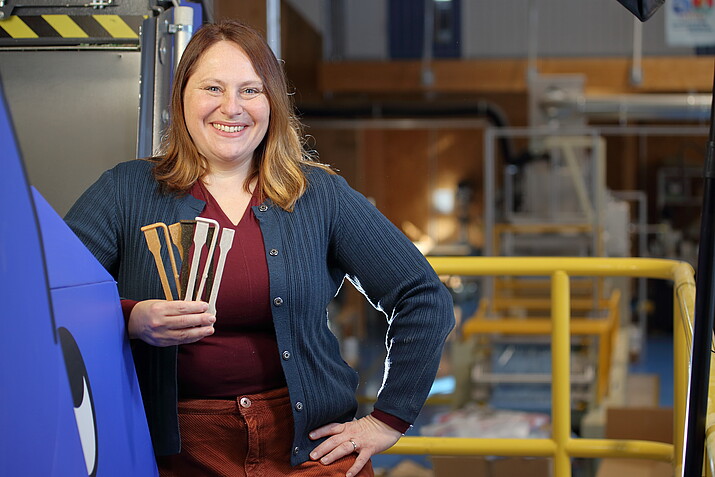
Anett Kupka
from the Zittau Institute for Process Development, Circular Economy, Surface Technology and Natural Materials Research / ZIRKON
Which aspects of your work do you enjoy the most?
Together we research the diverse possibilities of natural fibers and their use. My work at ZIRKON is not only technically challenging, but also meaningful - because we are actively contributing to a more sustainable world.
Is there a personal insight that has changed your view of science?
Tolstoy's quote: "It is always the simplest ideas that are extraordinarily successful" has often helped me when experiments and research results have not led to the desired success.
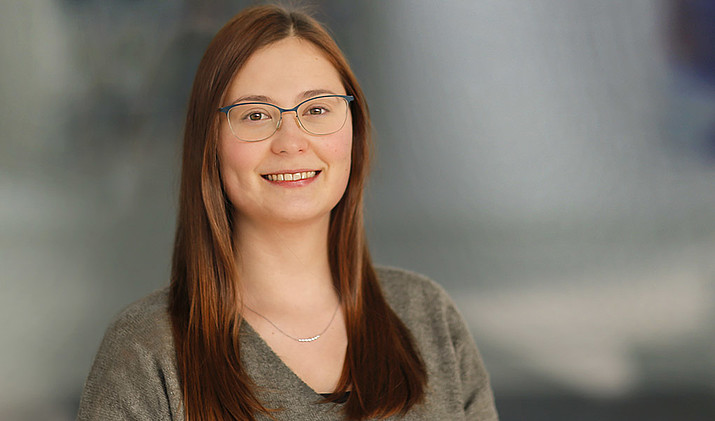
Jennifer Dutschke
from the Zittau Institute for Process Development, Circular Economy, Surface Technology and Natural Materials Research / ZIRKON
What does research mean to you?
Between the field, laboratory and microscope, I explore the secrets of nature - from hemp roots to duckweed, always on the trail of new findings.
What excites you most about it?
What excites me most about my work is actually the variety you have. As I'm working with hemp roots in my new project, I'm often out in the hemp field, especially in summer, and not just sitting in the office.
Science needs strong female scientists. Have the courage to go your own way and help shape the future!
1st floor