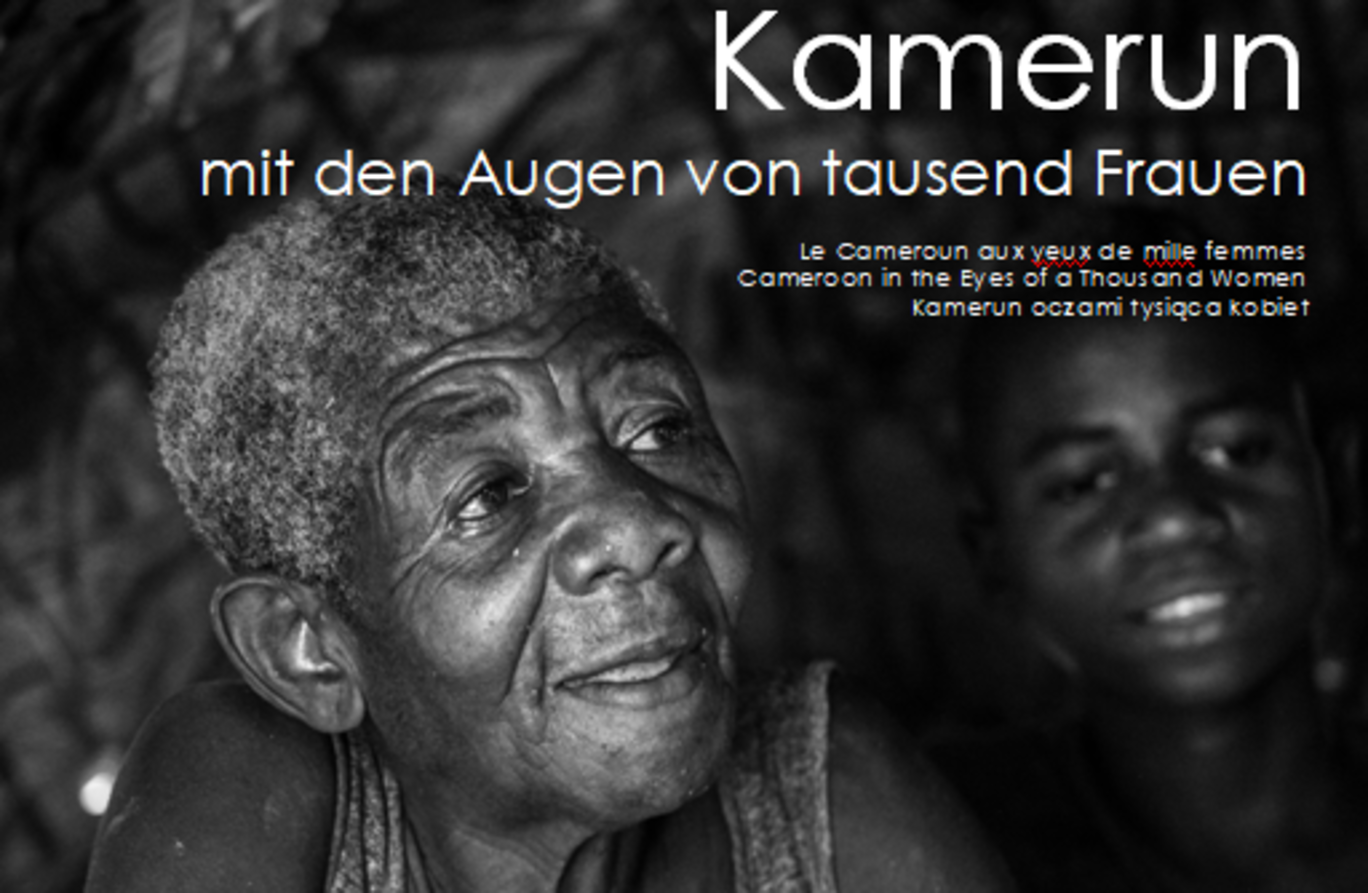

The exhibition "Cameroon through the eyes of a thousand women" is a tribute to the power of African women and takes place as part of the Lausitz Festival.
| Begin |
02. September 2021 -
19:30 |
Cameroon through the eyes of a thousand women
Le Cameroun aux yeux de mille femmes |
Cameroon in the Eyes of a Thousand Women |
Kamerun oczami tysiąca kobiet
The exhibition “Cameroon Through the Eyes of a Thousand Women” is a tribute to the strength of African women.
The exhibition and catalog represent the exact opposite of both “white male saviorism” and the usual reports of misery. From an insider’s perspective, they convey the position of Cameroonian women between tradition and modernity, their strength in everyday life, their concerns, and their hopes. And, not least, their situation, which in many respects is very similar to that of women in Europe.
The exhibition addresses the question posed by the Federal Chancellor’s Special Representative for Africa regarding a possible focus of Saxony’s and Germany’s Africa policy in the coming legislative period from the perspectives of culture, science, and economic policy: According to the World Bank, women are the key to economic growth on the African continent—not because they are better people, but because their potential has remained largely untapped. The female population in sub-Saharan Africa owns only one percent of the wealth but produces two-thirds of all agricultural goods.
The locations and subjects were selected by Her Highness Esperance Cadé, Queen Mother of Bafoussam, and Aimée Nguemtchueng, a doctoral candidate at the University of Yaoundé I and the Zittau/Görlitz University of Applied Sciences. A distinctive feature of the exhibition is the powerful poetic quality of the photographs and the poems by Aimée Nguemtchueng inspired by them. The Deputy German Ambassador, Gabriela Bennemann, wrote to us: “I viewed the photos in the exhibition with great pleasure; yes, that’s exactly what it looks like here!”
The exhibition is part of Upper Lusatia’s efforts to foster partnerships with Africa, particularly with its women. It focuses on Cameroon—whose population ranks among the top globally in terms of interest in German as a foreign language and in Germany itself.