Computer science colloquium
New algorithms and hardware acceleration for atomistic simulations
| Begin |
24. January 2024 -
14:30 |
| End | 24. January 2024 - 16:00 |
Lecture hall 112
Building GII
Brückenstraße 1
02826 Görlitz
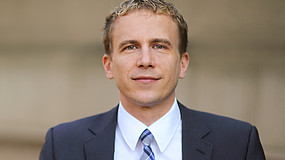
Speaker: Prof. Dr. Thomas D. Kühne, Director of CASUS
Contents:
This presentation provides an overview of the computational methods developed by Prof. Kühne’s research group for the atomic-level simulation of complex sustainable systems, such as photocatalytic water splitting, thin-film solar cells, and new materials for batteries and non-volatile phase-change memory. The focus is, on the one hand, on novel massively parallel algorithms based on the paradigm of approximate computing and suitable for modern GPU- and FPGA-based hardware accelerators, and, on the other hand, on machine learning methods and inverse design techniques.
Thomas D. Kühne has been Director of the Center for Advanced Systems Understanding (CASUS) since May 2023. His role as head of the institute at the Helmholtz-Zentrum Dresden-Rossendorf (HZDR) is accompanied by a teaching position at the Technical University of Dresden. The Chair of Computer-Aided Systems Sciences, which Kühne has assumed, is located at the Institute for Artificial Intelligence within the faculty of computer science and is jointly supported by TU Dresden and the HZDR. Prior to joining CASUS, Thomas D. Kühne was a professor of theoretical chemistry at the University of Paderborn, where he had held the professorship in theoretical interfacial chemistry since 2014 and had been a full professor since 2018. From 2010 to 2014, he was an assistant professor of theoretical chemistry at Johannes Gutenberg University Mainz. After studying computer science and computational sciences and earning his Ph.D. in Theoretical Physics at ETH Zurich in 2008, Kühne conducted research for one year as a postdoctoral fellow at Harvard University (USA). His work focuses primarily on the investigation of complex systems in condensed phases using computational methods, particularly aqueous systems such as water interfaces or biologically relevant reactions in aqueous solutions. Kühne has published more than 150 papers in peer-reviewed journals and holds a Starting Grant from the European Research Council.