

About the degree programme
In the automation and mechatronics diplom degree course, you’ll become part of the next industrial revolution. As a future engineer, you’ll develop the intelligent systems of tomorrow and actively shape the future of Industry 4.0. With the KIA (sandwich-style) degree course, you’ll optimally combine theory and practice and graduate with two valuable qualifications: a Diplom-Ingenieur degree and a recognized vocational certification.
Versatile Skills for the Digital Future
In this forward-looking degree programme, you’ll gain comprehensive knowledge in these key areas:
- Fundamentals of electrical engineering, mechanics, and computer science
- Automation technology, sensor technology, and actuator technology
- Control and regulation technology
- Digital communication systems and data processing
- Industry 4.0 technologies and networked systems
- Pattern Recognition and Machine Learning
- Project Management and Interdisciplinary Skills
With these qualifications, you’ll be well-equipped to tackle complex technical challenges. You’ll encounter real-world applications of mechatronics and automated systems every day: The digital revolution ensures that cars, airplanes, household appliances, smartphones, industrial robots, and trains communicate with one another. You’ll develop the intelligent interfaces between the virtual and real worlds, thereby helping to shape a connected future.
Study details
The most important facts at a glance:
| faculty: | Electrical Engineering and Computer Science |
| Location: | Zittau |
| Degree: | Diplom in Engineering (FH) |
| standard period of study: | 10 semesters |
| ECTS credits: | 240 |
| Language of instruction: | German |
| Enrolment for: | Winter Semester |
| Application: May 1 through September 30 | Start of studies: October |
| Admission restrictions: | No admission restrictions (no NC) Details |
| No prerequisite internship | Student Advisory Service |
| Accreditation status: | Accredited |
Course content
Your program is structured around a solid foundation in core subjects, followed by specialized coursework that builds on that foundation and offers opportunities for individualized specialization. In the first few semesters, you’ll acquire essential engineering knowledge in mathematics, physics, computer science, electrical engineering, and mechanics. You’ll regularly alternate between the university and companies to apply theoretical knowledge directly in practice and, after about 2.5 years, earn your first professional degree.
Starting in the third semester, you’ll deepen your knowledge in sensor technology, actuator technology, control engineering, and digital data processing. You’ll have the opportunity to specialize in one of two tracks: mechatronics and Automation Technology/Industry 4.0. The sixth semester includes an engineering internship that provides you with valuable hands-on experience. In the final two semesters, the curriculum covers advanced concepts in control theory, control systems, image processing, and methods of artificial intelligence, before you complete your degree with your Diplom thesis and demonstrate the skills you have acquired.
The semesters marked in light green (2.1 / 2.2 / 3.1 / 3.2) are part-time semesters. Here, the 2nd and 3rd semesters from the Diplom degree programme’s curriculum are each extended to two semesters. You’ll complete these in 4-week cycles at alternating learning locations (university/company). You’ll conclude this phase of your studies with your first professional certification (IHK chamber exam). As a result, the program consists of a total of 10 semesters.
- Engineering Mathematics I
- Physical fundamentals of mechanics & thermodynamics
- Engineering Mechanics
- Materials engineering
- Fundamentals of computer science
- Fundamentals of electrical engineering - stationary processes
- Business Administration
- Fundamentals of Electronics
- Fundamentals of Electrical Engineering—Electrical Networks
- Engineering Mathematics II
- Fundamentals of Electrical Engineering—Signals and Systems
- Power Electronics
- Measurement Techniques for Engineers
- Physics of Matter & Electromagnetic Waves
- Communication networks
- Object-oriented programming
- Digital Technology/Microcomputer Technology
- Numerical Methods/Simulation
- Final Examination for the Training Program
- Sensors and Actuators
- Control Engineering I
- Control Engineering I/Programmable Logic Controllers
Specialization or Major in mechatronics
- FEM in Mechanical and Electrical Engineering
- Compulsory Elective Modules
- Secure and Fault-Tolerant Systems
- Operating Systems
- Introduction to Collaborative and Autonomous Robotic Systems
- Solar Energy Technology
- Software Engineering 1
- Cyber-Physical Systems
Specialization or Major in Automation Technology/Industry 4.0
- Cyber-Physical Systems
- Safe and Fault-Tolerant Systems
- compulsory elective module
- Introduction to Collaborative and Autonomous Robotic Systems
- Electromagnetic Compatibility
- Solar Energy Technology
- Project Planning
- Interdisciplinary Skills (Compulsory Elective Modules)
Specialization or Field of Study: mechatronics
- Design Theory
- Modeling and Simulation
- Compulsory elective modules
- Fundamentals of Process Automation/Process Analysis
- IT Security and Data Protection
- Software Engineering 2
- Fundamentals of Soft Computing
- Methods and Applications of Industry 4.0
- Control Systems/Industrial Data Communication
Specialization or Major in Automation Technology/Industry 4.0
- Control Systems/Industrial Data Communication
- Fundamentals of Soft Computing
- Methods and Applications of Industry 4.0
- compulsory elective module
- Fundamentals of Process Automation/Process Analysis
- Modeling and Simulation
- Engineering Internship
- Control engineering II
- Control Engineering II
- Pattern recognition and machine learning
- Project management for engineers
Specialization or field of study Mechatronics
- Industrial image processing
- Building automation/energy management
Specialization or field of study Automation Technology/Industry 4.0
- Building automation/energy management
- Model-based measurement and control methods
- Final module (Diplom thesis and defense)
Career opportunities
Professional areas where you can get started
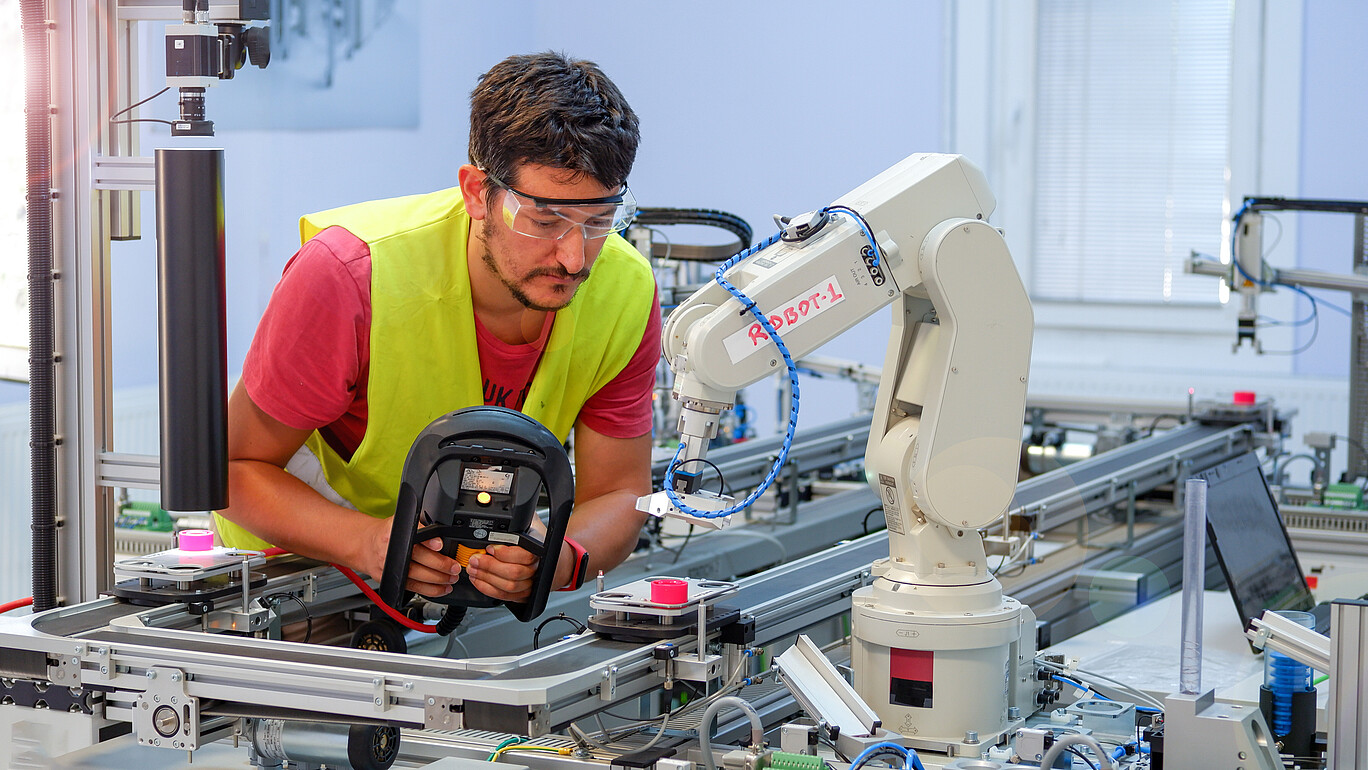
Automation technology
You will install and parameterize drives as well as measurement, control and regulation equipment. You will install, configure and program sensor and bus systems for industrial plants. Your work will make production processes more efficient and reliable. After commissioning, you will look after the systems, carry out maintenance and analyze faults using diagnostic systems.
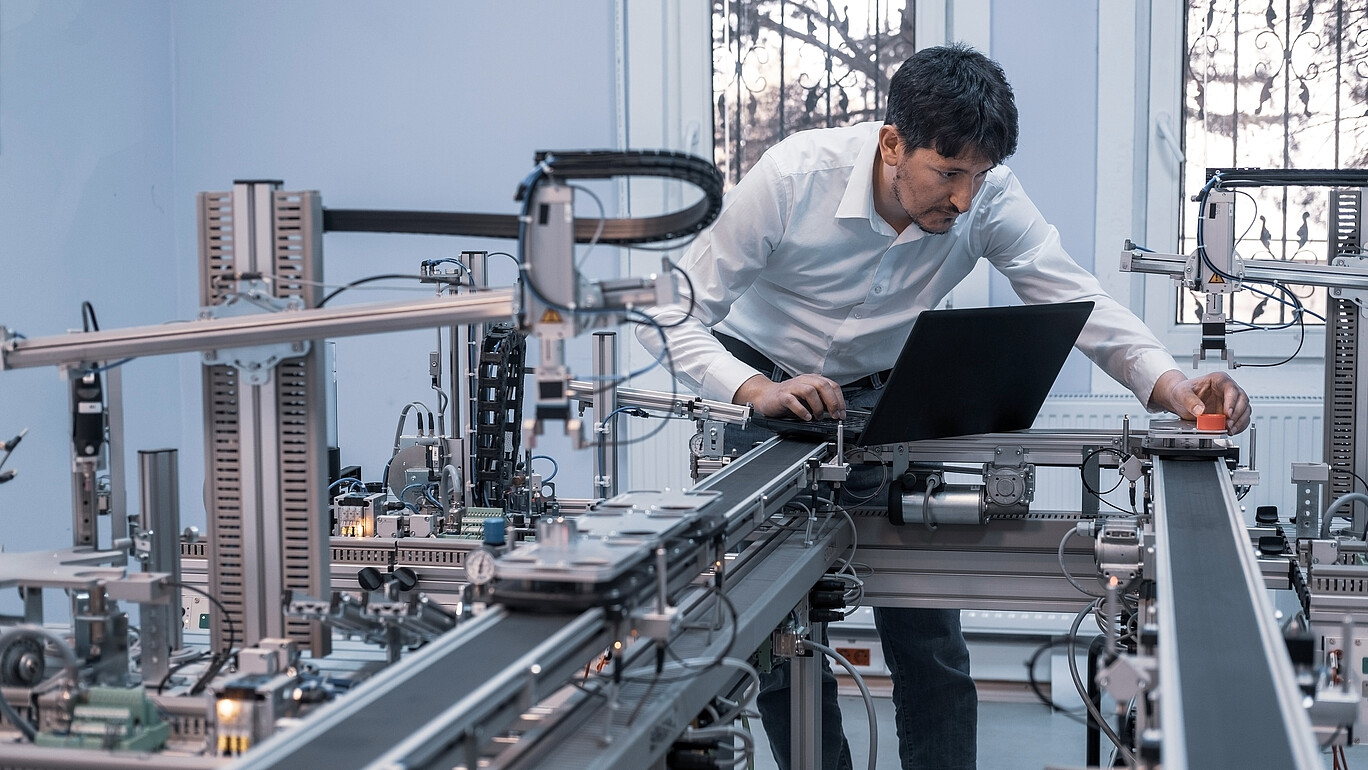
Electronics for Devices and Systems
You assemble electronic components into complex systems and establish mechanical and electrical connections. You select wires, perform wiring, and test the circuits you have built. You test components using measuring instruments, prepare device documentation, and commission systems. When malfunctions occur, you locate the source of the error and resolve it.
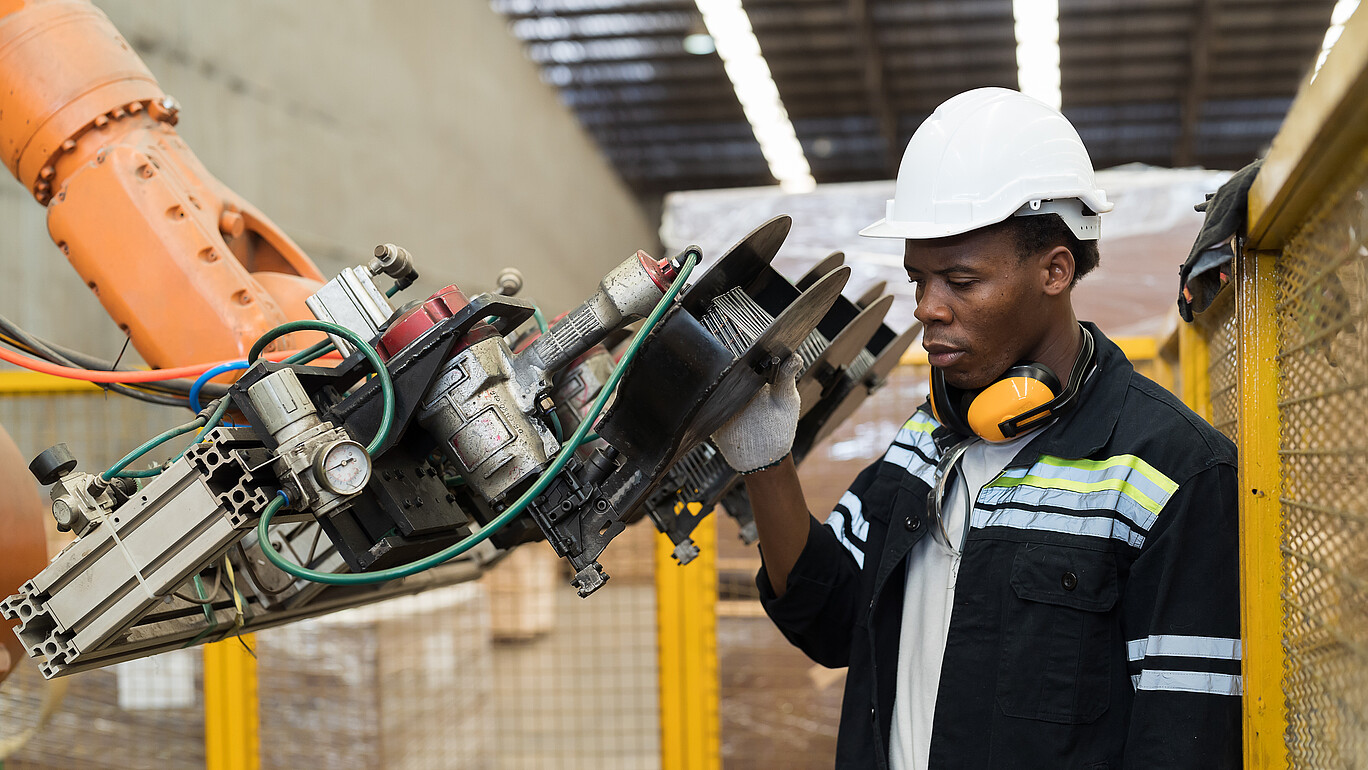
mechatronics
You’ll assemble mechatronics machines and systems that combine mechanics, electronics, and IT. You’ll assemble subassemblies, install pneumatic and hydraulic components, and connect them to electrical control systems. You test and calibrate newly built systems, perform commissioning, and conduct quality control checks. Regular maintenance is also part of your responsibilities.

Project management
You coordinate complex technical projects from planning to implementation. You set milestones, monitor the progress of the project and manage the available resources. With your technical understanding and leadership skills, you bring together different specialist departments and ensure that customer requirements are met on time and within budget.

Technical Sales
You’ll advise customers on automation solutions and prepare customized quotes. Using your technical expertise, you’ll analyze customer requirements and demonstrate the benefits of our products using concrete application examples. You’ll manage the entire sales process from the initial consultation through handoff to the technical team and build long-term customer relationships.
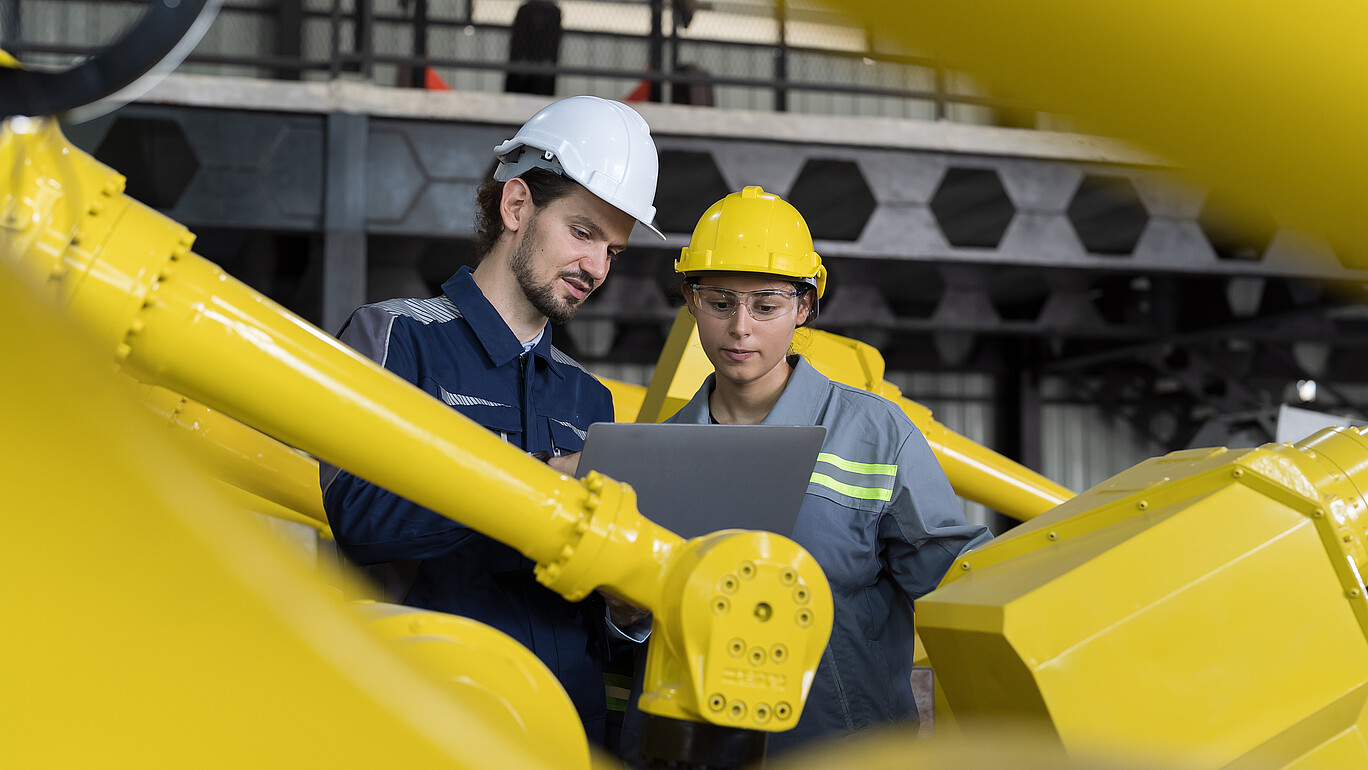
Commissioning and Service
You commission newly installed systems and train operators on-site. You’ll test all functions, optimize settings, and troubleshoot issues. When service is required, you’ll perform remote diagnostics, travel to customer sites, and ensure that production resumes as quickly as possible. Your flexibility and interpersonal skills make you a valued point of contact.
FAQ
How does the dual degree program work?
KIA is a dual university program leading to a degree as a Diplom-Ingenieur (FH) — with integrated vocational training (including an IHK/HWK certification).
It closely integrates theory and practice, fosters an early connection to the future employer, and is therefore recommended by the State Government of the Free State of Saxony and expressly required by companies.
Our future KIA students submit applications to a company partnering with the university up to one year before the start of their studies; they must have a university entrance qualification, be interested in scientific problems, and possess the necessary mobility.
The companies enter into a cooperation agreement with the university and sign contracts with the applicants for vocational training (vocational training contract or internship contract) or—in the case ofKIApro—a qualification contract.
After signing a vocational training contract or internship contract with the company, you must still register at the university with your university entrance qualification—this is possible starting in mid-May.
The program typically begins on September 1 with a 4-week basic practical training period at the company. Afterward, depending on your degree programme, you’ll complete one to three semesters of study at the university.
The breaks between semesters are reserved for practical training at the company. On-the-job training at the company takes place during the foundational phase of the program according to the semester schedule (e.g., alternating between the company and the university every 4 weeks) and concludes with an examination administered by the relevant chamber (IHK or HWK). No separate vocational school instruction is provided. The theoretical knowledge required for vocational training is imparted through scheduled lectures and additional “job-specific” teaching units at the university. During the practical training period, you are entitled to vacation time as stipulated by the collective bargaining agreement and receive monthly compensation from the company based on the standard pay scale for trainees.
After completing the vocational training, the remaining semesters are completed as a full-time study programme while working (often with a student aid agreement from your company) and culminate in the desired university degree of Diplom-Ingenieur/in (FH).
What apprenticeship programs are available?
- Electronics Technician for Automation Technology
- Electronics Technician for Industrial Engineering
- Electronics Technician for Devices and Systems
- Electronics Technician for Machinery and Drive Technology
- Mechatronics Technician
About the advantages of the dual study program | KIA
Here's what our students have to say about our university
- Module Handbook (Course Content and Structure)
- Faculty Website
- Application Information
- Program Flyer
- KIA (sandwich-style) degree course Flyer


1st floor

First floor
Starting now, we're also offering our Student Advisory Service via WhatsApp. Just send us a message at: +49 173 2086748
Our promise to you
Studying in the wild east?
Studying with us is different. Above all, better. Why? We have a family atmosphere. There are small study groups and the lecturers are always there for you. There is a close connection to practice in all degree courses. And finding affordable accommodation is no problem here.
There are many other reasons, such as university sports or the student representatives, clubs and societies. Campus life in Zittau and Görlitz, the wild east, is unique.