
Event details
AI in Nursing—What Practitioners Really Think
On August 5, 2026, the Saxony⁵ research project hosted a workshop titled “AI in Nursing Care?” at CELSIUZ in Zittau. Nurses, facility directors, and other interested individuals from the region came together to take a look at the current state of artificial intelligence in nursing care.
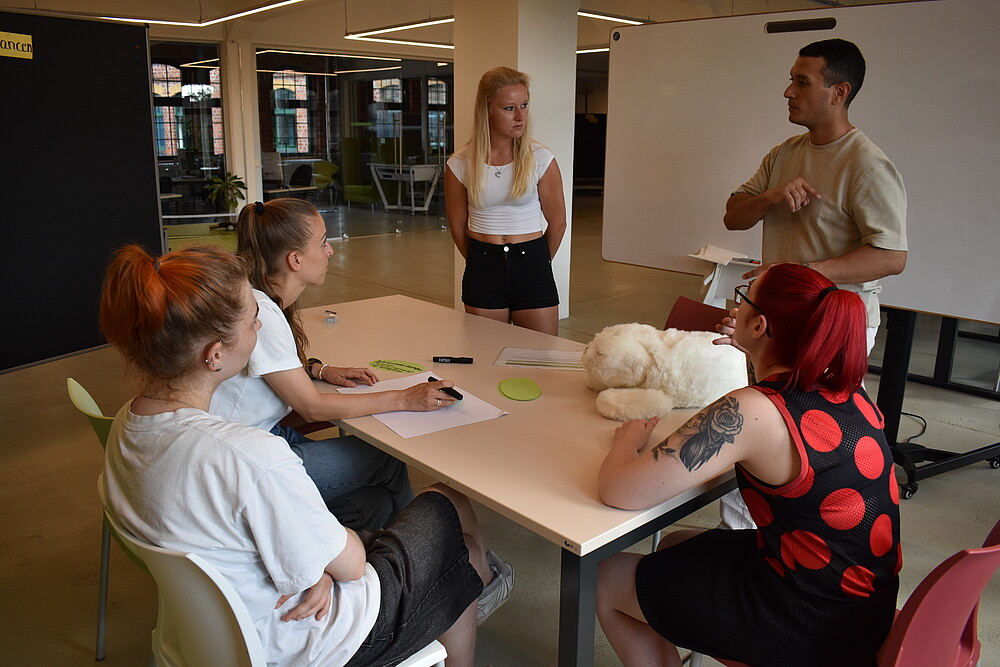
Rückblick auf den Workshop
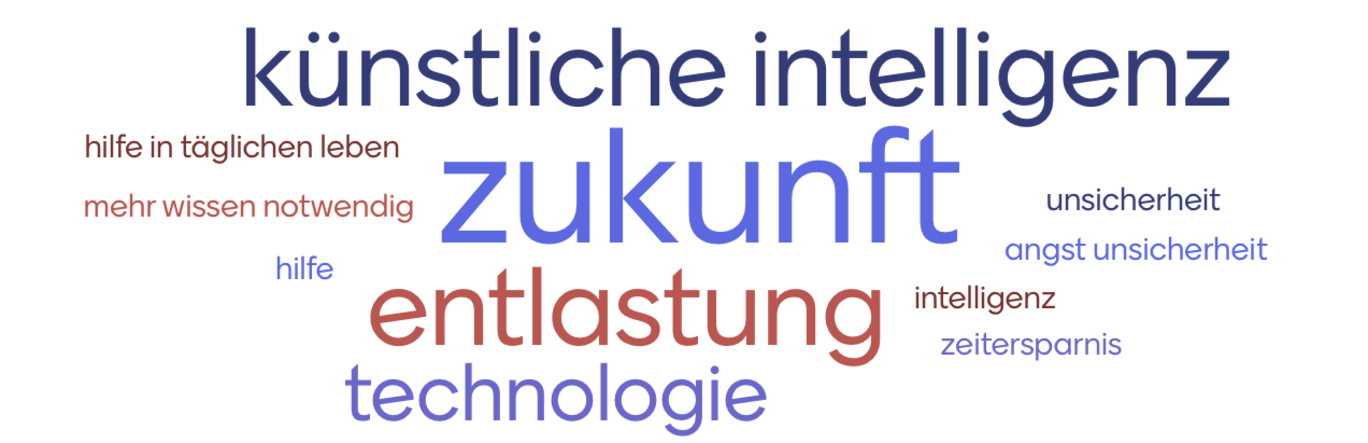
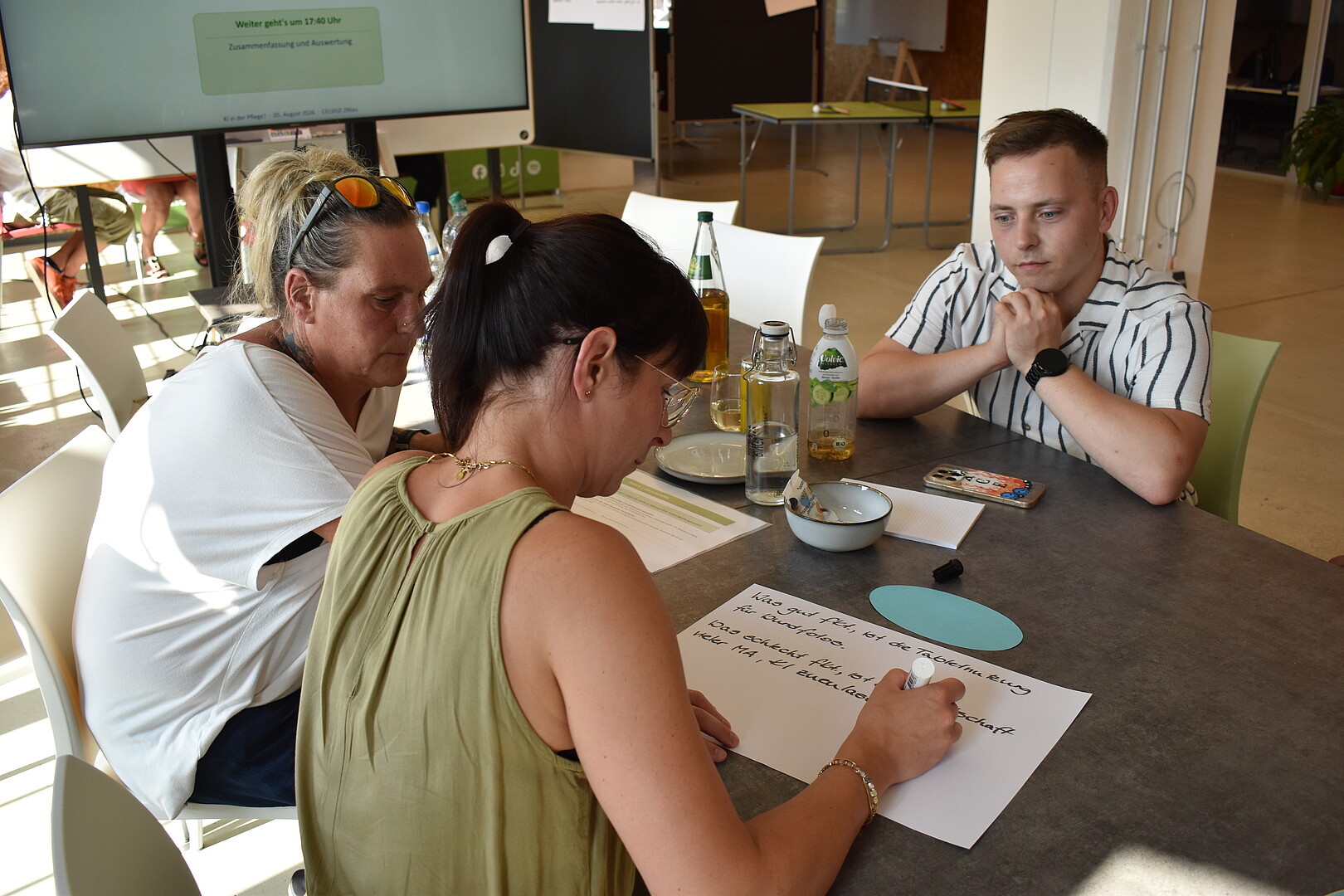
To what extent has artificial intelligence truly made its way into the field of nursing care, and what do those who have to work with it on a daily basis think? These questions were explored at the “AI in Nursing Care?” workshop on August 5, 2026, at CELSIUZ Zittau. About 15 nursing professionals and facility directors from the region came together, despite the summer vacation season, the heat, and a last-minute change to the program. The keynote presentation was delivered by Maria Fabisch, a project staff member at the Saxony5 Transfer Network, who provided an overview of current AI applications in nursing care—ranging from voice documentation and fall prevention to shift scheduling—while distinguishing between what already works today and what remains merely a promise. In the World Café session that followed, participants developed their own perspectives at four themed tables. The results show that there is a strong desire for relief, the boundaries are clearly defined, and the biggest hurdle is not a technical one.
World Café: The Voice of Practice
Chancen
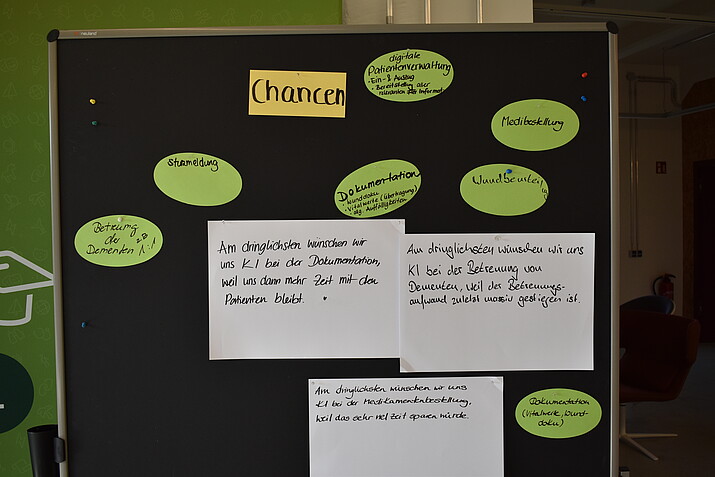
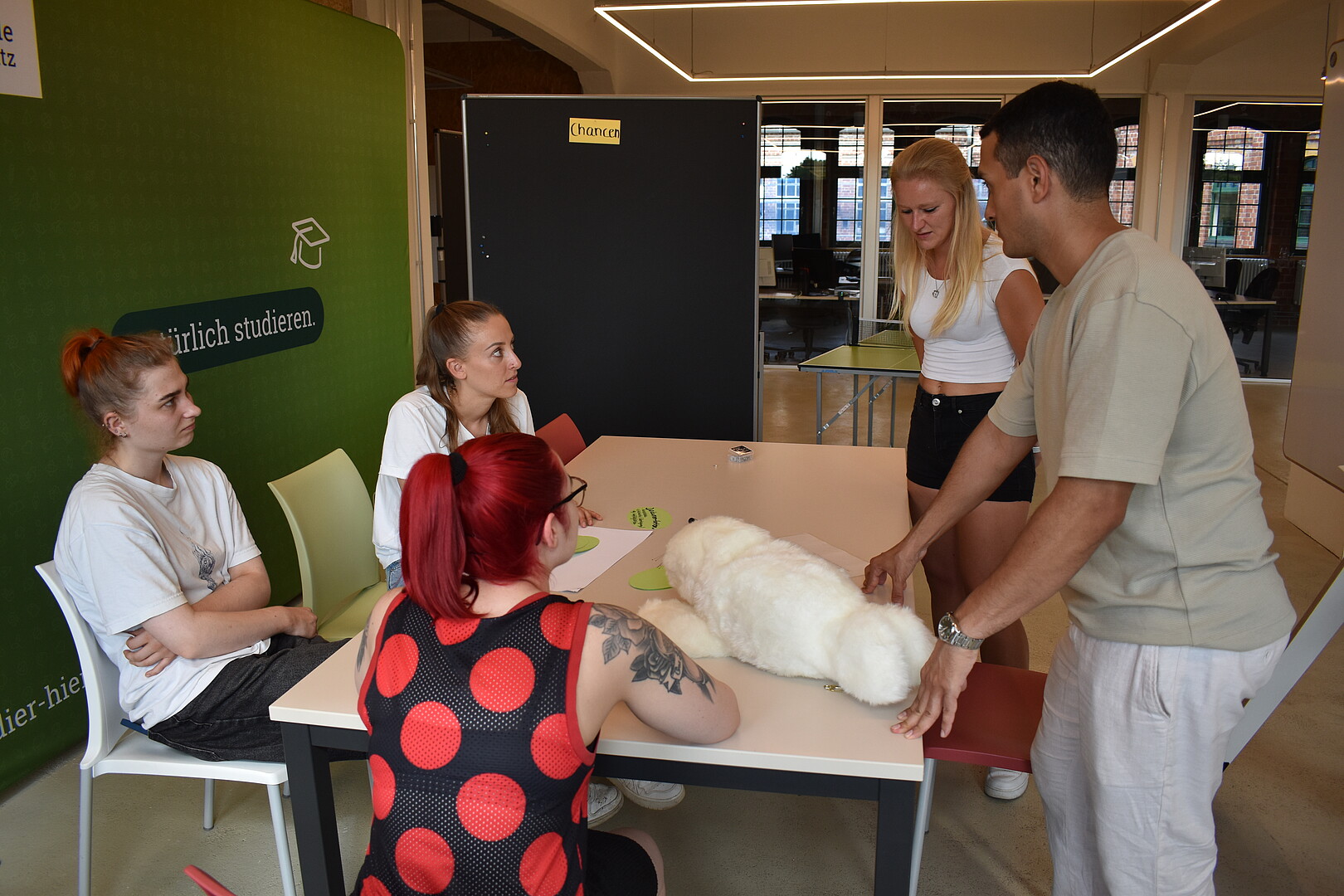
When asked where they most urgently needed AI, the participants cited documentation as their top priority, arguing that it would free up more time for them to spend with patients. Other frequently mentioned areas included digital patient management, fall detection systems, wound assessment, and medication ordering. It was particularly striking that one group identified the care of people with dementia as the most urgent area of application, citing the fact that the burden of care had recently increased dramatically.
AI in medical documentation would be helpful because it would give us more time to spend with patients.
”Borders
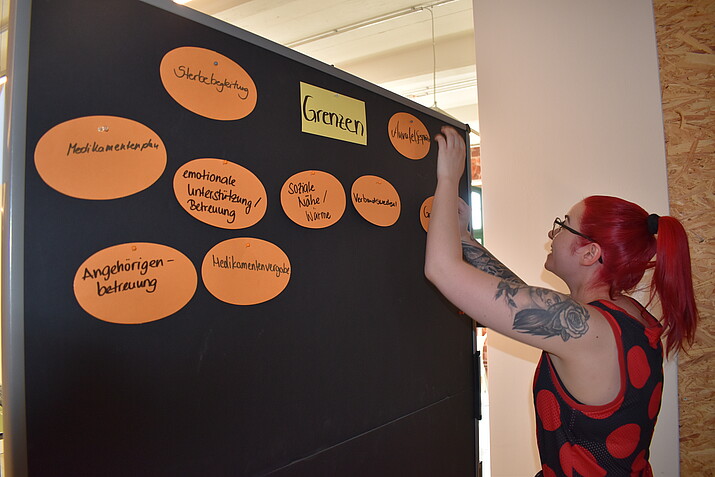
When it came to the topic of boundaries, the participants were remarkably in agreement. The areas mentioned—end-of-life care, emotional support, social closeness and warmth, comfort, conversations, support for family members, and basic care—make it clear that nursing professionals distinguish very precisely between tasks that technology can take over and those that are at the core of professional nursing. This distinction is not anti-technology, but rather the result of professional reflection. Everyone agreed thatthe final decision must always rest with the individual.
We will never allow AI to provide end-of-life care, because this phase is very personal and emotional.
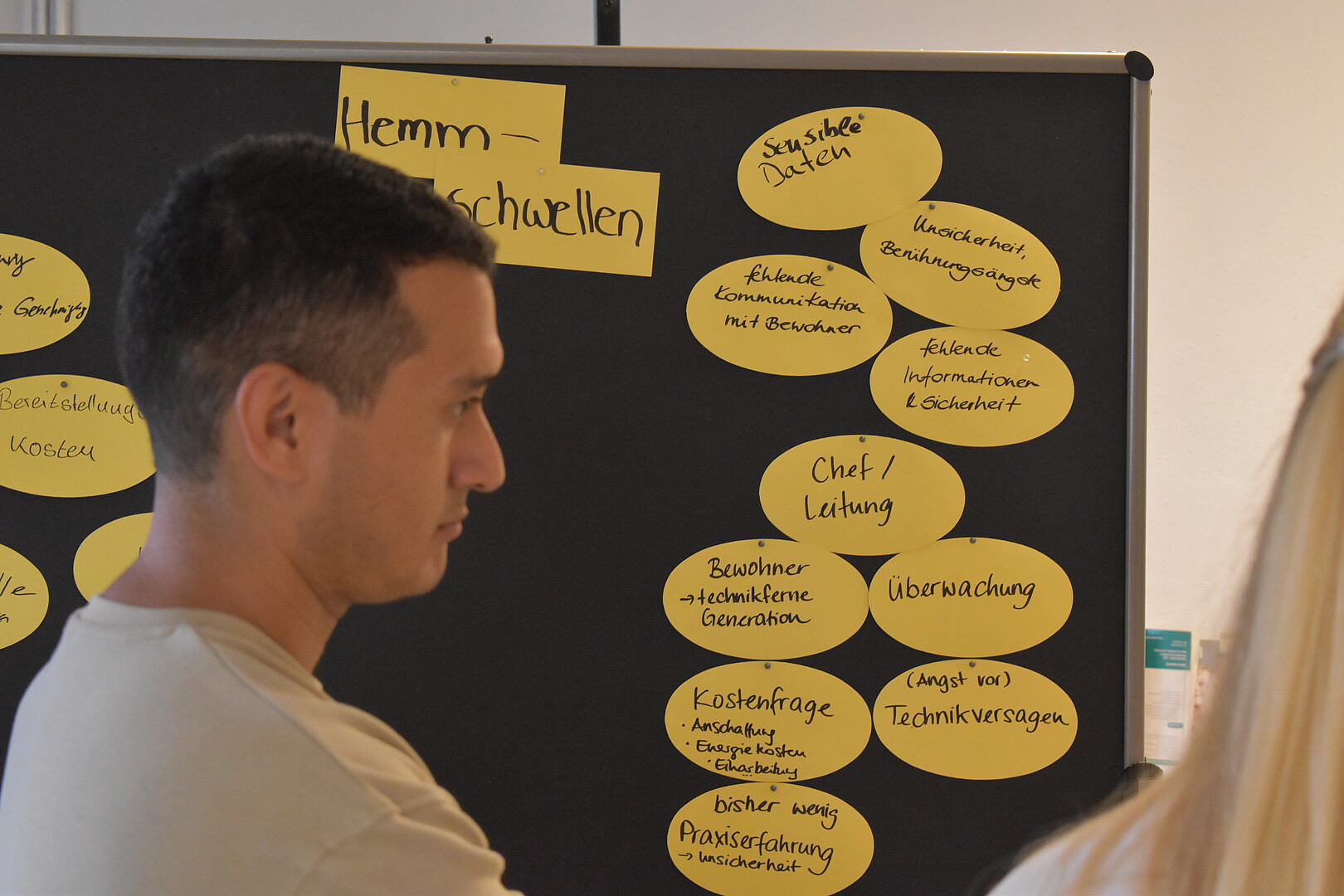
”Barriers
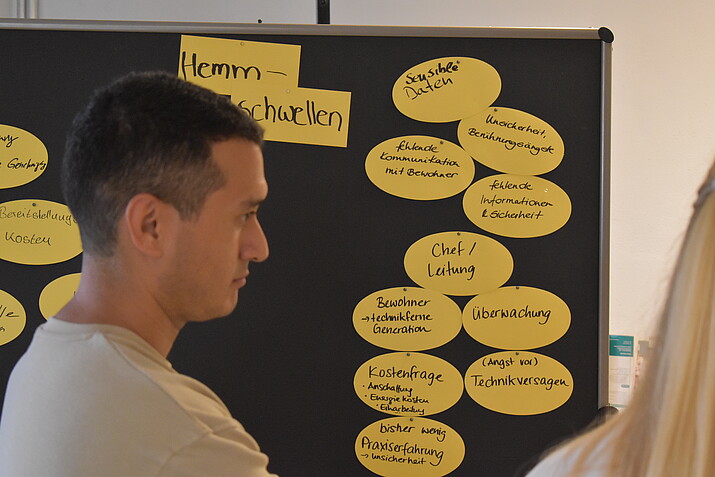
Participants cited sensitive patient data, uncertainty and reluctance to use the technology, acquisition and training costs, as well as the question of how to get all employees on board, as the biggest barriers. The Church Data Protection Act (KDG) was explicitly mentioned as a specific hurdle for religious institutions. Another finding was noteworthy: In addition to skepticism toward technology and uncertainties among employees, the lack of decisions at the management level was also cited as a hurdle. Therefore, it is not just a matter of training employees, but also of leadership responsibility.
What holds us back the most is the fear of new things. We would like to see more education on this topic.
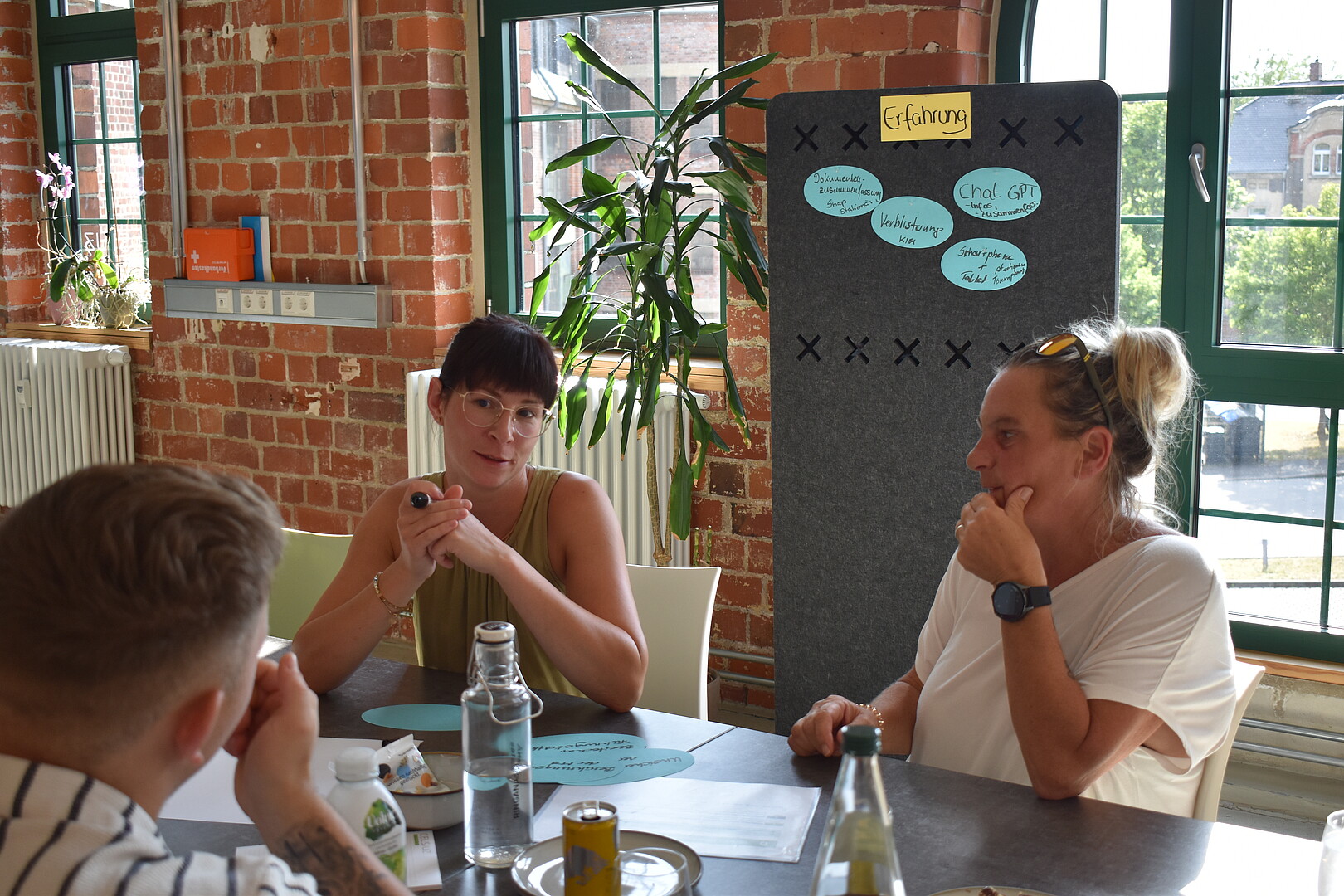
”Experiences
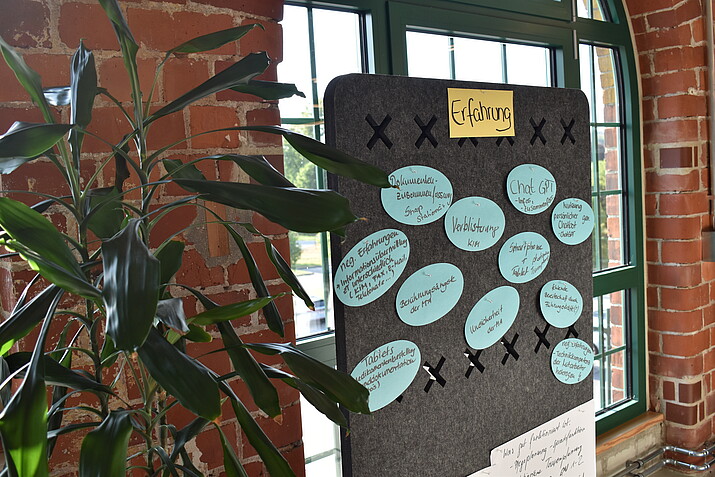
At the experience table, it became clear that the level of digitalization varies among the institutions represented. Positive examples mentioned included the use of tablets for wound photos, care planning with voice functionality, inpatient round planning, and the use of AI chatbots for information retrieval and summaries. On the other hand, heterogeneous communication channels between systems, reluctance to adopt new technology, and a lack of management support were described as obstacles. The team’s technical proficiency was assessed as varying widely. The conclusion: A start has been made, but technology acceptance and proficiency remain the real areas needing improvement.
The technology was good—but the implementation was the real challenge. The system wouldn't have worked without support.
”Circular Transfer – From Research to Practice and Back
A key goal of the evening was circular transfer: The opening scientific keynote presentation brought the latest research findings into practice. The results of the World Café are now flowing in the opposite direction, back into GAT’s research. This understanding of science transfer as a reciprocal process is characteristic of the co-creation approach. Research is not conducted in isolation from practice, but in collaboration with it. Problem definitions, solution approaches, and evaluations thus emerge through shared dialogue.
The workshop “AI in Nursing?” demonstrated that the topic has arrived in nursing practice, with all its potential and ambivalence. The participants demonstrated a remarkable degree of reflective capacity and openness. They expressed skepticism where skepticism was warranted and recognized opportunities where technology can provide genuine relief.
The GAT Institute plans to continue the discussions that have begun in further participatory formats.
![[Translate to Englisch:] Foto der Veranstaltung KI in der Pflege](/fileadmin/_processed_/d/3/csm_DSC_0002_690fad6ca5.jpg "[Translate to Englisch:] Foto: Maria Fabisch")
![[Translate to Englisch:] Foto der Veranstaltung KI in der Pflege](/fileadmin/_processed_/d/6/csm_DSC_0010_8ac4987366.jpg "[Translate to Englisch:] Foto: Maria Fabisch")
![[Translate to Englisch:] Foto der Veranstaltung KI in der Pflege](/fileadmin/_processed_/5/d/csm_DSC_0003_299e13bf83.jpg "[Translate to Englisch:] Foto: Maria Fabisch")
![[Translate to Englisch:] Foto der Veranstaltung KI in der Pflege](/fileadmin/_processed_/a/5/csm_DSC_0006_ac3731b7ef.jpg "[Translate to Englisch:] Foto: Maria Fabisch")




The workshop was held as part of the Saxony⁵ collaborative project, a knowledge transfer network of the five Saxon universities of applied sciences, funded by the Federal Ministry of Research, Technology, and Space (BMFTR) and the Joint Science Conference (GWK) under the “Innovative University” program.

2nd floor