
Where to put the CO2?
LaNDER³- Researchers develop technologies to convert CO2.
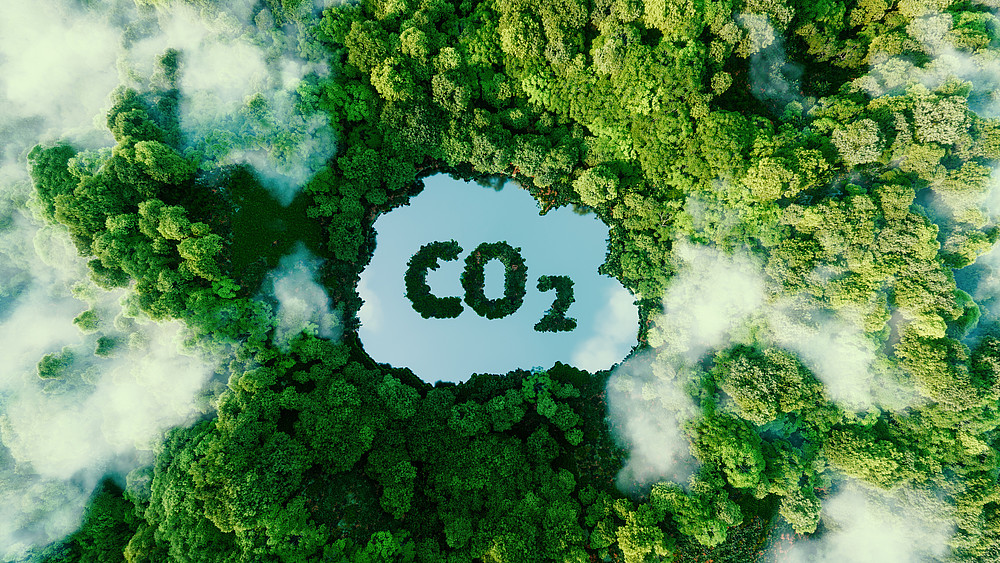
In addition to reducing or avoidingCO2 emissions, the path to climate neutrality also requires technologies for storing and converting theCO2 emitted. Such technologies can absorb climate-damaging emissions.
Due to the reform of EU emissions trading and the difficult framework conditions forCO2 storage in Germany,CO2 conversion technologies are already gaining relevance for industry.
Technologies for convertingCO2 into methane or methanol have already been researched and developed for some time. Methane for processing into natural gas and methanol as fuel for aircraft, for example.
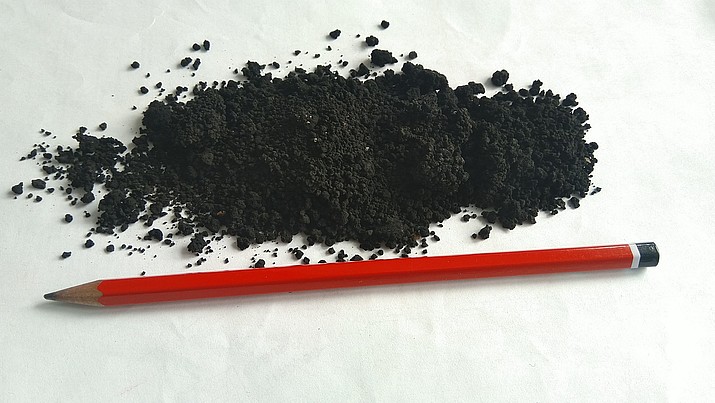
Another way is the conversion ofCO2 into solid carbon. As an alternative to fossil carbon, this can be used in industry as a carbon source for building materials, fillers or composite materials.
However, there are hardly any technologies and research on this to date.
In the recently launched initiative “Biorefinery, Material Recycling, Energy, and Carbon,” researchers from LaNDER³ are working together with partner companies within the “Energy and Carbon” research focus to address precisely these issues.
The team is conducting research using an SCCS facility developed at Zittau/Görlitz University of Applied Sciences—a facility unique in Germany that converts CO₂ into solid carbon. SCCS stands for Solid Carbon Capture Storage—carbon capture and storage in solid form.
The “Energy and Carbon” research focus builds on research into heat management and reactor design for the Sabatier process, a LaNDER³ research project that concluded in the fall of 2022. In that project, researchers focused on converting CO₂ into methane, but were also already exploring the conversion of CO₂ into solid carbon (aswe previously reported). In this project, the research team succeeded in optimizing a method for producing methane from CO₂ and hydrogen that has been known since 1902 but was previously very energy-intensive. This led to the development of a technology that allows more methane to be produced from CO₂ and hydrogen using the same amount of energy.
To date, aside from the research facility developed at the Zittau/Görlitz University of Applied Sciences, there is no other facility in Germany capable of converting CO₂ into solid carbon.
Furthermore, our researchers have succeeded in optimizing the energy efficiency of an energy-intensive process—known for over 100 years—for producing methane from CO₂ and hydrogen.
Over the next two years, the researchers will further optimize the technologies for convertingCO2 into methane or solid carbon. The main aim of the research is to make both technologies economical and energy-efficient and thus accessible to industry. In addition, the research team wants to open up further areas of application for methane and carbon.
The Upper Lusatian Energy Symposium 2023 & 32nd Zittau Energy Seminar
on November 7 and 8, 2023 offers a platform for interdisciplinary exchange on the key topic of "Hydrogen - a network of the future"
1st floor