
When talking to each other is only possible digitally
In a research internship, master's students are examining communication processes between employees and SCHKOLA's management during the pandemic.
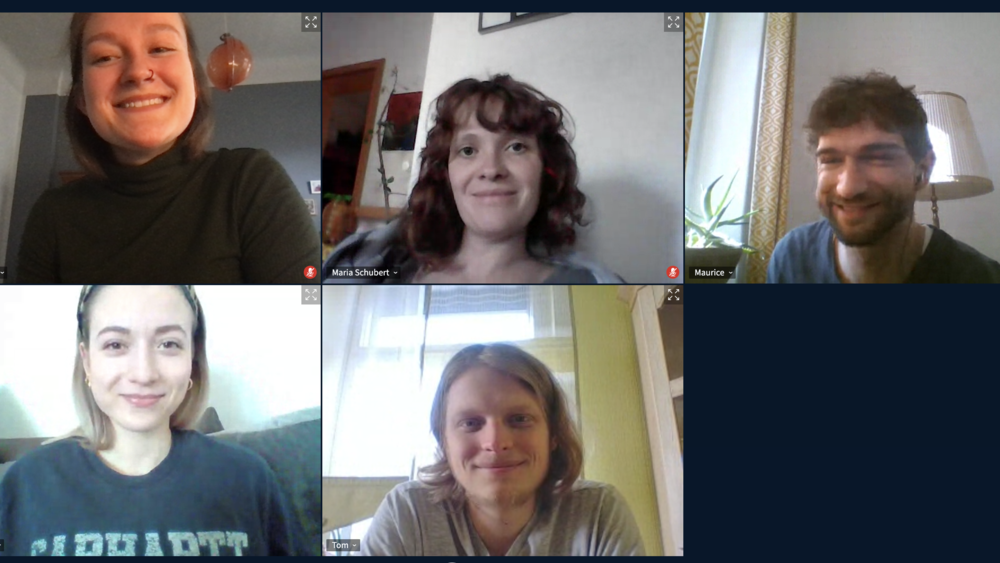
Direct, linear, and above all, personal. Talking to one another is essential. But do the pandemic and the resulting shift of key communication processes to the digital sphere also affect their quality?
A research group consisting of students in the Master's degree programme in management of social change addressed precisely this question and, in cooperation with SCHKOLA gGmbH, conducted a survey on the perceived development of communication quality between employees and management at the independent regional education and school authority.
The research process and the sometimes surprising preliminary results were recently presented virtually.
Research Takes Center Stage in the Master’s Program
“In our Master's degree programme, a research internship takes place in the third academic semester, during which students apply their knowledge of empirical social research to changes in the region and examine a topic of their choice in greater depth. Our research group has made it its mission to investigate the effects of the pandemic on SCHKOLA,” reports Nicole Gierke.
The shift to digital learning, which had become necessary, represented in itself an enormous change in the social space of the school, the master’s student emphasizes. However, her group focused its investigation specifically on communication processes between the learning facilitators (a term used at SCHKOLA to refer to teachers, educational staff, and other employees) and the administrative leadership. “After all, this exchange also had to be moved to the virtual space, which resulted in new challenges and changes in process patterns for everyone involved.”
So how did communication between SCHKOLA’s administration and its learning facilitators change against the backdrop of the 2020 pandemic?
The Method
The learning facilitators were surveyed using a digitized, standardized, empirically validated questionnaire on communication quality—developed in consultation with SCHKOLA’s executive management—across three time periods:
- The period before the first lockdown
- The period during the first lockdown starting in late March 2020
- The period during the “lockdown light” starting in late October 2020
The differences in communication quality between the two lockdown periods were compared. Additionally, a distinction was made between two age groups of respondents (younger and older).
Communication Quality During Lockdown Periods
The students were surprised by the results. “The analysis showed that, when comparing the two lockdown periods, no significant changes in the generally high quality of communication were apparent. Nor were any significant differences found between the age groups. In both age groups, communication quality was perceived and rated as high to very high,” says student Maria J. Schubert.
Nor was there any evidence of a significant decline in communication quality compared to the period before the pandemic began. “We can only see slight fluctuations here,” says the research group member.
How does the research group explain the results? “Even before the pandemic began, SCHKOLA gGmbH had already focused on digital learning methods, including the acquisition of the necessary infrastructure and the integration of learning facilitators into the processes,” says Nicole Gierke, discussing possible causes. “Favorable hierarchical structures and high frequencies of interaction are also conceivable factors. Further research would be needed to explore this.”
The research team would like to thank SCHKOLA for its great openness and its transparent, supportive collaboration. They also view SCHKOLA and its supporting associations as good partners for further collaborations in the form of final dissertations or internships.

2nd upper floor