
"Continuing to learn was always relevant for me!"
Gabriele Schönfelder is considered the oldest direct-admission student at HSZG. In this interview, she talks about her motivations for pursuing a degree later in life and the importance of “lifelong learning.”
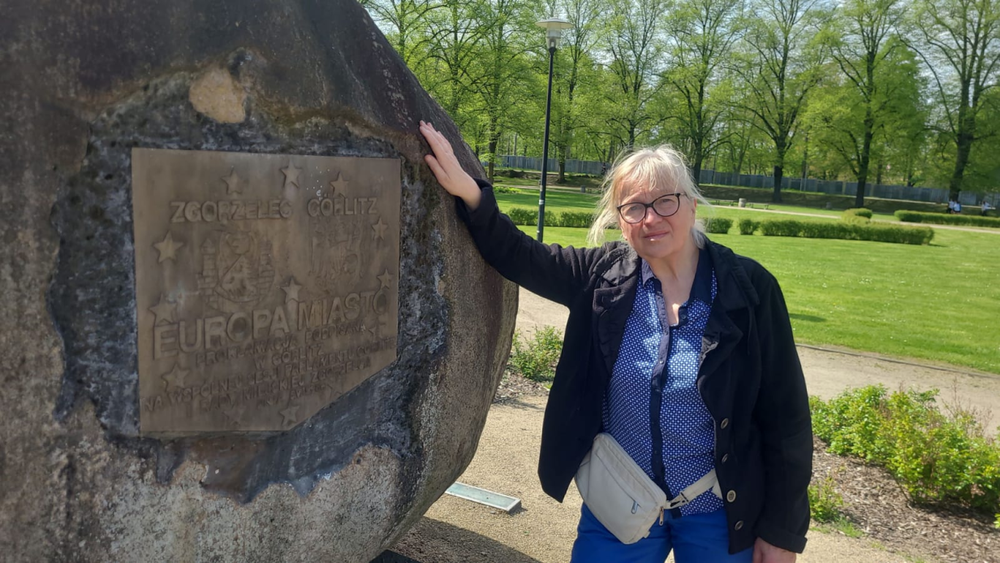
In 2018, at the age of 67, Gabriele Schönfelder successfully completed her master’s degree in Social Gerontology at the Faculty of Social Sciences at Zittau/Görlitz University of Applied Sciences (HSZG). But that wasn’t enough for her: she began another master’s program in management of social change, which she successfully completed in 2023.
As a graduate of the Berlin Weißensee Academy of Art, she initially worked as an interior architect and product designer. In the 1990s, as an East German, she was elected to the board of the Association of German Industrial Designers (VDID). Her professional life was always characterized by interdisciplinary work and continuous learning.
From 2003 to 2013, Schönfelder lived in Bad Muskau and was deeply committed to cross-border cooperation in the German-Polish region. She initiated numerous projects aimed at addressing demographic change and promoting regional development.
A Role Model for Lifelong Learning
Her decision to return to school was influenced by her involvement in regional development projects and the challenges posed by structural change. During her studies at the HSZG, she brought her extensive professional experience and interdisciplinary knowledge to the academic community and actively contributed to discussions and projects.
In her Master's thesis, “Neighbors’ Resources for the Future,” she examined the significance of cooperation in the German-Polish border region of Görlitz/Zgorzelec. Her research highlighted the importance of linguistic and cultural understanding for successful regional cooperation.
Gabriele Schönfelder demonstrates that lifelong learning and active engagement are both possible and enriching even in later life. Her time at the Zittau/Görlitz University of Applied Sciences is an inspiring example of the opportunities that arise from curiosity and a thirst for knowledge.
In an interview, Gabriele Schönfelder discusses her reasons and motivations for studying Social Sciences later in life.
Ms. Schönfelder, what motivated you to begin studying Social Gerontology after a successful career?
During my time in Bad Muskau (2003–2013), I developed projects aimed at addressing demographic change. In the process, I recognized the opportunities and challenges posed by structural change and decided to deepen my knowledge. I was familiar with Zittau/Görlitz University of Applied Sciences through collaborative projects, and I wanted to engage in academic research myself. Professor Andreas Hoff encouraged me to study Social Gerontology—at the age of 67.
What particular challenges did you face during your studies, and how did you deal with them?
In my first degree programme—the part-time master’s degree programme in Social Gerontology—there were no problems, since other students were also older. In my second master’s degree programme, management of social change, I was the oldest student, but working with younger classmates went smoothly. Thanks to my professional experience, I was good at working with digital media and certainly didn’t feel like I was holding anyone back.
What was it like working with the younger generation on joint projects?
The collaboration was normal and focused on academic content. There were no negative comments, and my grade point average was good. The students appreciated my contributions, and some expressed surprise about whether it made sense to earn a degree at my age—which I affirmed.
How did your professional experiences influence your studies and your perspective on the Social Sciences?
My work as an interior architect and product designer required interdisciplinary collaboration, which proved helpful in my studies. I focused more on the resources of people of different ages and genders.
How did your experiences on the student and Faculty Council influence your perspective on education and social change?
The university should prioritize research and teaching and collaborate with students as equals. My work on the councils showed me the importance of good preparation and treating one another with respect.
Can you tell us more about your Master's thesis, “Resources of Neighbors for the Future”?
I examined cooperation in the German-Polish border region of Görlitz/Zgorzelec and the importance of shared resources. The results showed that residents strongly identify with the region and highlighted the need for multilingual dialogue.
How did your Erasmus semester abroad at the University of Wrocław broaden your perspective?
The semester abroad broadened my horizons, especially thanks to the university’s international atmosphere and the Willy Brandt Center. I delved more deeply into the history and development of EU border regions.
What advice would you give to people who want to study in middle or later life?
Learning requires curiosity and a willingness to work hard. There are many ways to age actively and continue your education. It’s important to set priorities and take care of your health.
What does “lifelong learning” mean to you?
Lifelong learning means constantly learning new things, whether informally or through courses. I overcame health challenges during my studies by taking breaks and engaging in physical activity.
What are your goals for the future?
Professionally, it’s difficult to be included as an older researcher, but I continue to work on projects related to resources for older adults and the development of the European City of Görlitz/Zgorzelec.
Finally, what would you like to share with others about your educational journey?
Stay true to yourself and remember the power of self-efficacy. Learning is a way to stay active and find joy in life. Make use of your individual strengths and spread positivity. Stay calm and mindful. One of my favorite quotes, from Marcus Aurelius, is: “Over time, the soul takes on the color of one’s thoughts.”
The interview was conducted by Cornelia Rothe of the Office of University development and communication.
2nd floor
2nd upper floor
First floor