
"Shaping change as positive change for all"
New appointment: Dr.-Ing. Jakob Hildebrandt - brand new at our HSZG since February 2020 - teaches operational environmental protection and sustainability at the Zittau site.
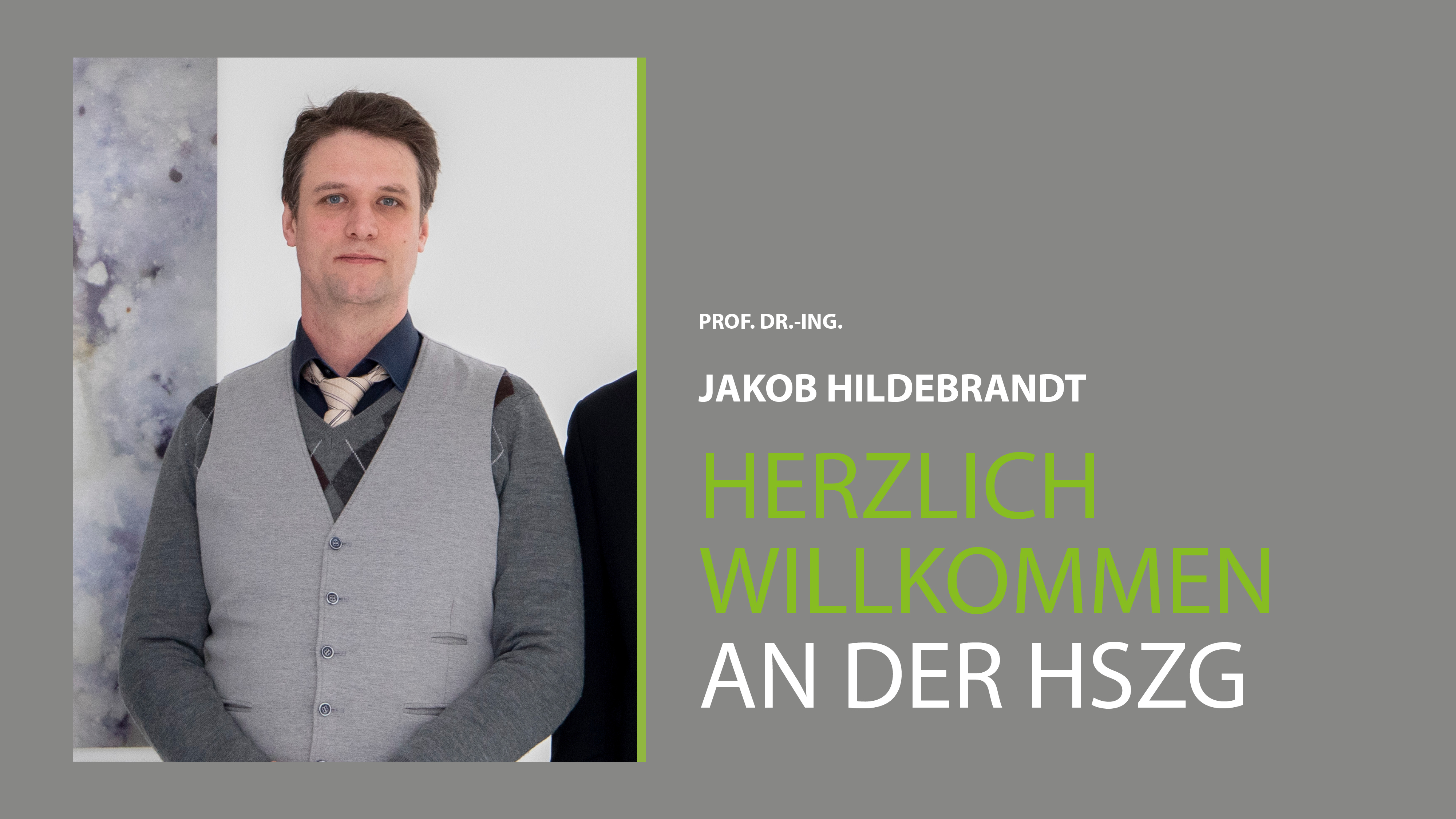
How do designing edible forest gardens, scuba diving, long-distance running, and applied mycology fit together? All of these interests and talents come together in our newly appointed professor, Dr.-Ing. Jakob Hildebrandt, born in 1984 in Werther, Westphalia. Since February 2020, he has been a professor in the Faculty of Environmental and Natural Sciences. His area of expertise at our HSZG encompasses industrial environmental protection and sustainability. “I developed a passion for ecological relationships in the landscape and technical environmental protection at a very early age,” says Hildebrandt. While preparing for his Abitur, he took Environmental Sciences as a subject; the now 35-year-old completed his alternative military service in landscape conservation. He earned his bachelor’s degree in Environmental Engineering as part of the International Environmental Engineering degree programme at the University of Applied Sciences in Bremen. While his bachelor’s program had a focus on process engineering, his master’s program in Energy and Material Flow Management at the University of Applied Sciences in Trier focused more on management and Engineering Management.
After completing his Bachelor’s degree, Hildebrandt gained what he describes as “down-to-earth practical experience” at the lower-level environmental protection agency of the City of Cologne. From 2011 to 2013, he worked in this major city as a technical staff member in operational monitoring related to waste, water, and air pollution control, and was responsible for more than a hundred companies that, among other things, work with highly volatile chlorinated hydrocarbon solvents. From this government position, Jakob Hildebrandt then moved to the Helmholtz Center for Environmental Research in Leipzig in 2013. As a doctoral candidate and research associate, he conducted research in the Department of Bioenergy, focusing on the material use of biomass, on the topic “Sustainability Index for the Assessment of Value Chains in the Central German Bioeconomy Leading-Edge Cluster.”
Living with renewable energies and the bioeconomy means learning to live with and deal with system change and fluctuations. Structural change offers us a great opportunity to do more than just repeat this as a mantra. Rather, it provides us with the task and opportunity to establish a common innovation ethos together with society and the economy. This will help us to deal with fluctuations in a resilient manner, to create knowledge capital and added value even from supposed scarcities and to develop completely new opportunities for the future of Lausitz in renaturation ecology and the development of highly innovative business ecosystems of the bioeconomy and to place them on a stable footing.
From 2016 until last year, Hildebrandt worked as an assistant plant manager and project coordinator in the recycling and humus management sector. There, he was responsible for the planning and operation of biowaste anaerobic digestion and composting facilities at the Gütersloh site in East Westphalia. In 2018, Hildebrandt successfully earned his doctoral degree as a Doctor of Engineering at the University of Leipzig with a comprehensive PhD thesis, while continuing to work in the industry. As part of his PhD thesis, he researched the assessment of the sustainability of the material use of beech wood. Both professionally and personally, Hildebrandt has a keen interest in the recycling of organic substrates. More specifically, he focuses on how an intelligent cascade utilization of biogenic waste and residual materials can be implemented across the entire system—from gardens all the way to the chemical industry. Examples of this include the recycling of materials for energy production—e.g., as biogas—or for soil improvement—e.g., as compost substrates.
Here, too, there is a connection to his training as a specialist consultant in applied mycology—the study of fungi—which he has been pursuing since 2014 and which also focuses on the bioconversion of substrates. In his personal time, he experiments with designing forest gardens—known in English as “food forest design”— —which offers a wide range of future potential, such as the use of starchy fruits as food and animal feed; these can help green cities and contribute to making inner-city landscapes “edible.” “I’m also interested in the mycological relationships in the forest,” says Hildebrandt. “How can fungi heal and help, and what effects do harmful fungi have? For example, in the context of climate change?” Perhaps Mr. Hildebrandt will soon develop project ideas with a few students for designing edible forest gardens—for example, for a private food forest in Zittau. A warm welcome to the HSZG.
- B.Sc. in “Environmental Engineering” / International Degree Programme in Environmental Technology at Bremen University of Applied Sciences
- M.Sc. in “Energy and Material Flow Management” / International Material Flow Management at Trier University of Applied Sciences
- Ph.D. with a focus on “Sustainability Monitoring and Industrial Ecology Management for Bioeconomy Regions” at the Faculty of Economics at the University of Leipzig
- (2011–2013) – Technical Clerk responsible for monitoring compliance with air pollution control, waste management, and water protection laws at the City of Cologne’s Environmental Office, Department of Air Pollution Control, Water, and Waste Management, Industry Group for Services, Chemistry, and Food
- (2013–2016) – Ph.D. candidate/research assistant in the Bioenergy Department at the Helmholtz Center for Environmental Research GmbH, Leipzig, focusing on the sustainability assessment of bioeconomy value chains within the Central German Bioeconomy Leading-Edge Cluster and the Helmholtz Portfolio Topic “Sustainable Bioeconomy”
- (2016–2019) – Deputy Plant Manager / Project Coordinator at the Eggersmann Group (a consortium of companies in the construction and recycling technology sector) at KOMPOTEC Kompostierungsanlagen GmbH, responsible for the operation and planning of biowaste composting and dry fermentation plants for the Gütersloh site (North Rhine-Westphalia)
- (2019–2020) – Postdoc/Research Associate in the Bioenergy Department at the Helmholtz Center for Environmental Research GmbH, Leipzig, focusing on the sustainability assessment of key bioeconomy technologies
Education in the following fields
- Environmental Law
- Production-Integrated Environmental Protection (PIUS) and Industrial Ecology
- Environmentally Oriented Corporate Management
- Energy Transition Strategies (Energy Quest)
- Life Cycle Assessment, Energy and Material Flow Analysis, and Software Applications
Research in the following areas
- Multi-criteria sustainability assessment of regional circular economy and bioeconomy strategies
- Further development of waste treatment facilities into circular biorefineries
- Design and evaluation of innovative biomass utilization strategies and cascade utilization strategies (e.g., in the areas of biochar and whole-plant utilization)
- Co-creative development, support, and evaluation of industrial decarbonization technologies and pathways and municipal climate protection strategies, as well as technology coupling options between the public sector and businesses
- Evaluation of cross-company by-product utilization options in the bioeconomy and bioenergy sectors (industrial symbiosis)
2019
- Hildebrandt, J., Budzinski, M., Nitzsche, R., Weber, A., Krombholz, A., Thrän, D., Bezama, A., (2019): Assessing the technical and environmental performance of wood-based fiber laminates with lignin based phenolic resin systems
Resour. Conserv. Recycl. 141, 455 - 464 - Hildebrandt, J., O'Keeffe, S., Bezama, A., Thrän, D., (2019):
Revealing the environmental advantages of industrial symbiosis in wood-based bioeconomy networks: an assessment from a life cycle perspective
J. Ind. Ecol. 23 (4), 808 - 822
2018
- Hildebrandt, J.,(2018):
Expected demand for material use of biomass
DBFZ Annual Conference 2018: Energy & Materials from Biomass: Competitors or Partners? September 19/20, 2018
DBFZ Deutsches Biomasseforschungszentrum gemeinnützige GmbH, Leipzig, pp. 54 - 63 - Hildebrandt, J., Bezama, A., (2018):
Cross-fertilization of ideas for a more sustainable fertiliser market: The need to incubate business concepts for harnessing organic residues and fertilisers on biotechnological conversion platforms in a circular bioeconomy
Waste Manage. Res.36 (12), 1125 - 1126 - Olsson, O., Roos, A., Guisson, R., Bruce, L., Lamers, P., Hektor, B., Thrän, D., Hartley, D., Ponitka, J.,Hildebrandt, J., (2018):
Time to tear down the pyramids? A critique of cascading hierarchies as a policy tool
WileyInterdiscip. Rev. Energy Environ.7 (2), art. e279
First floor