
Energy-saving measures at the HSZG
By consistently applying energy-saving measures, all HSCG members can help reduce costs and contribute to environmental and climate protection.

Dear Colleagues,
Dear students,
We are living in very volatile times, which are reflected in particular in the developments and uncertainties in the energy sector. The cost of procuring energy has risen significantly!
Against this backdrop, special attention is being paid to energy conservation, which can be supported and promoted through the active participation of each and every individual. By consistently implementing energy-saving measures, you can not only make your personal contribution to reducing costs but also help protect the environment and combat climate change.
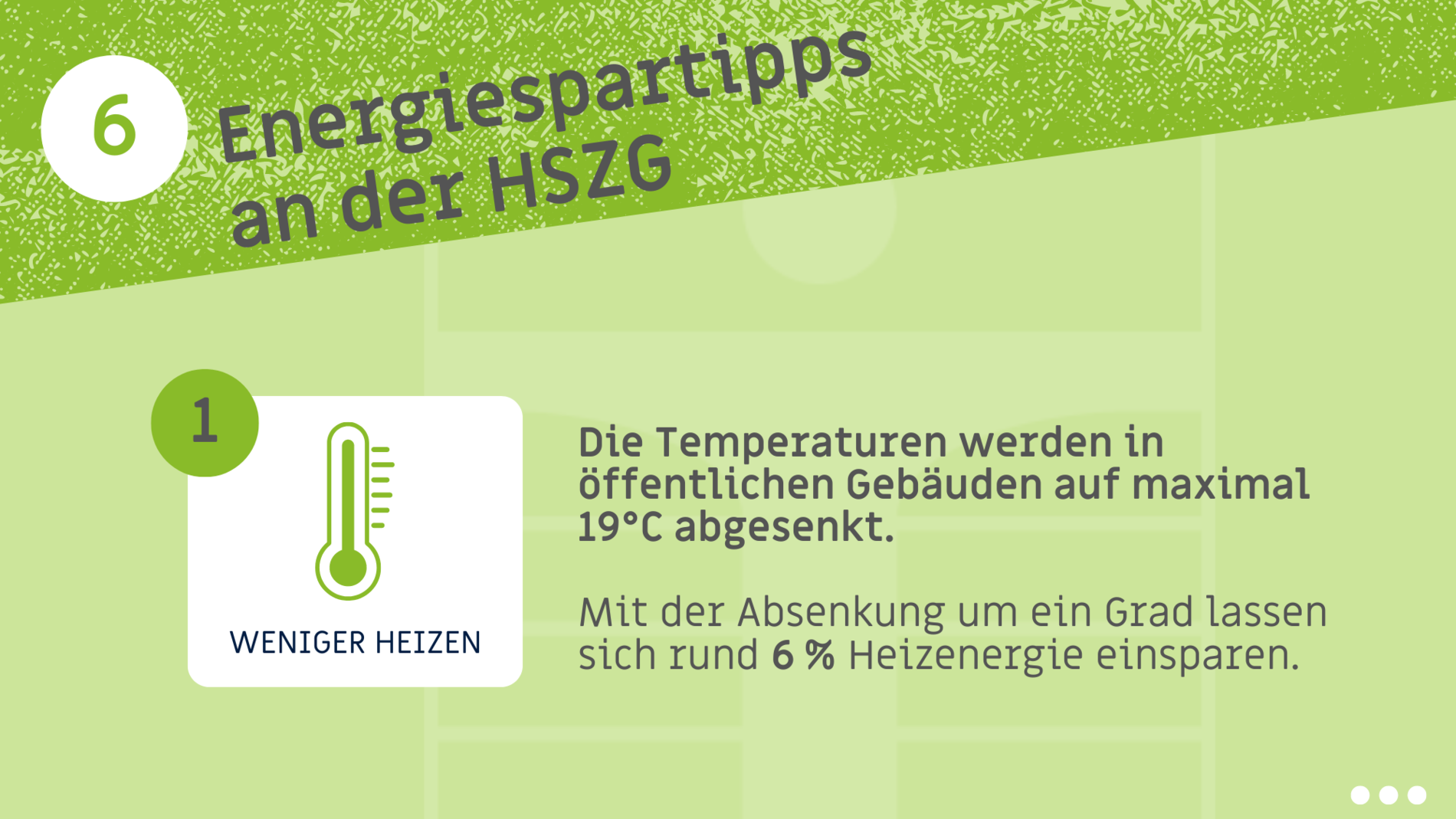
Binding regulations are contained in the Ordinance on Securing the Energy Supply through Short-Term Measures (EnSikuMaV). These include a ban on heating common areas (hallways, stairwells, etc.) as well as lowering the room temperature in classrooms and workrooms in accordance with the nature and intensity of the activities taking place there. For physically light and predominantly sedentary activities, a maximum air temperature of 19 degrees Celsius has been set.
If the building’s existing building management system allows it, the room temperature is centrally controlled or reduced by the Technical Administration & Facility Services division (DTG). In areas or rooms without central control capabilities, the temperature must be regulated by the respective user adjusting the heating thermostats accordingly. Department management will conduct random checks of the current room temperature. A target temperature of 19 degrees Celsius corresponds to a thermostat setting of 2.75 (= the third mark between 2 and 3 on the scale). In this context, the DTG will examine options for reducing the flow temperatures.
For leased properties/premises, responsibility for implementing these requirements generally lies with the respective owner/landlord or, in the case of individually controllable heating elements, with the individual user. Information is provided that the use of additional heating devices in workrooms at Zittau/Görlitz University of Applied Sciences is not permitted.
To mitigate the adverse effects of low room temperatures in classrooms and work areas and to protect the health of university members, rooms with higher air temperatures (“warm zones”) are being established in select university buildings. An overview of the rooms currently designated for this purpose can be found in Appendix 1 of the circular on the university information portal ( internal area). In order to spread out the frequency of use of these rooms for health protection purposes in the context of the “COVID-19 pandemic,” the faculties/organizational units are urged to where appropriate, make internal arrangements (e.g., by coordinating break times during or between classes / courses) regarding their use.
To conserve electrical energy , the operation of refrigerators for the purpose of cooling food for personal consumption is prohibited until further notice. Where available, decentralized drinking water heating systems, which are primarily intended for handwashing, will be shut off. In areas and rooms with mechanical ventilation systems, it must be determined to what extent a reduction in ventilation capacity or the shutdown of the system is possible. Health and safety concerns in the context of the COVID-19 pandemic will be taken into account. To this end, the organizational units must, in particular, identify areas and rooms that will not be used for an extended period (> 1 week) and, if necessary, report them to DTG.
Safety and occupational health aspects are to be considered a priority in this context.
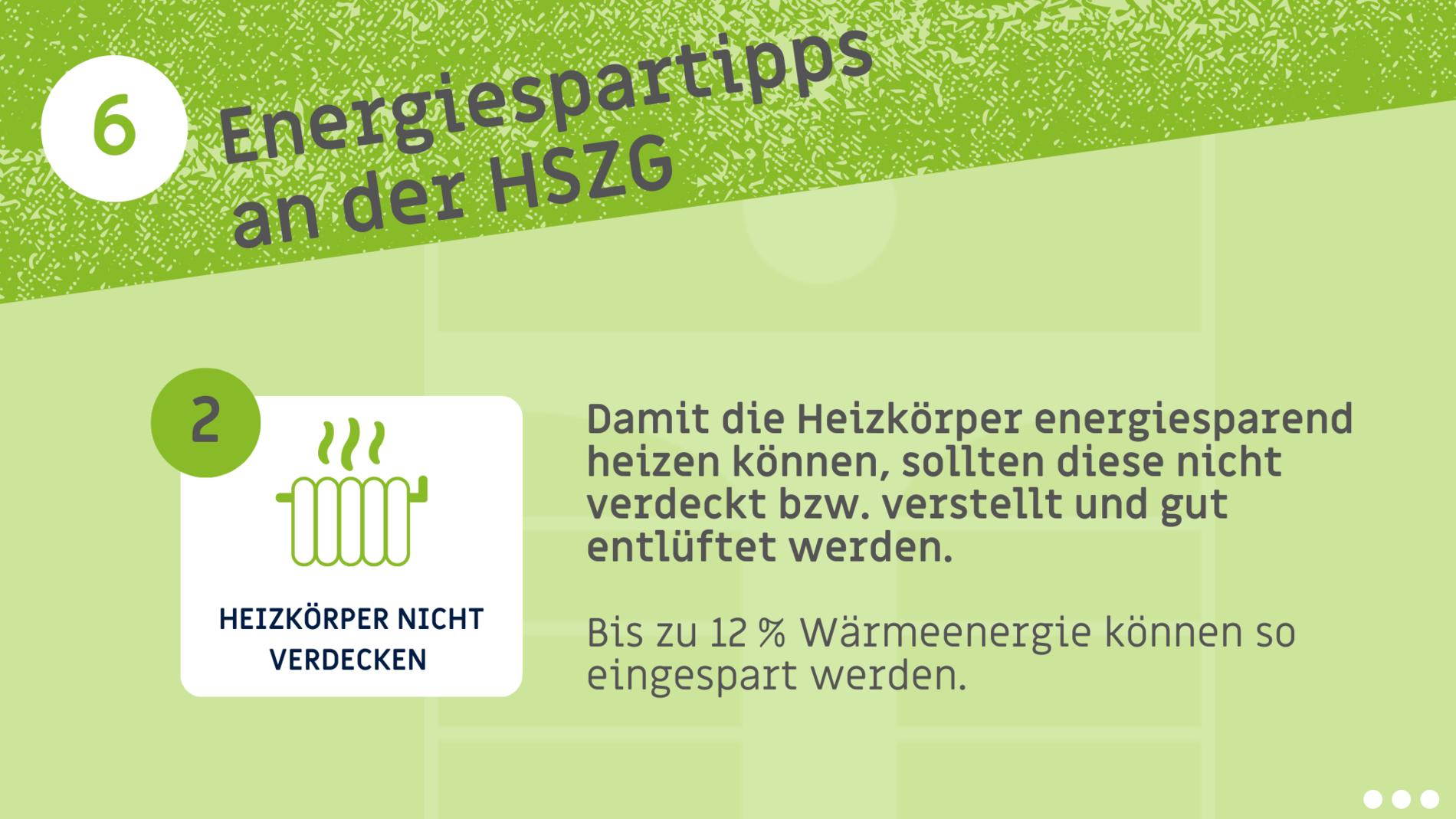
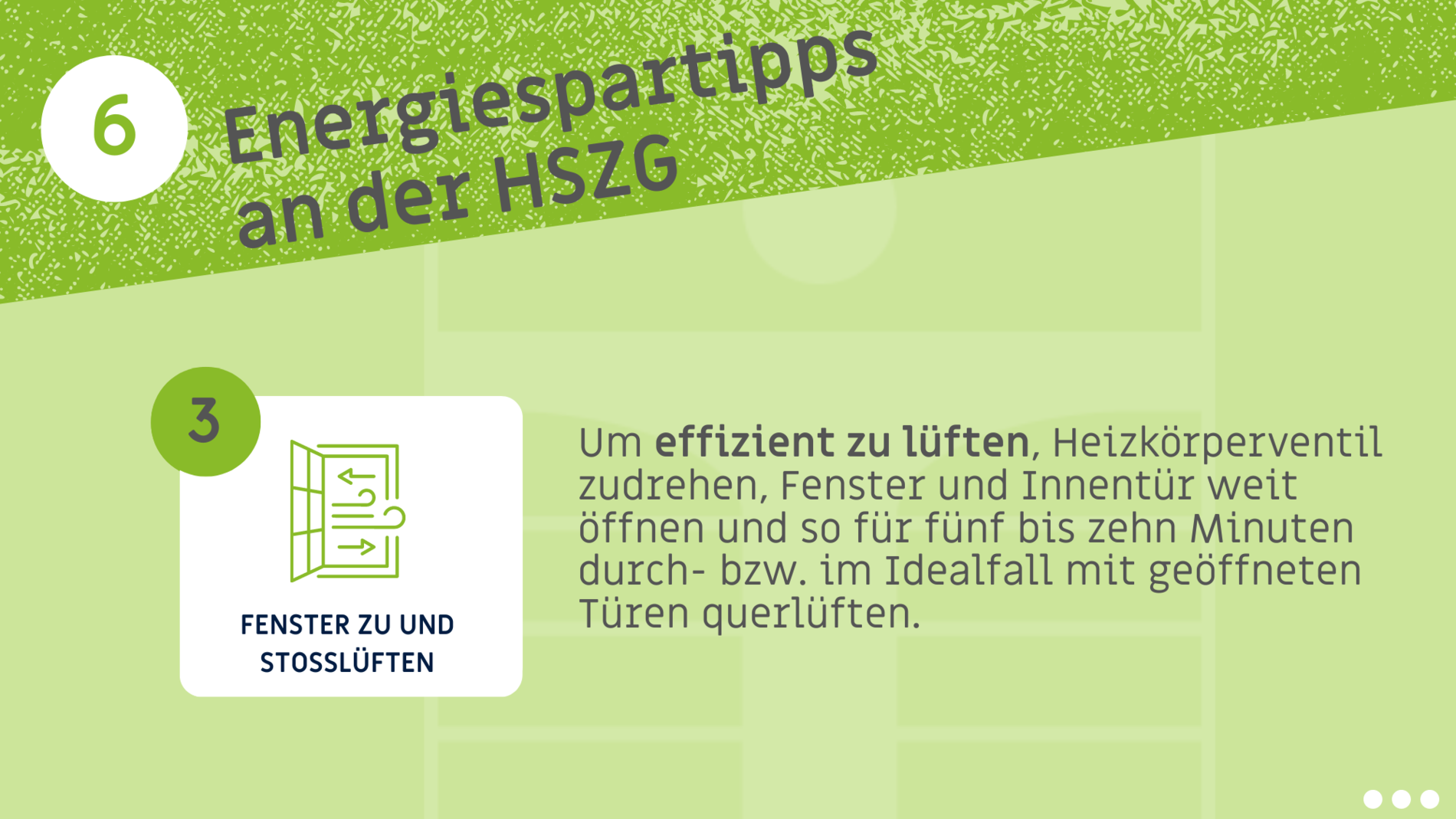
Further background information and simple tips that can help save energy are provided below.
Thank you for your understanding and your active participation in overcoming this crisis.
Karin Hollstein, Diplom-Juristin



1st floor