
Studying without borders
Working Across Borders: virtual intercultural project successfully completed for the 3rd time. Students of the HSZG learn and work in intercultural teams, taking into account the UN Sustainable Development Goals.
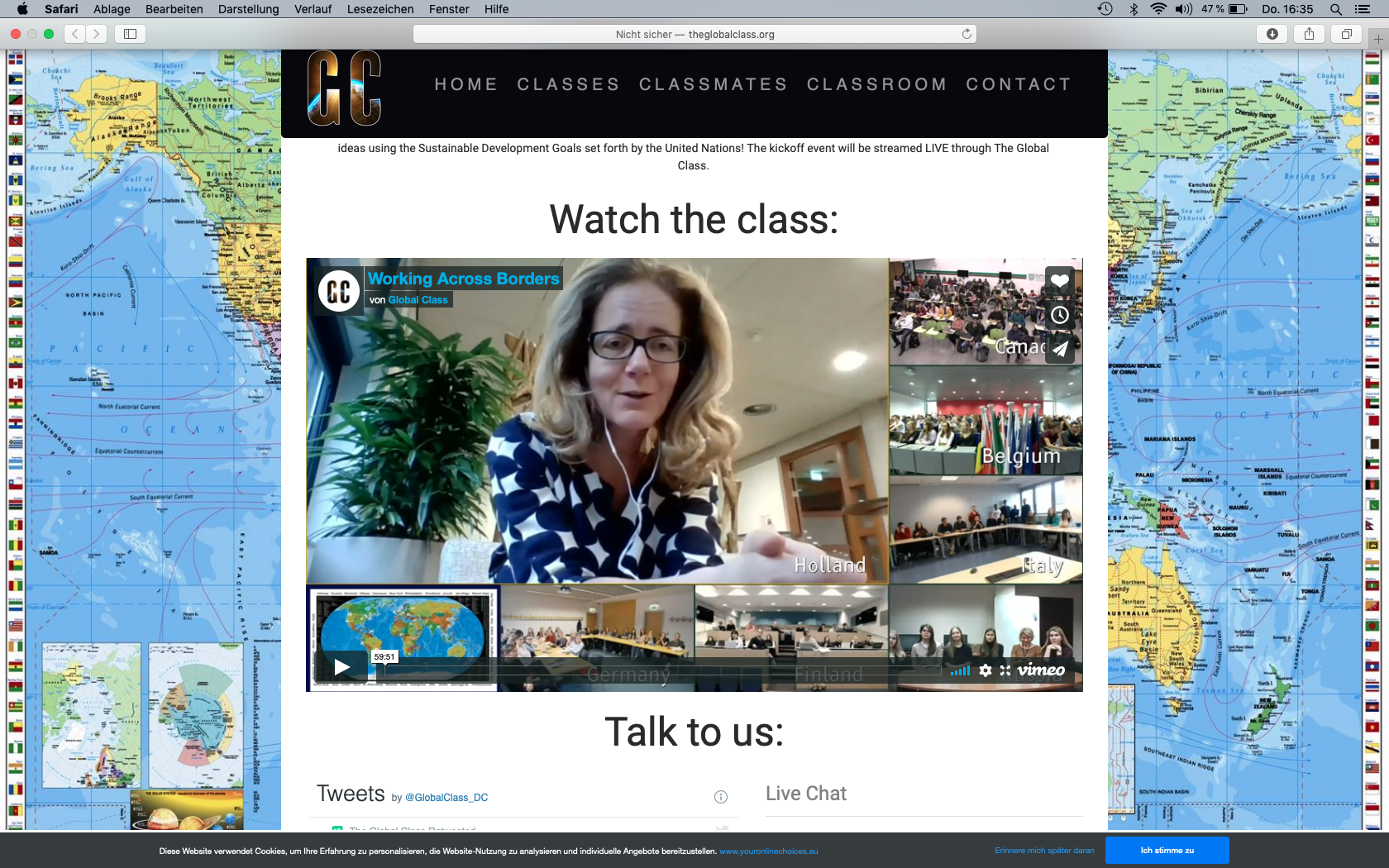
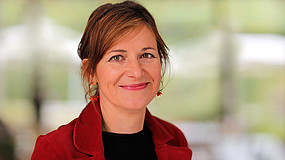
The “Working Across Borders” project took place last winter semester. This virtual intercultural project is a collaboration with universities in seven different countries; this year, it involved universities in Belgium, Finland, Russia, Italy, the U.S., and Canada. At our university, the project is led by Prof. Martina Zschocke from the Faculty of Managerial and Cultural Studies. This was the third time the project has been held.
This year, students from the WTb17 class participated. The in-person instruction in the “Interculturality” module was supplemented with virtual work components as part of a blended learning and working concept. The students experienced the opportunities and challenges of intercultural projects: they learned and worked together globally, thereby completing assignments in intercultural competence and business while taking into account the UN Sustainable Development Goals (SDGs).
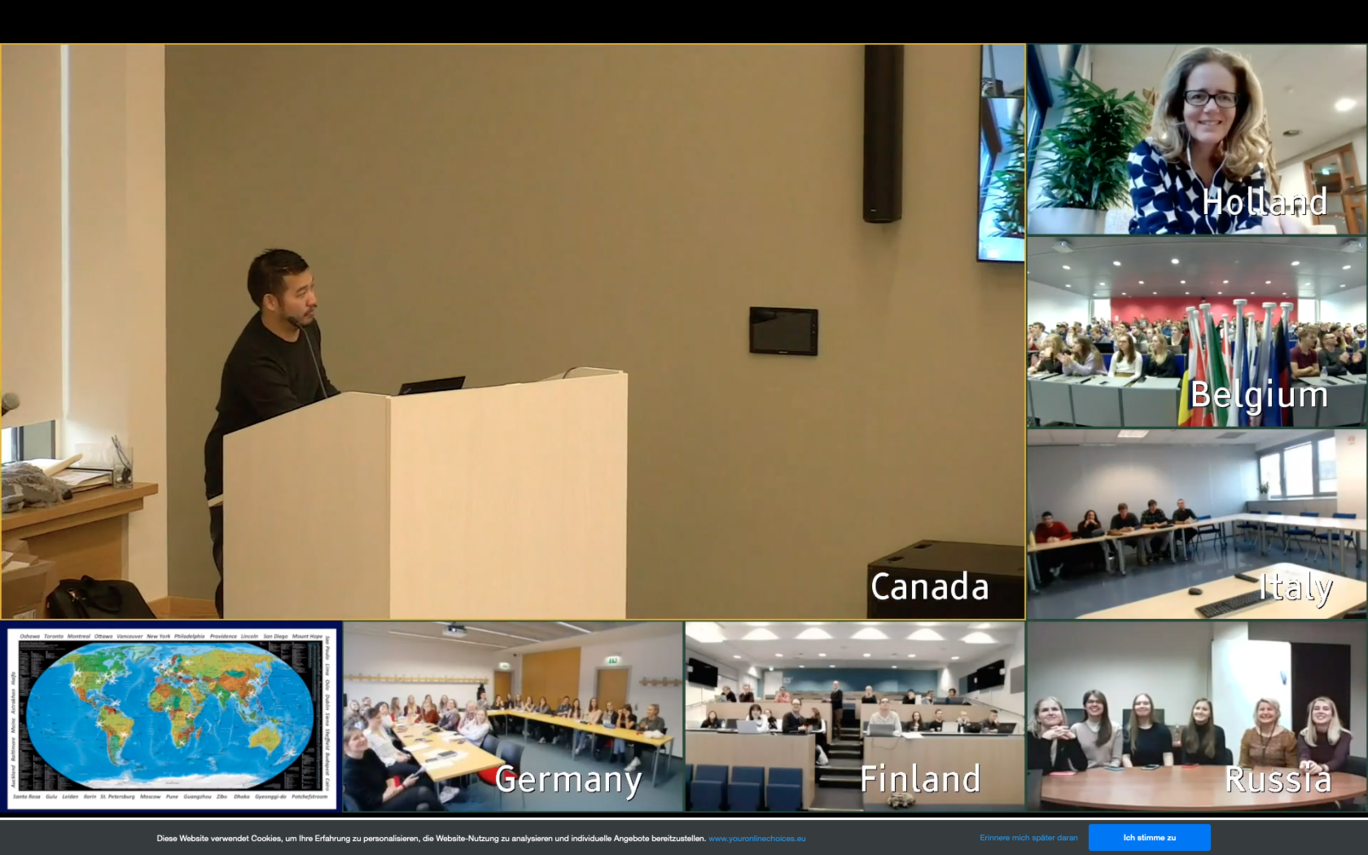
Intercultural teams were formed with students from different countries, who worked together on projects. Beforehand, the teams got to know each other and introduced their cultures to one another, including their favorite words in their respective languages and the view from their bedroom windows. They then made short films about their teams. This was followed by a kick-off meeting, which was held simultaneously by all participants in every country and broadcast live. All participating universities and the project partner, Interface, introduced themselves; afterward, the participants shared their hopes and expectations for the project.
The goal was to combine real-world international communication and teamwork with getting to know one another, building trust, and fostering engagement in a joint project. To this end, in addition to lectures on intercultural competence, participants were to practice acting and analyzing in an intercultural context. The students were to work together as business consultants, taking the UN Sustainable Development Goals (SDGs) into account; the term “business consultant” is good to be translated into German as “Unternehmensberater*in.” To this end, each team was assigned a country to analyze, for example, using Hofstede’s cultural dimensions or the PESTEL analysis. The students were tasked with identifying which sustainability goals needed to be implemented most urgently in which regions around the world. Additional objectives included developing innovation skills and expanding digital competencies through the use of platforms such as Toledo and Microsoft Teams. While working on the assignments, on-site mentoring was provided by Prof. Zschocke, along with additional digital mentoring for the individual teams, digital feedback on the individual assignments, and a final virtual evaluation of the team members.
The partner universities have decided to repeat the project this year and plan to expand it to include three to four new partner universities. Prof. Zschocke is currently in negotiations with the University of Graz, KU Leuven, and a university in Slovenia. Additionally, discussions are underway with institutions in Ecuador and Japan.
-
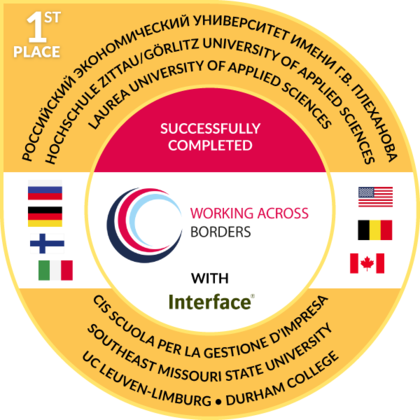
"Working Across Borders" Badge – awarded to all students who successfully participated in the International Intercultural Project (with a list of all partner universities involved in the project)
-
The project was co-financed last year and this year by funds from the SMWK's Digital Fellowship Program.
2nd upper floor