
Studying with life experience
Student Sabine Bublitz explains why Social Work is also a good field for those starting their studies later in life.
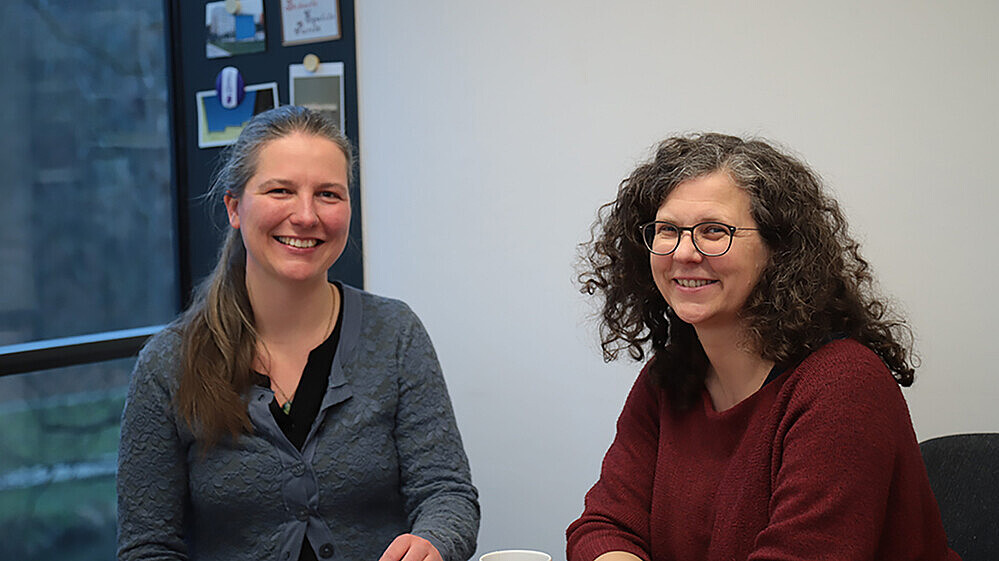
More and more people are choosing to change career paths at some point in their lives—often after turning 30. Two students at Zittau/Görlitz University of Applied Sciences show how studying social work can be a meaningful and fulfilling next step, even after an initial career—whether shaped by work or family.
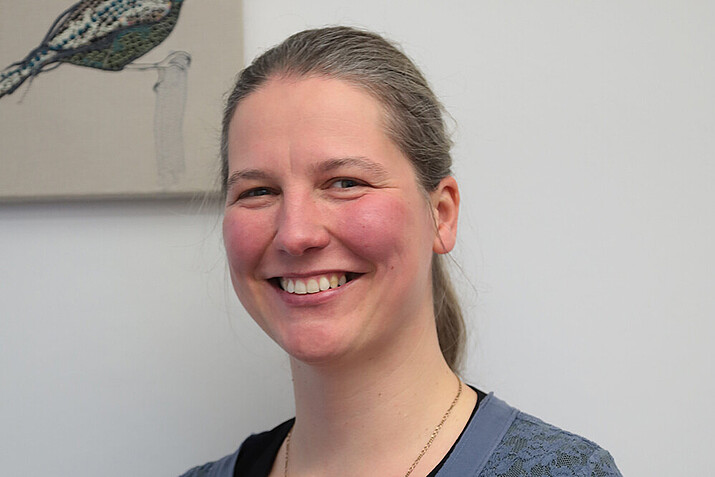
Sabine Bublitz and Andreas Baensch made a conscious decision to study at the university—as a form of personal professional development, in response to societal challenges, and with the desire to help others professionally in the future.
At the age of 47, Andreas Baensch enrolled in the Social Work program at HSZG. As an instructor, he had already been working with young people, and later, during the COVID-19 pandemic, he also provided educational support at an elementary school. His desire to pursue this professionally grew, and the oldest of his four children encouraged him, as she, too, had studied Social Work.
Sabine Bublitz’s (39) path to her studies, on the other hand, unfolded as follows: After graduating from high school, she first studied German language and literature at the University of Leipzig until family “got in the way.” With four children by then and her husband, a Protestant pastor, she moved to Upper Lusatia. Based on recommendations from alumni, the decision was made: Here in Görlitz, she could balance her studies with family life.
In this interview, Sabine Bublitz talks about her decision to go back to school in the middle of her adult life.
What were you doing professionally or in your personal life before studying Social Work?
After graduating from high school in Thuringia in 2004, I immediately began studying for teacher training at the University of Leipzig. Shortly after that, I met my current husband and had my first child. After taking a one-year break, I continued my studies in Halle/Saale. After having my second son, I no longer wanted to commute every day, so I decided to continue studying German language and literature for my Bachelor’s degree in Leipzig. It was a nice plan, but unfortunately it didn’t quite fit into my life… Shortly before I finished my Bachelor’s degree, my husband, our two children, and I—pregnant with our third child—moved to Upper Lusatia. At the time, my husband had completed his theology studies with the Second Church Examination and was now assigned his first position: in Bischdorf near Löbau.
The wide range of responsibilities, family obligations, and the physical distance ultimately meant that I didn’t complete my degree at that time. At first, I struggled with this decision, but I quickly realized that I could put my skills and talents to good use in the parish. I took over the church choir, learned to play the organ, and became a lector. At the same time, I led the children’s and youth programs for many years. And along the way, I had a fourth child. We really enjoyed that time as a family. Today, I’m very glad I made that decision, because it allowed me to truly navigate everyday life together with my husband, spend a lot of time with him, learn new things, and try my hand at a variety of activities.
Was there a specific moment or trigger that led you to decide, “I’m going back to school”?
Yes! Lots of them! I really wanted to earn a professional degree because I’d experienced what it’s like not to have one. You can use your knowledge, but you don’t get paid more than pocket money for it. I had made it a point to be there to support all my children through their transition to secondary school. Once my youngest son had made it through, I submitted an application. I’ve always enjoyed studying and was sure my family would be okay with me being away from home more often. In addition, in my day-to-day life as a pastor’s wife, I repeatedly ran up against limits that I would have liked to “underpin” with more professional expertise. These included complex conversations or situations where I needed to set boundaries with someone in need of help.
Why Social Work, specifically? What particularly appealed to you about this degree programme? And what about the University of Applied Sciences Zittau/Görlitz?
“Social Work” didn’t really even occur to me as a possible field of study before. I simply wasn’t familiar with the profession. Today I know that I actually had contact with social workers during my youth—I just didn’t think about it at the time. I find the profession very versatile: on the one hand, you can work in a wide variety of practical settings; on the other hand, the degree program also has a component focused on the Social Sciences that really appeals to me. I have several HSZG graduates among my friends who told me about the degree programme; they were also older when they started their studies. They especially praised how well the degree programme balances academics and family life. The Görlitz campus is good to reach from where I live; Dresden would have been too far for me.
How did you find the transition into your studies—especially compared to your younger classmates?
I’ve always really enjoyed studying. I enjoy listening, discussing, reading academic literature, and writing papers. I think I’m also good at organizing myself. Much better than I was able to in my early 20s. I make better use of my time—precisely because it’s more limited. Of course, there are also limitations: I don’t take part in the typical student life with parties and cultural events. But that doesn’t bother me much—I’ve already experienced all of that… I find it very enriching to interact with young, engaged people from this region. I’m very interested in their views and thoughts on future prospects, political developments, and, above all, how to deal with diversity.
What are the biggest challenges for you—and what are the greatest rewards?
The biggest challenge is balancing my daily family life, my volunteer work, and my free time with the demands of my studies. I find the interactions with my fellow students—as well as with the faculty—to be very rewarding. I really enjoy engaging with academic literature and discussing it with others. I’m grateful for the opportunity to learn. I have the time for it, I can afford it, and it allows me to broaden my horizons and advance my career.
How do you experience your interactions with the faculty and the university in general? Do you feel that your life path is acknowledged?
For the most part, yes. I’ve been able to discuss many things and have generally been met with understanding. Last semester, I had difficulties with the exam dates. My husband has very fixed vacation schedules, and our summer vacation with the children had been planned long in advance (even before I started my studies). I couldn’t simply take my exams during the make-up exam period because they were group examinations. I would have liked there to be a set procedure for such cases (similar to early registration for courses). As it was, I had to go around asking for favors everywhere, and on top of my daily responsibilities and exam preparation, I had even more organizational work to deal with. A change in perspective is needed here. Who is the “typical student”? In the end, a few very dedicated instructors went out of their way to help me. I’d like to take this opportunity to thank them once again.
What would you like to see in terms of visibility for people who start (or resume) their studies later in life?
I really just hope that within the university system, such a life path isn’t perceived as problematic, but is treated as the norm. After all, there are also younger students who, for example, take on caregiving responsibilities for family members. And this interview is a great opportunity to draw attention to that. So far, I’ve only received support from society for my decision.
What goals or dreams do you associate with graduating?
I want to earn a professional degree. That’s the first thing—I can imagine working in many different fields. Right now, I’m doing an internship with social services at the Saxon Hospital in Großschweidnitz in an addiction treatment unit. It’s really good there. However, I’m not committing to where I’ll end up later. I have many areas of interest. The only things I don’t want to do exclusively are working with young children and working the night shift. I could also imagine staying in academia. Of course, that also depends on my academic success. But so far, I’m very satisfied with that.
What would you say to people who are considering going back to school at 40 or 50—but are still hesitating?
I’d say: If you’re determined and hardworking, then go for it. The younger students gave me recognition right away. I’m not shunned. Especially in the social sector, there are people who are understanding. I’m also often asked for advice or for my perspective on things. At first, I was worried that I wouldn’t be able to keep up with certain technical innovations. That turned out to be a misjudgment. On the contrary, I’m doing very good. Of course, it’s also a financial issue. I’m in an extremely privileged position—I don’t need financial aid like BAföG (German financial aid for students) or similar programs. But ultimately, a college education can also lay the groundwork for working in a good-paying position later on, with more creative freedom and responsibility. My husband supports me tremendously every day. He participates fully in family life without compromise. It’s absolutely essential to discuss these things beforehand. The University of Zittau/Görlitz is definitely a place where everyone is welcome—no matter how old they are.
2nd upper floor