
Stress management and enjoyment of learning
Culture and management students develop methods for coping with stress and strengthening the joy of learning in primary school children.
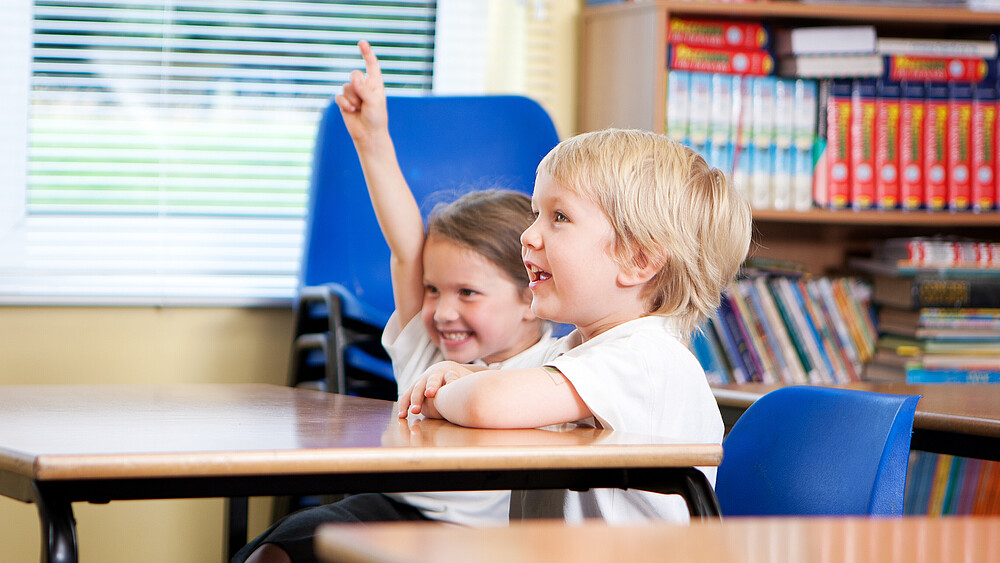
Around the world, even elementary school-aged children are increasingly exhibiting symptoms of psychological stress and so-called “mental health disorders” (anxiety, self-doubt, depression, etc.). The causes of this include, among other things, sensory overload from digital media as well as the general crises of our time.
However, these challenges to young people’s learning and lives are not inevitable. They call for effective strategies to address them, thereby equipping students with the skills of emotional resilience and self-regulation. This can sustainably strengthen not only their joy of life and learning but also their learning abilities and learning outcomes. This is the conclusion of a study conducted by an Australian university involving over 700 children.
As part of this study, a practical methodology was also developed to teach elementary school children the skills of emotional self-regulation in just 10 weeks through 10-minute daily exercises.
Through a collaboration between the “Peaceful Educational Revolution” real-world laboratory, the Techniker Krankenkasse, and a research seminar in the culture and management degree programme at the Zittau/Görlitz University of Applied Sciences, this method was specifically adapted so that it can be easily implemented in everyday school life by dedicated teachers or learning facilitators.
The method comprises the following 5 phases of 2 weeks each:
Phase 1: Relaxation breathing (weeks 1 and 2): Children learn to breathe slower, deeper and more relaxed, while becoming aware of body sensations and regulating their nervous system.
Phase 2: Affirmations (weeks 3 and 4): Children learn to use positive autosuggestions to boost their self-confidence and practice kindness towards themselves and others.
Phase 3: Heart-centered coherence (weeks 5 and 6): Children learn to become aware of their emotions and feel higher emotions such as gratitude, kindness and love.
Phase 4: Shifting focus (weeks 6 and 7): Children learn to keep an open mind, allowing them to remain generally open-minded and curious.
Phase 5: Change Game (weeks 9 and 10): In this game, children learn how to deal with difficult emotions, as well as the ability to change them in themselves.
These five phases are presented in more detailhere. Interested parties are welcome to simply use the detailed instructions as they are or adapt them for themselves. When using the method, it is important to generally create a pleasant and relaxed atmosphere.
To make it easier to use, five short instructional audios have been produced. The links can be found in the instructions for the individual phases.
The team would greatly appreciate any specific case studies or information regarding possible variations. Please contact Prof. Maik Hosang regarding this matter.

2nd upper floor