
Stability meets coolness
Planning, constructing and designing a scooter from start to finish? With a 3D printed frame, environmentally friendly hydrogen drive and autonomous driving?
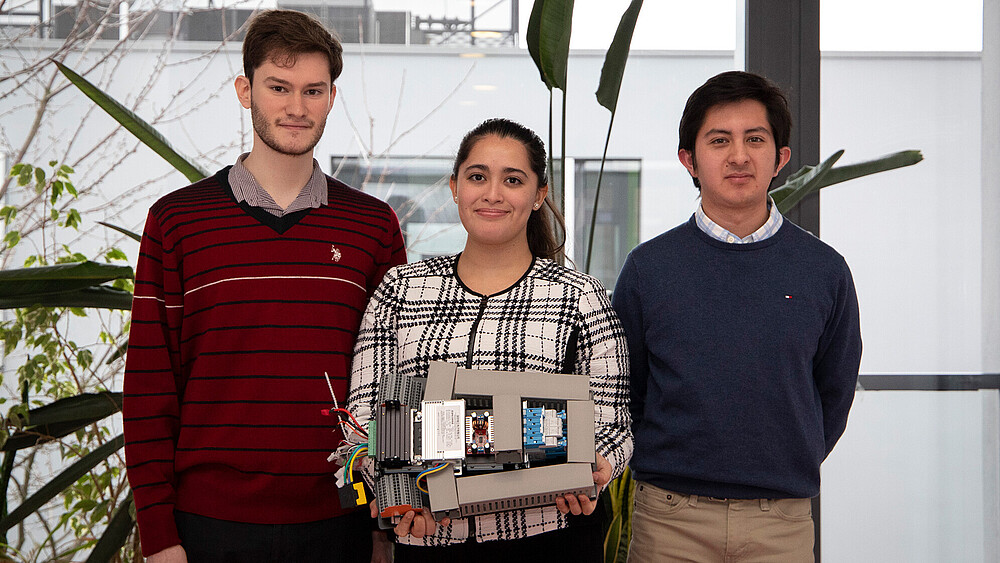
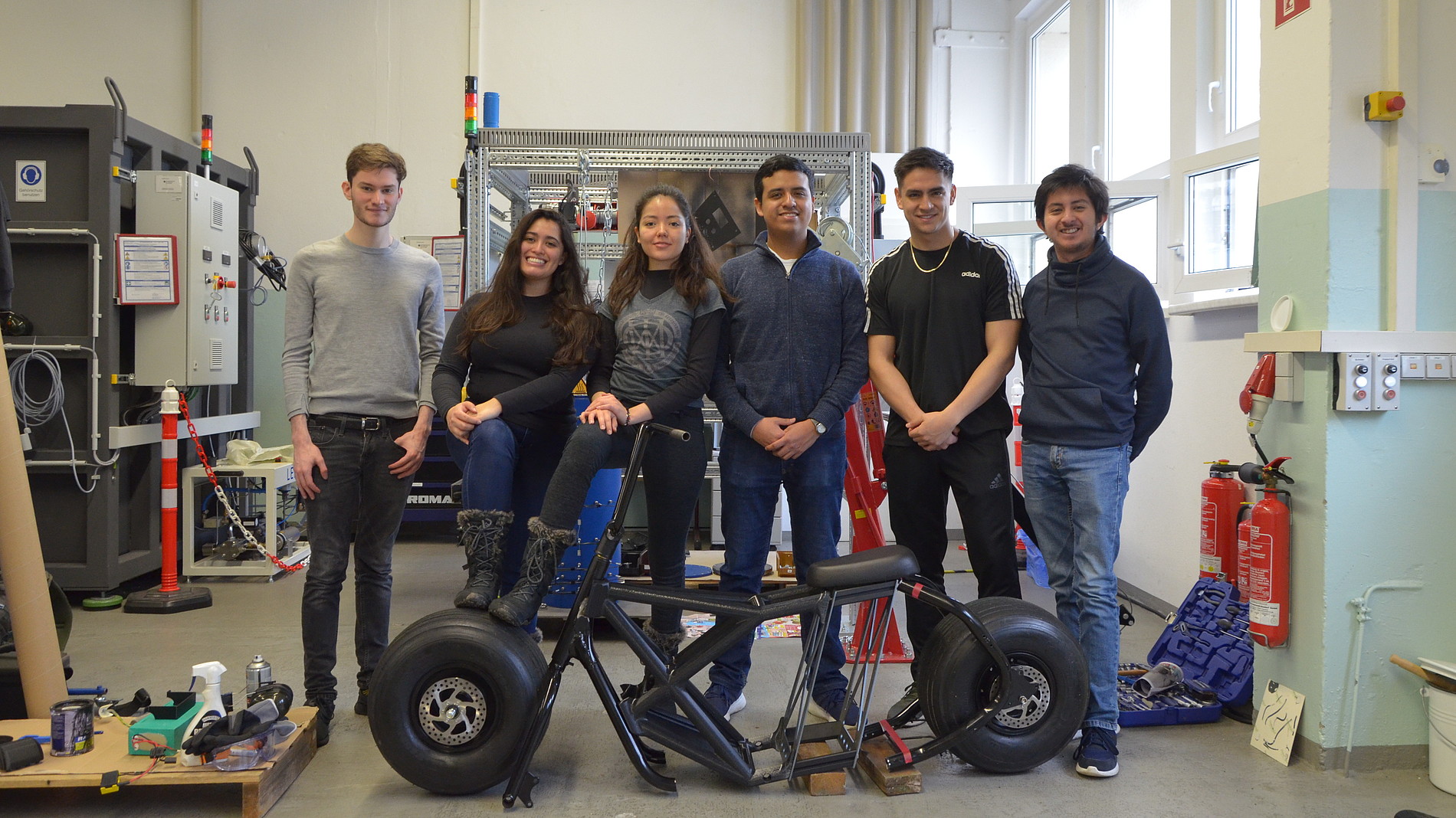
No problem for Fanny Mancilla, Luis Nava, Emilio Pizano, Jacob Mérida, Brenda San German, and David Herrera, exchange students from the German-Mexican university “Instituto Tecnológico de Monterrey.” They had one semester to build their hydrogen-powered scooter, from the initial sketches to the finished product.
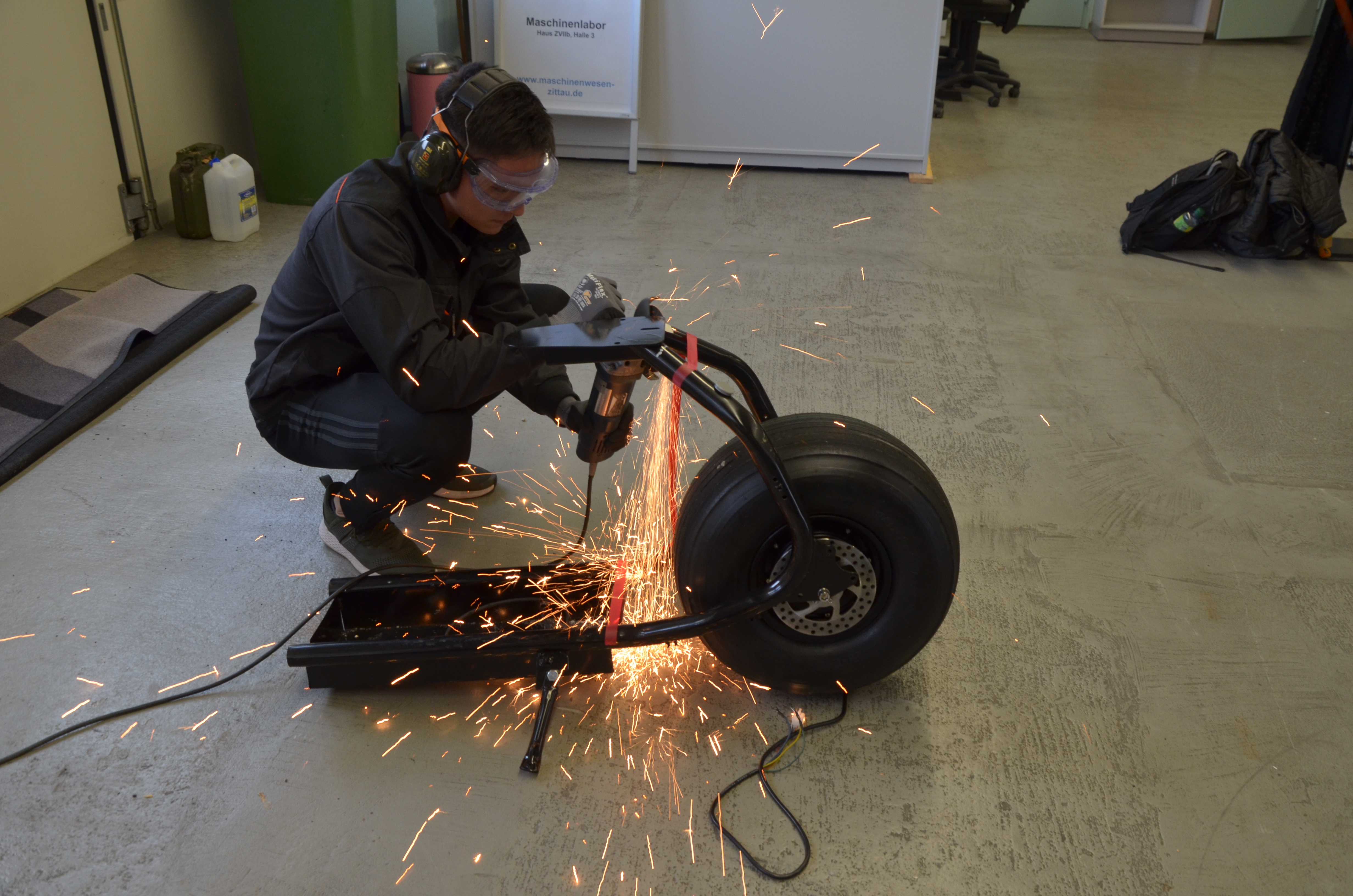
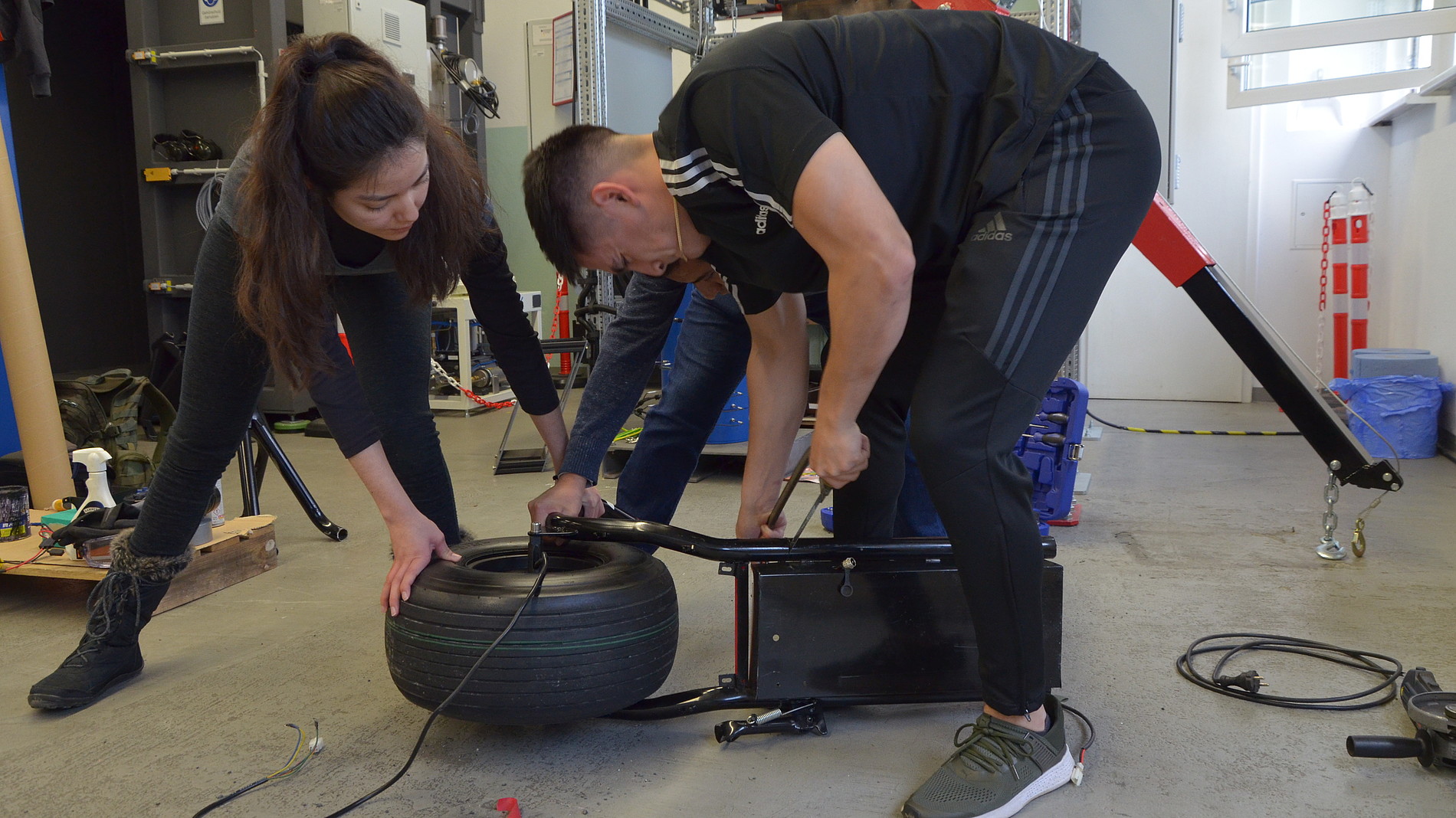
To do this, they had to divide the work into two teams. While “Team Mechanics” focused on “developing design variants and the mechanical construction of a frame for the hydrogen scooter,” “Team Electronics” worked on designing the motherboard and programming the autonomous driving system. The students were not competing against one another; on the contrary, one of the main focuses was on close coordination between the two areas to ultimately build a fully functional scooter. This was good preparation for working in regional and international companies, where employers increasingly prioritize teamwork and the ability to collaborate with others to solve complex tasks when selecting employees. Added to this was the challenging mix of languages, juggling between Spanish, German, and English.
The development of the scooter combines the application of future technologies with traditional engineering disciplines, such as lightweight construction, additive manufacturing (3D printing), design, simulation, and programming. After all, the scooter also features the sensors and mechanisms necessary for autonomous driving.
From traditional literature reviews and project management—including scheduling—all the way to implementing the project, this highly complex task demanded a great deal from the students. Naturally, the top priority in the design had to be the stability and safety of the users, although many other variables besides weight had to be taken into account. But how do you achieve stability? Team Mechanics reports on the brilliant idea they had during their research: “Triangles are the basis of many bridge designs; they ensure high stability and load-bearing capacity. They are the fundamental concept behind our design. We didn’t just want to design any old frame—we wanted to create something extraordinary.”
Hydrogen-Powered Vehicles on the Roads?
Hardly any automaker has yet to try its hand at designing a production-ready car powered by this alternative fuel. But it’s not the engineers at their desks who doubt its feasibility, because the principle of generating electricity from hydrogen—which is then used to power the electric motor—is good at being researched. Gaseous hydrogen is refueled, then reacts with air in the fuel cell, thereby producing electrical energy. Only climate-neutral water vapor is emitted into the atmosphere from the exhaust.
Another problem is currently preventing this technology from breaking through. Large corporations are unsure of its success; for example, specialized high-pressure tanks and refueling stations make investing in a comprehensive network of refueling stations unprofitable for businesses.
Why did the faculty advisors at the university and the Fraunhofer Center for Plastics Technology in Upper Lusatia choose this fuel? “The federal government has set ambitious goals with its hydrogen strategy. The further development of this type of energy generation will be funded with two billion euros through 2025. The education of our students is closely aligned with current developments,” says Dr. Sebastian Schmidt from the Institute for Process Engineering, Process Automation, and Measurement Technology (IPM). Together with Sven Meißner (Fraunhofer IWU) and Sebastian Reinicke (IPM), he supervised the students from Mexico.
Knowledge of alternative propulsion technologies and their application is also in high demand in the students’ home country. For example, Mexico City—with 22 million residents, the most populous metropolis in North America—has just set a goal of reducing greenhouse gas emissions by 30% over the next five years. Promoting alternative energy sources to gasoline and diesel is also part of the package of measures proposed by Mayor Claudia Sheinbaum, a trained climate researcher.
The university and Fraunhofer will present the hydrogen-powered scooter for the first time at the Hannover Messe in April of this year. The fair’s motto, “Home of Industrial Pioneers,” couldn’t be a better fit.
Text: Kristin Sprechert (Saxony5)
Your contact: Dipl.-Ing. Sven Meißner (IWU)
HSZG is one of the 30 partner universities in the Mexican-German University Cooperation (MDHK) under the umbrella of the German University Consortium for International Cooperation (DHIK). With over 25 campuses, the Tecnológico de Monterrey is one of the largest universities in Mexico. Since the winter semester of 2018, students from Mexico have been coming to our university to earn a dual degree in the automation and mechatronics degree programme. Over the course of one year, the students attend classes / courses, complete an internship at a German company, and then defend their Bachelor thesis.
Students in the Faculty of Electrical Engineering and Computer Science — specifically those in the automation and mechatronics degree programme —have the opportunity to participate in the Mexican-German university cooperation program.
If interested, our students can contact Prof. Uwe Schmidt.
Further information about the program can be found here.
Upper floor