
An open and honest exchange
The self-organized colloquium of doctoral students has been taking place since 2017. GAT employee Bill Pottharst successfully defended his dissertation.

Since 2017, the self-organized doctoral colloquium at the Faculty of Social Sciences has been held regularly. The doctoral colloquium was first convened by Prof. Dr. habil. Rudolf Schmitt (Ph.D. Coordinator, Faculty of Social Sciences) and Prof. Dr. Andreas Hoff (Director of the GAT Institute) and is primarily aimed at doctoral students in the social sciences and humanities.
In 2018, a so-called “rotation principle” was introduced, which internally regulates the handover of organizational responsibility after a certain number of sessions have been held. This gives every doctoral candidate the opportunity to develop their own organizational and facilitation skills, while at the same time ensuring that the responsibility and organizational effort—which inevitably arise when planning such an event format—are distributed evenly among all participants. Since only online formats have been possible since the pandemic, the group has evolved via BigBlueButton since 2020 into a fully autonomous organizational unit within the HSZG, whose profile still needs to be further refined as the right for universities in Saxony to grant doctoral degrees draws ever closer.
From the very beginning, an open approach to one another has prevailed within PromKoll —an attitude that cannot be taken for granted. After all, it’s also about empowering and supporting one another, and building resilience against criticism to the extent that it can be taken seriously from a scholarly perspective without being overly demoralizing. To this end, it is important to regularly exchange ideas with other doctoral candidates and to speak honestly and respectfully about one’s own research—and sometimes even about one’s own failures.
A few days before the colloquium, each doctoral candidate has the opportunity to submit their own work and drafts, which are reviewed by everyone and discussed together. The meetings take place approximately every three weeks. A culture of polite yet assertive communication is fostered, designed to spur progress on everyone’s PhD thesis. Initial joint meetings with some doctoral candidates from Zittau have also already taken place. Since 2021, the Prorectorate for Research has been organizing a university-wide doctoral candidate meeting. Perhaps one day it will even be possible to establish a kind of doctoral student representative body based on the existing structures, thereby institutionally anchoring the organized academic mid-level faculty in university policy (e.g., through elections).
But there is still a long way to go before that happens—just as there is regarding the right of universities of applied sciences in Saxony to award doctoral degrees.
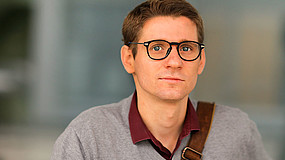
Now that the first participant in our colloquium has successfully defended his PhD thesis as part of the cooperative doctoral program between the University of Vechta and Zittau/Görlitz University of Applied Sciences, we congratulate Bill Pottharst (GAT) on this achievement. In May, he was able to publicly present the results of his dissertation for the first time at the 22nd Conference for Early-Career Researchers at the Brandenburg University of Applied Sciences and won the award for the good presentation.
The next doctoral colloquium will take place on 19.7.2022 from 15:00 to 16:30 in G I, room 0.26 in Görlitz. We are always happy to welcome new participants!
If you have any questions about participation, please contact the current organizer Sinziana.Schoenfelder(at)hszg.de.
2nd floor