
Reinhart Koselleck's 100th birthday
Prorector Kollmorgen Honors an Outstanding Historian and University Professor from Görlitz
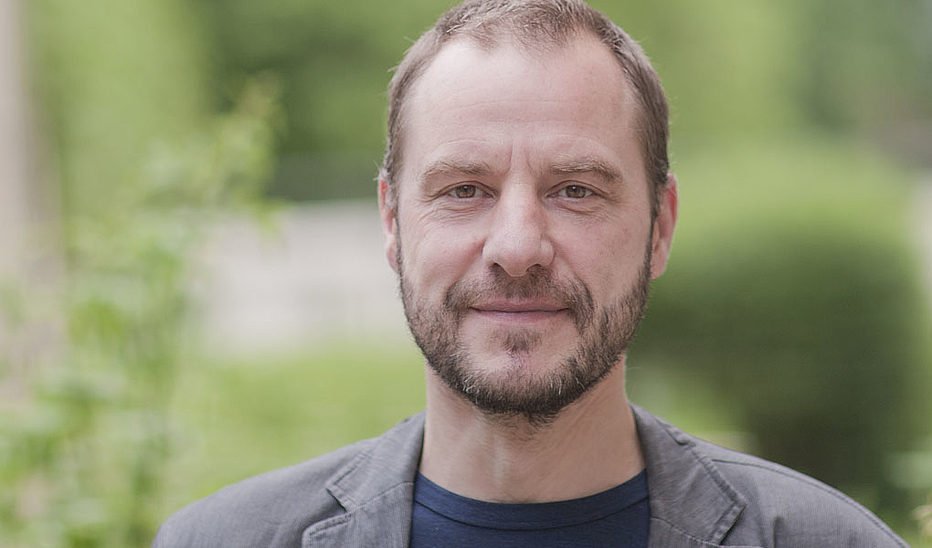
The 100th birthday of Reinhart Koselleck, a historian and university professor originally from Görlitz, which was celebrated in April, was marked not only by academic institutions but also by the arts and culture sections of Germany’s major daily and weekly newspapers. In the following article, Prof. Raj Kollmorgen, Professor of Sociology/management of social change and Prorector for research, explains why this is the case and why Koselleck’s work deserves greater attention.
The Herrnhut Academy for Political and Cultural Education is hosting an international conference titled “Reinhart Koselleck and Contemporary History” from May 5–7, 2023, in Herrnhut (Komenský Guest and Conference House, Comeniusstraße 8+10, Herrnhut).
Further information and registration details can be found here.
Founded in 1992, our university—an academic institution dedicated to education and research, with its central historical roots in the Zittau University of Technology and a focus on energy technology—honors and pays tribute above all to university professors in this subject area (which are often referred to today as STEM disciplines). However, the university also draws on the humanistic traditions of important educational institutions and thinkers in Zittau and Görlitz, exemplified by Jakob Böhme, the great theological philosopher from Görlitz (1575–1624), the Upper Lusatian Society of Sciences, founded in 1779, and the economist Oskar Morgenstern (1902–1977).
Moreover, with the Faculty of Business Administration and Engineering Management, the Faculty of Managerial and Cultural Studies, the Faculty of Social Sciences, and several research institutes, the university now has teaching and research units that address the problems and future opportunities of contemporary societies from the perspectives of economics, Social Sciences, and cultural studies (so-called GSW disciplines). Admittedly, this tradition is certainly less pronounced than that of the natural and technical sciences. But it does exist, and the university is called upon—especially in light of the challenges of shaping our future—to embrace this tradition more strongly than before, to convey it to students, to reflect on it critically as a matter of course, and—in this way as well —to highlight and further develop the appeal of the cross-border cultural and academic region in the border triangle.
Reinhart Koselleck (1923–2006), a native of Görlitz, embodies this tradition in an outstanding way and demonstrates its relevance to contemporary teaching and research at our university. His 100th birthday, celebrated on April 23, is being widely discussed and celebrated by relevant academic institutions, as well as in the arts and culture sections of Germany’s major daily and weekly newspapers—from the *Süddeutsche Zeitung* to *Die Zeit* and the *Frankfurter Allgemeine *. Why is this happening, and why should we, as Zittau/Görlitz University of Applied Sciences, engage more deeply than ever before with this historical theorist, university professor, and intellectual of stature, and examine his life and work?
Biography
Reinhart Koselleck was born on April 23, 1923, in Görlitz as one of three children of history teacher Arno Koselleck and his wife Elisabeth, née Marchand. The family moved shortly thereafter, first to Saarbrücken, then to Munich, where Koselleck also attended high school. In 1941—like so many young men of his generation and background—Reinhart Koselleck – and served in the Nazi Wehrmacht until 1945 in the war against the Soviet Union—including in Ukraine and in regions that, in Russia’s current war, are once again targets of bloody attacks, including against the civilian population. Shortly before the end of the war, he was taken prisoner by the Russians but was released as early as the fall of 1946. Immediately afterward, he attended a “re-education” program organized by the British occupying forces for denazification. At the age of 24, Koselleck began the studies he had long desired—history, as well as philosophy, law, and sociology—at the universities of Heidelberg and later Bristol (UK), where he attended classes or was even mentored by scholars as influential and, at the same time, as intellectually and politically diverse as Carl Schmitt and Martin Heidegger, as well as Hans-Georg Gadamer, Karl Löwith, Ernst Forsthoff, and Alfred Weber.
Even while still a student, Koselleck, with the support of his professors, set his sights on an academic career and began his PhD thesis, which he successfully completed as early as 1954. This PhD thesis, published in 1959—slightly revised—as a book under the title“Critique and Crisis: A Study on the Pathogenesis of the Bourgeois World,”made Reinhart Koselleck famous overnight. While the work received almost enthusiastic praise for its original research, it also drew a fair share of harsh criticism rooted in the conservative worldview (and its presumed inspirers—such as Carl Schmitt) as well as at the alleged criticism of progress and democracy (see below).
Koselleck began his academic career as a lecturer at the University of Bristol (1954–1956), before joining the Department of History at the University of Heidelberg, where he earned his habilitation in 1965 with the study“Prussia Between Reform and Revolution,” under the guidance and supervision of the great modern historian Werner Conze.
Reinhart Koselleck assumed his first professorship—interestingly, in political science—at Ruhr University Bochum in 1966, before returning to the University of Heidelberg in 1968 as a professor of modern history and being appointed in 1973 to the new —whose structure and orientation he had helped shape—and held the chair in the Theory of History there until his retirement in 1988. Both during these decades as a full professor and after his retirement, Koselleck was a sought-after visiting professor in Europe and beyond (including the U.S., France, Japan, and the Netherlands). He was elected a member of numerous national and international academies and learned societies; the Wissenschaftskolleg Berlin (1987–1989), the Heidelberg Academy of Sciences, and the British Academy may suffice here as examples of many others. In addition, he received important prizes and honors, among which—in addition to honorary doctorates from Dutch and French universities—the Sigmund Freud Prize for scholarly prose (1999) deserves special mention.
On February 3, 2006, at the age of nearly 83, Reinhart Koselleck passed away in Bad Oeynhausen (North Rhine-Westphalia).
Significance and Relevance
In this brief remembrance and tribute, we can, of course, address only a few aspects of his work and legacy, though we will focus on those that are (still) relevant to us today and particularly pertinent to our university and its research. Naturally, we can offer nothing more than highly subjective overviews.
1. Throughout his academic career, Koselleck engaged with historiography in the sense of a historiographically grounded “theory of history.” He published extensively on this topic, though he did not leave behind a comprehensive work in the sense of a monograph. However, the building blocks of his “historik” are available, including significant contributions to the understanding of history as, on the one hand, the quasi-real continuum of people’s complexly mediated actions and inactions under specific conditions, and, on the other hand, as the pluralistic perception, writing, and comprehending of history(ies)—both of which dimensions are themselves complexly intertwined. In this respect—according to Koselleck—there can never be, and certainly not just one, “objective history” or “historiography,” but at best an (ex post constructed) truth of the events, which appears as a mosaic of the diverse voices of all the actors involved. “The recourse to the diversity of histories of perception that constitute a single history raises legitimate doubts as to whether the continuation of just one variant can capture the ‘meaning’ of a given history. Assuming its meaninglessness is therefore, from an epistemological standpoint, a good basis for dealing with what is commonly called history” (Koselleck 2010: 18). And because the (itself plural) subjective and the (no less plural) objective aspects of history(ies) are constitutive of the historical process, the discipline of history—to borrow one of Koselleck’s famous formulations—is not only“in need of theory,”but also requires an intensive engagement with perceptions, images, descriptions, concepts, and language —both in historical events themselves and in their interpretations and evaluations.
In this regard, Koselleck not only carried out pioneering work in the history of concepts, semantics, and iconology but also co-directed and implemented major research and publication projects. Of particular note is his role as one of the three editors and one of the leading authors of the eight-volume magnum opus*Geschichtliche Grundbegriffe*(*BasicConceptsof History*), which was published by Klett-Cotta (Stuttgart) beginning in the late 1970s. The relevance of this theoretical perspective on history and society is evident—not only in research on narratology and discourse analysis, but also in today’s debates over interpretations and interpretive authority regarding, for example, the history of the GDR, that of the period of transformation and reunification after 1989, and the associated concepts and ways of speaking (as well as more recent controversial topics in historical politics) make Koselleck’s work seem just as relevant today as it did 20 or 30 years ago.
2. Koselleck was—also with regard to the linguistic dimension of history just mentioned—in an unusual sense: a historian of time. Hardly anyone in German historical scholarship has engaged so intensively with the dimensions, modes, and consequences of temporality for the historical process—and thereby formulated insights that are highly valuable and complement a sociology of social change. In doing so, he addressed temporal formations of a genre-historical and epochal nature, as well as repetitive patterns or processes of acceleration (notably and most prominently in the 19th century), and action-oriented horizons of expectation under specific conditions of action. Here, too, it holds true that in the current times of upheaval—at both the regional and global levels—reflection on these very different yet mutually interacting“layers of time”is virtually a necessity, for which Reinhart Koselleck has provided us with important guiding principles and analytical frameworks.
3. Since the 1970s, Reinhart Koselleck has intensively engaged with the positioning of historical scholarship within the broader field of the humanities and Social Sciences and has developed a substantive concept as well as institutional solutions for practical interdisciplinarity that are not limited to platitudes or appeals, but rather enable the unique potentials of individual disciplines to be uncovered and further developed, and allow these respective potentials to be brought into a thoughtful dialogue and productively linked in teaching and research projects in ways that generate added value. He was particularly committed to this cause at Bielefeld University, a pioneering institution of higher education, and played a key role in shaping its direction, including through his work on the governing bodies of the Center for Interdisciplinary Research (where he also served as Executive Director in 1974–75). These approaches remain—and indeed are becoming increasingly—important for us as a university of applied sciences in a region undergoing structural change and should be taken into account.
4. One final point of relevance should be addressed, one that was already hinted at above: In his fiery debut work*Criticism and Crisis*(1959), Koselleck examined the conditions, content, and consequences of the intellectual Enlightenment movement of the 18th and early 19th centuries for the social—and not least, political—conditions of development and the logics of formation of the “bourgeois world.” To put it simply, a central argument could be summarized as follows: Where the absolutist state did grant freedom to the individual, it confined this freedom to mere individual freedom of conscience in the symbolic and private spheres (and thus severely restricted it), the philosophical and journalistic Enlightenment of the 18th century asserted the possibility and real opportunity for a reconciliatory emancipation of the state, freedom, and reason. Drawing on figures of speech from the philosophy of history, a utopian society was envisioned in which rational freedom could become the guiding principle of the state and of the society of moral individuals as a whole. Koselleck identified here the intellectual foundations not only for a hubris of reason but also of morality (among intellectuals), which—as the French Revolution demonstrated—could quickly turn into dictatorship and terror even under democratic pretenses; a possibility that—as the 20th century demonstrated so impressively and horrifically—was pushing its way into reality.
Whatever one’s stance may be toward this explanatory approach and evaluative framework (including that of historical absolutism)—that Enlightenment and rationality do not simply guarantee what is humanly“good,” but—to borrow the words of Horkheimer and Adorno—are equally subject to a “dialectic” that can cause them to turn into their very opposite is today, more than 60 years after its first publication, just as true and part of the common knowledge as the thesis that intellectual and moral rigorism may not only mask pronounced ambitions for domination but is also capable of undermining even developed democracies in their participatory substance and functionality. In this respect, it is still worthwhile today to read—mind you, in a critical and reflective manner—this text and the many subsequent analyses and reflections by Reinhart Koselleck on this subject.
In short, I have no doubt that—regardless of one’s academic or sociopolitical stance—engaging with Reinhart Koselleck’s work remains highly “thought-provoking,” challenges the reader, fosters intellectual growth, and —let me emphasize this in closing—in its literary quality, it offers a reading pleasure that is by no means commonplace. Therefore, I strongly recommend it to anyone interested in the topics discussed here, whether in teaching, (self-)study, research, or knowledge transfer, for reading and intellectual engagement.
In addition to the relevant digital information portals (such as Wikipedia), we recommend a recently published book by Stefan-Ludwig Hoffmann:“The Rift in Time: Koselleck’s Unwritten History”(Frankfurt/Main, Suhrkamp Verlag, 2023), which combines an account of the “History” mentioned above with an intellectual biography of Reinhart Koselleck.
Reinhart Koselleck himself has written numerous works; the following are recommended as a starting point:
- “The Past Future: On the Semantics of Historical Times” ( Frankfurt am Main, Suhrkamp Verlag, 1979; later also published as a paperback by Suhrkamp).
- “Layers of Time: Studies in Historiography (with a contribution by Hans-Georg Gadamer)” (Frankfurt/Main, Suhrkamp Verlag, 2000; later also published as a paperback by Suhrkamp).
- “Histories of Concepts” ( Frankfurt am Main, Suhrkamp Verlag, 2006).
- “On the Meaning and Nonsense of History. Essays and Lectures from Four Decades” ( edited by Carsten Dutt; Frankfurt am Main, Suhrkamp Verlag, 2010).
As well as the two classic works:
- “Critique and Crisis: A Study on the Pathogenesis of the Bourgeois World”(First edition: Karl Alber, Freiburg/Munich 1959; later published as a paperback by Suhrkamp, 1973 and subsequent editions).
- “Prussia Between Reform and Revolution: General Land Law, Administration, and Social Movements from 1791 to 1848” (Stuttgart, Klett-Cotta, 1967).
2nd upper floor