
"Female professors are just right for management positions!"
During her 30 years of service to the university, Prof. Dr.-Ing. Marietta Spangenberg has played a decisive role in shaping the development of the department of computer science and the design of both university campuses.
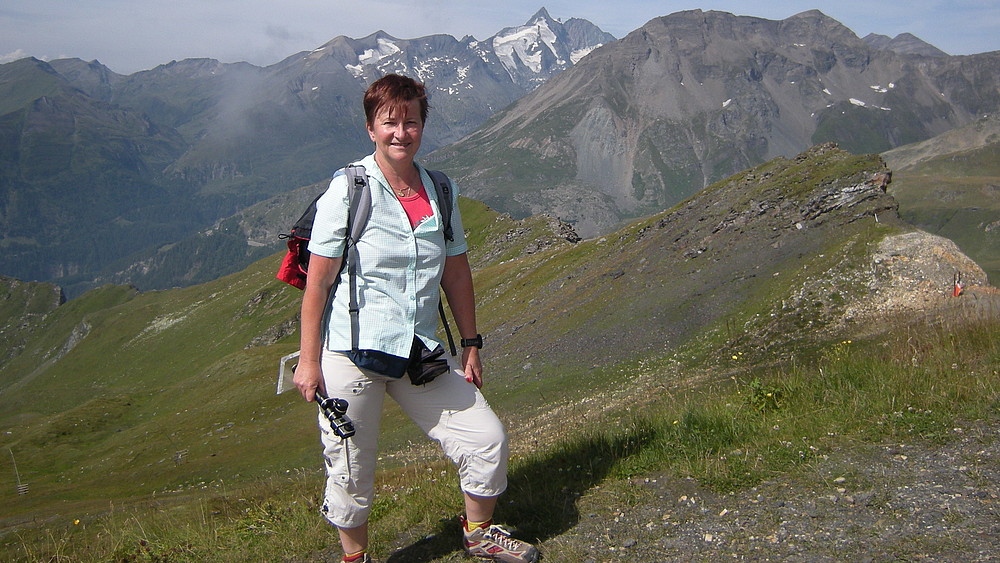
Marietta Spangenberg served as a professor in the fields of hardware and the fundamentals of computer science at Zittau/Görlitz University of Applied Sciences for thirty years, from 1992 to 2022. During this time, her lectures, seminars, and internships—covering topics such as hardware, data communication, network security, and the fundamentals of computer science—generated a great deal of interest among computer science students. In recent years, her focus has been on the subject areas of computer architecture, computer networks, IT security and data protection, as well as IT security management and object-oriented programming. In addition, since 2004, she has taught lectures and internships in English as part of the Neisse University program at HSZG, for example in the modules “Data Security and Data Protection” and “Security in Networks.”
Born in Zittau in 1958, Marietta Spangenberg completed a direct degree program in Information Technology at the Technical University of Dresden from 1976 to 1981, and subsequently, after earning her degree as a Diplom-Ingenieurin in Information Technology, began working as a project engineer in the Department of EDP and Computer Engineering at the Technical University of Zittau. Her PhD thesis followed in 1989, awarded the distinction “magna cum laude,” on the topic: “A Contribution to the Implementation of Local Ring Networks in Accordance with the Requirements of Office and Process Automation.”
During her tenure as a professor at the HSZG, the field of computer networks grew to become a central topic in computer science. She continuously adapted her lectures, seminars, and internships in the field of network technology to the latest research and technical developments, thereby preparing students for their future careers in industry or public administration. She established the Network and IT Security Laboratory at the Görlitz campus and consistently kept it up to date.
Particularly noteworthy is her work as director of the University Data Centre and the University Library from 2000 to 2006. Under her leadership, both of these central university facilities underwent significant development. For example, the university’s modern computer network was planned and implemented as a major investment. The libraries at both campuses were integrated at the IT level; the library in Zittau was designed and built at its new location in the student canteen, and the new library in Görlitz was planned. In this role, she represented the university on numerous committees, such as the DFN, ZKI, and AKIf, even after her tenure as director had ended.
Marietta Spangenberg integrated data protection, IT security, and data security into her area of expertise early on. It was always a priority for her to identify the risks associated with computer networks and distributed applications, to explain them clearly, and to teach others how to manage them.
She approached her work with students with great dedication and enthusiasm. As early as 1993, she served as an advisor, reviewer, and secondary reviewer for numerous Diplom, Bachelor, and Master's theses at the Zittau/Görlitz University of Applied Sciences; from 2001 to 2009, she also worked as a reviewer for the German Research Foundation (DFG).
As an active ambassador for “computer science,” she established the discipline at the Zittau campus by introducing students from other fields to computer science in general and to programming in C and object-oriented programming in C++. She set up and supervised the necessary laboratories.
In addition, Professor Marietta Spangenberg chaired the computer science examination board for many years, finding solutions to difficult situations within the framework of the regulations. As the equal opportunities officer, she participated in virtually all tenure-track hiring procedures, enriching them with her expertise and balanced personality. She was also a member of the Faculty Council for many years. During her 30 years of service to the university, she played a decisive role in shaping the future of the faculty and the development of both campuses.
The Public Relations Office met with Prof. Dr.-Ing. Marietta Spangenberg for an interview:
Prof. Spangenberg, you worked as a professor in the Department of Computer Science for 30 years. What sparked your passion for your field?
I was already interested in technology as a student and was determined to study something exciting, but also something challenging. Actually, I wanted to become a radio officer in the merchant marine. That’s why I chose the “Communications and Computer Engineering” track within the “Information Technology” degree programme at TU Dresden.
An unusual choice for a young woman.
That’s true. Girls were underrepresented in information technology back then—which, by the way, is still the case today. There were about 180 students in the faculty, nine of whom were girls. I was, so to speak, always in a male-dominated field, but that never bothered me—if anything, it spurred me on to show that women can also excel in these areas. I didn’t end up becoming a communications officer because I was involved in exciting research projects at the University of Dresden. But communications and computer engineering turned out to be a stroke of luck. It’s still just as interesting today as it was when I started my studies—and it’s even more significant now than it was back then.
What do you find special about computer science?
By choosing computer science, I selected the field that has developed most dynamically over the past 40 years. It’s not like mathematics, where the Pythagorean theorem still holds true today. No, you always have to stay on top of things. It never gets boring—it’s a constant challenge. You can always stay curious and find joy and success in solving problems.
What have you enjoyed most about your work? What stands out most in your memory?
I fondly look back on my time as director of the University Data Centre and the University Library. We accomplished so much for both institutions during those years, and there were also numerous challenges along the way. The best part of my job, however, was being able to work with young people. I was able to accompany them for a while and teach them something that would serve them in their future lives. I tried to inspire them to love computer science, but above all to think independently and logically, to take on new technical challenges, and to solve problems—even when it’s sometimes difficult. Computer science isn’t just about programming; it also encompasses, for example, the world of networks and information security. These topics are important as well. To this day, I still receive positive feedback from former students about this.
With such a passion for teaching, it must have been hard to let go.
I haven’t completely given up teaching and administrative work. I still work freelance at a private university as the director of studies for IT security and am involved in the teaching process.
What still connects you to the HSZG today?
As a member of the university community, I follow developments there and stay in touch with colleagues, especially those in the computer science department in Zittau. “Alumni” from the HSB also meet up from time to time, and we catch up with one another.
1st floor