
"Only those who inspire can convince!"
The workshop with TV and media expert Stefan Ganß shows how "impact stories" make scientific lighthouse projects of the HSZG visible.
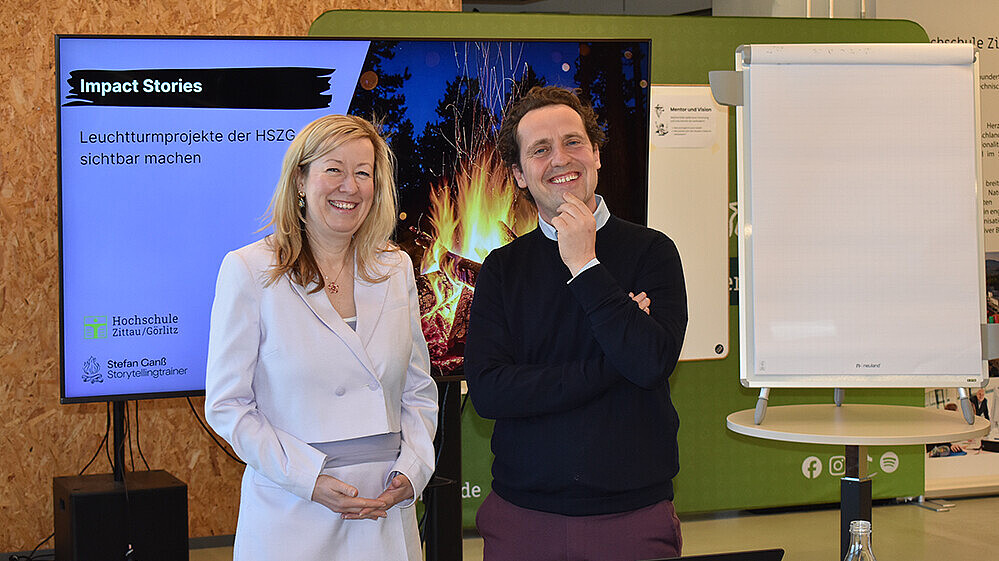
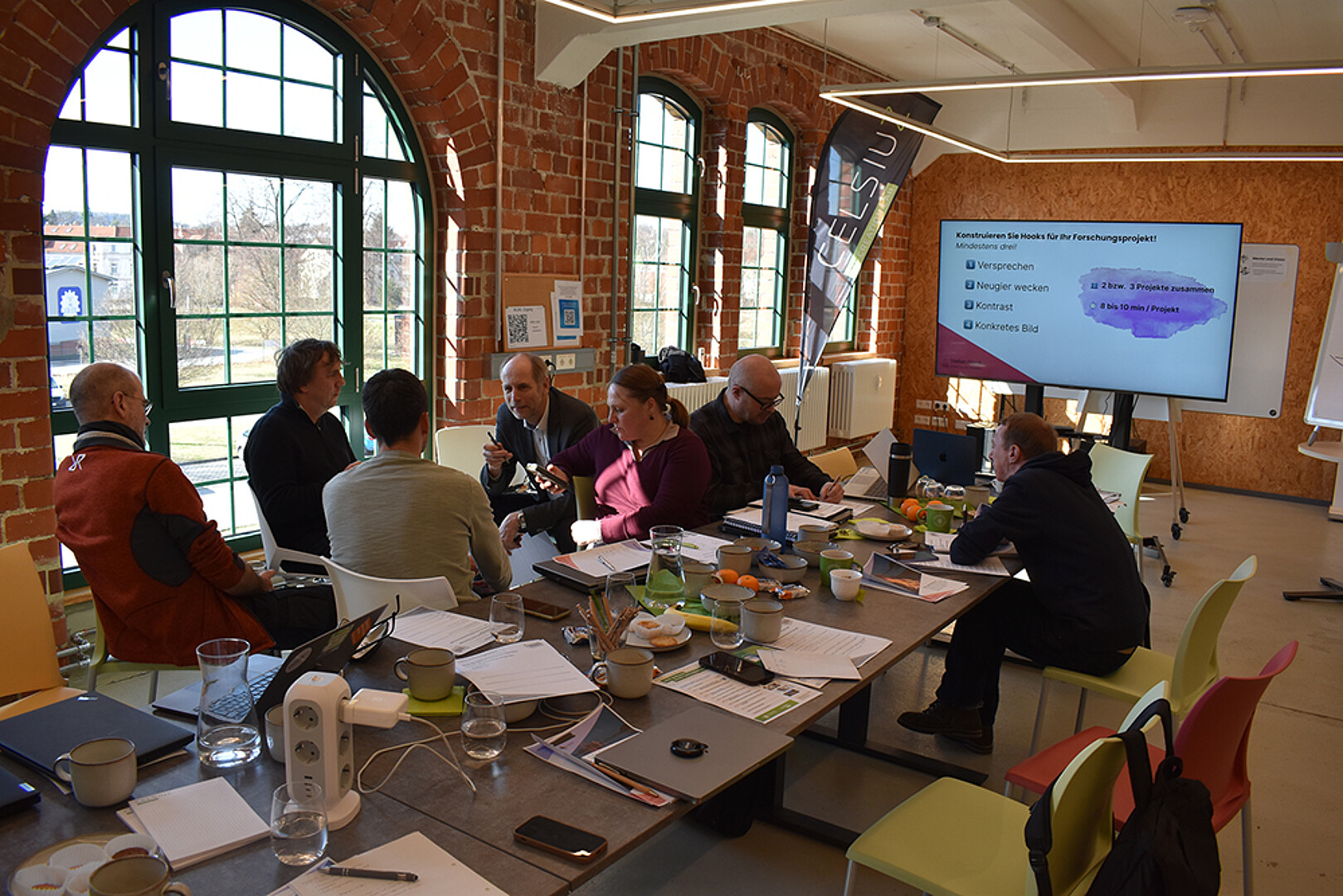
At the workshop “Communicating Science—Understandably, Authentically, Effectively,” held in the fall of 2025 at the CELSIUZ Decision Theater in Zittau with veteran TV and media professional Stefan Ganß, the participants at that time learned how to present their research in a way that was understandable and tailored to the media. In mid-March 2026, the Zittau/Görlitz University of Applied Sciences (HSZG) hosted the workshop at the aforementioned CELSIUZ . The topic this time was “Impact Stories—Highlighting the HSZG’s Flagship Projects.”
“The Zittau/Görlitz University of Applied Sciences has strong, innovative flagship projects. The goal of the workshop is to present selected projects in a way that makes them understandable, relatable, and shareable for relevant target audiences—without technical jargon, without so-called ‘grant-application German,’ and without compromising academic rigor,” according to the handout introducing the workshop. By the end of the workshop, the core objective is for each project presented by the participants to have a toolkit consisting of target audience logic, key messages, hooks, and pitches.
Storytelling as a Method for Successful Science Communication
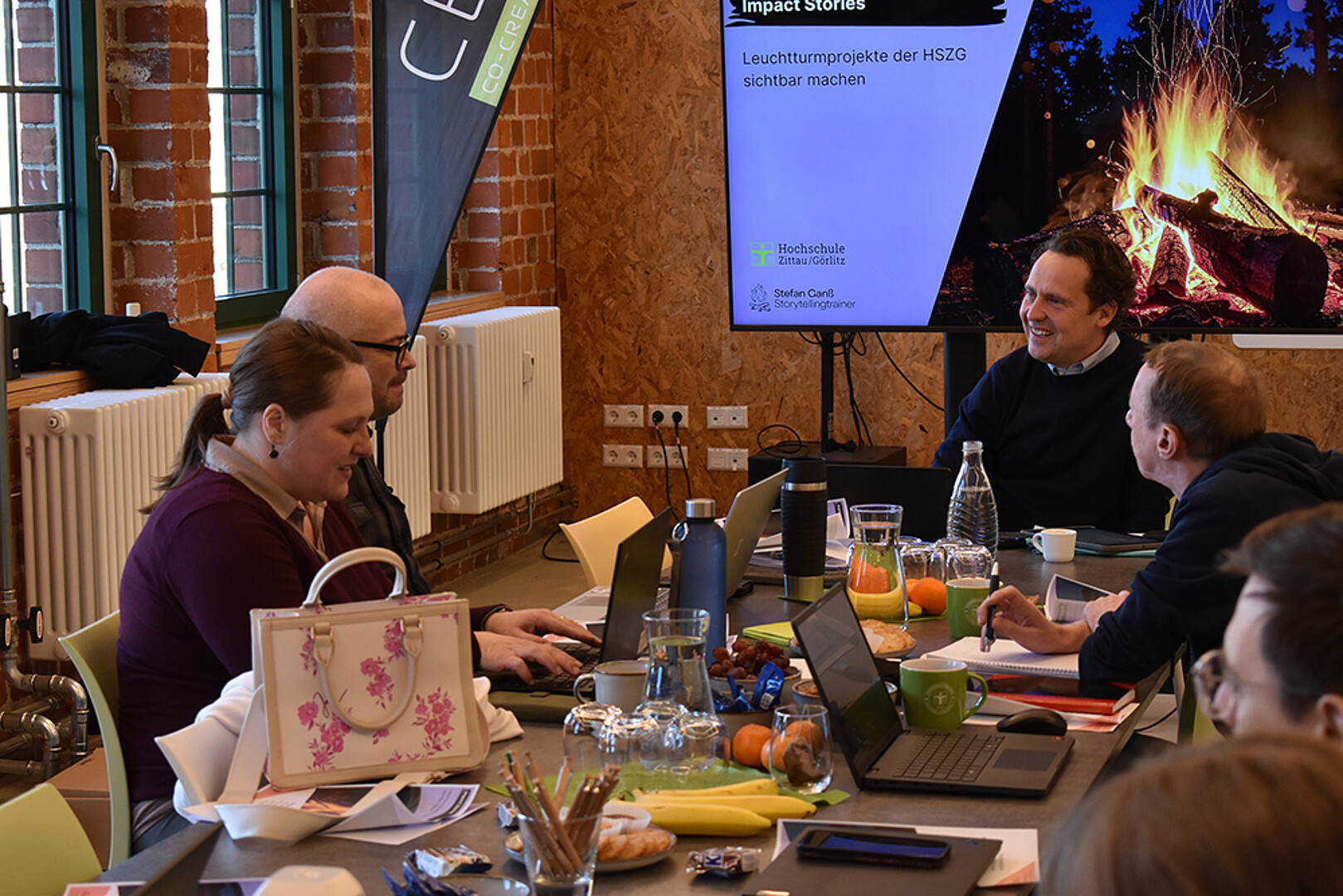
“For millennia, people have been telling stories around the campfire,” workshop leader Stefan Ganß (TV reporter and radio host) tells the workshop participants. “Today, you can make strategic use of this ancient cultural technique. I’ll show you how to present your research in a good way to the outside world using the art of storytelling, hooks, and pitches.” However: “Only those who inspire can also convince,” says Stefan Ganß. And it’s often said that only those who have a good story for their research project can spark curiosity and enthusiasm for their research among outsiders. “Tell a story that inspires,” says Stefan Ganß.
By definition, storytelling is the art of conveying values and messages through the telling of stories in order to evoke emotions and establish a connection with the audience. In marketing and science communication, storytelling has been growing in popularity in recent years—as a way to present and convey complex content in a conversational, authentic, and effective manner.
This can also be achieved through a so-called “hookline.” A hookline (or “hook” for short) is a concise, catchy melody or line of lyrics in a piece of music that is highly recognizable and sticks in the memory—for example, Keith Richards’ guitar riff in the Rolling Stones song “Gimme Shelter” (1969), the piano (synthesizer) riff in “Small Town Boy” (1984) by the British synth-pop band “Bronski Beat,” and the piano riff covered in 2023 by the German pop singer “Leony” in “Holding On.”
Personas and Pitches, Hooklines and Impact
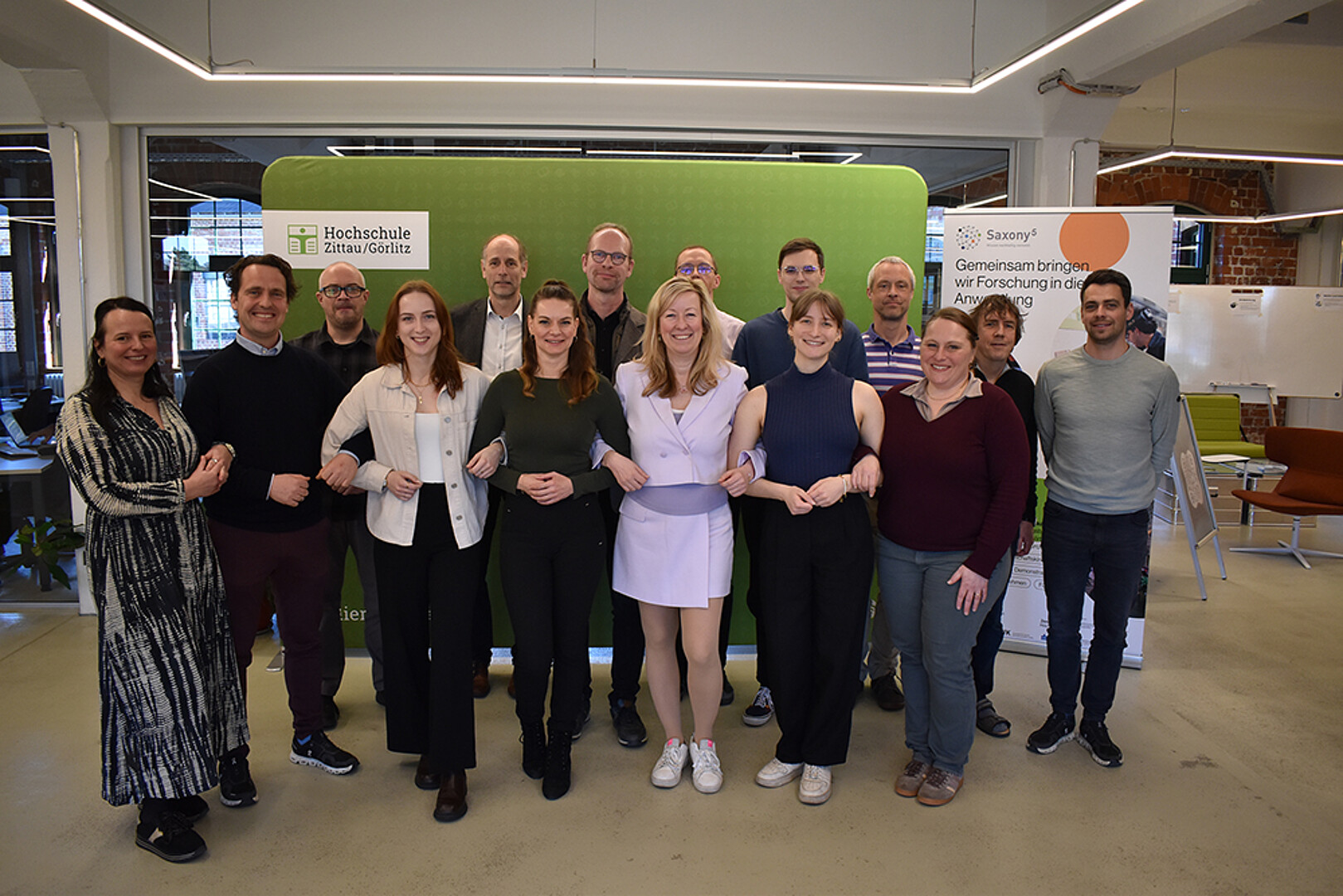
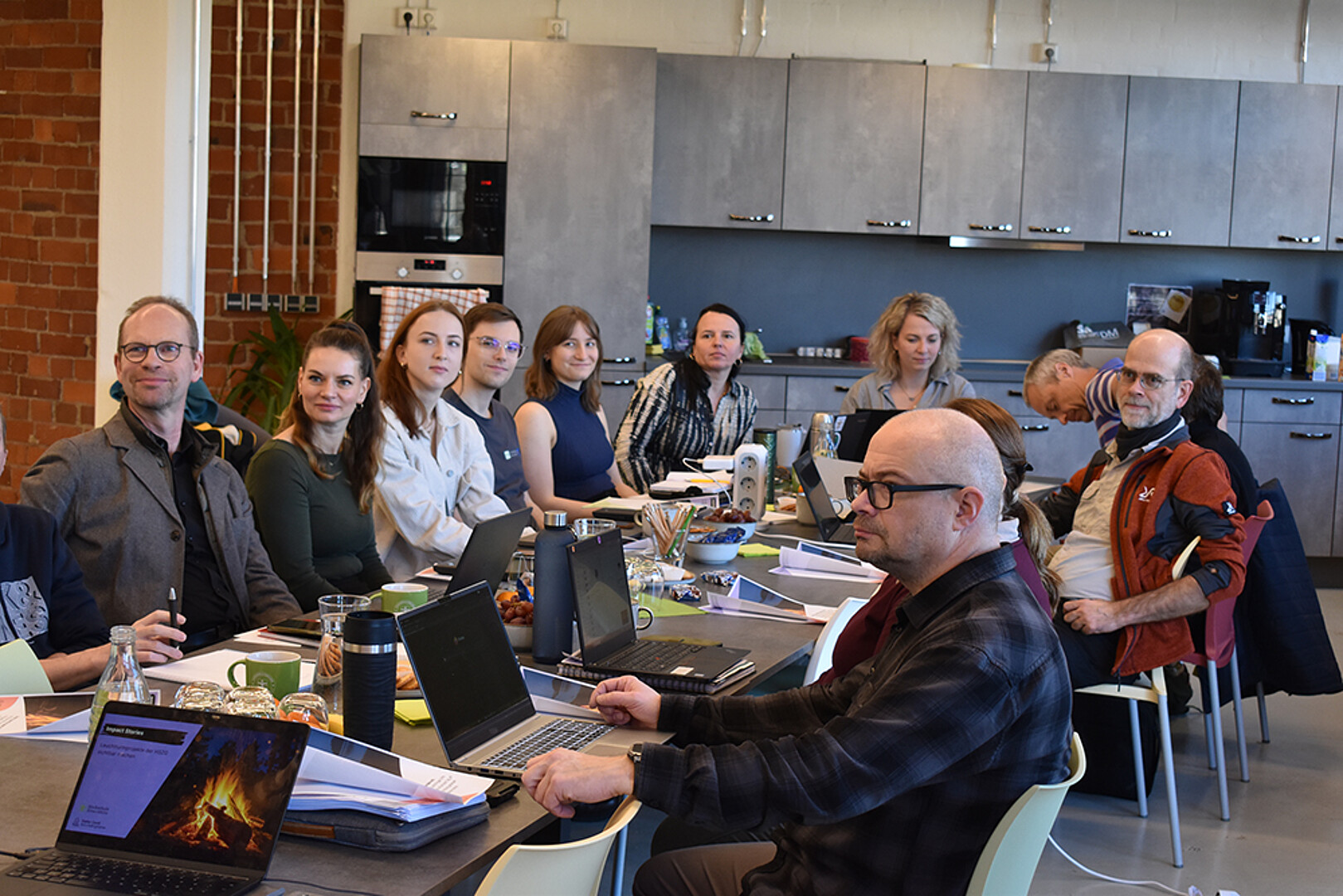
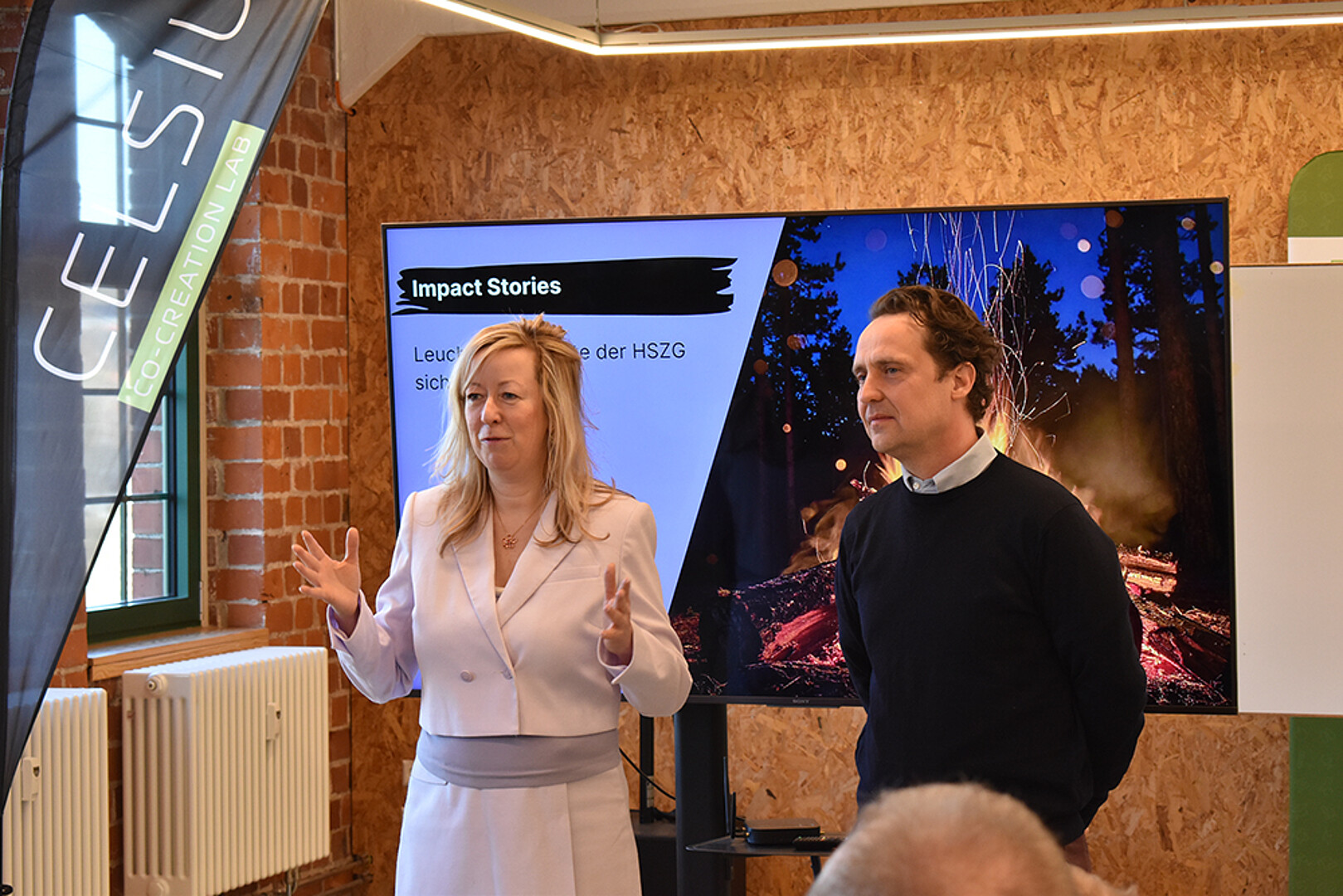
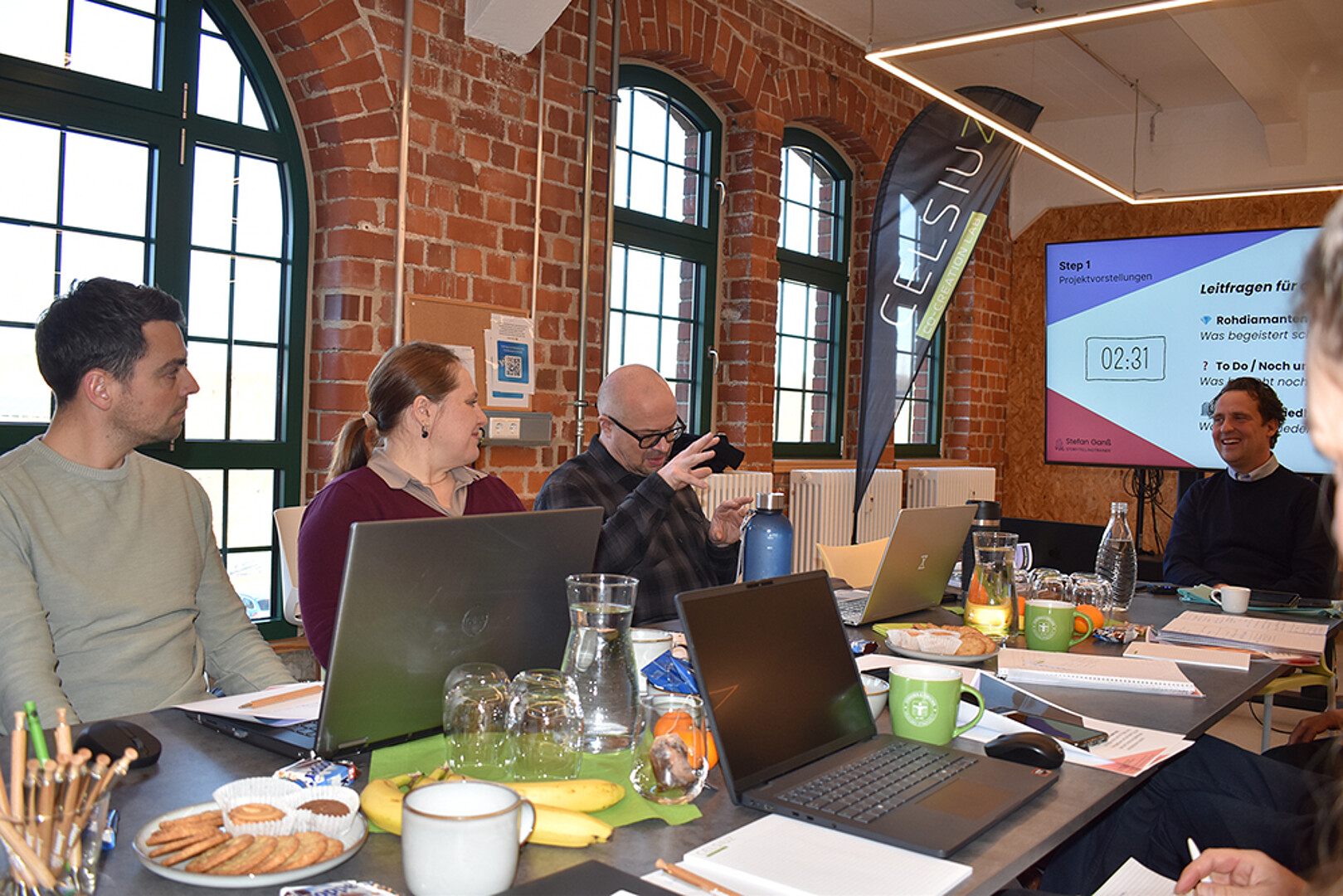
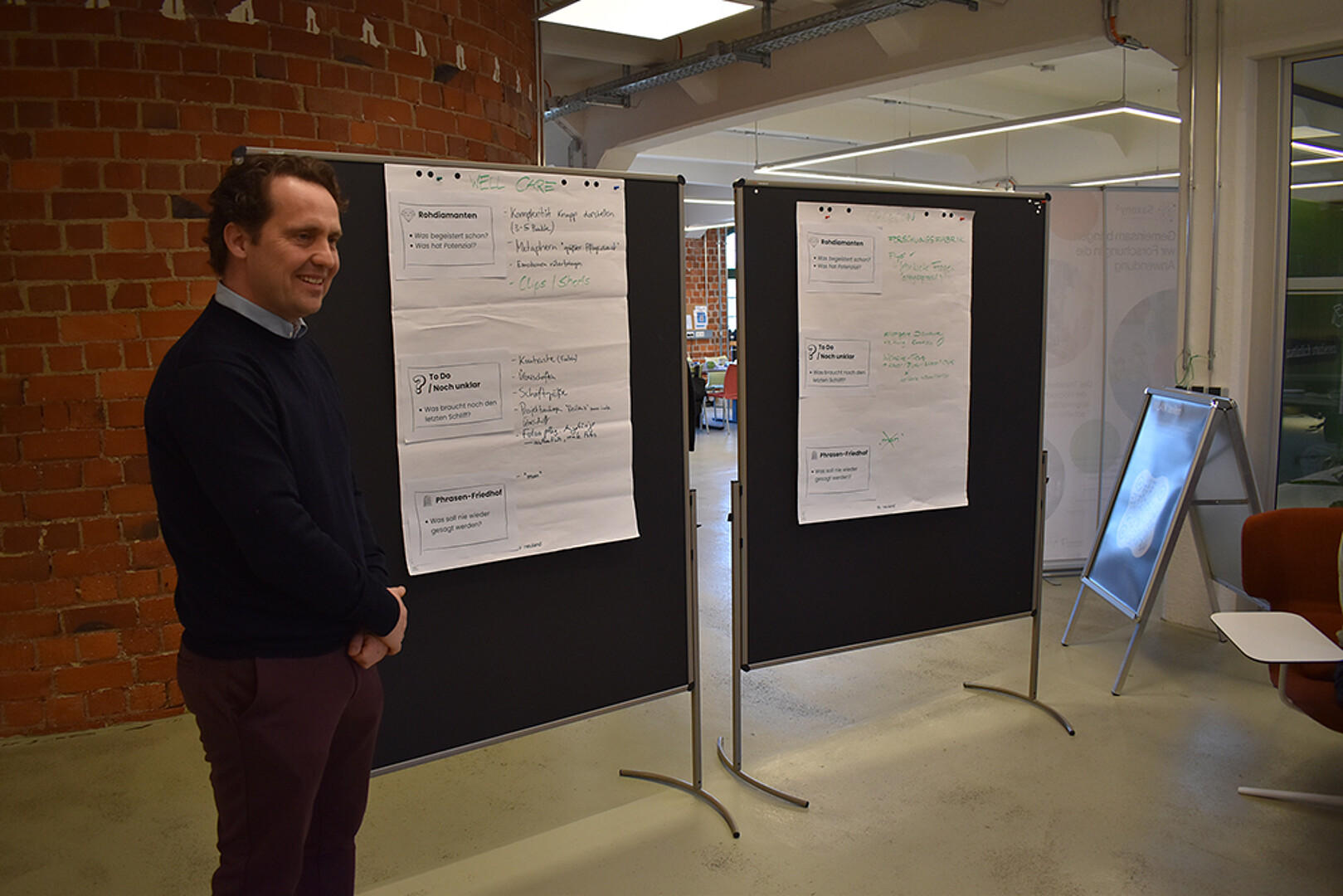
In addition to learning how to craft good hooklines for science (and science communication), participants in the 8-hour “Impact Stories” workshop held in mid-March also learned about “personas” and the method of crafting a “pitch.” A pitch is a short, concise presentation designed to sell a business idea, a product, or a service, or to attract investors. In the context of research, the challenge of a “pitch” is this: How do I describe my research project in a way that is understandable, appealing to the public, and—for outsiders—detailed, precise, and tailored—without falling into subject-specific jargon and often incomprehensible technical language?! And “personas”? This means: Who is our audience? What message should resonate with our target groups? And how do I generate “impact” (to use the modern term) for my research and create influence, effectiveness, and significance?
Excellent research only realizes its full potential when it is understood. Through Impact Stories, we bridge the gap between scientific depth and societal relevance, facilitating the transfer of knowledge into industrial practice. This fosters innovation, which gives rise to new products and services and, in turn, can create new jobs. After all, only those who inspire can truly convince.
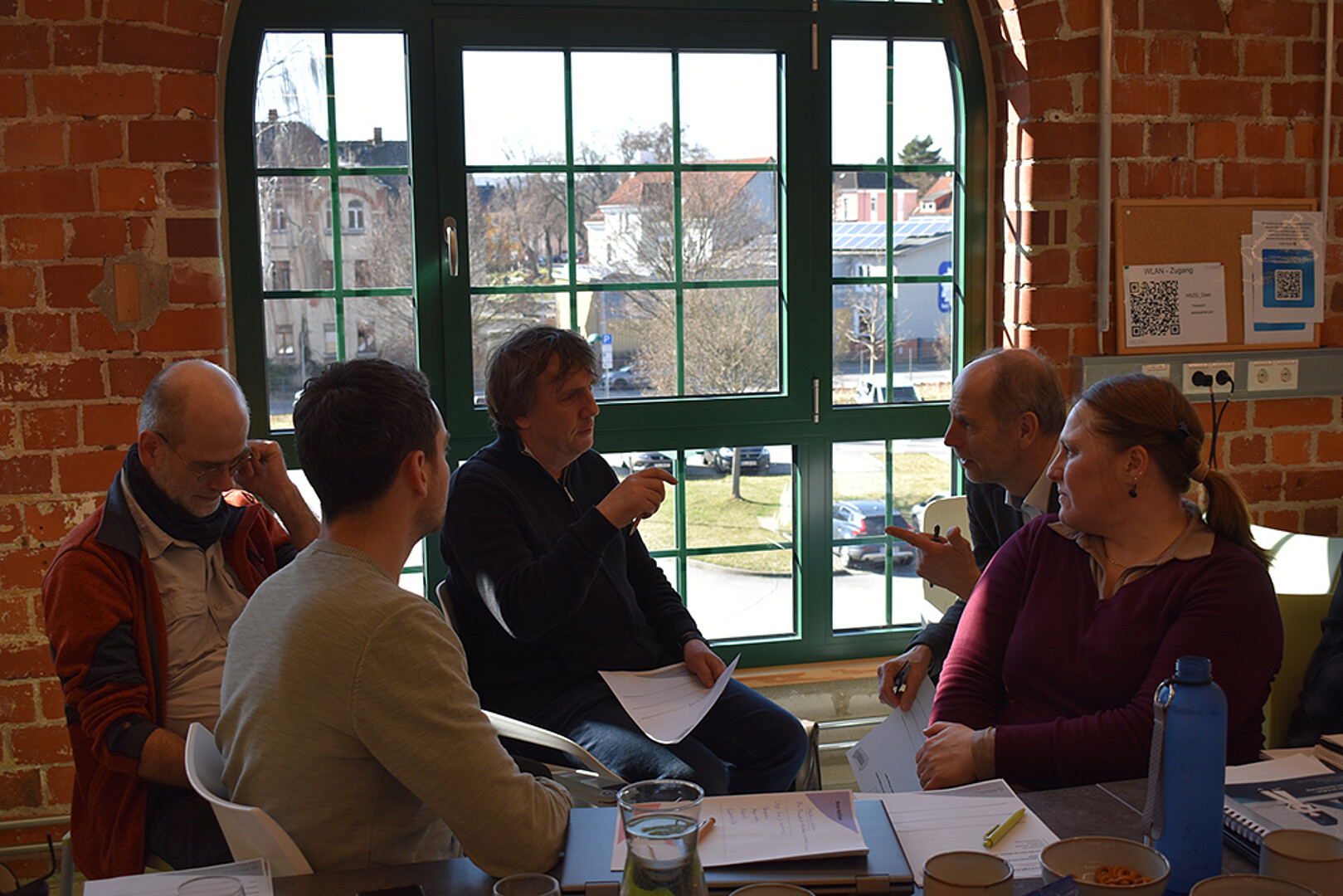
”Anett Kupka, Diplom-Ingenieur, project manager at the HSZG in ZIRKON (Zittauer Institute for Process Development, Circular Economy, Surface Technology, and Natural Products Research), says: “In the workshop, I refreshed my memory on a few important communication rules and learned new communication ‘tools.’ What are the key messages? Who is the target audience? How do I structure the opening of an article or presentation? The opening sentences determine whether people will keep reading or listening. Finding the right words here—or working through them as a team—is a worthwhile investment of time.” Kupka sums it up as follows: “The workshop took place in a very collegial atmosphere, filled with passion, subject-specific competence, and interdisciplinarity. I was impressed by how our text for the project presentation changed within just a few hours with the help of the toolkit.”
Dr. Thomas Fester, director of the DLR_School_Lab at Zittau/Görlitz University of Applied Sciences, reports: “I really liked the concise, clear structure for developing a media-effective piece (an ‘impact story’). I was already familiar with the storytelling approach, but I wasn’t specifically aware that it could be implemented so rigorously—or that it can and should be used as an essential, central approach for outreach activities. If you want to get people interested in your own activities, you have to tell short, good-structured stories. These stories need a hook, a challenge, and a solution.”
Immediate Application of What Was Learned
However: At the beginning of the workshop, the participants’ task was to briefly present their respective fields of research or research projects. The task was repeated at the end of the workshop—this time with the participants applying what they had learned. If the word “synergistic” came up in a project description at the beginning, it had already disappeared by the final presentation. And what had been a highly complex research topic had become a good narrative—or even a good story with a strong hook or a successful pitch.
And for those who find words like “hook, ” “pitch,” “story, ” “teaser, ” or “impact” to be too many Anglicisms: “Use ordinary words to say extraordinary things,” as the philosopher Arthur Schopenhauer put it. This also applies to successful science communication.
Text: Frank Leberecht
Photos: Lucas Wenzel

1st floor