
New framework for social innovation
Up to now, the focus of regional structural change has primarily been on technological innovations. The need for social innovations is now also coming more into focus.
To specifically promote these processes, evaluation criteria must be redefined. The framework conditions must be structured in such a way that social innovations can emerge. How can this societal change be optimally supported?
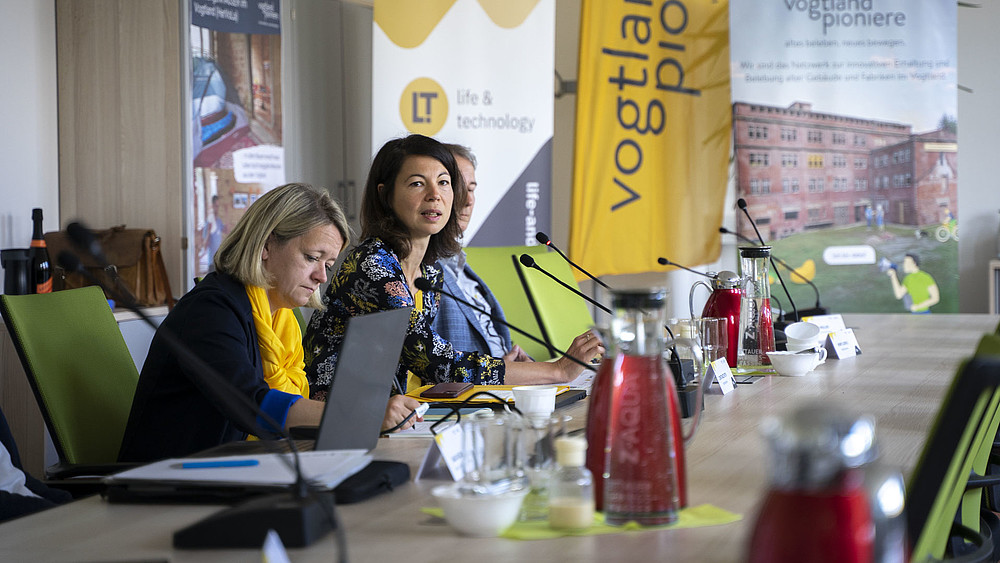
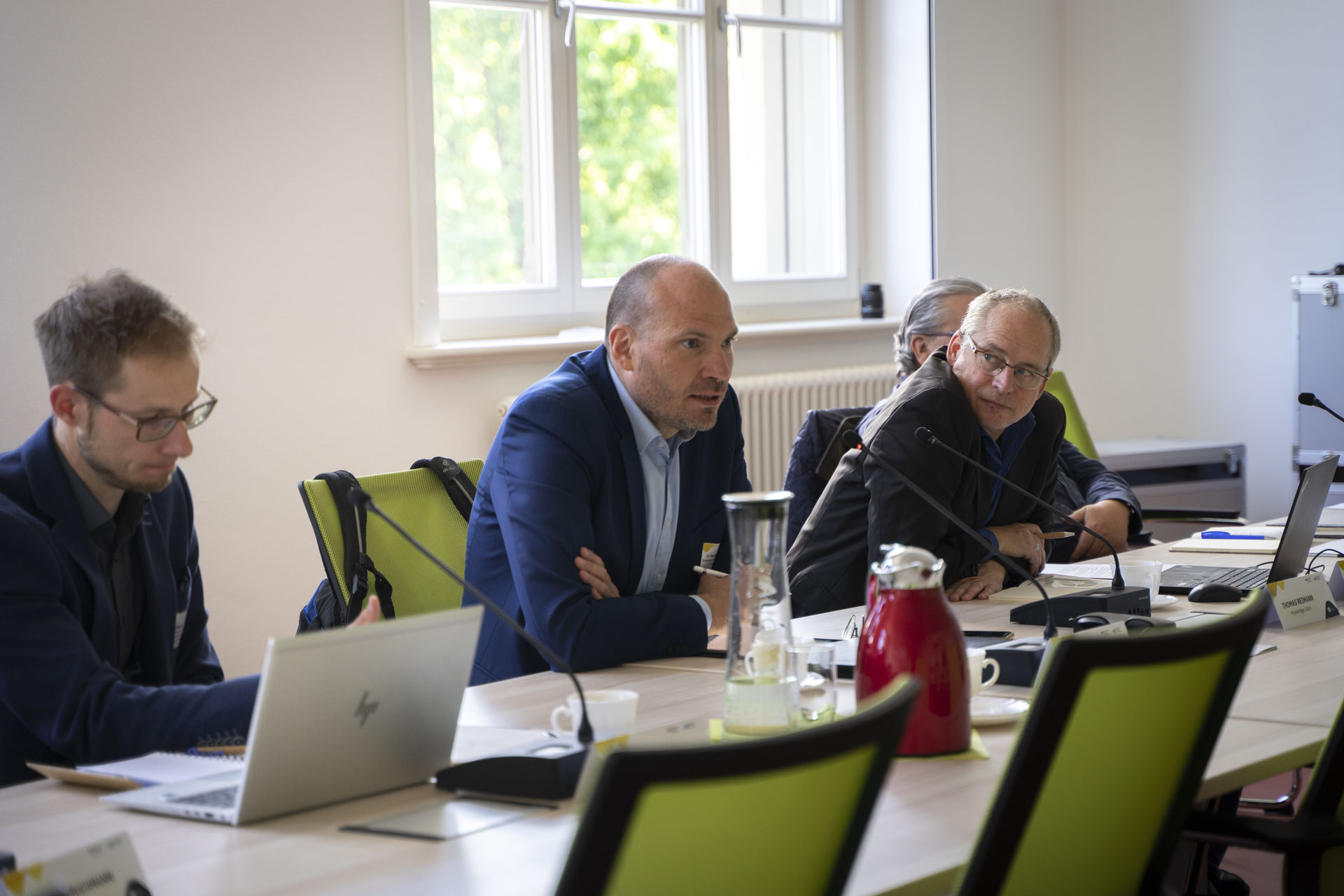
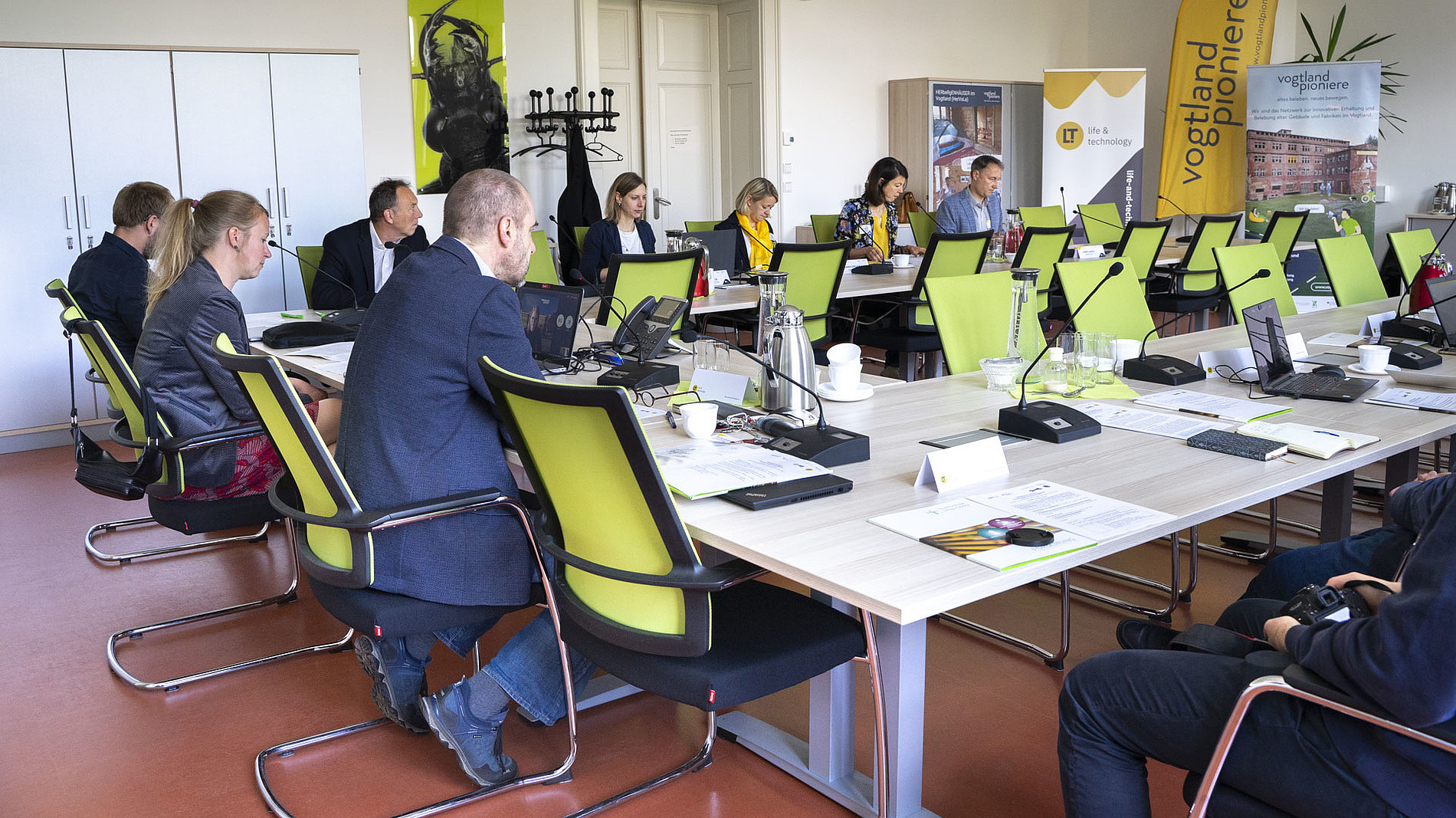
This was the central question of a workshop at Zittau/Görlitz University of Applied Sciences, hosted by four initiatives funded by the BMBF program “WIR! — Change Through Innovation in the Region.” Together with the BMBF and the project management agency in Jülich, they shared their experiences and discussed how to create more space for social innovations in practice. Representatives from the four WIR! alliances—“Lausitz — Life & Technology (Upper Lusatia),” “Vogtland Pioneers,”
, “Recomine (Ore Mountains),” “Region 4.0 (Uckermark)”, as well as “Plant³ (Vorpommern)” and “I-Ma-Tech
(Western Saxon Vogtland)” as guest WIR! alliances.
Where technological progress is concerned, social processes are always a factor as well.
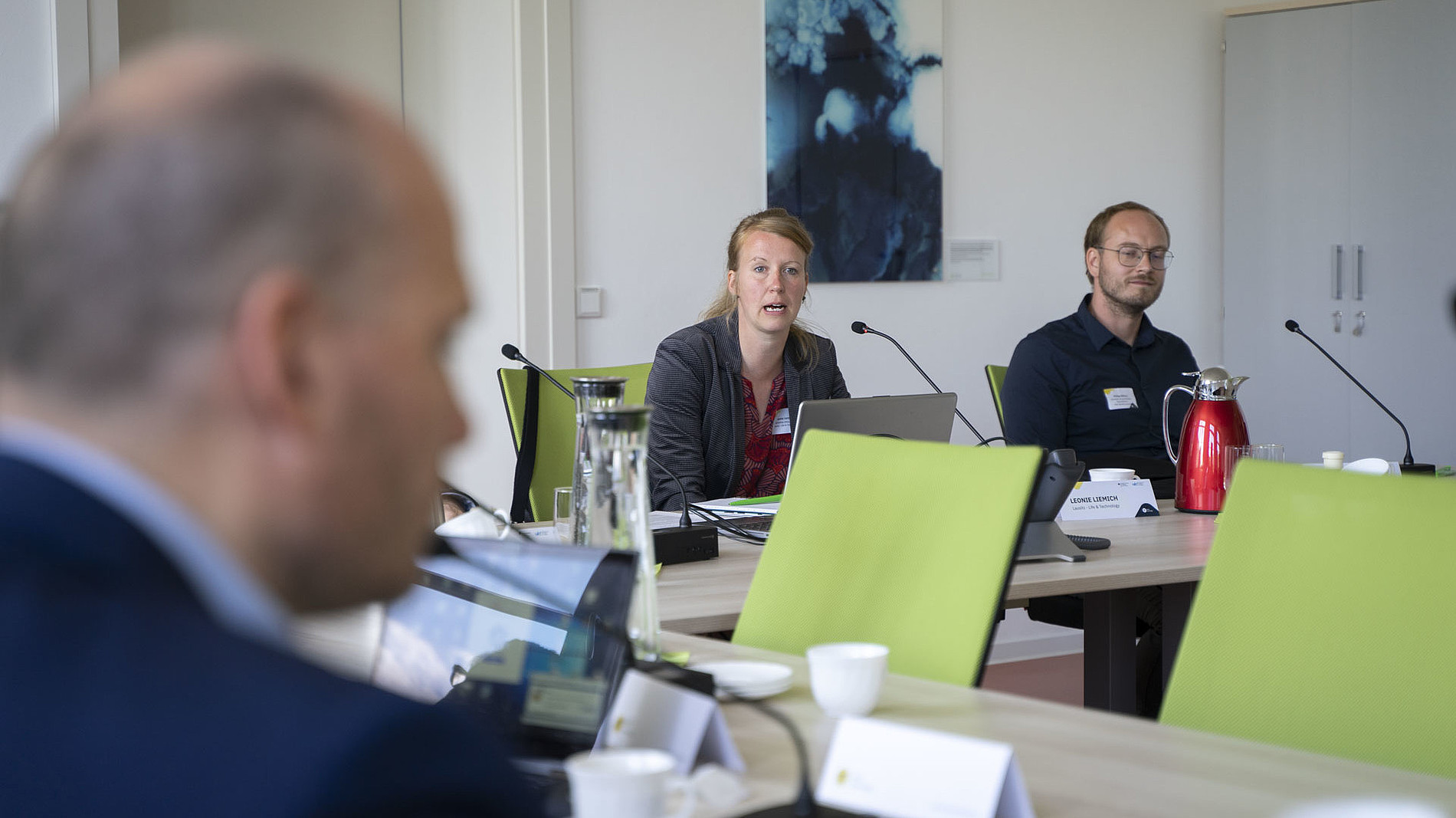
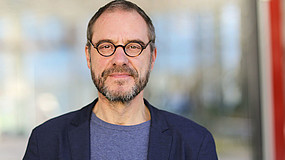
All five regions face immense challenges in the context of regional structural change, and it is primarily small businesses, associations, and freelancers who are actively involved in the alliances. “Where there is technological progress, there are always social processes involved as well,” emphasized Professor Raj Kollmorgen, Prorector for Research at Zittau/Görlitz University of Applied Sciences and also the consortium leader of “Lausitz — Life & Technology.” While technical innovations were the primary focus of public discourse and funding up until the turn of the 21st century, the necessary social innovations are now taking center stage, according to the sociologist. Leonie Liemich confirmed that this development is reflected in the day-to-day work of the WIR! alliances. As project coordinator for “Lausitz — Life & Technology,” she senses the challenges faced above all by the small businesses and institutions that are typical of the economic and research landscape in Upper Lusatia, but whose staffing capacity and resources are limited. Raj Kollmorgen provided information on the importance of establishing a new scientific institute in Zittau, for example. However, this development also has social consequences and raises several questions. Among them: “How do you prepare the city, the county, and the region for this? What opportunities do local women and men have for employment? How can we inspire children and young people to embrace these new opportunities?”
Constanze Roth, project coordinator for the WIR! Alliance
“Vogtland Pioneers,” addressed these questions and broadened the perspective: “Our alliance partners, who are, among other things, wholeheartedly committed to breathing new life into vacant, historic buildings by repurposing them for new, innovative uses. These are often associations, men and women who volunteer their time, and small and medium-sized enterprises.” Their in-depth knowledge of the region and their close connection to local challenges shape their expertise and must be leveraged even more intensively. She would like to contribute this wealth of experience, which exists in many regions, even more strongly to the collaboration with the BMBF and the project management agency. To this end, she suggested evaluating funding for social innovations using specific criteria. The criteria catalogs for innovative funding projects—which are primarily designed with economic considerations in mind—must be expanded to include a social dimension.
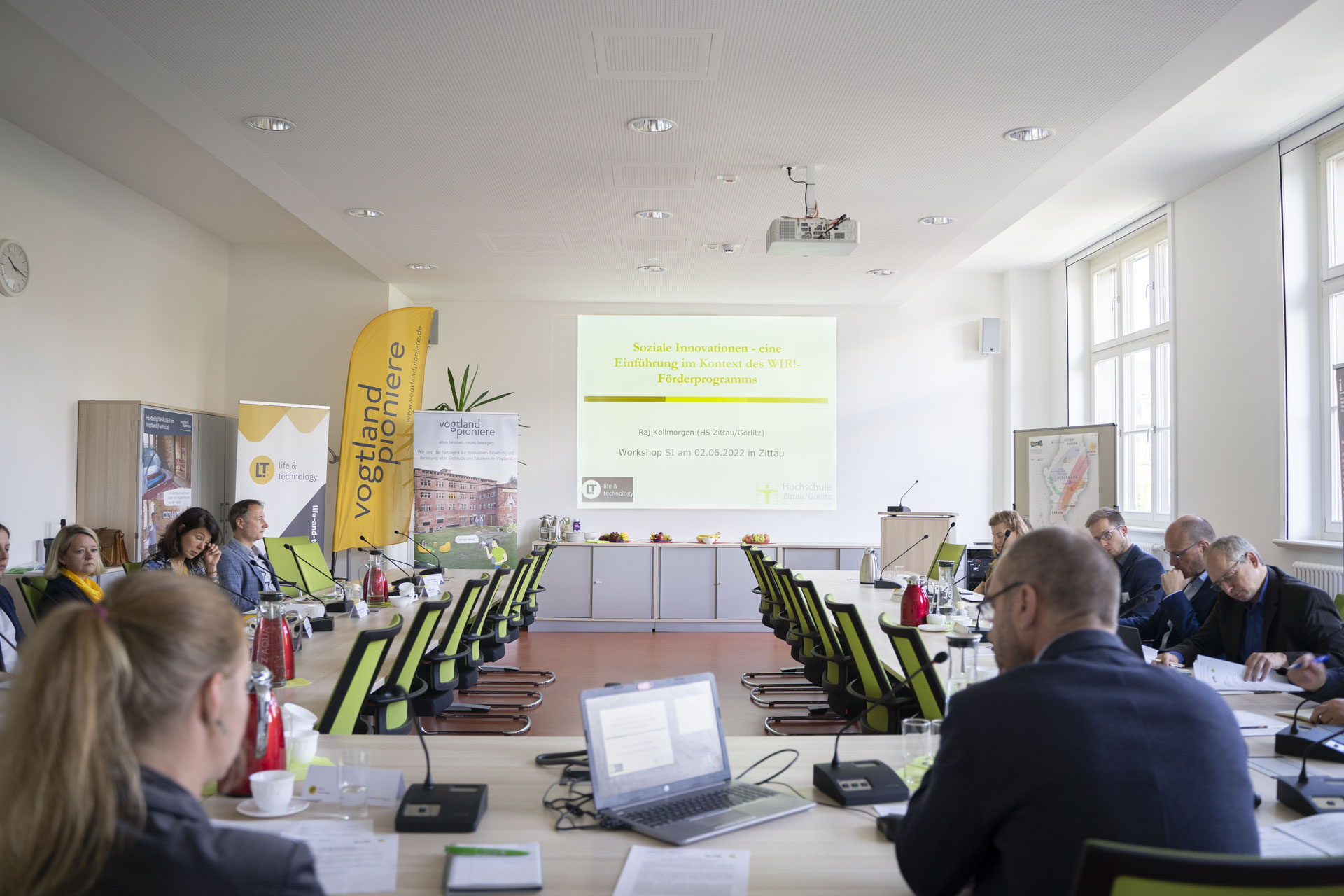
Joint initiative of the WIR! alliances encourages a rethink in dealing with social innovations
Ramón Kucharzak, specialist officer at the BMBF, referred to a leap in quality that has been achieved with the WIR! program family, as this funding focuses on both the technical and social dimensions of innovation. The experience gained by the WIR! alliances in their day-to-day work will play a role in the formulation of new funding programs and in the fine-tuning of the current cooperation. In consultation with Thomas Reimann from the project management agency, he suggested that specific solutions be found at a further working meeting to enable the alliances to continue their successful work. However, it must always be clear what contribution the defined field of technological and social innovation can actually make to change in a region, what investment the individual partners can make and how this process can be consolidated in the long term .
Professor Raj Kollmorgen concluded this discussion, which was conducted with great competence, curiosity and passion, with a philosophical outlook. Up to now, technological innovations have almost always been created in competitive situations, in the competition of ideas and processes, in overcoming routine. Social innovations, on the other hand, require cooperation, the coexistence of ideas and the balancing of interests. It is possible that combining both dimensions will be an important innovation in the 21st century.
Another article about the event, as well as video statements from some of the participants, can be found on the website of the Federal Ministry for Education and Research.
2nd upper floor
2nd floor right

4th upper floor
2nd upper floor