
New Ideas for a Sustainable Lausitz
The ReMiLa Transfer Forum at the Zittau/Görlitz University of Applied Sciences focused on innovative approaches to regional energy and resource use, as well as the inaugural presentation of the Lausitz Future Prize.
Agriculture, energy supply, and industrial production are closely intertwined. If their energy and material flows are intelligently linked, resources can be used more efficiently and new forms of regional value creation can be tapped. On October 28, 2026, the ReMiLa Transfer Forum at the Zittau/Görlitz University of Applied Sciences (HSZG) focused on the approaches being developed by researchers and industry to achieve this.
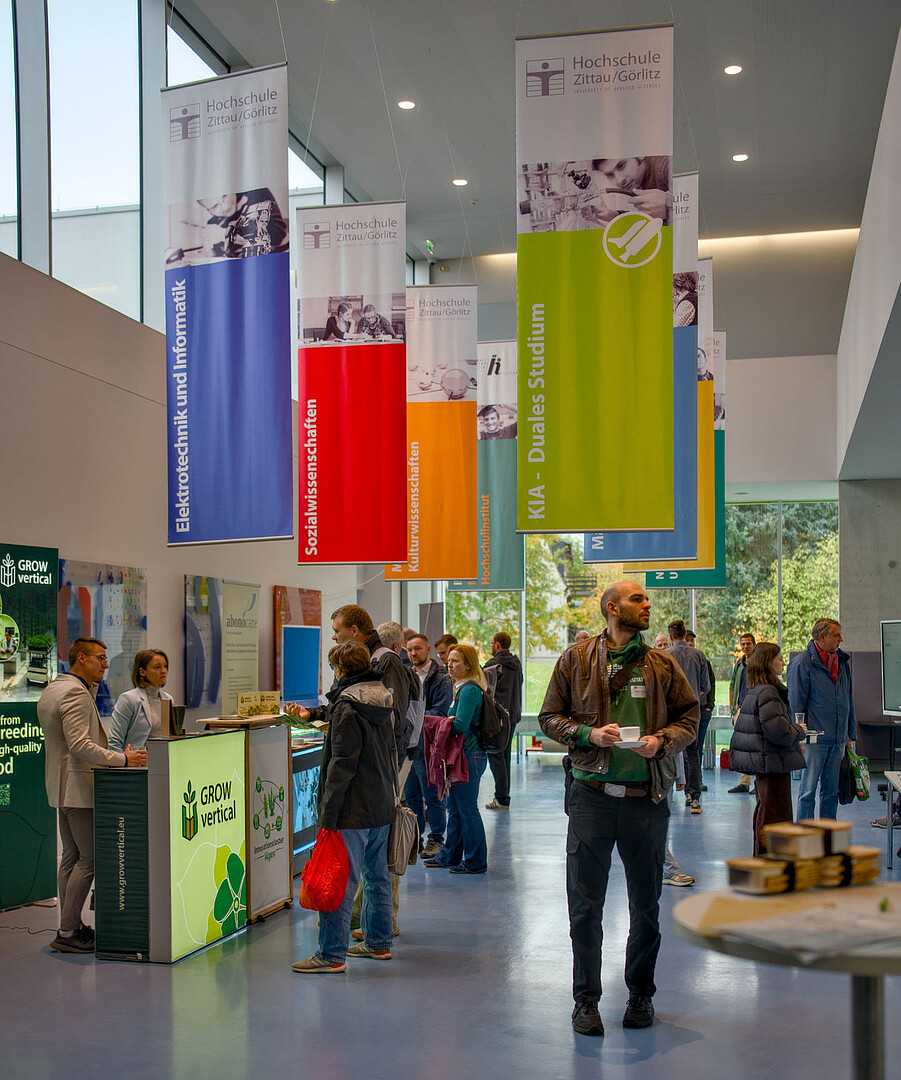
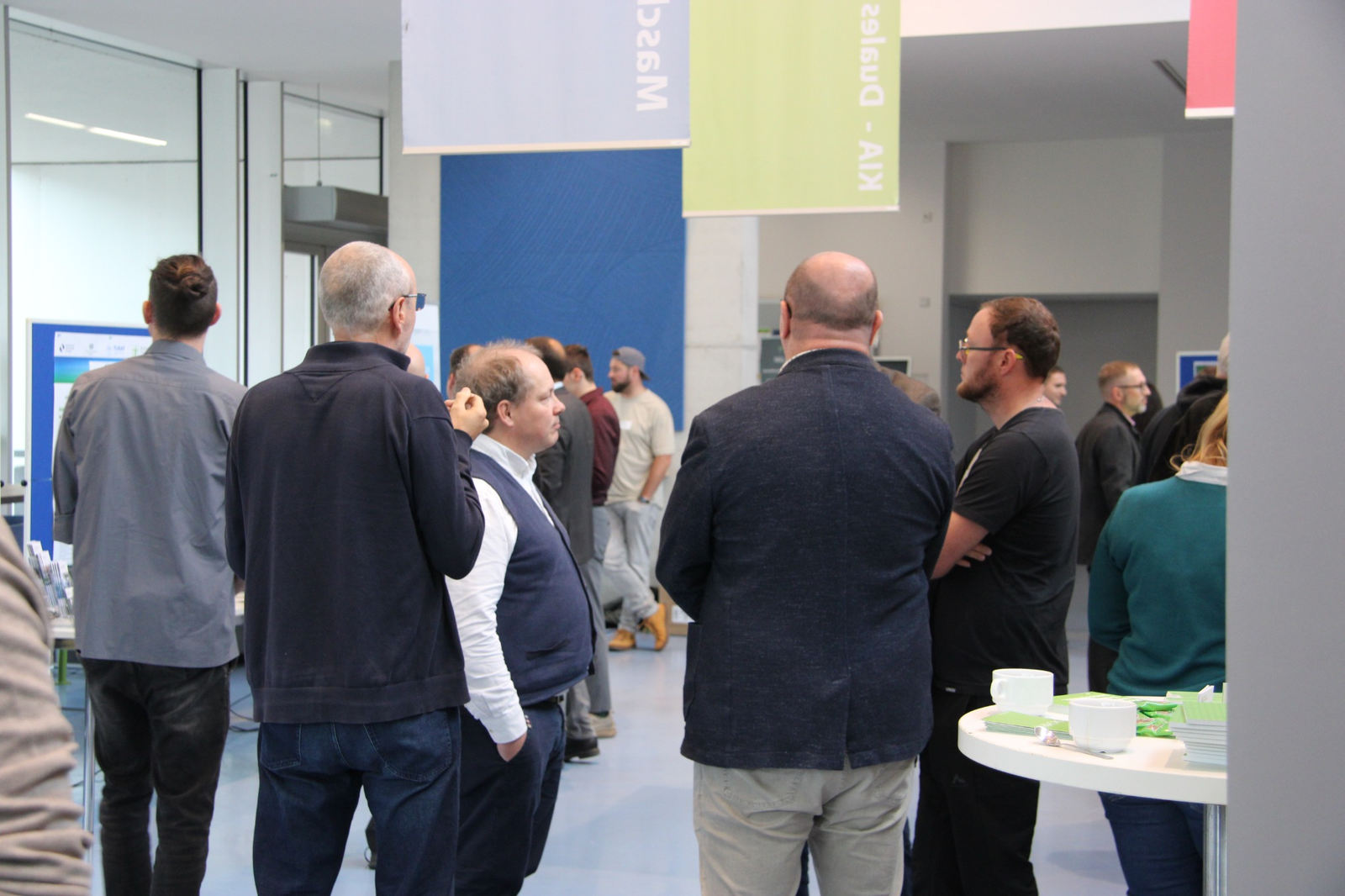
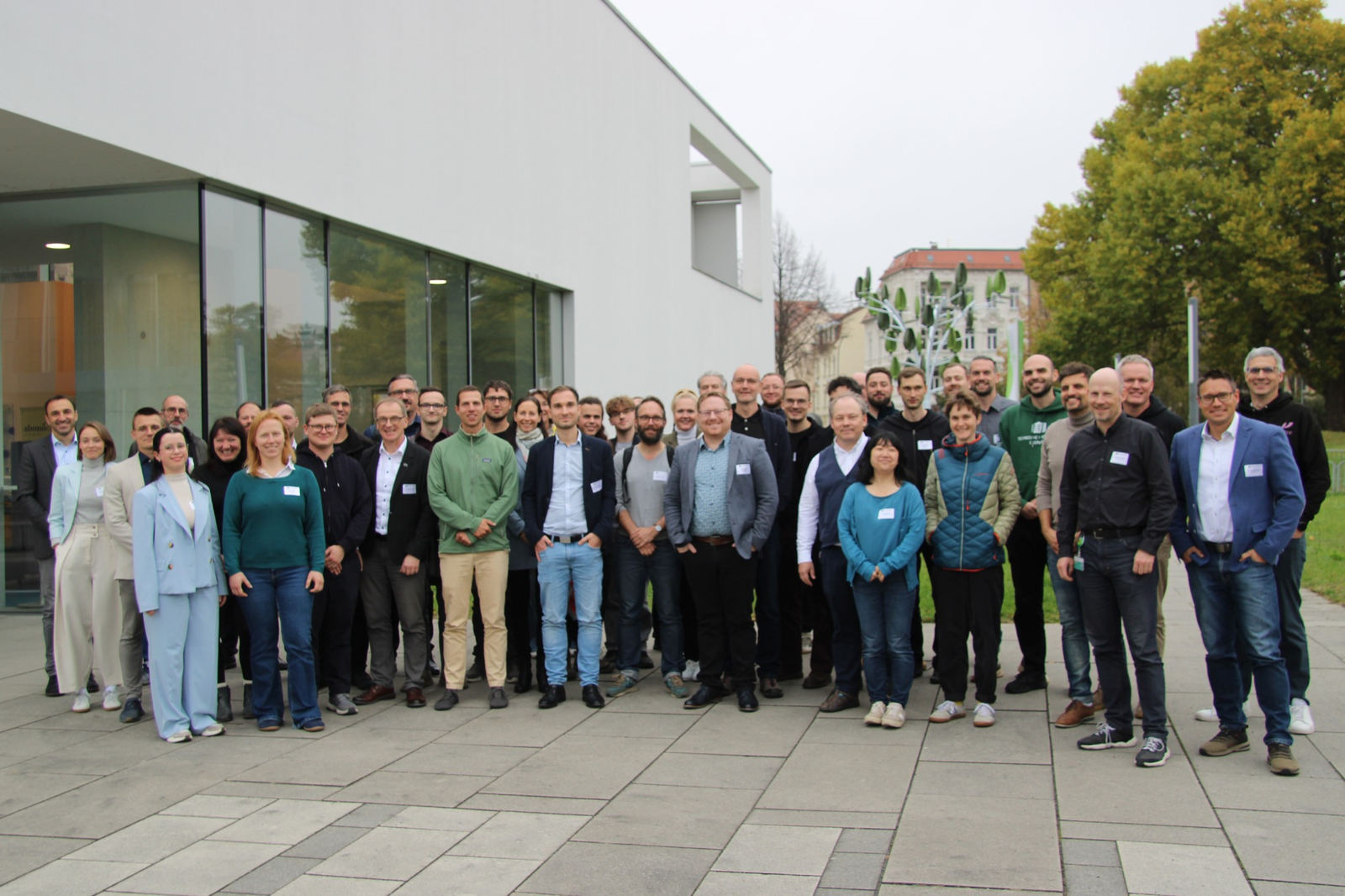
The event brought together experts from academia and industry to discuss research approaches and practical applications. Resource-efficient production and energy systems are of particular interest to the Lausitz region, which is developing new economic prospects in the wake of structural change.
When Agriculture and Energy Supply Work Together
The presentations and discussions at the ReMiLa Transfer Forum demonstrated just how diverse the possibilities are for linking energy and material cycles. Contributions from both research and practice highlighted various approaches to using energy more efficiently, intelligently linking material flows, and maximizing the value of existing resources. This made it clear what potential lies, in particular, at the intersections of energy supply, agriculture, and industrial production.
Key topics included flexible energy use and innovative storage solutions, the utilization of biogenic and industrial residues, and the integration of energy generation with agricultural production processes. The research papers and practical examples presented demonstrated how processes that had previously been considered in isolation can be integrated, thereby creating new opportunities for a resource-efficient and economically viable circular economy.
The structural transformation in Lausitz calls for new ideas for sustainable economic activity. It is crucial that experts from academia and industry come together to collaborate on solutions. The ReMiLa Transfer Forum provides a platform precisely for this purpose: It brings together diverse perspectives and lays the groundwork for turning research ideas into concrete applications.
”The Lausitz Future Prize Honors Young Researchers in Research
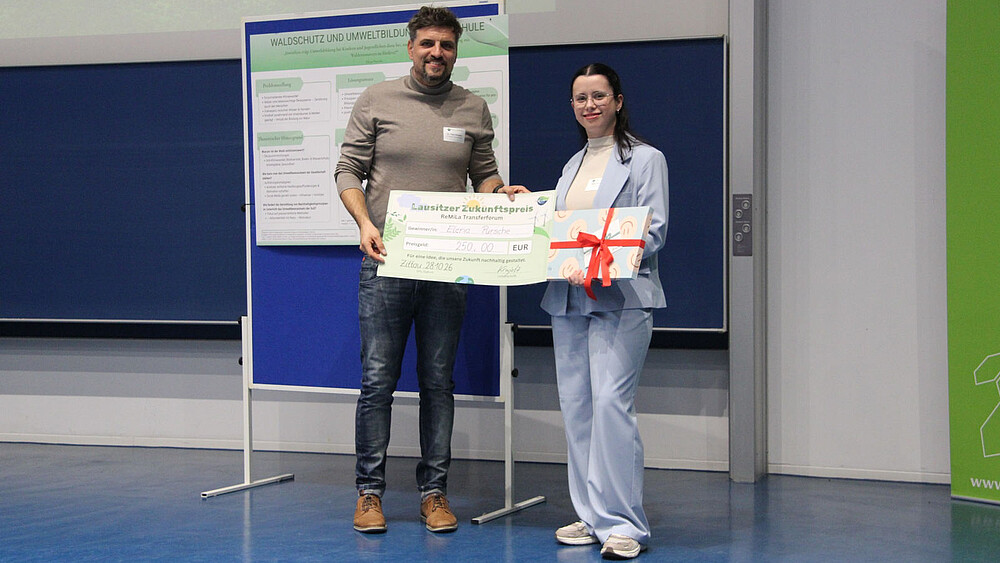
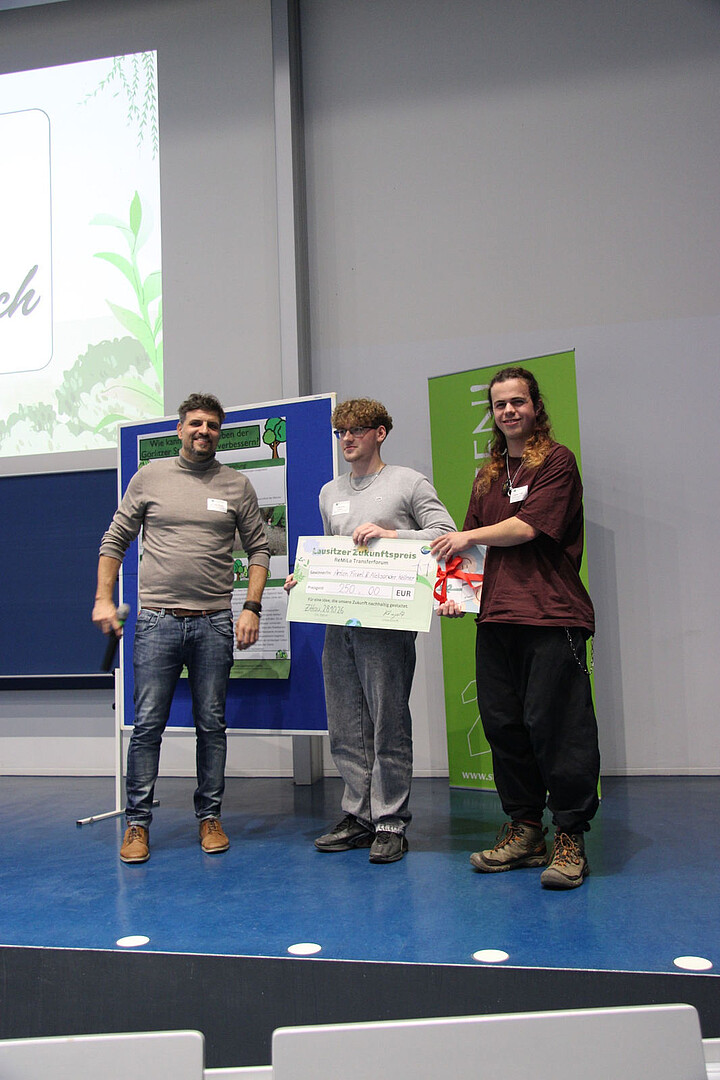
The inaugural presentation of the Lausitz Future Prize demonstrated that even high school students can make scientific contributions to the sustainable development of their region. With this award, the ReMiLa project team honors young people who address issues of the future through scientific research and projects.
Among the award winners are Aleksander Kellner and Anton Ficzel from Görlitz High School. They examined the health of Görlitz’s urban trees and explored possible strategies for improving their living conditions.
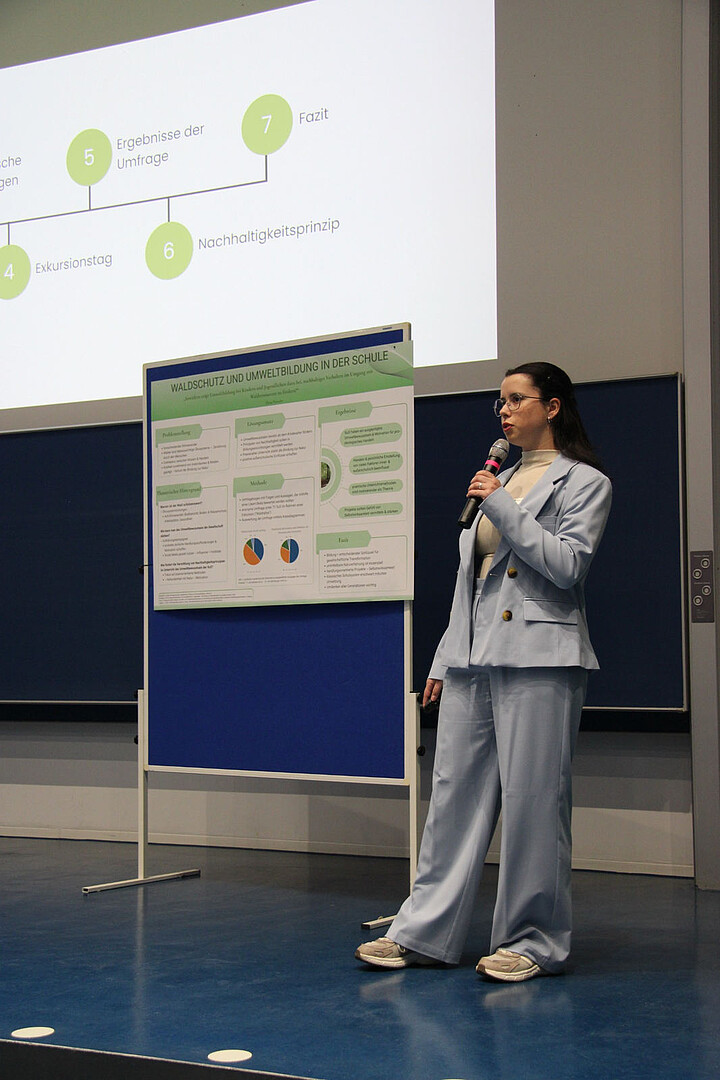
Elena Pursche from the Oberland High School in Seifhennersdorf was also honored. In her project, she explored the impact that environmental education can have on children and adolescents’ sustainable use of forest resources.
The awards specifically recognize the scientific quality and practical relevance of the projects. At the Transfer Forum, the students presented their research to an expert audience from the fields of science and business.
Research for Regional Economic Growth
The Transfer Forum is part of the ReMiLa project —Resilient Microclusters in Rural Areas. The goal is to integrate agricultural production methods, renewable energy, and digital control systems in a way that allows for more efficient use of resources and strengthens regional economic cycles.
To this end, the project is examining, among other things, the interplay between aquaculture, crop production, and energy generation. A demonstration and transfer cluster is intended to show how such systems can be linked in practice.
The HSZG is particularly involved in knowledge and technology transfer. The goal is to make research findings accessible for practical application and to open up new perspectives for sustainable economic activity in rural areas.
Ground Floor