"Sustainability is on everyone's lips and also affects materials research."
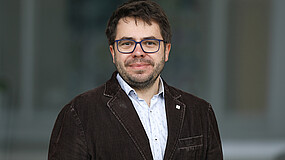
Innovation platform futureSAX conducts interview with Prof. Jens Weber, project coordinator of LaNDER³ at the HSZG.
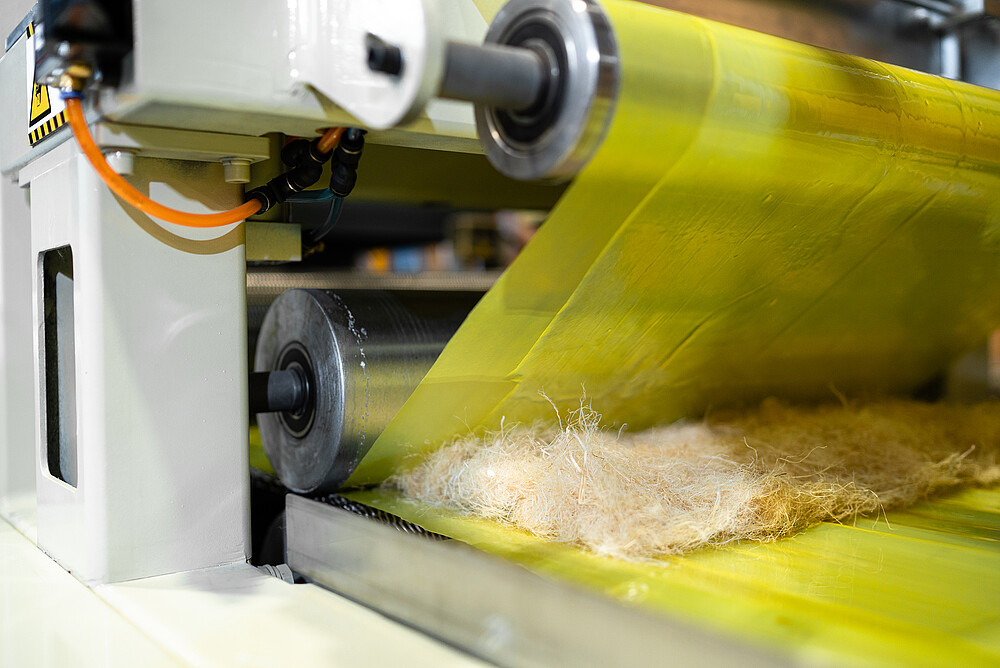
Knowledge and technology transfer takes place at various levels—something Prof. Dr. Jens Weber knows very well. In addition to his work as a professor of physical chemistry at Zittau/Görlitz University of Applied Sciences, Prof. Dr. Weber also serves as coordinator for the LaNDER³ project. The idea behind it: to use natural fibers from regional plants, chemically optimize them, and combine them with plastics.
In an interview with futureSAX, the Free State of Saxony’s innovation platform, he shares more about his work, explains why Saxony’s small and medium-sized enterprises can benefit from it, and highlights the importance of cross-industry platforms for knowledge and technology transfer.
futureSAX: Prof. Weber, you have held the Chair of Physical Chemistry at Zittau/Görlitz University of Applied Sciences (HSZG) since 2014. Please briefly describe the research areas to which you and the Chemistry Department at HSZG are dedicated.
Prof. Dr. Weber: My main areas of focus as a physical chemistinclude applied polymer chemistry as well as the use of highly porous materials for the separation of mixtures of substances. Current projects range from work on natural-fiber-reinforced polymers and water treatment to the investigation and modification of plastic surfaces, such as silicones. Overall, we as chemists at the Zittau/Görlitz University of Applied Sciences are committed to applied research—each with our own areas of focus and eager to collaborate with SMEs.
futureSAX: The HSZG is a regional driver of innovation in Upper Lusatia. In your view, how important is knowledge and technology transfer for the region’s economic development?
Prof. Dr. Weber: It’s crucial ! As a university, we are involved in a wide range of collaborations with local as well as regional companies. Knowledge and technology transfer takes place at various levels—from student projects during work placement semesters to contract research. These two examples already clearly illustrate important drivers of economic development: Local companies can secure skilled professionals for their future growth early on, and companies with good ideas but no in-house R&D department or experience in R&D can work with us to develop their ideas into—ideally—a finished product. These joint efforts toward economic development have been reinforced for some time by additional initiatives, such as the Lausitz Life & Technology Alliance, as well as other activities related to the structural transformation process.
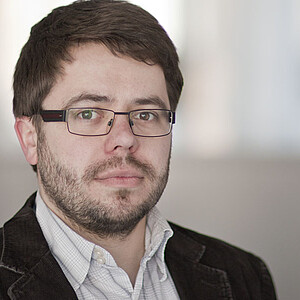
"We provide impetus that generates added value with and for small and medium-sized businesses in Saxony and Upper Lusatia." Prof. Dr. rer. nat. Jens Weber, LaNDER³ Project Coordinator, Zittau/Görlitz University of Applied Sciences
”futureSAX: Professor Weber, you are coordinating the project “Lausitz Natural Fiber Composites: Decentralized Energy, Raw Materials, Resources, and Recycling (LaNDER³).” What does this entail, and how can small and medium-sized enterprises in Saxony benefit from this project?
Prof. Dr. Weber: LaNDER³ is a strategic partnership—funded by the BMBF as part of the FH-IMPULS program—between the HSZG and a wide range of other partners, primarily companies from the region. The scientific goal is to advance the sustainable and economically viable use of renewable raw materials. This is being achieved through a series of projects, not only at HSZG but also directly within the participating SMEs. The research activities focus on natural fiber-reinforced plastics (NFK) and their entire product life cycle.
The thematically interlinked projects address both the development of efficient technologies and processes for the production, refinement, use, and recycling of NFK, as well as energy generation from biological residues during fiber production and recycling.
The partnership has been in an intensification phase since 2021 and will continue to evolve dynamically. In doing so, we continue to develop satellite projects, connect partners with one another, and—with the shared laboratory facility set to open shortly—offer a “shared factory”—in short, we provide impetus that generates added value with and for small and medium-sized enterprises in Saxony and Upper Lusatia. Feel free to reach out to us—we’re not an exclusive club!
futureSAX: At the futureSAX Innovation Forum on September 15, 2022, in Görlitz, you’ll be discussing the opportunities presented by new materials for resilient supply chains with representatives from the business community. What can interested companies and researchers expect?
Prof. Dr. Weber: Sustainability is on everyone’s lips and also affects materials research; here in Zittau, we focus on NFK, among other things. The overarching concept directly related to this is the bioeconomy. It is becoming increasingly important, in part to reduce dependence on fossil raw materials, and is moving more and more from the research context into broader industrial implementation. In this context, the question also arises: Are (further) disruptive technologies on the horizon? What challenges and opportunities are emerging? Specific questions—some of which may be provocative—could include, for example:
- Does lightweight construction make sense if it comes at the cost of making recycling much more difficult?
- Are all renewable raw materials actually sustainable?
- Which technology might still be hampered by a lack of materials or regulatory issues?
- Where do business opportunities and risks lie, and what is the “right” horse to bet on?
These questions and other topics can be discussed with us.
futureSAX: Prof. Weber, you represent the Zittau/Görlitz University of Applied Sciences in the Saxon Transfer Network ; in addition, the LaNDER³ project, along with other Saxon transfer projects, . How important are cross-industry platforms for knowledge and technology transfer?
Prof. Dr. Weber: I’vealways approached the world with curiosity—futureSAX is a place where new ideas, some of which may seem “quirky” at first glance, come together—for me, it’s an ideal place to gain new inspiration and also to contribute ideas in return. In that sense, I consider interdisciplinary networks to be extremely important, also for finding the partners needed to bring exciting projects to life.
futureSAX: Prof. Weber, thank you very much for the interview.
You can find more information about LaNDER³ here.
On September 15, 2022, Prof. Jens Weber will be a guest at the futureSAX Innovation Forum in Görlitz. Among other things, he will speak and discuss the challenges and opportunities of the bioeconomy.