
From structural to transformation funding
A study co-authored by the TRAWOS Institute formulates recommendations for sustainable structural change in lignite mining regions.
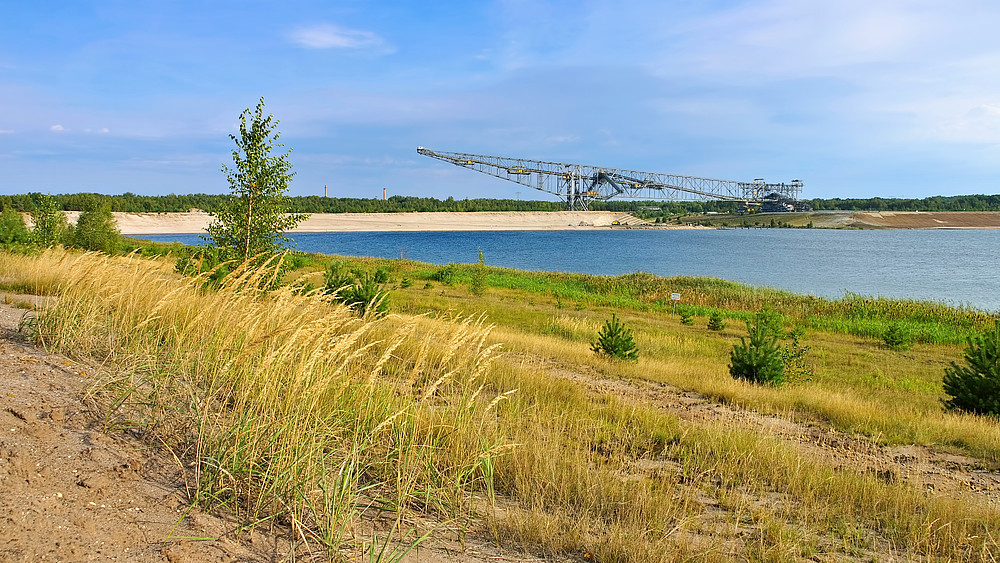
Between 2019 and 2022, a research team from the TRAWOS Institute (Raj Kollmorgen, Markus Will, Annekathrin Kluttig), in a consortium led by the Wuppertal Institute for Climate, Environment and Energy and in cooperation with the ifo Institute for Economic Research (Dresden site), helped to realize a project funded by the Federal Environment Agency, which dealt with the past, present and future opportunities for sustainable regional development in the municipalities of lignite mining and power generation (in Brandenburg, North Rhine-Westphalia, Saxony and Saxony-Anhalt).
The study, which has now been published and summarizes the results of the project, not only bundles analyses and existing legal and political conditions and actor constellations, but also formulates concrete recommendations for sustainable structural change in lignite regions. The study shows that it is crucial for successful structural change to integrate the sustainability agenda into the design of funding programs and development projects. It also requires the active participation of local stakeholders and the inclusion of the ideas and interests of local people.
- Anchoring sustainable and climate-neutral regional development as a funding objective and priority in all structural funding programs (with a clear reference to the German Sustainability Strategy (DNS))
- Reserve at least 30 percent of structural change funding for environmental sustainability goals
- Development of clear and binding "Do No Significant Harm" criteria for all structural funding programs and their projects
- Stronger promotion of transformative and process-based approaches
- Introduction of a consistent, regular and mandatory evaluation of implementation and funding results for all structural funding programs
The study is an important practice-oriented contribution to shaping sustainable structural change in lignite mining regions. It provides valuable insights for the stakeholders in the affected regions and supports the participatory design of a sustainability transformation with explicit consideration of the economic necessities and needs in the context of the coal phase-out.
”You can download the studyhere.
2nd upper floor

2nd upper floor