"You don't realize that you're getting older!"
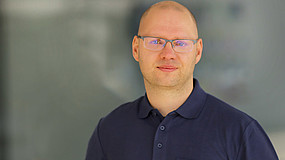
With Udo Johne, the electronics technicians for devices and systems are getting a new apprenticeship program director at HSZG. The new apprentices are also pleased about this.
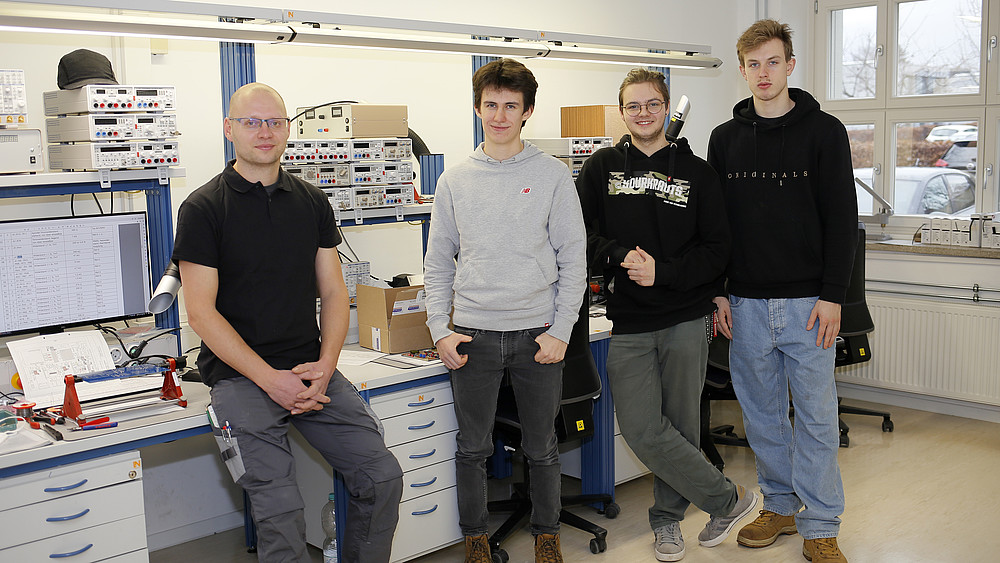
Since 1985, Dipl.-Ing. (FH) Andreas Israel has been training electronics technicians for devices and systems at the HSZG. He will now hand over leadership of the apprenticeship program to Udo Johne effective January 1, 2022. For him—who has worked in the Technical Administration & Facility Services division until now—this is not an unfamiliar role: “I’ve been filling in for Andreas as training director since 2008 whenever he was on vacation or otherwise unable to be present. Now I’ve been asked if I’d like to take over the reins.”
Udo Johne himself completed his apprenticeship as an electronics technician for devices and systems at the university and is now looking forward to working more closely with his KIA trainees. After all, these are apprentices who, when they aren’t designing and building electronic devices in the training workshop, spend the rest of their time in the lecture halls of the department of electrical engineering.
“Every year in September, three new trainees begin their dual study program. They are, so to speak, our in-house KIAs, since the HSZG serves as the training organization,” explains Udo Johne.
”Of the standard three-and-a-half-year vocational training period, trainees at the HSZG devote two-and-a-half years to their training and foundational studies. Afterward, they specialize in mechatronics, automation, or electrical power systems. They can then complete their studies with a Bachelor’s degree or a Diplom.
“That’s quite a rigorous program for these young people,” notes Udo Johne, making it clear that he is not responsible for teaching academic content, but rather for the vocational training.
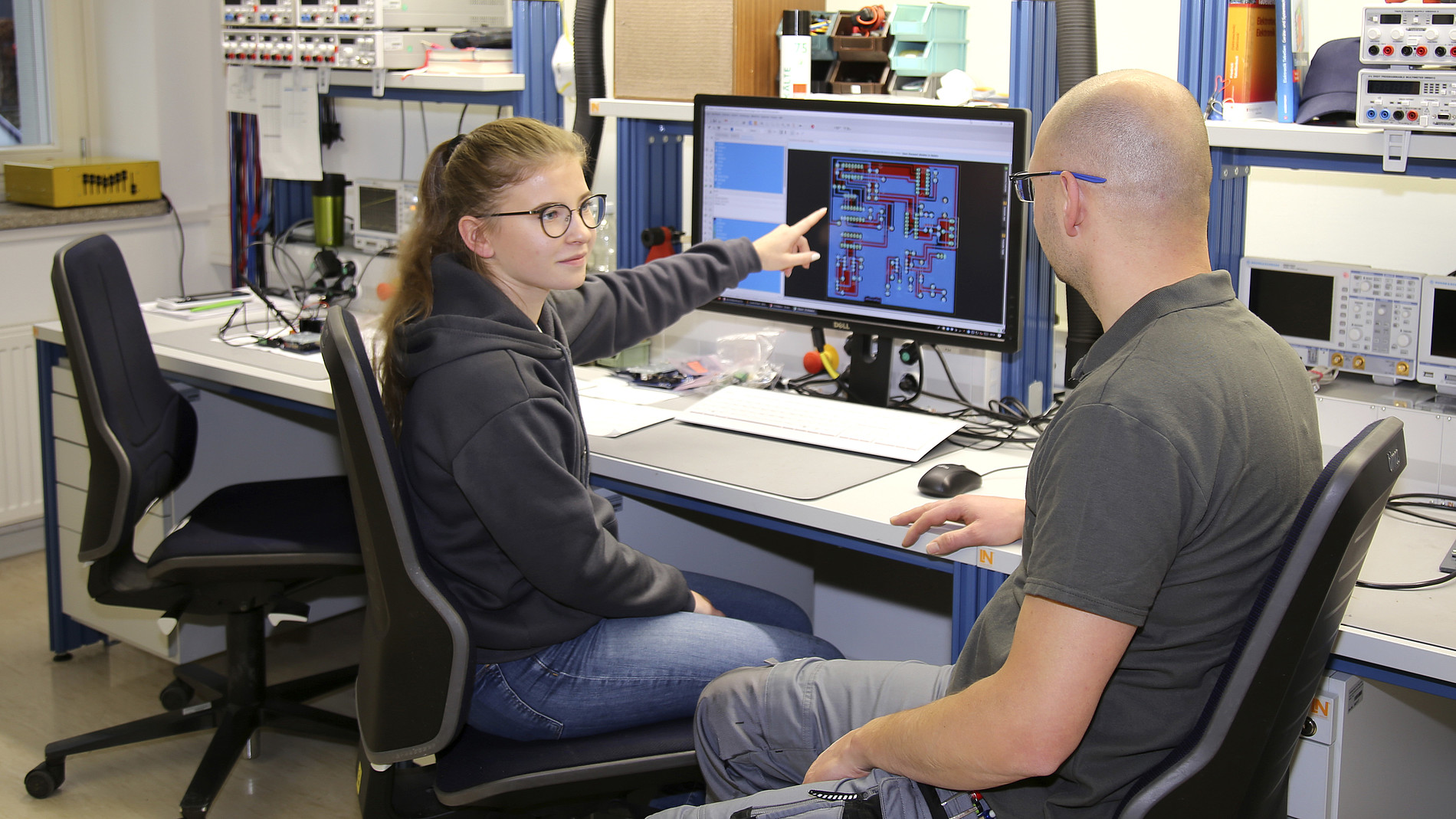
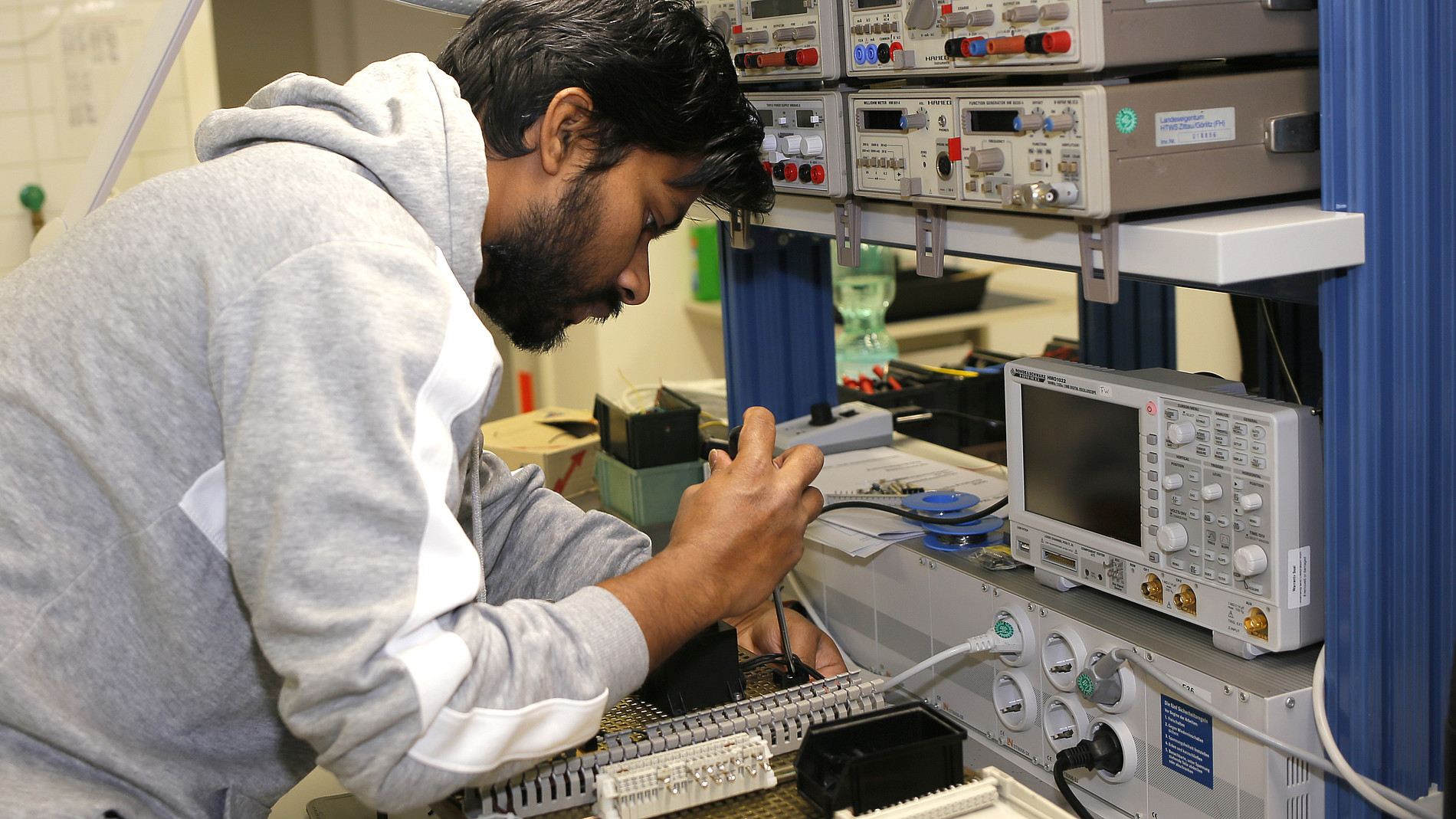
In the training workshop, the aspiring electronics technicians manufacture housing components for devices and systems, install and inspect building electrical systems, conduct safety inspections of electrical equipment, and develop solutions to electronic problems, which they then put into practice.
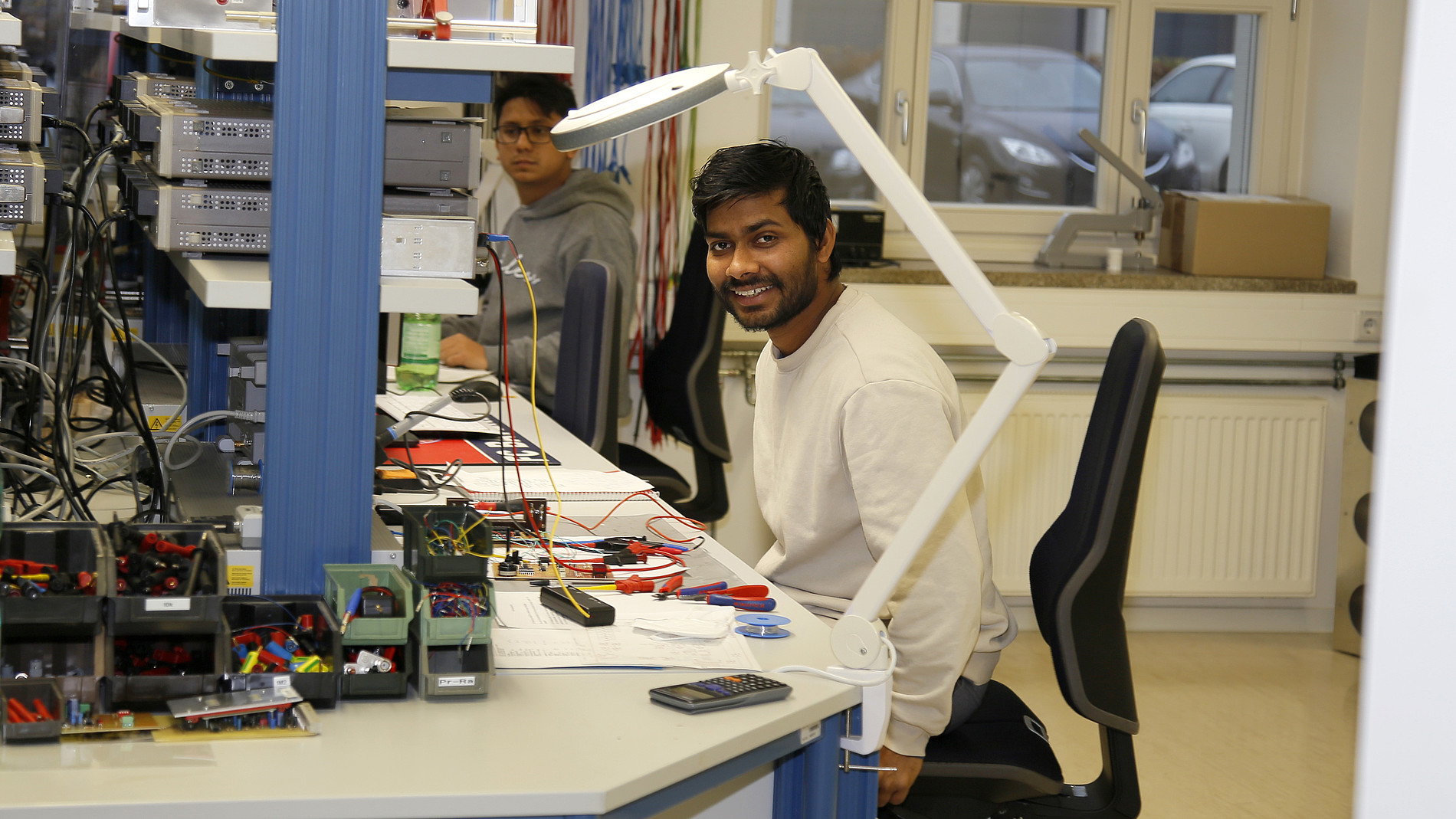
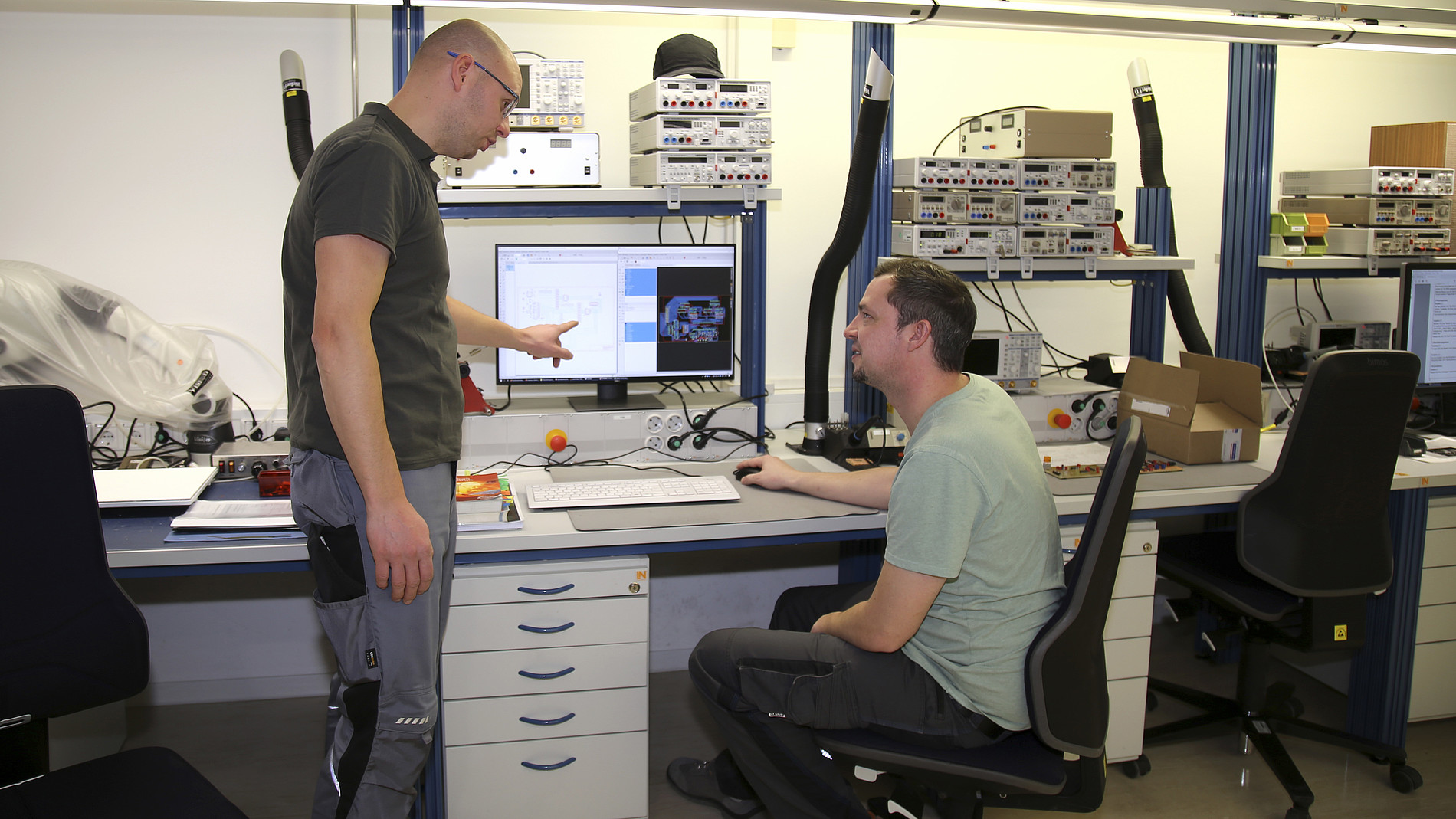
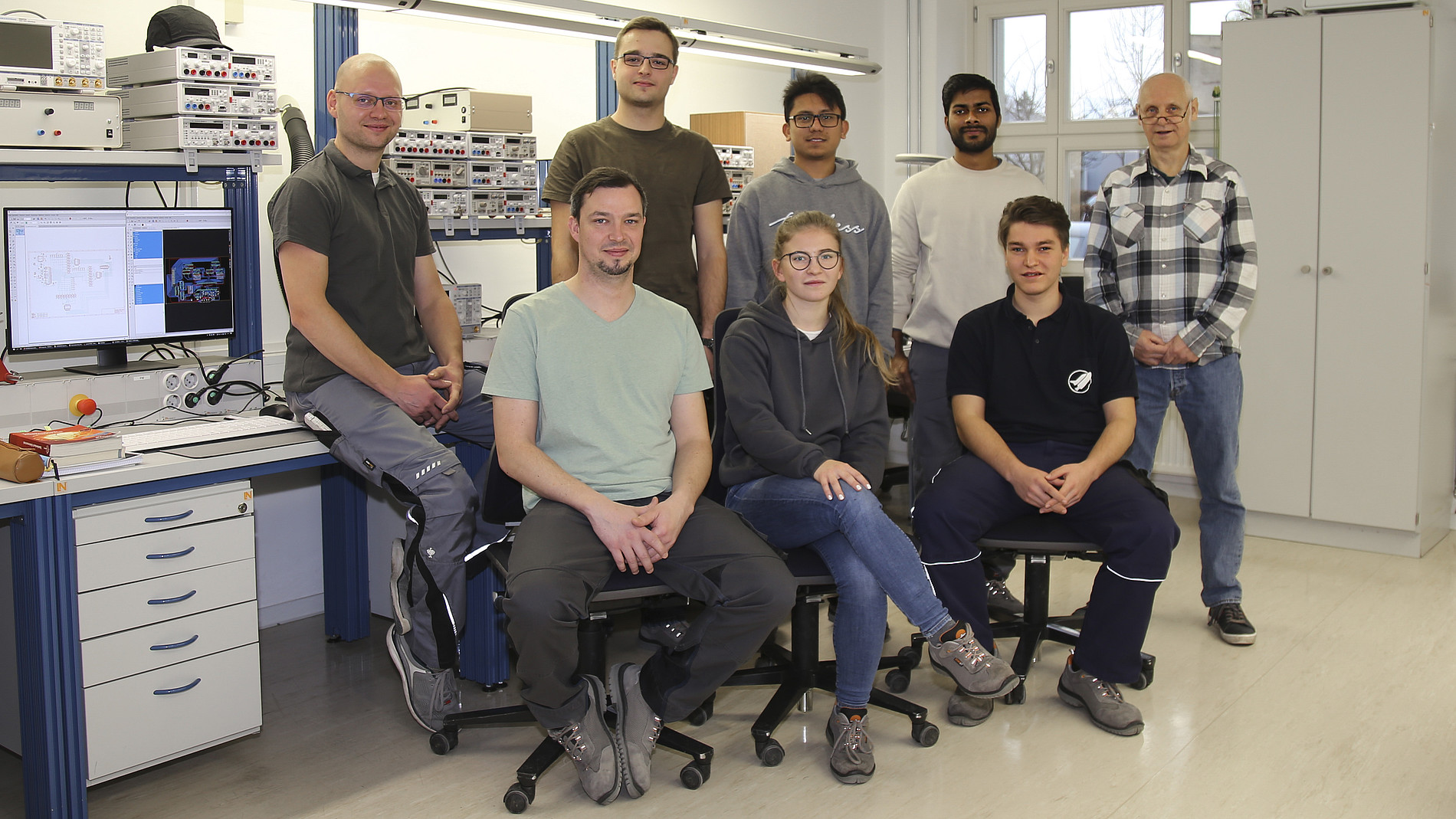
This year’s new apprentices are David Richter, Steven Ehmke, and Paul Guttwein. “I found out about HSZG through the father of a good friend. He studied here himself nearly 20 years ago, ” says David Richter. The new KIA students agree that it’s helpful when the training company is located right nearby. Paul Guttwein: “That way, I was already familiar with the university facilities before I started my studies and had no trouble finding my way around. And if I ever forget to get a signature on my training record, it’s just a short walk to get it added. It was also an advantage for me—and still is—that I got to meet many university staff members before starting my studies.” Steven Ehmke sees challenges alongside all the advantages due to the current COVID-19 measures: “The first year of the program is proving to be more stressful than expected, but I’m still very satisfied.”
Three young apprentices are getting started at HSZG as future electronics technicians for devices and systems. Is this a purely male-dominated field? Udo Johne doesn’t think so. With Emilia Herzig, yet another young woman is currently completing her dual-track apprenticeship. “Thanks to the hands-on experience you get here, you can understand the theory much better right away, and it’s great to be doing something productive in between,” says the third-year apprentice. “We’re a good team. Whenever I have questions, the instructors are always there to help me.”
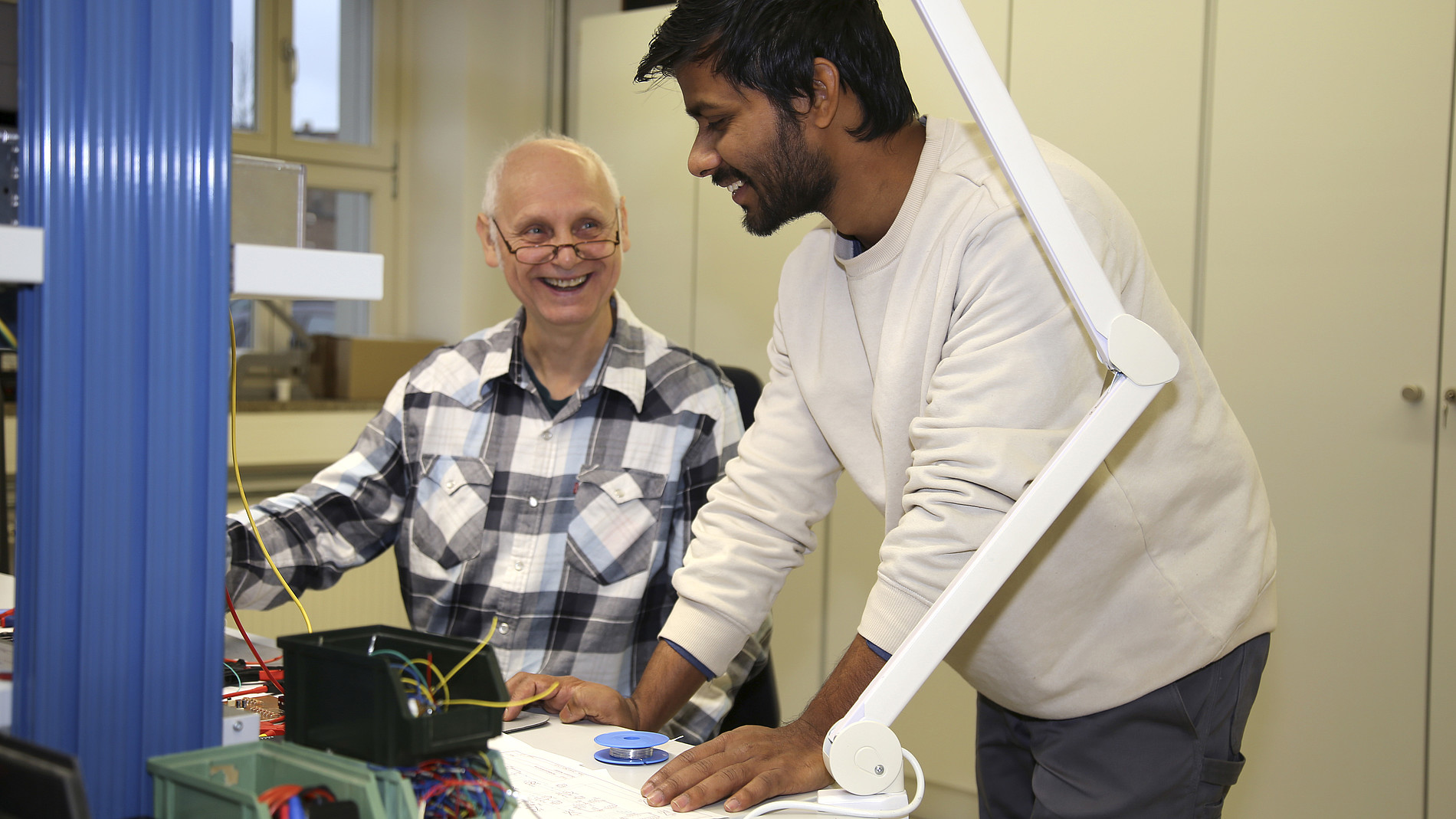
Pramod Kumar Sah agrees. The apprentice is from Nepal and entered the KIA program through the HSZG’s 'Studienkolleg' (preparatory college) after successfully passing the entrance examination. Udo Johne is pleased with the multicultural diversity in the team: “We’ve had trainees from Morocco, the Czech Republic, and even El Salvador. Hats off to those who see the program through, even when it’s not taught in their native language.”
For Andreas Israel, it was precisely the collaboration with the trainees that he’s enjoyed so much over the years: “Whenever things got complicated, we always found a solution. You don’t even notice that you’re getting older when you’re working with young people,” he sums up with a mischievous glance at his successor.
Text: Cornelia Rothe M.A.