
Now also cooperative
The Housing and Real Estate Management degree programme is now available through the KIAdirekt model at HSZG.

The established Housing and Real Estate Management degree programme at HSZG is now also being offered through the KIAdirekt model. This gives students the opportunity to directly combine in-depth theoretical knowledge with practical experience in a company setting.
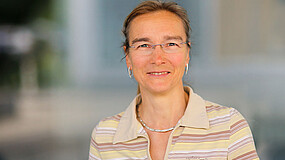
In an interview,Dr. Ulrike Golbs explains how the model works, why it is attractive to the industry—and how it benefits both students and industry partners.
Dr. Golbs, thank you for taking the time to speak with us today. Could you briefly describe what makes the new cooperative degree programme in “Housing and Real Estate Management” unique?
The degree programme is already an excellent combination of in-depth content in civil engineering, Business Administration, law, and real estate management. Thanks to its broad-based knowledge and opportunities for specialization, it provides a good start to a career.
The dual-track program enables both partner companies and students to gain practical experience and apply what they’ve learned directly. This gives partner companies the opportunity to tailor students’ skills specifically to their business needs and establish long-term relationships.
Why is now the right time to offer this degree program?
Goodly trained and motivated employees are always in demand and are particularly important right now for companies’ future planning. Experience shows that combining theoretical and applied practical training helps identify good employees in the long term—employees who are already fully integrated into the workforce by the time they begin their careers.
What does theKIAdirekt model specifically mean for students—how is the program organized?
Students are fully integrated into the degree programme. Unlike in alternating models, they complete their practical training at the company during semester breaks, in a full work placement semester, and as part of their thesis semester. This model allows them to focus on their studies or practical work for longer periods and thus enables them to be deployed more effectively by the partner company.
What advantages does the model offer over a traditional full-time study programme?
Based on my many years of experience with dual study programs, this represents the future of skilled training. Through parallel practical experience, students are able to apply and contextualize the course material much more effectively. Conversely, practical application often triggers that “aha moment” regarding what they’ve learned.
And what added value do you see for the partner companies?
On the one hand, partner companies can begin preparing motivated students for their specific operational tasks and unique requirements even while they’re still in school. Especially when it comes to elective modules, students can specifically choose courses relevant to the company. After four years, students graduate with a practice-integrated Diplom.
With the HSZG as a partner university, we gain access to many years of teaching experience with full-time and dual-track students. The HSZG enters into cooperation agreements with partner companies. In addition to the most important aspect—namely, a solid education—these agreements also provide continuing education events for the companies.
There was recently an online kick-off event to recruit cooperation partners. What was the response like?
We were pleased to see that many companies expressed short- and medium-term interest in the degree programme, both during the kick-off event and in one-on-one conversations. They want to incorporate the dual training programme into their companies.
Many of the attendees already had experience from work placement semesters with students in the full-time Housing and Real Estate Management program.
What requirements do you have for potential partner companies?
We would like to see a long-term, trusting partnership aimed at providing a good education. We do not impose any formal requirements on the companies. Given the degree programme’s diverse curriculum, it appeals to a wide range of companies. I don’t want to limit this by listing specific types. Please feel free to visit our website for more information. But you’re also welcome to come visit us first to get to know us.
You hold the visiting professorship in law—which legal topics are particularly important for students in this degree programme?
The program is very structured in this regard. Beginning with a comprehensive foundation in general and specific contract law, students then study construction law and real property law in depth in subsequent semesters, concluding with tenancy law and the German Condominium Act (WEG). I wouldn’t single out any one area as particularly important, since all areas of law build on one another and thus provide a solid foundation for practical application.
How does your area of expertise specifically factor into the practical study phases?
Legal issues arise daily in companies, ranging from general contract drafting to, for example, specific tenancy law questions in property management. Students are able to classify the facts under the relevant legal provisions. This allows them to continue working with confidence and generally eliminates the need for further legal advice.
What are your hopes for the first cohort of cooperative education students?
That they settle in well to the rhythm of their studies and training and are able to take advantage of and apply all the benefits mentioned. Above all, I wish them a wonderful time as students!
Who should prospective students contact if they’d like to pursue this degree programme through theKIAdirekt model ?
Ms. Groß (kristin.gross(at)hszg.de) and I (ulrike.golbs(at)hszg.de) are happy to assist.
The interview was conducted by Kristin Groß.
First floor