
Inclusion between utopia and reality
The first volume in the "Inclusion and Society" series published by Frank & Timme Verlag was written by Professor Norbert Störmer.
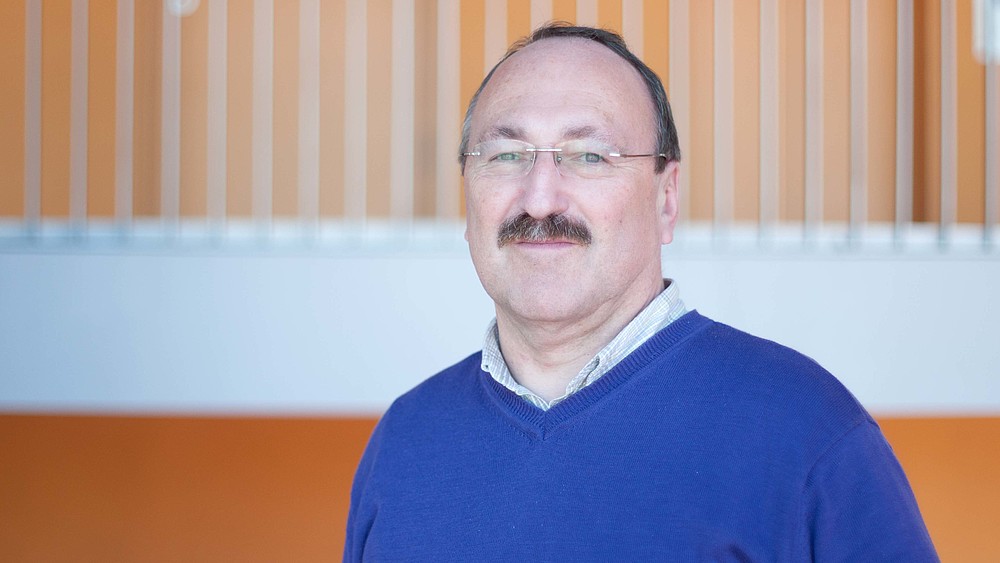
Under the title “Inclusion: Between Utopia and Reality,” Professor Norbert Störmer, a member of the university faculty, published a comprehensive work as an academic contribution to the field of “Inclusion and Society.”
With the German federal government’s ratification of the UN Convention on the Rights of Persons with Disabilities (UN CRPD), the concept of inclusion has gained significance. Demands for equality for people who are generally considered “disabled” suddenly became ubiquitous, and participation became the order of the day. However, a certain “rhetoric of inclusion” also developed in the relevant debates. Although there was much talk of inclusion, the necessary structural changes progressed only slowly—if at all. Often, the concept of inclusion was also used to feign a willingness to change, only to remain on seemingly “tried-and-true” paths. The UN CRPD, however, calls for changes in all areas of social life. Norbert Störmer contrasts aspiration with reality and highlights where relevant initiatives exist and where they do not (yet). In doing so, he points to the potential for change inherent in the concept of inclusion—a potential that must be continually advocated for, both professionally and politically.
Dr. phil. Norbert Störmer, as a professor of Special Needs Education at Zittau/Görlitz University of Applied Sciences, has primarily taught the fundamentals, didactics, methodology, and therapy of Special Needs Education, as well as general education. His research focuses on challenging behaviors, communication, language, and perceptual impairments, as well as dealing with challenging behaviors in group situations. At the end of the 2016 summer semester, Professor Störmer retired from active university service.
Norbert Störmer: Inclusion between utopia and reality
Frank & Timme publishing house, 2021, 594 pages
ISBN: 978-3-7329-0472-3
This work is part of the series: Inclusion and Society

1st floor
1st floor