
Hollywood under the magnifying glass
Student uncovers magnet myth from "Fast & Furious 9".
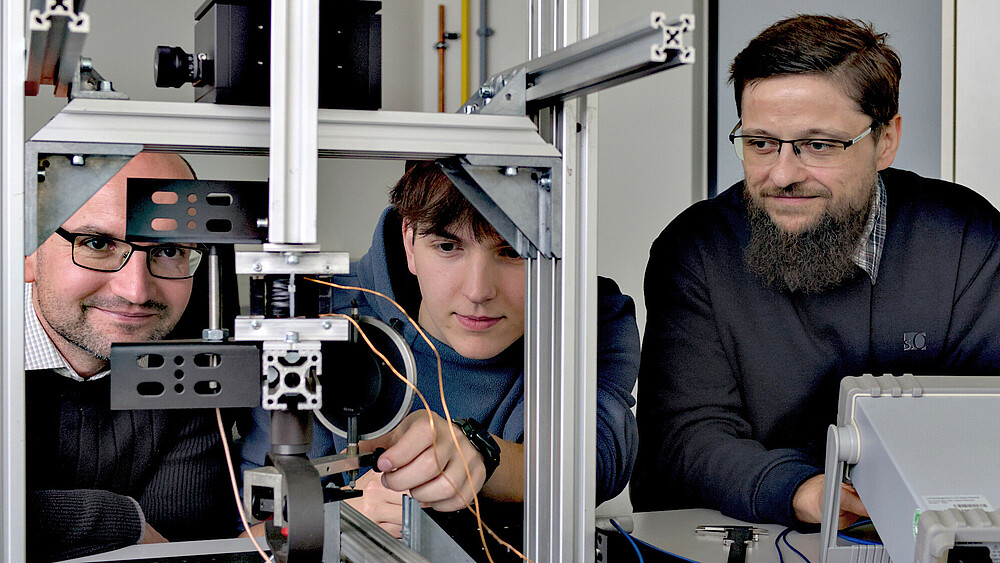
Electromagnets that send cars whirling through the air—in “Fast & Furious 9,” Vin Diesel, aka Dominic Toretto, uses this technology to create action-packed scenes. But can that really work? That’s the question Tom Schirbel, a student at Christian-Weise-Gymnasium in Zittau, asked himself. Together with his physics teacher, Ramona Tschüter, he decided to scientifically examine this spectacular movie scene as part of his Special Learning Project (BELL).
Tom received support from Holger Neumann and Hagen Hoffmann from the Institute for Process Engineering, Process Automation, and Measurement Technology (IPM) at the Zittau/Görlitz University of Applied Sciences. In a complex project, he investigated the physical principles and explored whether electromagnets would actually be capable of attracting—or even repelling—vehicles.
The initial results were clear: electromagnets exert only attractive forces—repelling cars is pure fiction. But even attracting them proved more difficult than expected. Tom calculated the forces that would be required to move a vehicle against the friction of the road surface. The result: about 30 kN, comparable to the weight of three small cars. Using a test rig he designed himself, he verified the results on a smaller scale. It became clear that magnets strong enough to attract a car would be so large that they would never fit inside the Dodge Charger driven by Dominic Toretto.
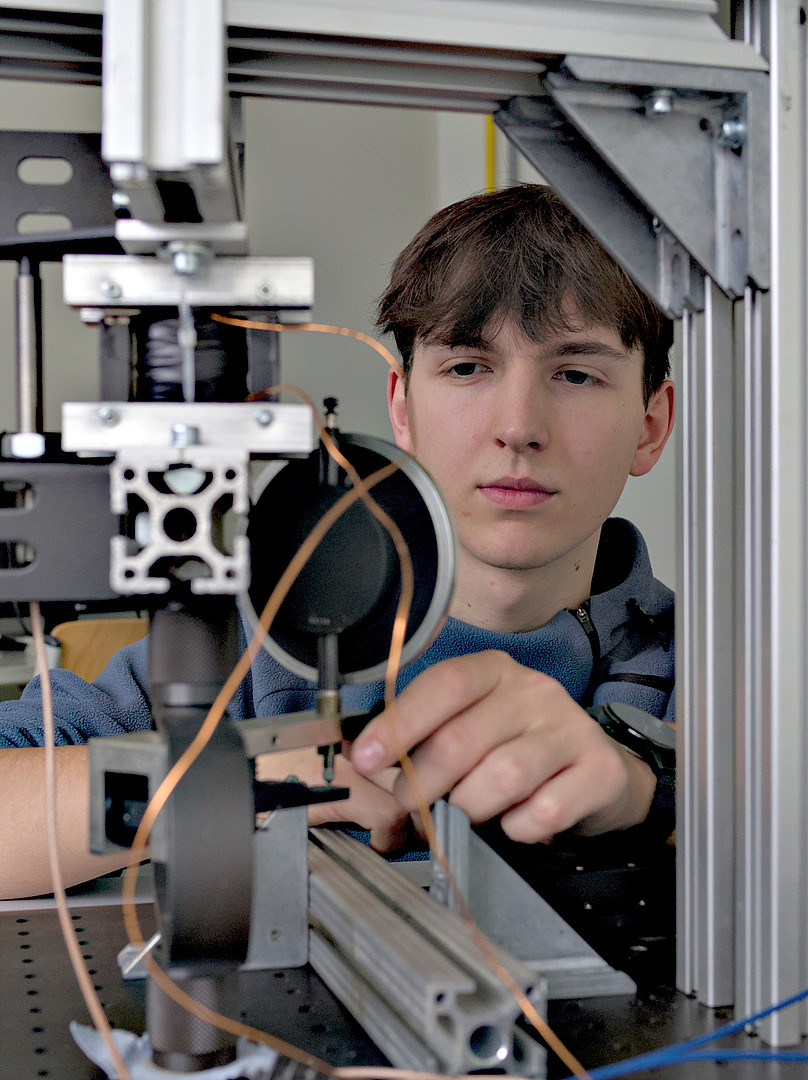
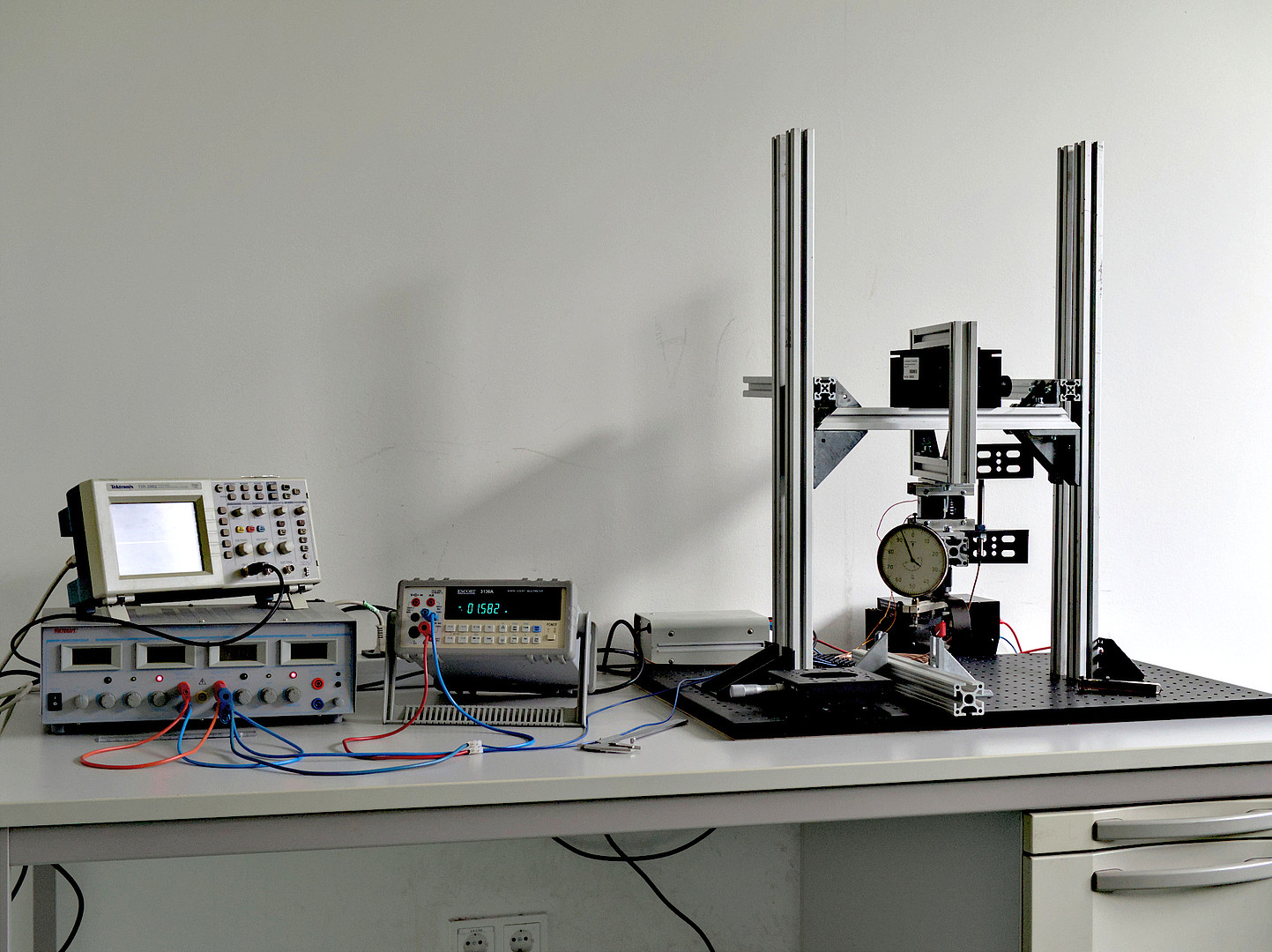
The project’s conclusion: Hollywood exaggerates tremendously, but that’s exactly what makes such scenes so appealing. Tom’s work shows how exciting and insightful it can be to explore the boundaries between fact and fiction—and how movies can inspire people to experience science in a vivid way.
Tom’s conclusion:
“Collaborating with the Zittau/Görlitz University of Applied Sciences was an incredibly exciting and motivating experience for me. What I initially expected to be a rather dry collaboration turned into an open, warm, and humorous partnership. The knowledge was conveyed in a practical and understandable way—a far cry from the sometimes dry lessons in school. To anyone considering gaining practical insights and furthering their development at HSZG, I can only say: Take advantage of this opportunity! It’s worth it.”
Text: Holger Neumann and Hagen Hoffmann
Photos: Stephan Düsterhaupt
Tom received support from the Institute for Process Engineering, Process Automation, and Measurement Technology (IPM) while working on his special academic project. The necessary force measurement equipment was provided by the Faculty of Mechanical Engineering’s machine laboratory.
Contact person
Upper floor