
Historic construction meets digitalization
IZU's unique offerings drew a great deal of interest during the Open House at the Umgebindehaus.
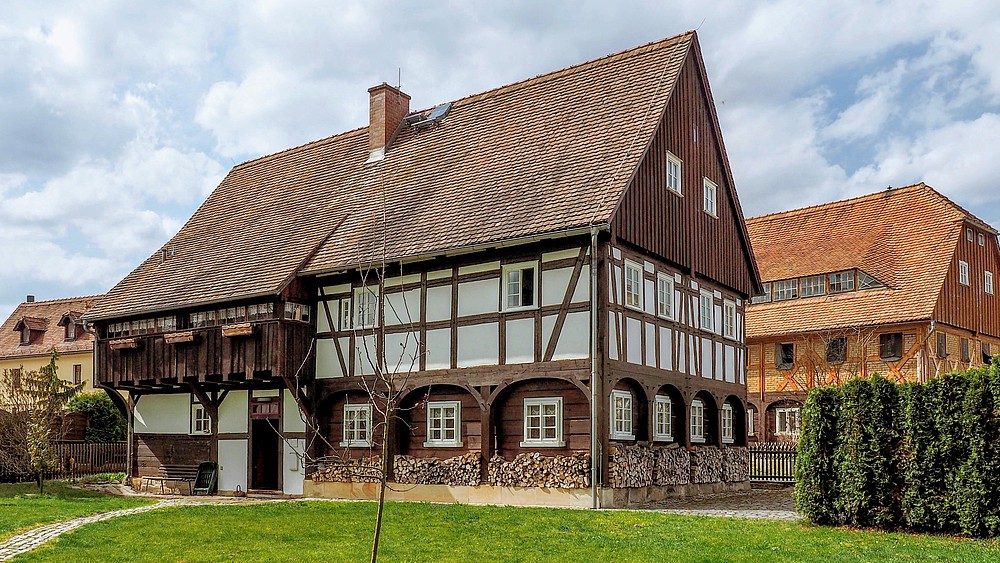
They are the ultimate eye-catchers in our Upper Lusatia region and make every architect’s heart beat faster. Last Sunday, May 30, this year’s Open Umgebindehaus Day once again drew numerous visitors to the Umgebindehaus Information Center’s (IZU) online platform, which is unique in its field.
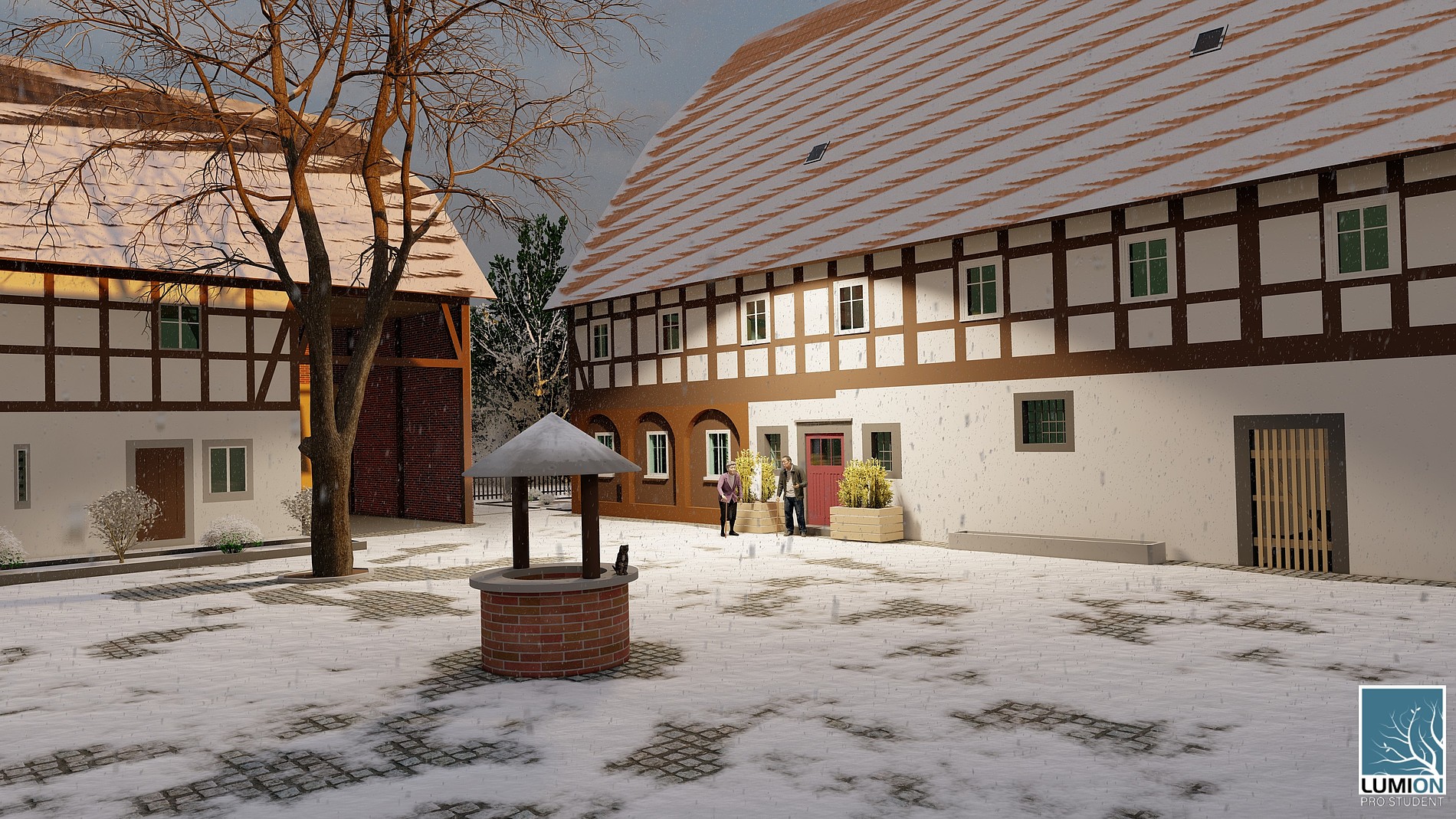
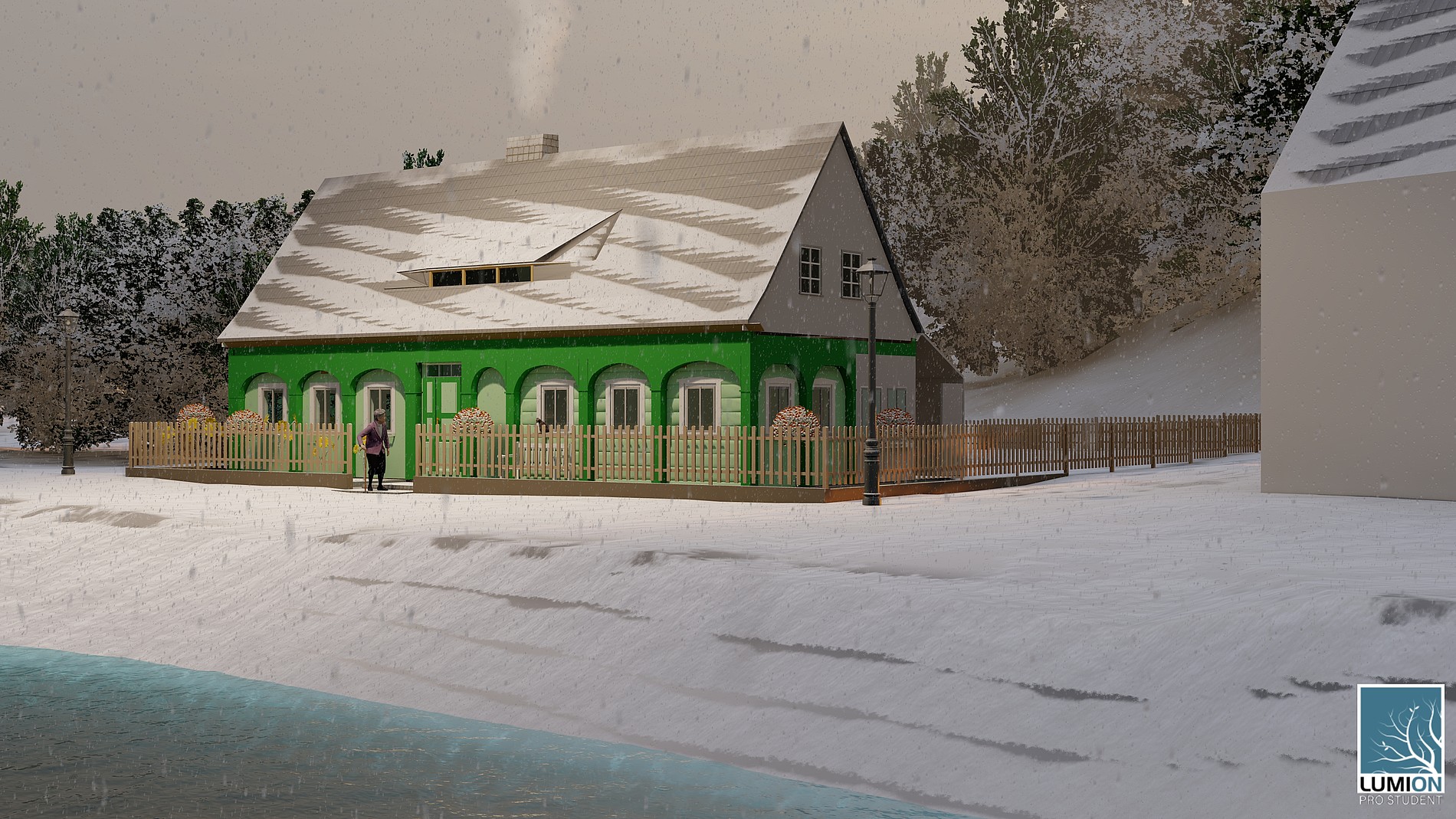
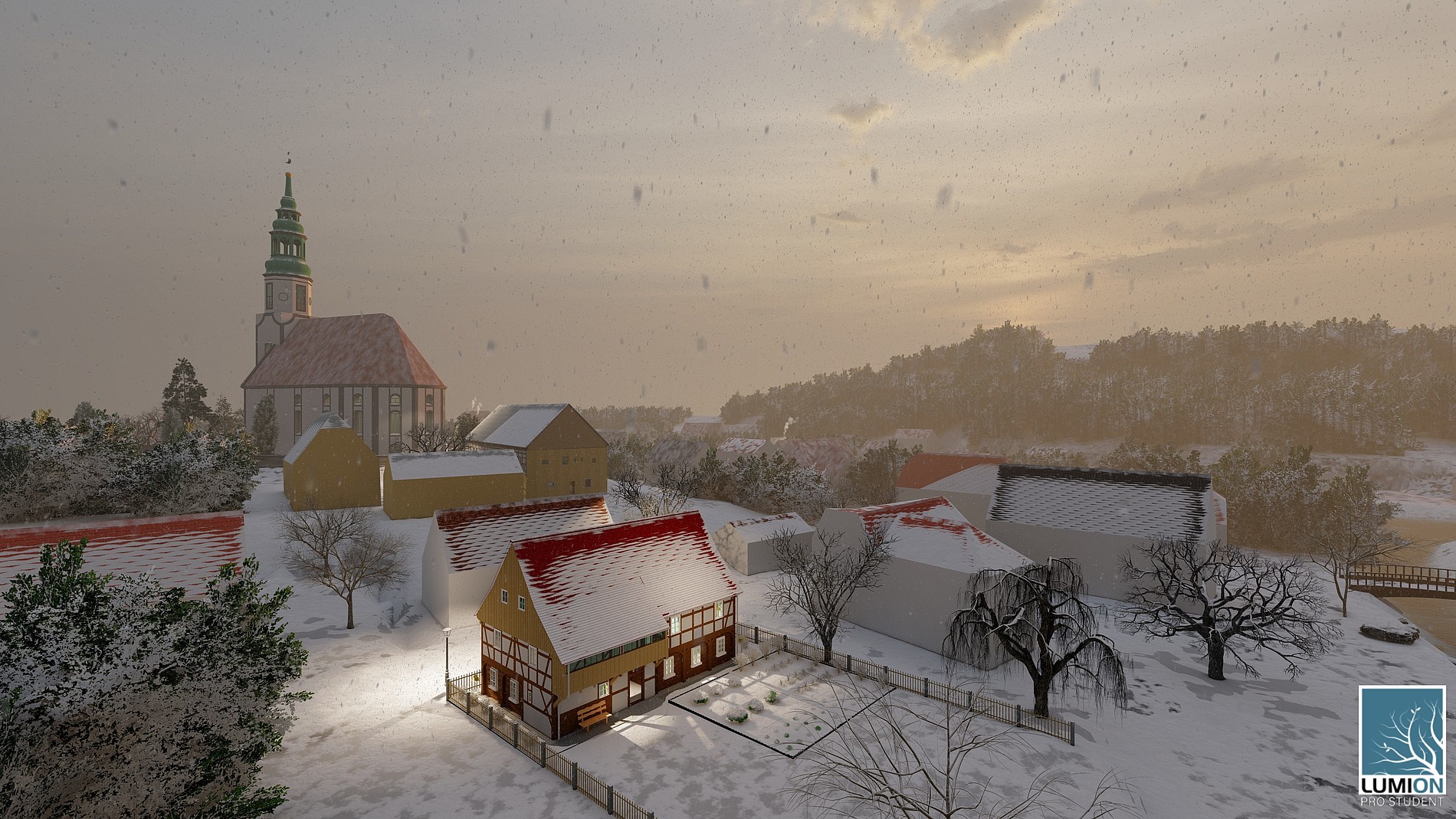
In addition to exciting online presentations, interested visitors found new animations, a virtual Umgebinde village, VR applications, 3D prints, and much more about this regional building style.
What makes it special: Everything is based on student projects from the Housing and Real Estate Management degree programme.
What Makes Us Unique
Prof. Dipl.-Ing. Thomas Worbs is the director of the IZU. In this interview, he describes who is behind the information center, what makes the web platform so unique, and what role its offerings can play for future master carpenters.
Prof. Worbs, what is Open House Day for Half-Timbered Houses?
The Umgebindehaus Open House Day always takes place on the last Sunday in May. On that day, dedicated owners of Umgebindehäuser in Upper Lusatia and the neighboring regions of Poland and the Czech Republic open their buildings to the interested public.
For those who aren’t quite sure what that means: What exactly are Umgebinde houses?
Half-timbered houses are the hallmark of Upper Lusatia’s villages and a unique type of historic building found in such high concentration only in our “tri-border region.” A distinctive feature is the log-walled living quarters, which are “encircled” by a half-timbered structure set in front of them.
What is the connection to the HSZG?
The Umgebindehaus Information Center (IZU) is based at the HSZG. We are the academic point of contact when it comes to Umgebinde houses. Our focus is on the specialized topics of construction, building physics, digitization, and real estate in rural areas. And we’re right there on site, exactly where the Umgebinde houses are located. I even own one myself ;-).
Who is behind the Umgebindehaus Information Center (IZU)?
We are a team of dedicated colleagues from the Faculty of Business Administration and Engineering Management. Dr. Vogel, Jan Fallgatter, Tom Walter, André Hennig, and I are actively involved in this project, which was originally launched by Prof. Schurig. But we wouldn’t be anything without our students in the Housing and Real Estate Management program. With a lot of hard work and dedication, they create the virtual properties that we can use so effectively in our teaching and in our public outreach.
How does the IZU engage with the public?
For non-degree seeking guest students, we’ve set up the module “The Upper Lusatian Half-Timbered House.” We host lecture evenings and are represented in regional foundations, associations, and clubs. But we primarily make an impact through our website, where we connect historic buildings with the digital world. This offering is unique.
What makes this website so unique?
We offer in-depth, specialized information online about the Umgebindehaus. We complement this with digital models of the historic buildings rendered with a high degree of realistic detail. In this area, we cover a very broad spectrum—starting with the virtual half-timbered house—in which all specialized trades are addressed separately—to house tourscaptured using point clouds or photogrammetry, which allow for a complete virtual tour. Additionally, carpentry-style wooden structures can be disassembled and reassembled in virtual space. We we print in 3D . Right down to our fully functional loom, which can be moved around at will in the virtual space while it’s in operation. This can be quite entertaining for the viewer.
Does that mean, at the end of the day, it’s just entertainment instead of educating people?
Every single citizen we can help appreciate the unique features and value of half-timbered houses is worth it! We can see from the steady number of page views that our specialized information—such as the renovation manual, research reports, and lecture transcripts—is clearly a valuable resource, especially for property owners and tradespeople who are working directly on a specific project. The Construction Industry Training Center in Bautzen has taken notice of our virtual carpentry-style assembly of wooden structures and has encouraged us, expressing a desire to expand this offering to include master carpenter training and make it available to the public.
What are your plans for the future of the IZU?
We still have plenty of ideas and motivation. I would like to have a little more time and also solid funding. In historic preservation, particularly in applied building research, third-party funding sources are scarce.
Are there any ongoing projects you’d like to mention?
An exciting collaboration on half-timbered houses is currently underway with our computer science students in Görlitz, led by Mr. Rönisch. Our computer science experts are currently hard at work on the programming. In addition, starting next semester, our long-running and widely recognized Karl Bernert Seminar will evolve into the ZfL module “The Upper Lusatian Half-Timbered House.” This course is also open to non-degree seeking guest students and the interested public. The program can be found on our website.
The website of the Umgebindehaus Information Center (IZU) provides all the information you need about Umgebindehaus-style houses: https://umgebindehaus.hszg.de/.

First floor