Sustainable impetus for the region
The 3rd Lausitz - Life & Technology alliance meeting on November 30 focused on strategies, projects and the interlinking of innovation fields.
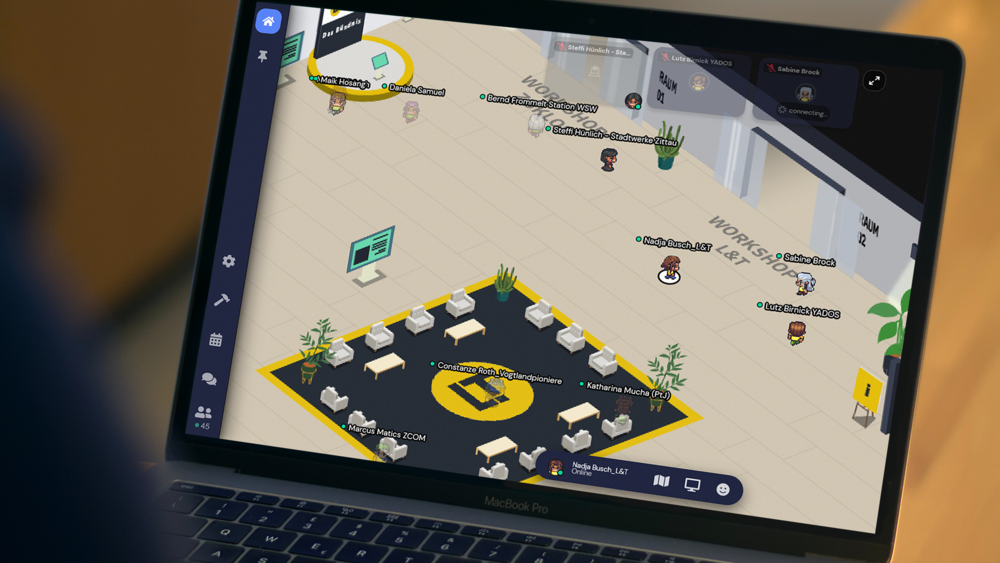
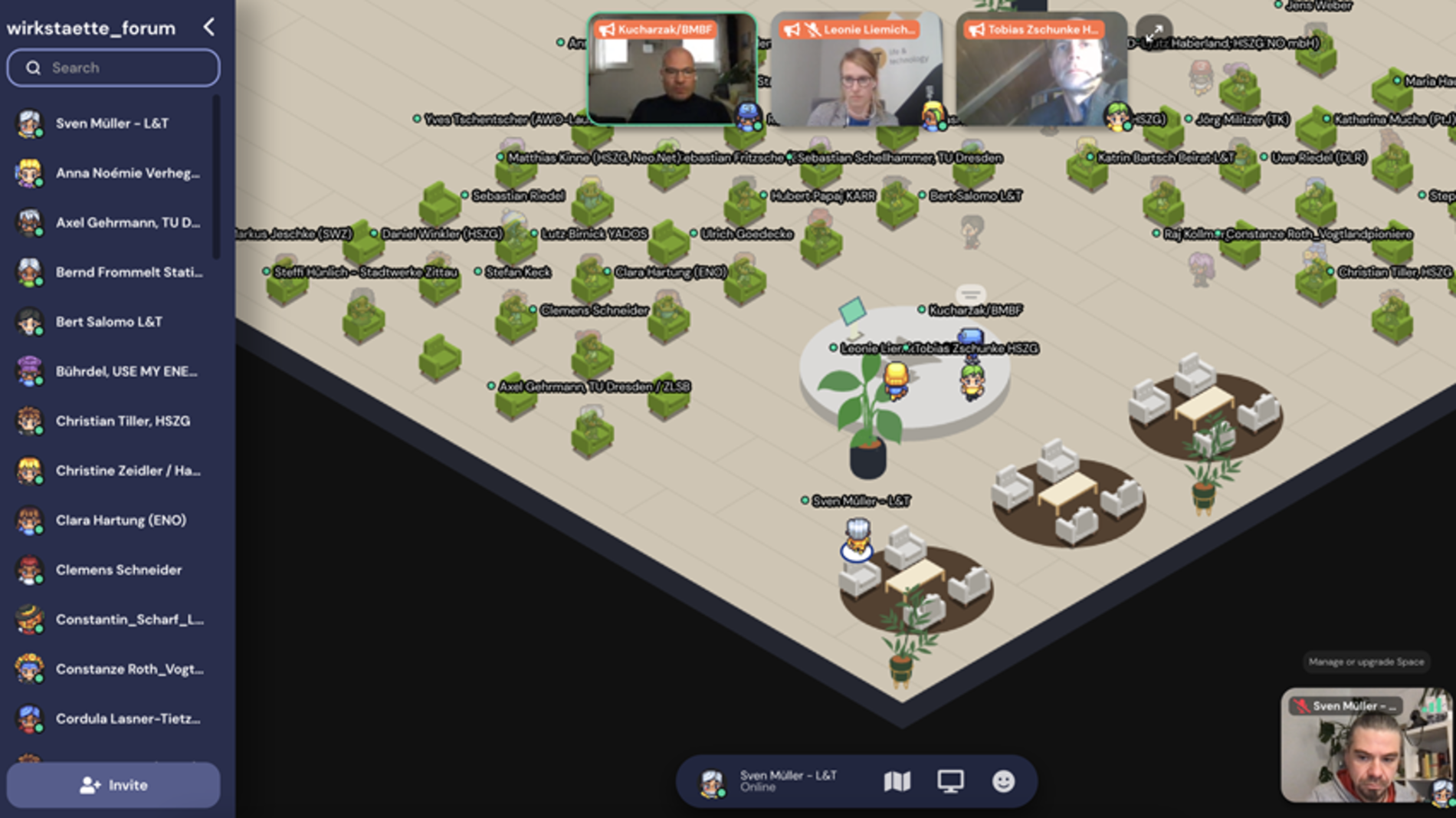
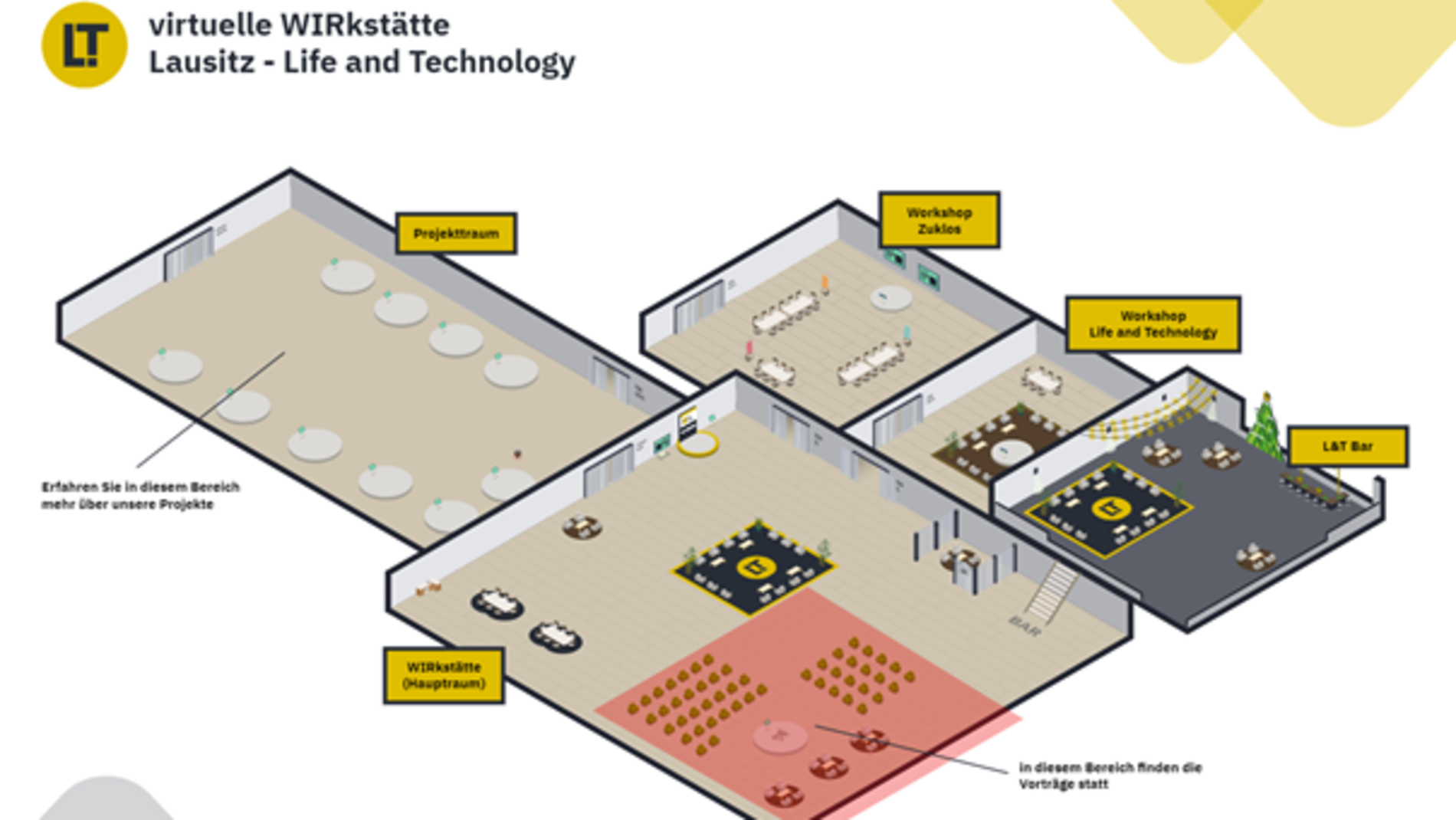
More than 60 alliance members and interested network partners attended the 3rd Lausitz – Life & Technology alliance meeting on November 30. “With a great deal of creativity, the meeting was organized using the online platform gather.town, thereby creating our very own digital L&T world,” explains Leonie Liemich, L&T project coordinator at HSZG. “Thanks to the interactive nature of this platform, we not only facilitated an easy and participatory exchange for networking among alliance partners, but also set up digital project booths showcasing current research projects and enhanced the exchange of ideas during workshops.”
A modern way to exchange ideas for a diverse program
“We don’t just want to promote pure R&D projects, but to support sustainable, innovation-based structural change in the region with a broad understanding of innovation. Creating prospects for the region—being aware of its strengths and weaknesses,” emphasized Dr. Ramon Kucharzak of the Federal Ministry of Education and Research during the opening of the alliance meeting, referring to the WIR program line—Change through Innovation in the Region—through which the alliance has been funded since 2019. As the L&T Alliance spokesperson, Prof. Tobias Zschunke highlighted the successful development of the network’s content and structure over the past two years and proudly emphasized the participation of over 73 alliance partners who are actively shaping the alliance.
Under the motto: “Turning regional ideas into local growth!” Dr. Matthias Kinne, a member of the executive board, and Cordula Lasner-Tietze, from Innovation Management, presented the association neo.NET e.V. and its mission. “Developing sustainable structures requires continuous collaboration between academia and industry, the willingness to turn project ideas into research initiatives, and thereby drive the development of new products in the region. All of this is made possible by the innovative strength of regional stakeholders,” said Cordula Lasner-Tietze. In addition to supporting the alliance partners, the association is committed to ensuring the continuity of the structures of the Lausitz – Life and Technology alliance beyond the funding period.
Integration of Social and Technological Innovations
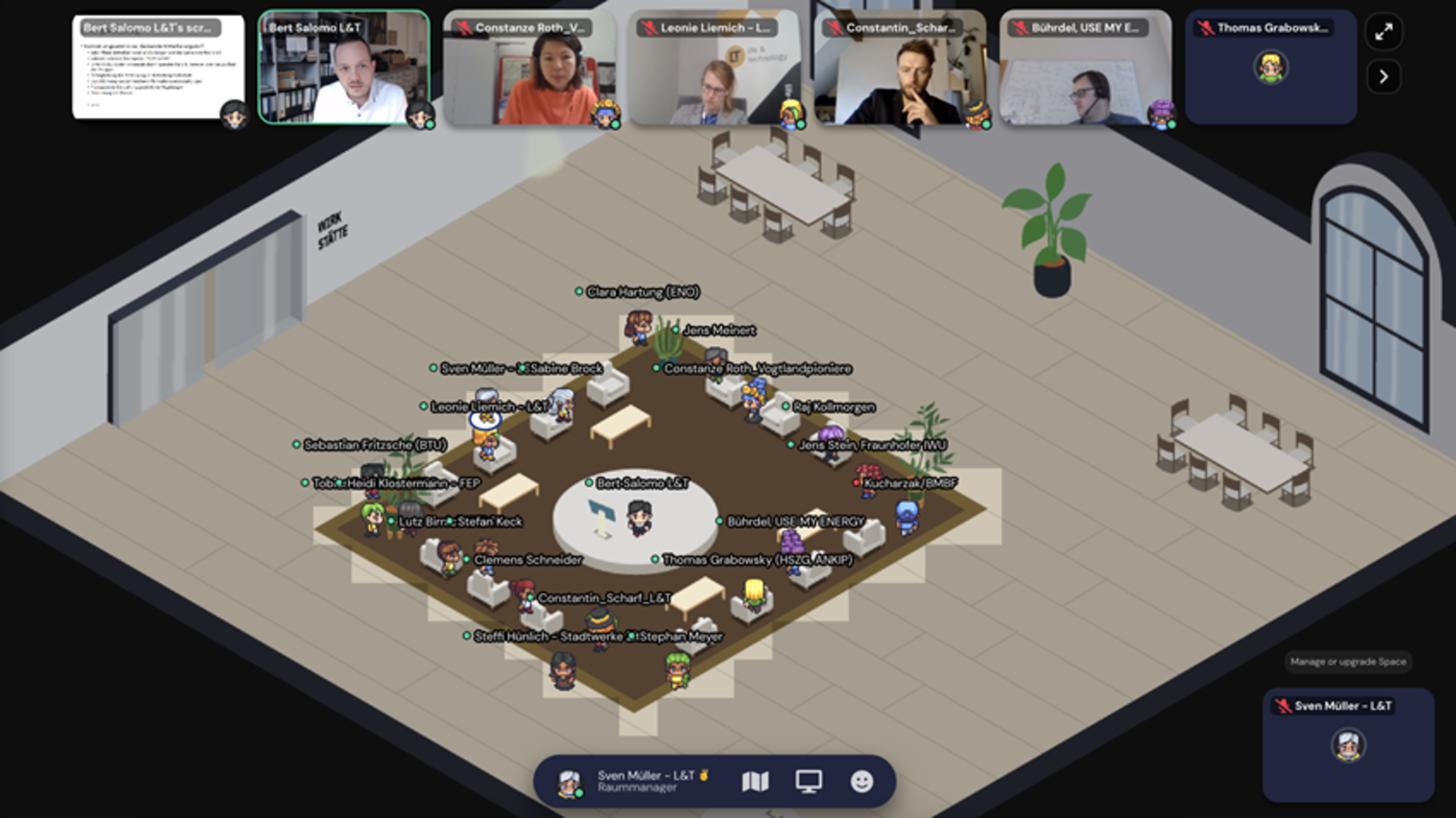
Prof. Raj Kollmorgen, consortium leader of the alliance and head of the strategy development project, presented the alliance’s unique interdisciplinary approach through the expanded L&T strategy concept:
"The aim is to create sustainable impetus for the region by dovetailing technological and social innovations," Prof. Raj Kollmorgen
”The alliance has thus just applied for a second funding phase. How the dovetailing of technological and social innovations can be put into practice as part of F&E projects at L&T was discussed in the second part of the alliance meeting. Two workshops were designed for this purpose.
Workshop 1: Participatory and Sustainable Innovation Dynamics, Using Efficient Energy Storage and Energy Systems as Examples, and Their Social Acceptance in the Process of Structural Change
As an introduction to the workshop, various examples and challenges were discussed, focusing on the integration of technologies for providing renewable energy and on existing participatory formats. Participants then jointly discussed which participatory methods promote increased societal acceptance and to what extent ongoing or planned research projects address the issue of acceptance. This was followed by the question of which institutions and partners must be involved in technological research projects to ensure the sustainable establishment of technological innovations and the associated value creation. The results of the workshop will be further defined in a follow-up working group and will continue to incorporate the potential of the interdisciplinary alliance.
Workshop 2: Extracurricular STEM Education of the Future: What New Technologies and Skills Does Upper Lusatia Need?
Upper Lusatia is undergoing economic transformation, accompanied by further challenges such as a shortage of skilled workers, demographic change, and digitalization. For the region’s success, it is therefore necessary to further develop the regional educational landscape in order to prepare young people early on for the region’s transformation processes and to foster key competencies. In the workshop, participants worked with alliance partners to identify the key levers for the further development of the region’s extracurricular STEM education. Participants discussed which new technologies (including additive manufacturing, modern energy storage technologies, and artificial intelligence) will shape the Upper Lusatia business region in the future. Particular attention was paid to the question of how participants assess STEM education in the region and how it should evolve. The discussion then turned to the skills young people need to actively help shape the structural transformation in their region and become the skilled workers of tomorrow.
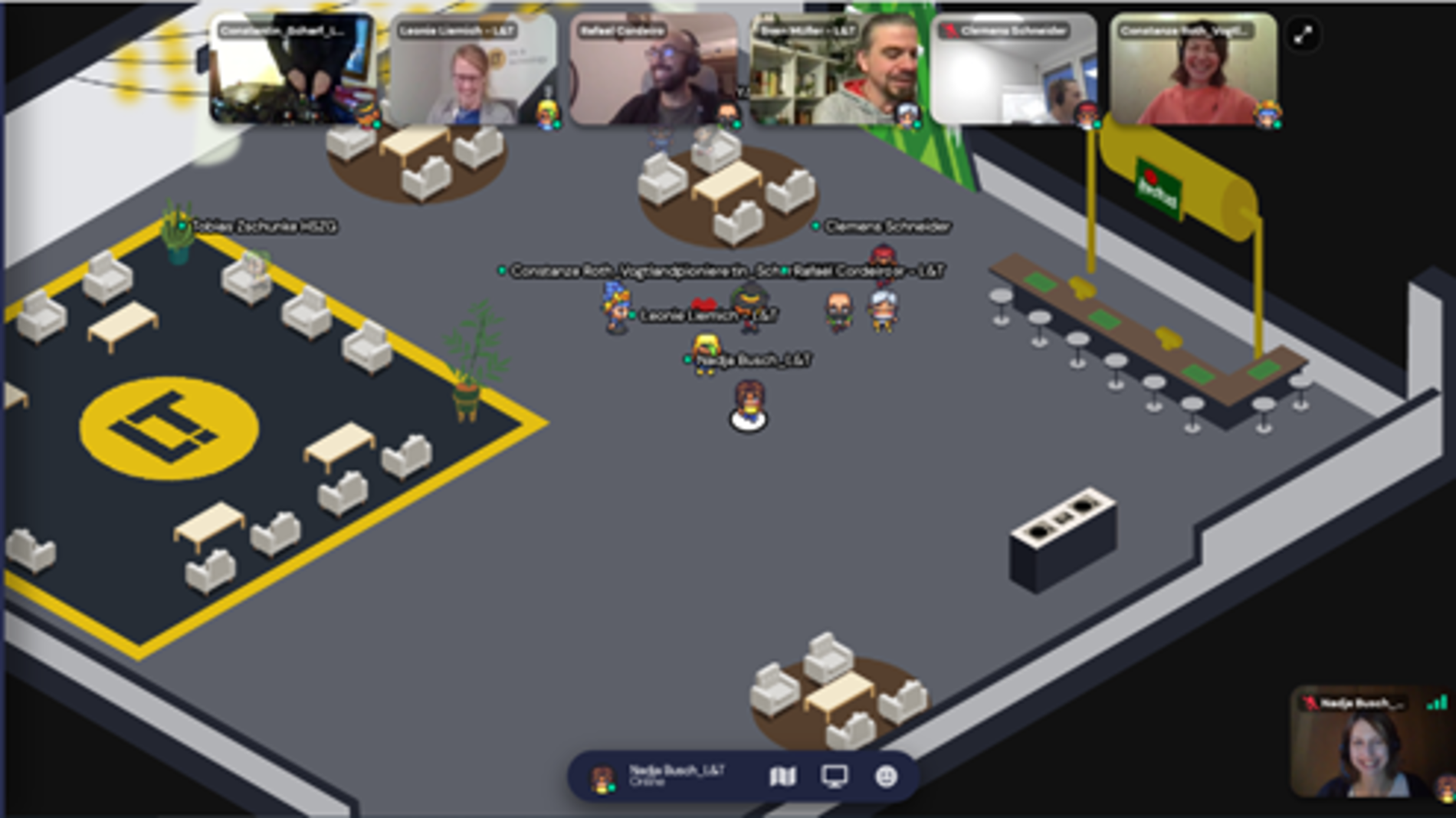
After an intensive exchange and a joint wrap-up session, the event drew to a close in a relaxed atmosphere at our L&T Bar, featuring networking and a live DJ.
We very much hope that we’ll be able to hold our next alliance meeting in person again. Until then, we’ve created an interesting space for communication with our digital hub and look forward to an exciting time ahead!
Summary Workshop LAT
https://www.youtube.com/watch?v=XzXzkmDK0nY
Summary Workshop ZUKLOS
https://www.youtube.com/watch?v=QoNt6gmKbmk
Closing remarks Prof. Kollmorgen
Leonie Liemich, L&T Project Coordinator, Zittau/Görlitz University of Applied Sciences
Email: Leonie.Liemich@hszg.de
Cordula Lasner-Tietze, L&T Innovation Manager, neo.NET e.V.
Email: cordula.lasnertietze@neo-net.de
Sven Müller, L&T Public Relations, Zittau/Görlitz University of Applied Sciences
Email: Sven.Mueller@hszg.de

4th upper floor
2nd upper floor