
It's worth getting up early!
Our students as the future leaders of the university and the region.
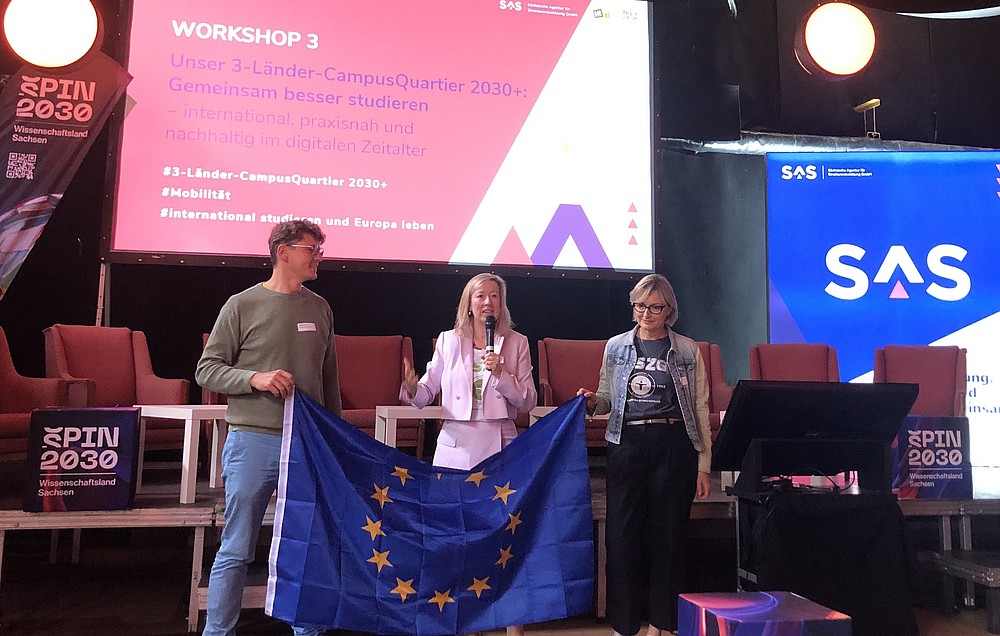
On June 10, 2024, the event “An Early Shift for My Görlitz – Shaping Saxony as a Land of Science” took place at the Kühlhaus Görlitz. In four creative workshops, representatives from the Zittau/Görlitz University of Applied Sciences worked together with young people to develop innovative ideas for a “3-Country Campus Quarter 2030+” in the European City of Görlitz.
The HSZG is committed to a participatory approach to shaping the future of higher education and, in recent years, has engaged many people in the region in its own transformation process amid structural change through a variety of formats. We want to shape the university and the region together with the people here and for the people here. During the “Early Shift” event, we were able to put our approach into practice and, together with the next generation, further develop existing ideas for a “3-Country Campus Quarter 2030+.” As a mentor for our university roundtables and a jury member, I was thrilled by the inspiring ideas from the youth of Upper Lusatia.
”Initiative for creativity, exchange and participation
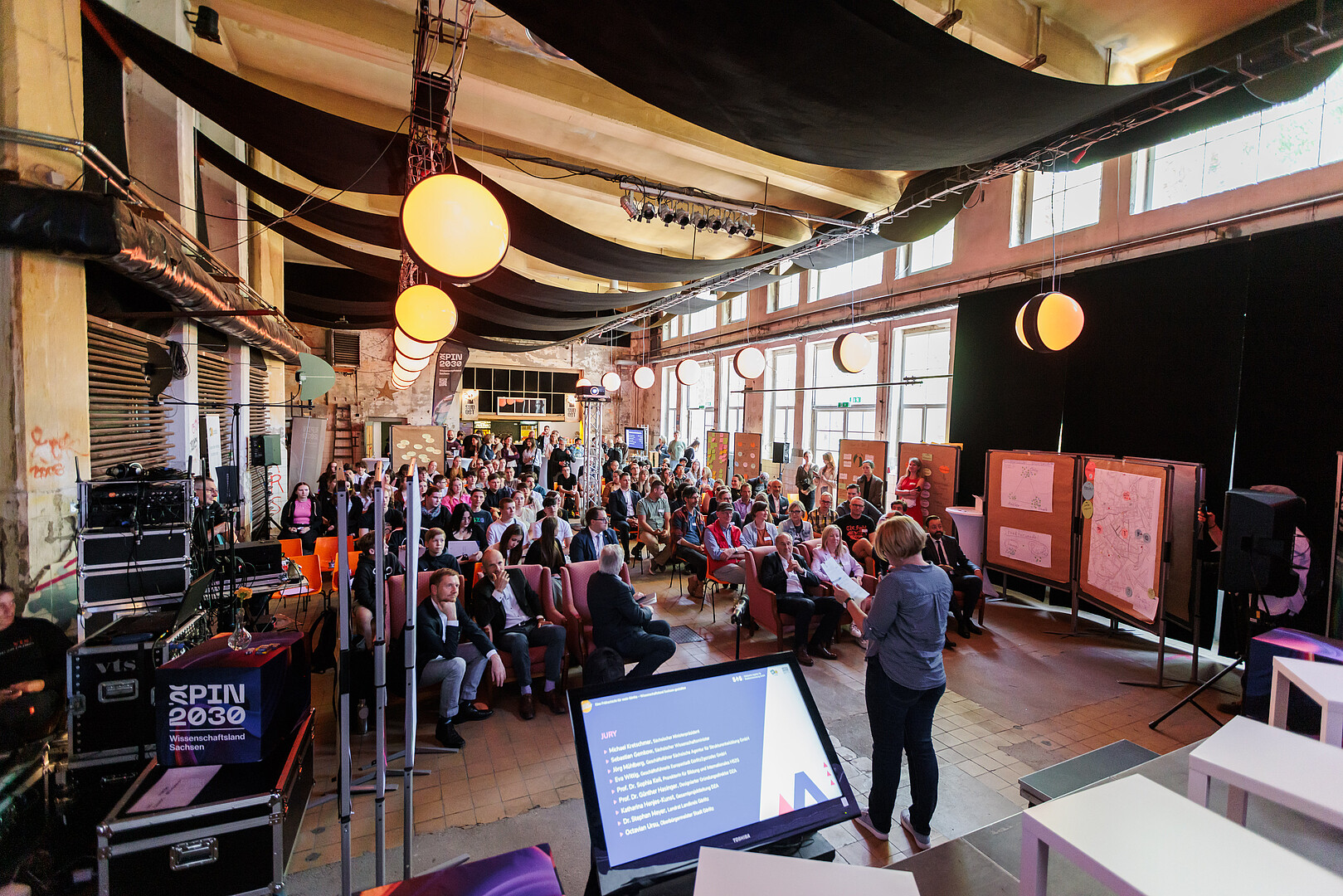
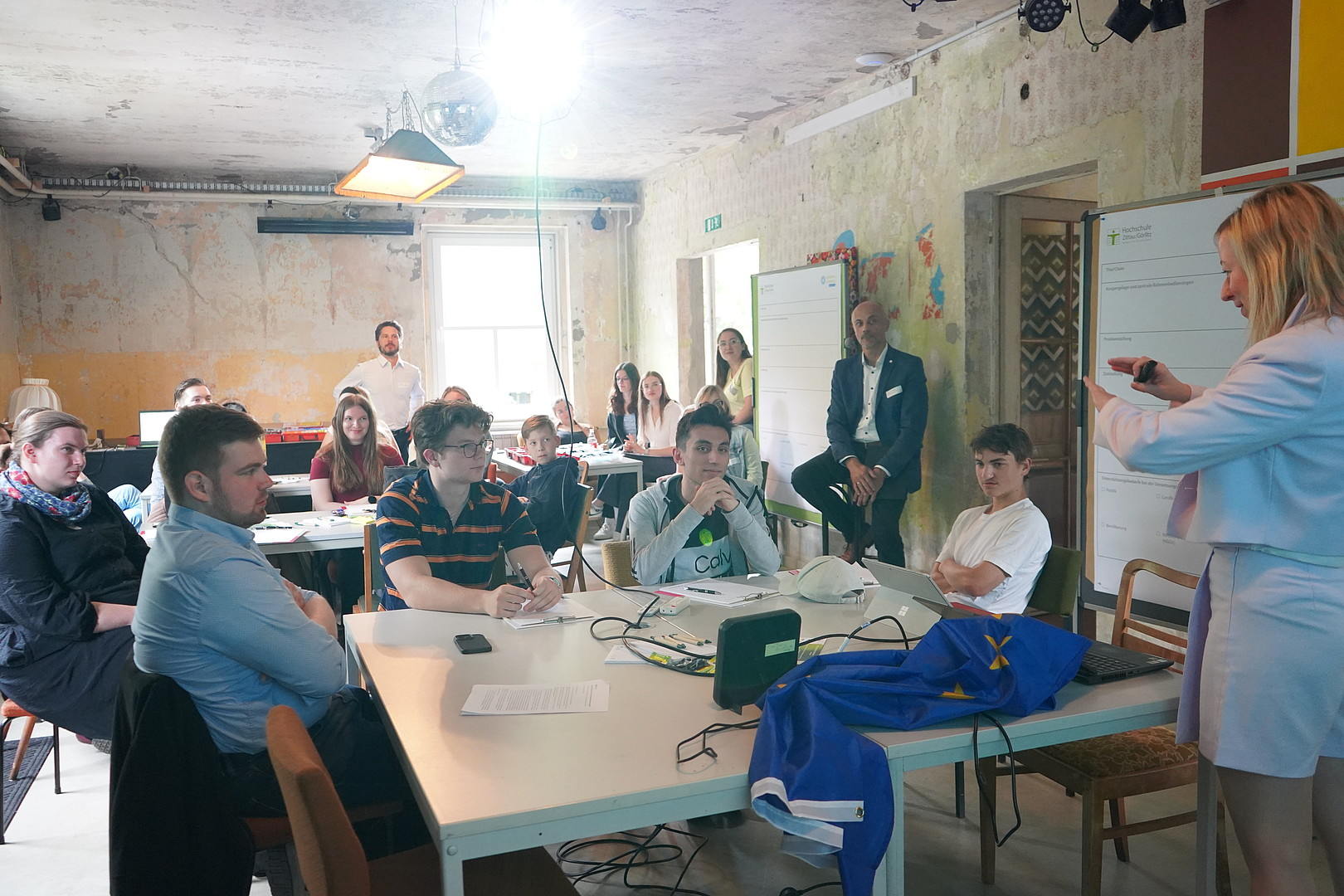
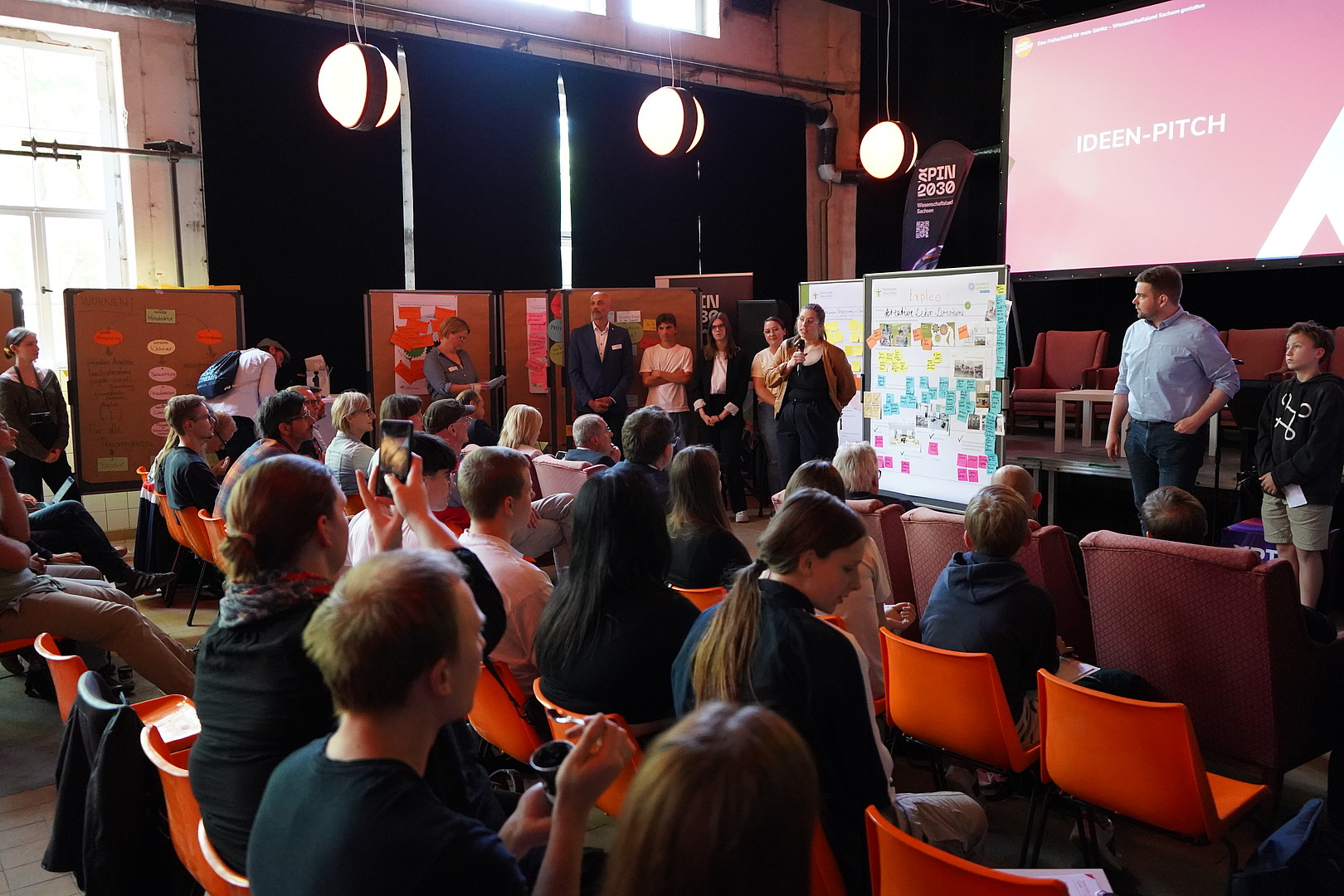
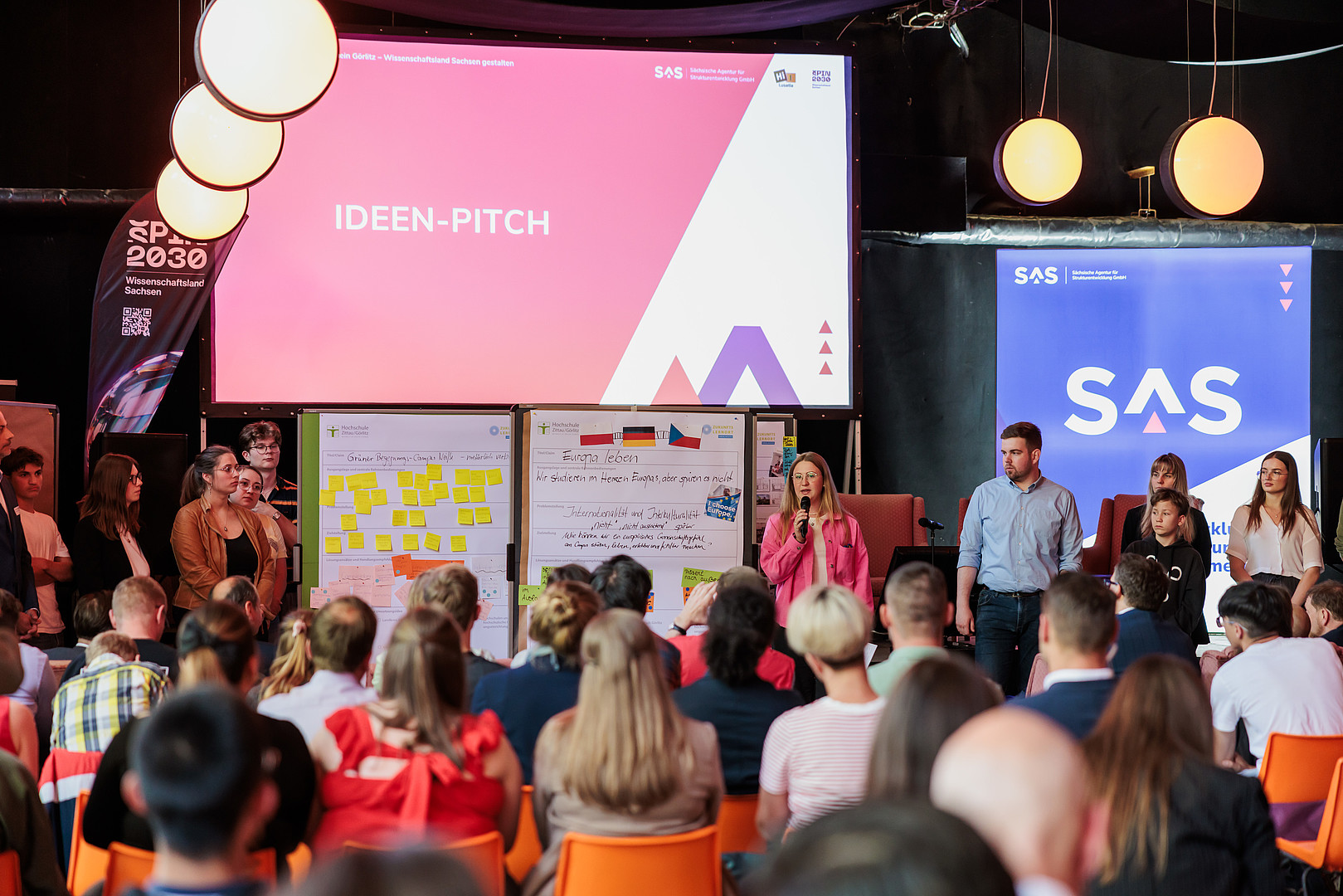
With this event, the Saxon Agency for Structural Development (SAS), in collaboration with the Ministry of Science’s “SPIN2030” campaign and the Hi!Lusatia! science network, launched a participatory initiative for people aged 13 to 27. They were invited to explore questions about their future in Görlitz and to actively participate in the region’s transformation process. Over 100 young people came to the “Frühschicht” event to participate in eight workshops led by experts from the fields of science, education, culture, and communication. Together, they developed ideas on the topics of infrastructure, housing, studying, working, and leisure for Görlitz and the Lausitz region.
HSZG creative workshop for a 3-country CampusQuartier in Görlitz
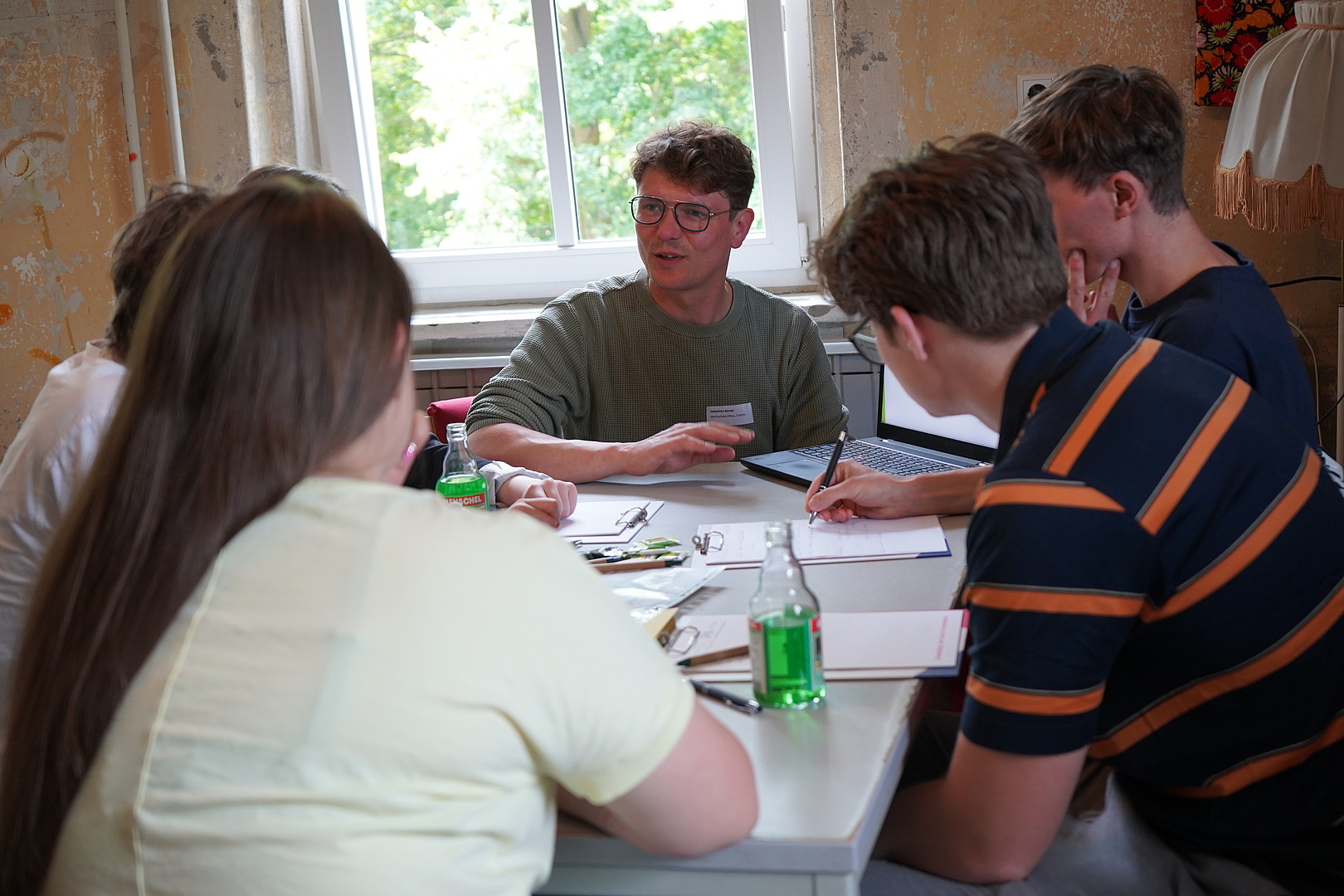
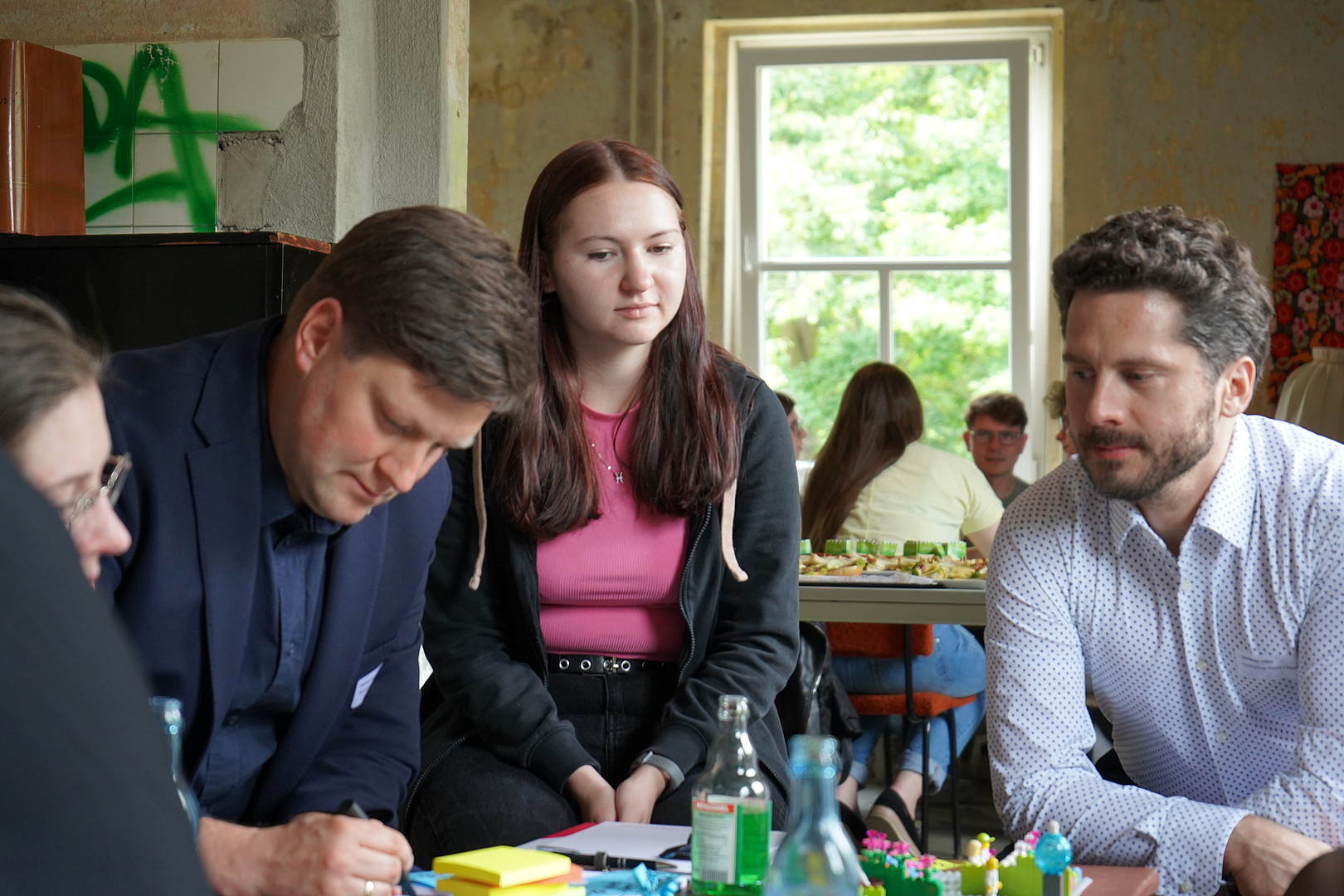
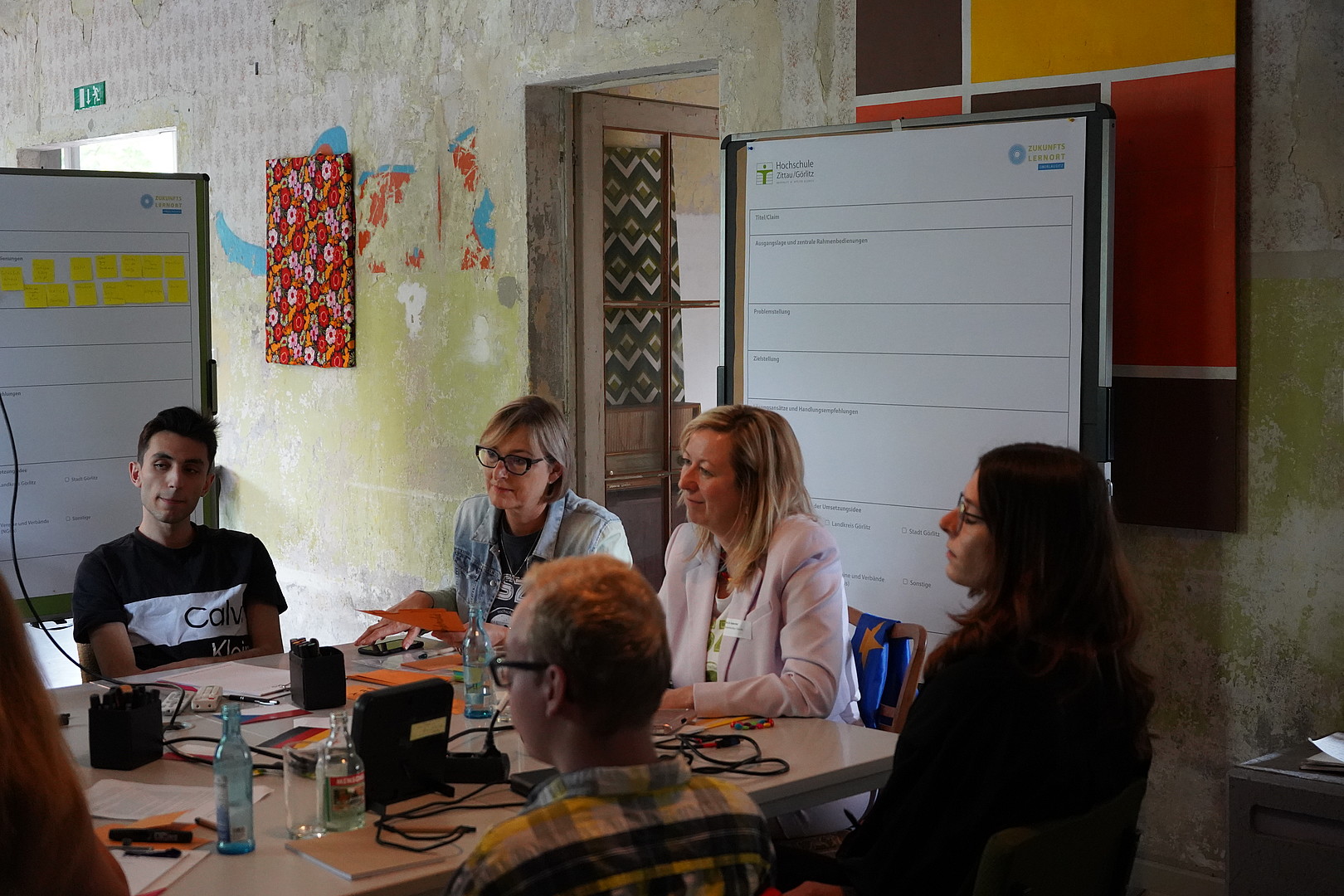
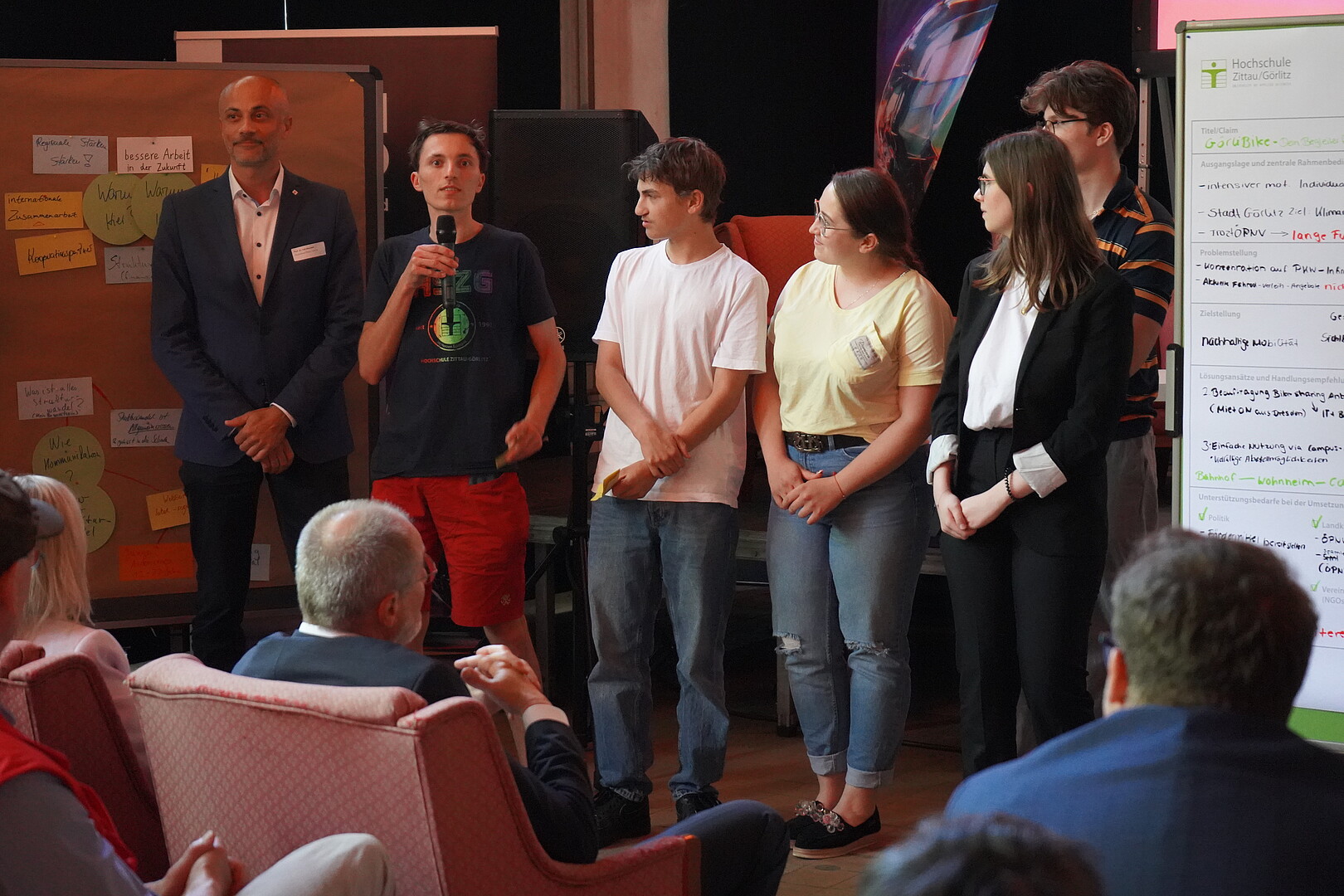
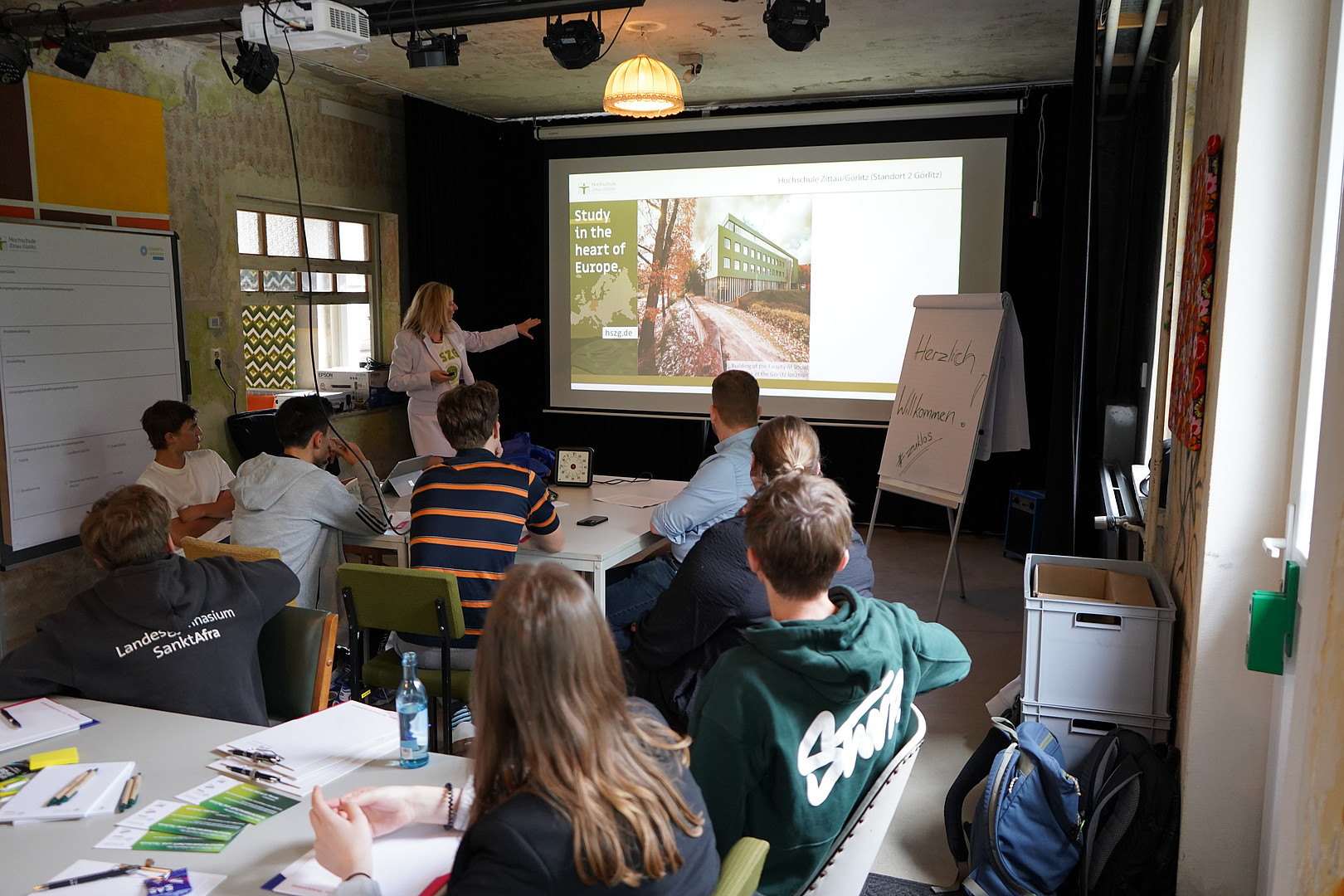
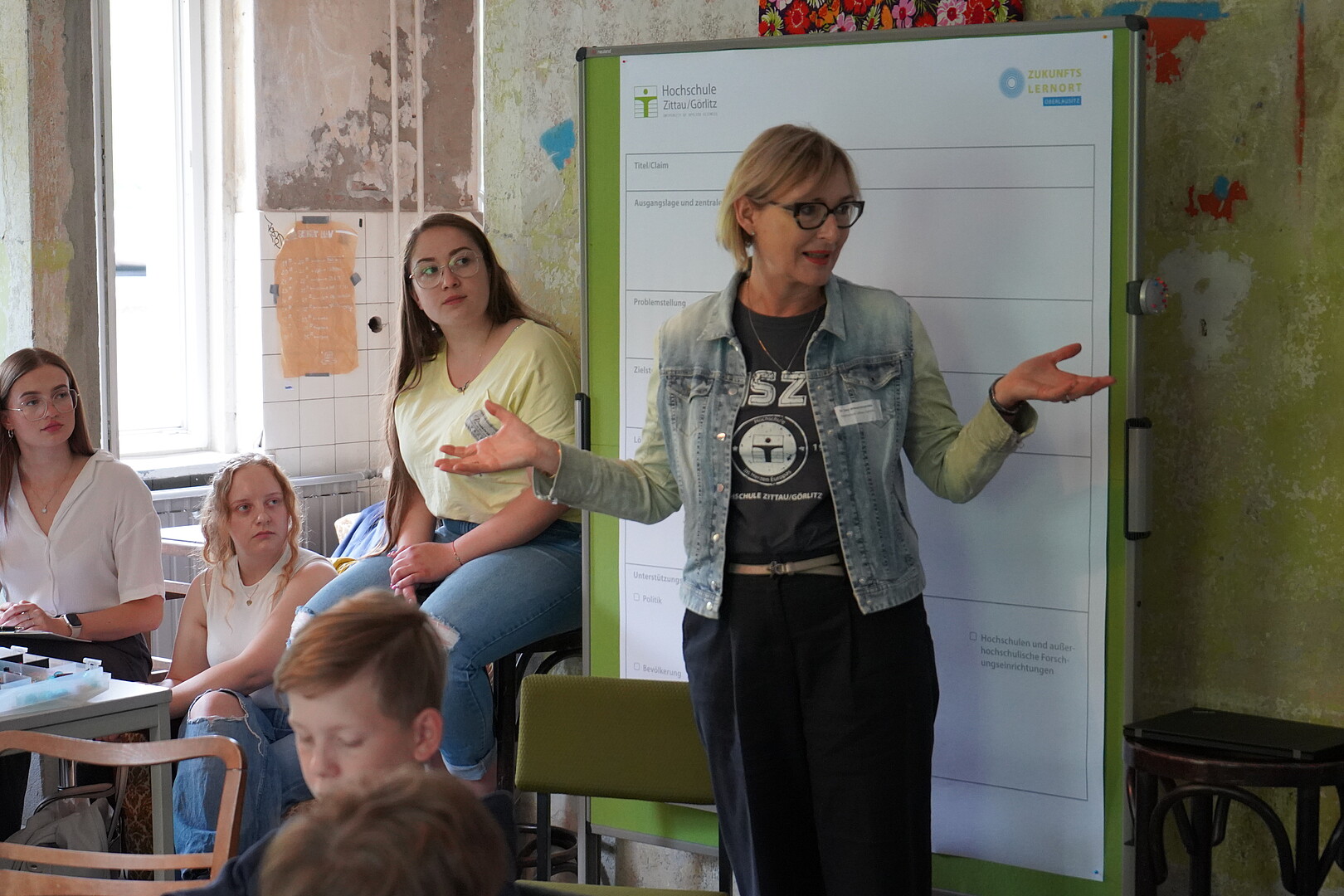
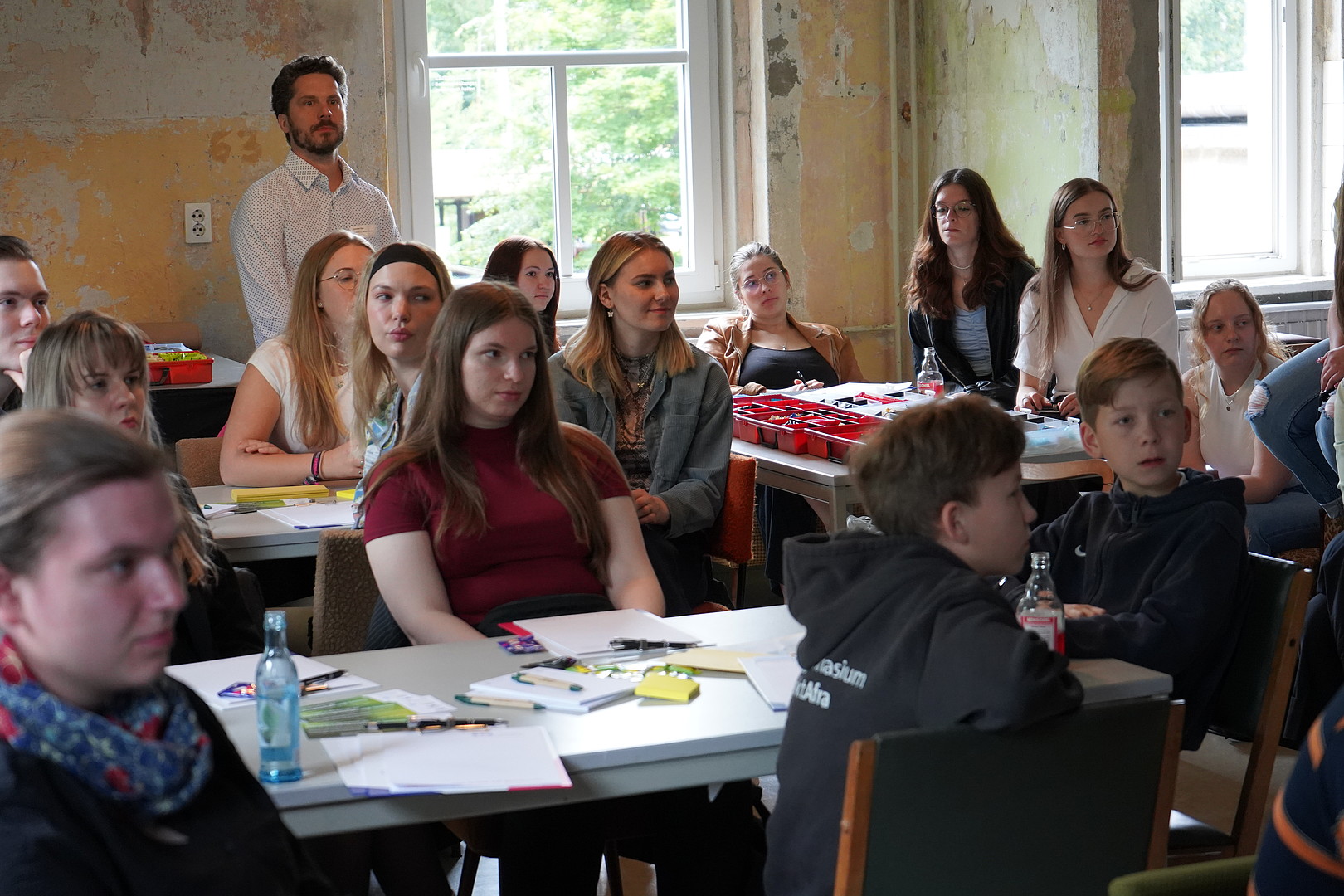
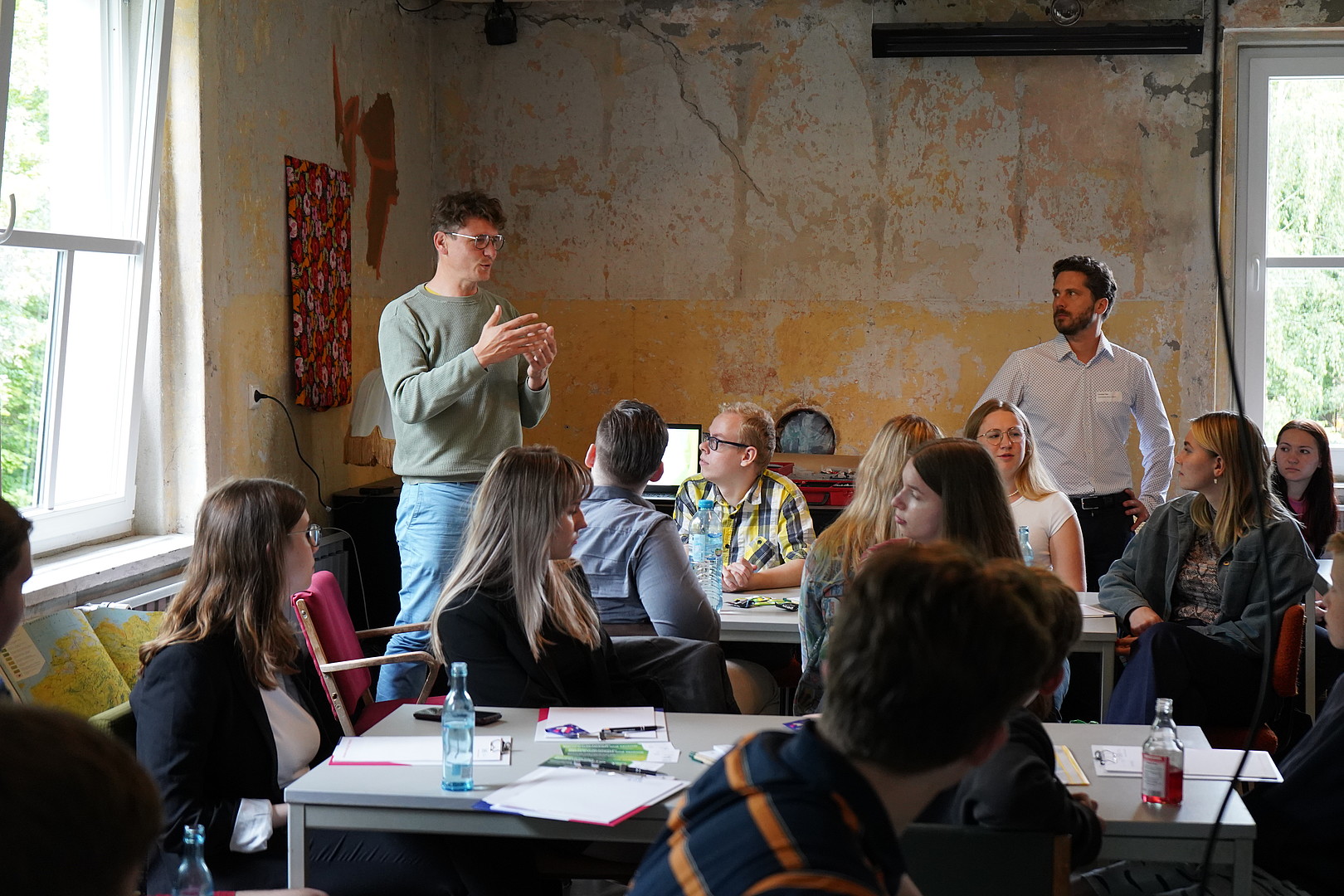
Under the direction of Professor Dr. Sophia Keil, Vice President for Education and International Affairs, the HSZG presented its themed tables centered on the guiding principle“Our 3-Country Campus Quarter 2030+: Studying Better Together—Internationally, Practice-Oriented, and Sustainably in the Digital Age.” In an open ideas and creativity workshop, the 22 participating high school and college students had the opportunity to contribute to the development of four key themes. Questions and propositions regarding mobility, sustainability, creative learning spaces, and internationality served as the starting point. Young people from the region and subject experts from Zittau/Görlitz University of Applied Sciences discussed and exchanged ideas to develop their own concepts for a sustainable CampusQuartier in Görlitz.
One focus, four topics and diverse results
In three phases—from analyzing the current situation and identifying problems, to brainstorming ideas, and finally developing concrete solutions—the participants worked together to formulate recommendations for action regarding each priority area. Background: A lot is happening right now in Görlitz’s Ost district, home to the Görlitz Campus! The Stadthalle is set to be renovated into a cultural center, and the German Center for Astrophysics (DZA) is planning a campus on the Kahlbaum site. The University Executive Board intends to capitalize on these opportunities to advance campus development. All the thematic discussion groups were thematically interconnected.
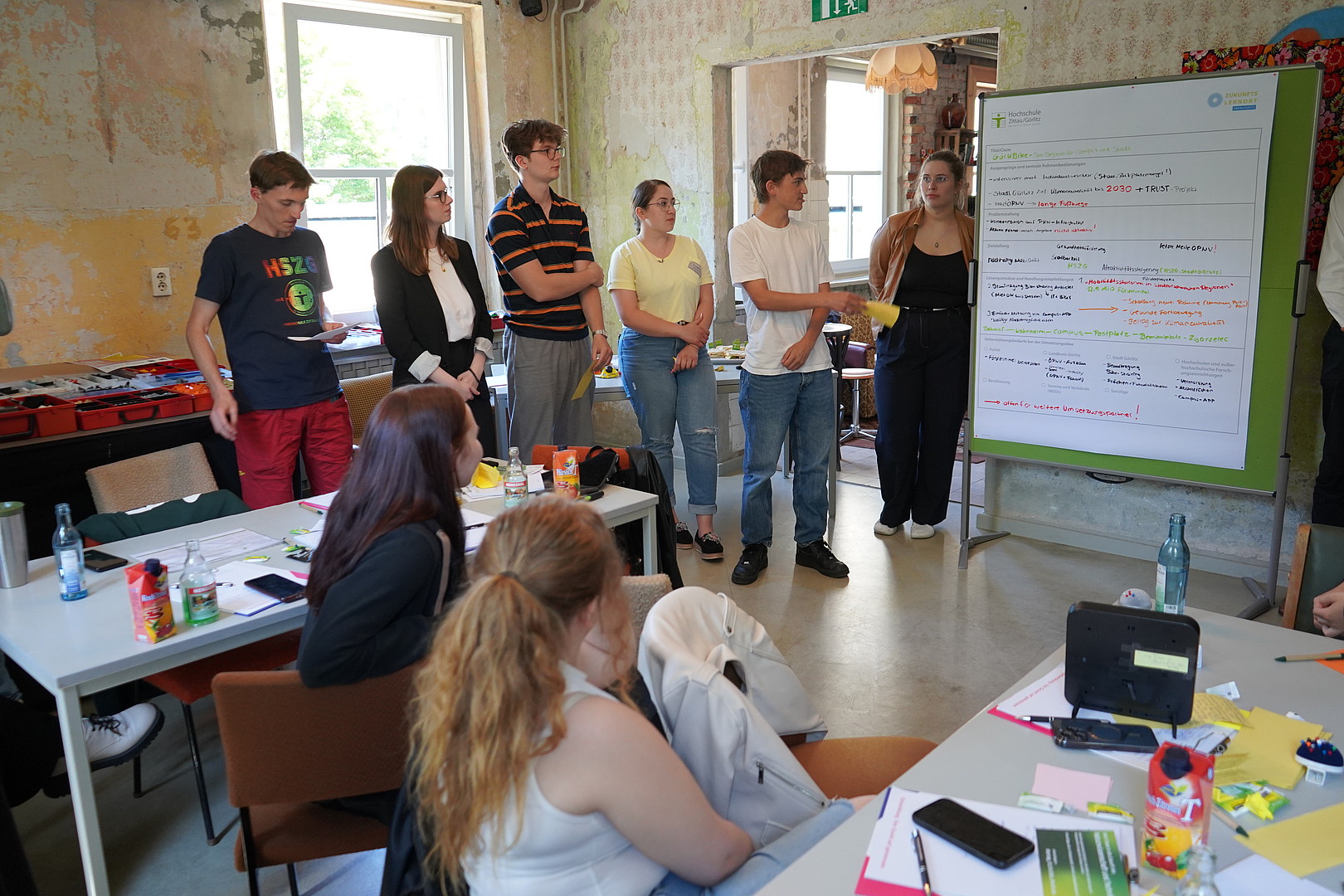
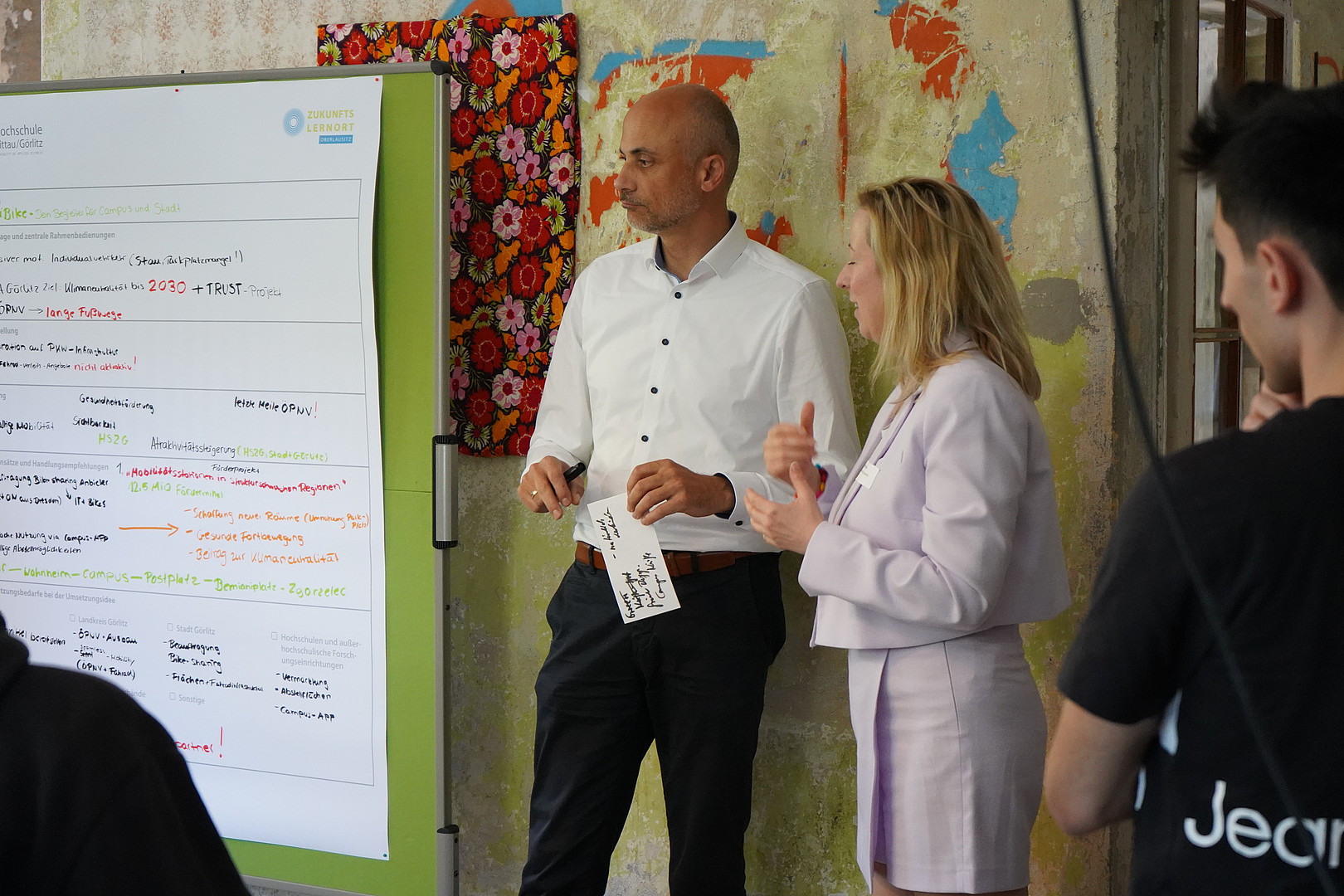
Here, the participants discussed how the mobility of students and employees could be improved from the Görlitz campus to the Neisse city, e.g. the route to the train station or into the city. The result was the idea for a bike-sharing scheme called "GörliBIKE - your companion for the city and campus".
"I am proud of our mobility workshop participants who developed the sustainable GörliBIKE concept. GörliBIKE is more than just a bike sharing system - it is a step towards a more sustainable, healthier and more attractive Görlitz. By improving mobility, protecting the climate and promoting health, we are not only making Görlitz a better place to live, but also an even more attractive place to study. We look forward to implementing this project together with the city of Görlitz."
Sebastian Benad, M.A., Faculty of Managerial and Cultural Studies, workshop leader
A pavilion with a garden serving as a vibrant gathering place on campus where students and faculty can come together to work side by side in a green setting. A lively campus café on the banks of the Neisse River, as well as pedestrian bridges connecting the Görlitz main campus across the Neisse to Poland and back to the new Expleo building —these are the core ideas of the participants in the “Sustainability” workshop and their answers to the question of what a sustainable, green, and socially inclusive campus in Görlitz could look like.
“The discussion group on sustainability in campus life, held under the heading ‘Green Neisse Meeting Campus—Connecting Naturally,’ generated some great ideas. The discussion also took into account the ‘big neighbors’—the Stadthalle, the opposite bank of the Neisse in Zgorzelec, and the Kahlbaum site for the German Center for Astrophysics. All of these should be connected to literally build new bridges and pave the way for encounters and greater visibility. I am thrilled and hope that we can further develop these ideas and implement at least some of them.”
Prof. Dr. rer. Pol. Falk Maiwald, Dean of the Faculty of Managerial and Cultural Studies, Workshop Leader
The university management has succeeded in securing a new building for the Görlitz university campus. The Faculty of Managerial and Cultural Studies will move into the former Expleo building. In line with the ideas developed in the Campus4You field of action, these premises are also to be designed innovatively.
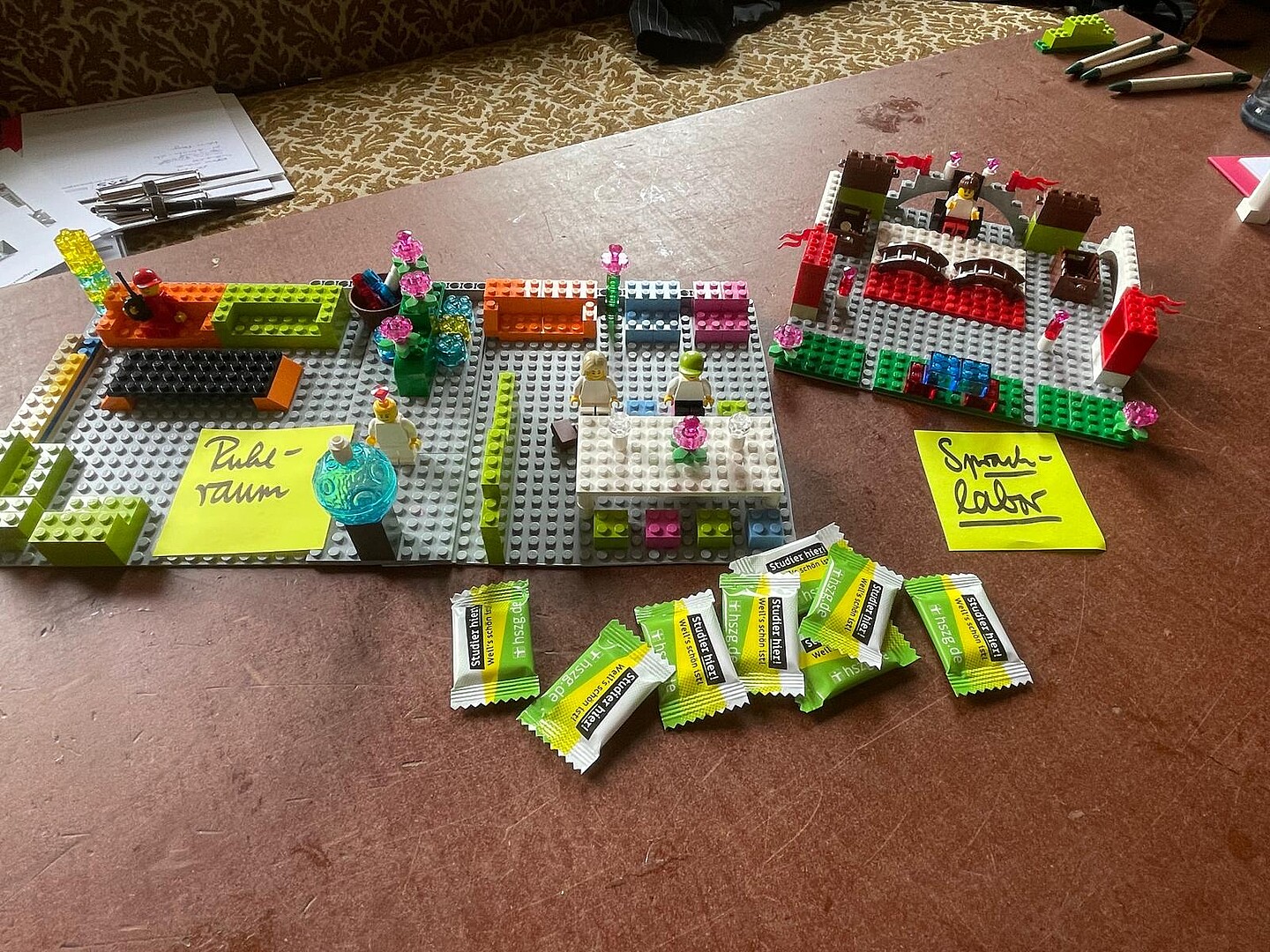
The workshop participants discussed together how teaching and learning spaces can be designed flexibly and creatively and at the same time how and which digital technologies can be integrated to enrich everyday learning and improve the quality of teaching. The result was the desire to design open room concepts in the new Expleo building that not only promote learning, but above all encourage interaction. There should also be a dedicated language lab and a café on campus that is open to everyone.
Workshop leader: Christian Tiller, Academic Director ZukLOS and Daniel Winkler, University Didactics Officer
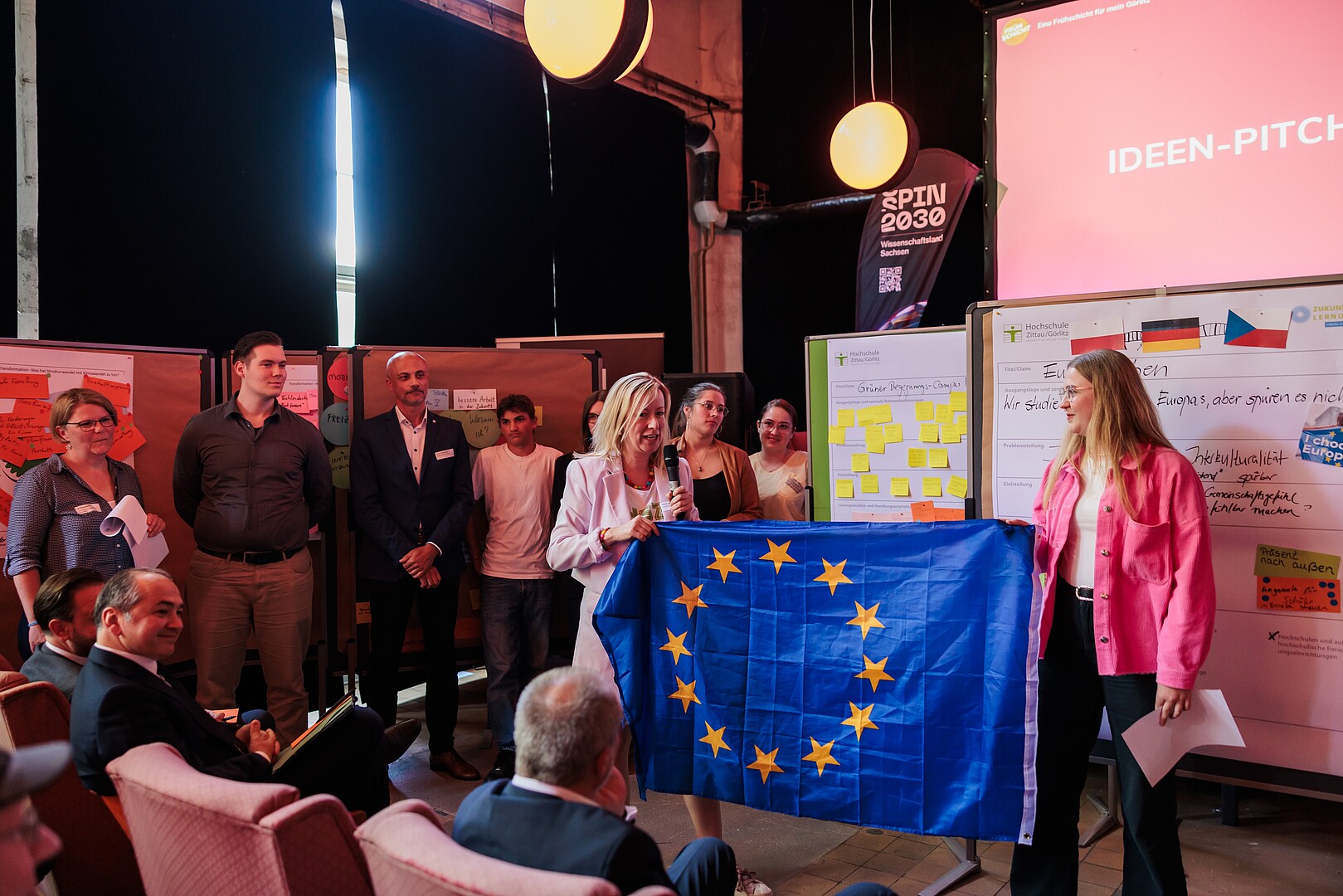
This workshop explored how a “sense of Europe” can be further strengthened at the university and in the city of Görlitz, so that it becomes more tangible and tangible for our students and university community members. As a solution, the high school and college students propose, on the one hand, strengthening the HSZG’s external presence —for example, through increased and, above all, multilingual activity on social media and at international trade fairs. On the other hand, opportunities for study abroad as part of the degree program at the HSZG should be expanded and streamlined, for example through short study trips, a language exchange program, or an international student café.
Workshop leaders: Prof. Dr. rer. pol. Sophia Keil and Dr. phil. Ewa Wieszczeczyńska, coordinator of the Academic Coordination Center of the Neisse Euroregion (ACC)

Presentation of results to a top-class jury
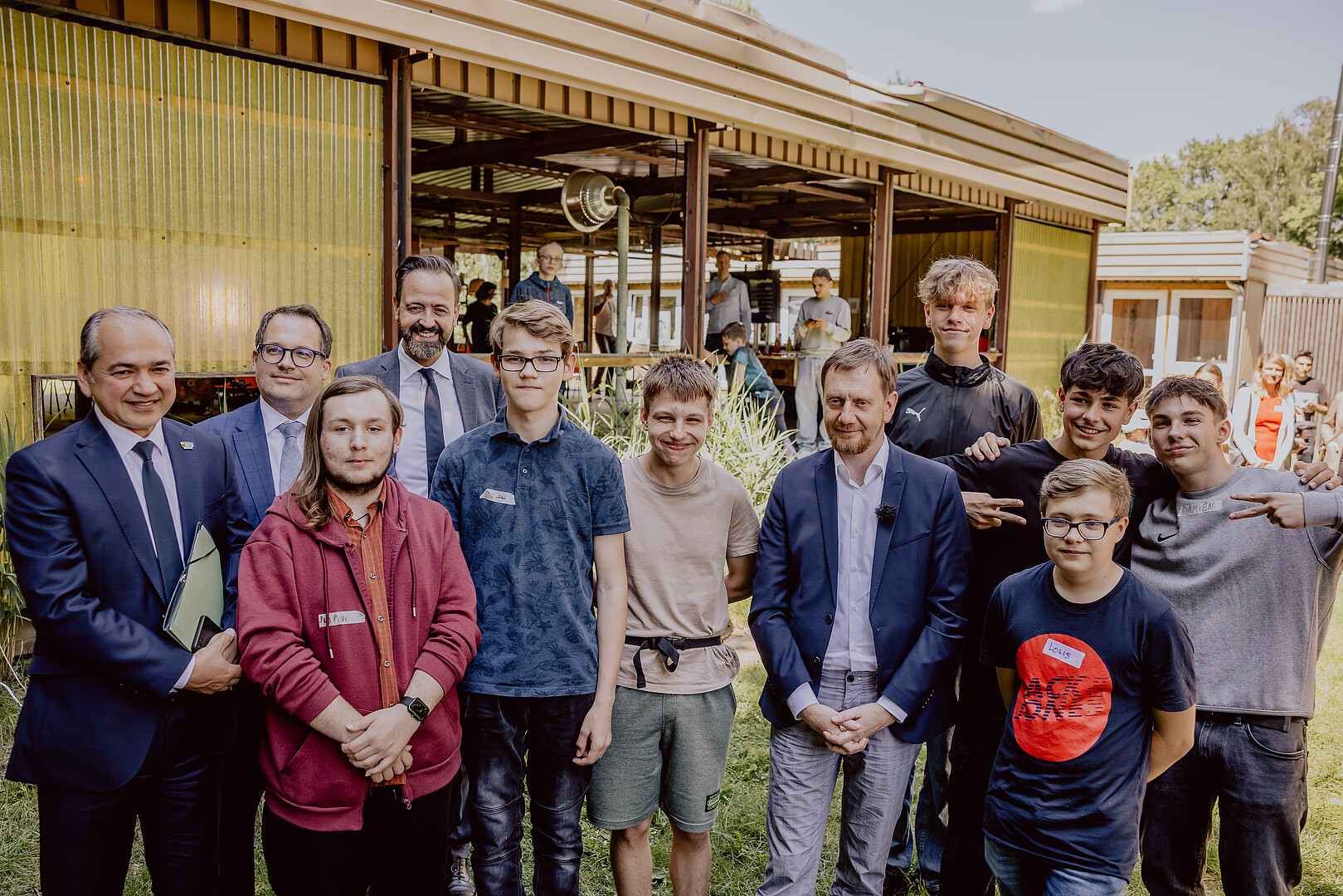
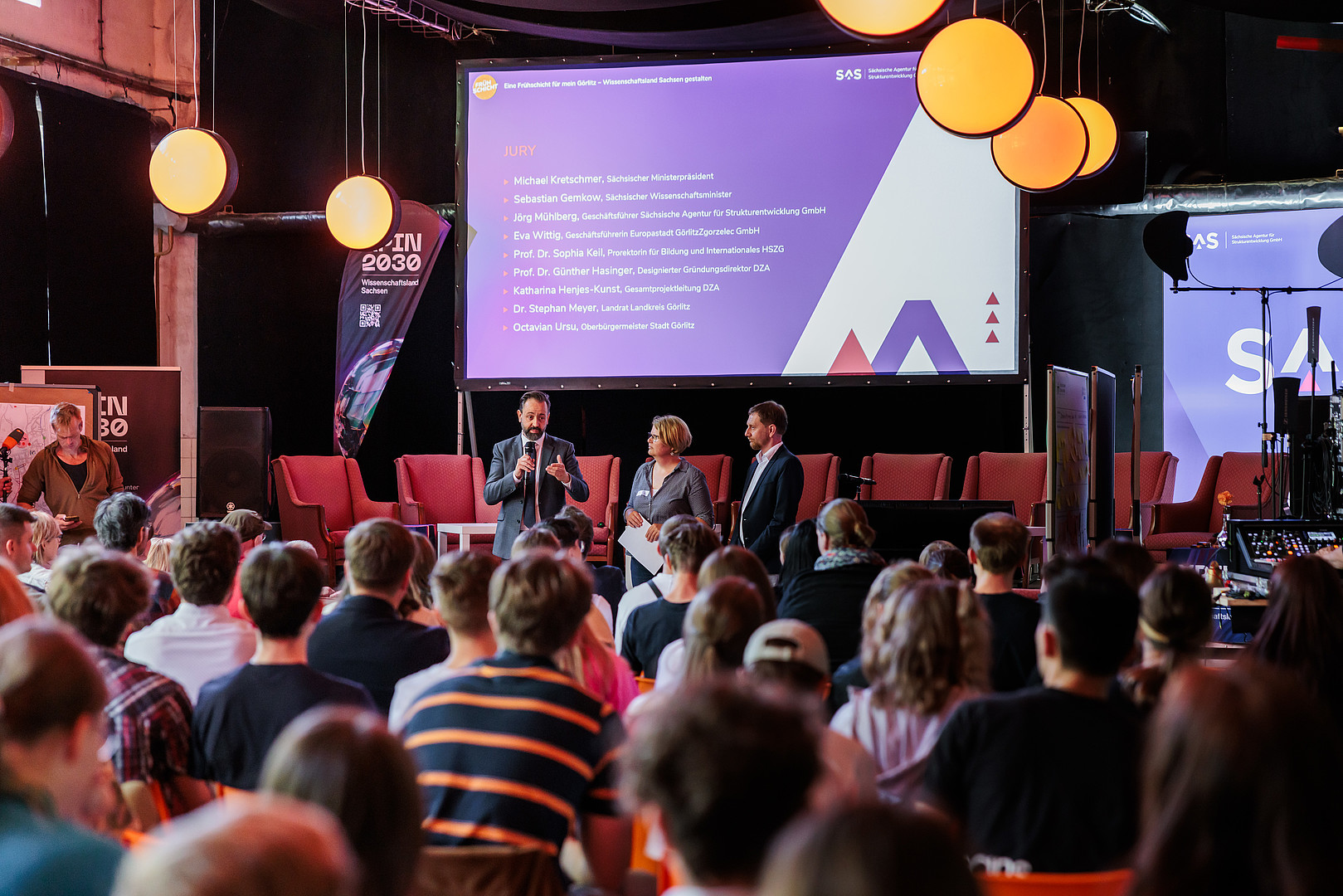
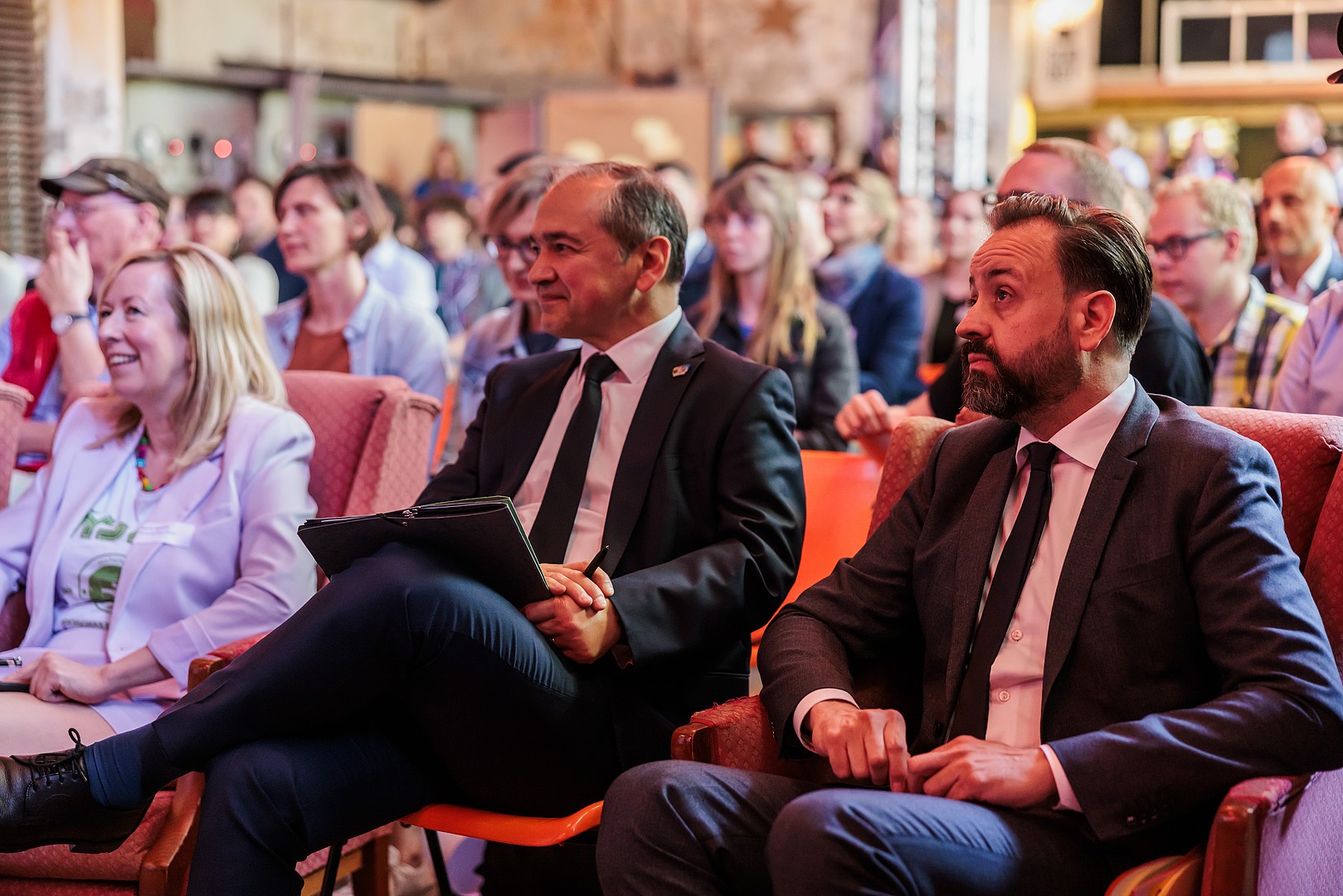
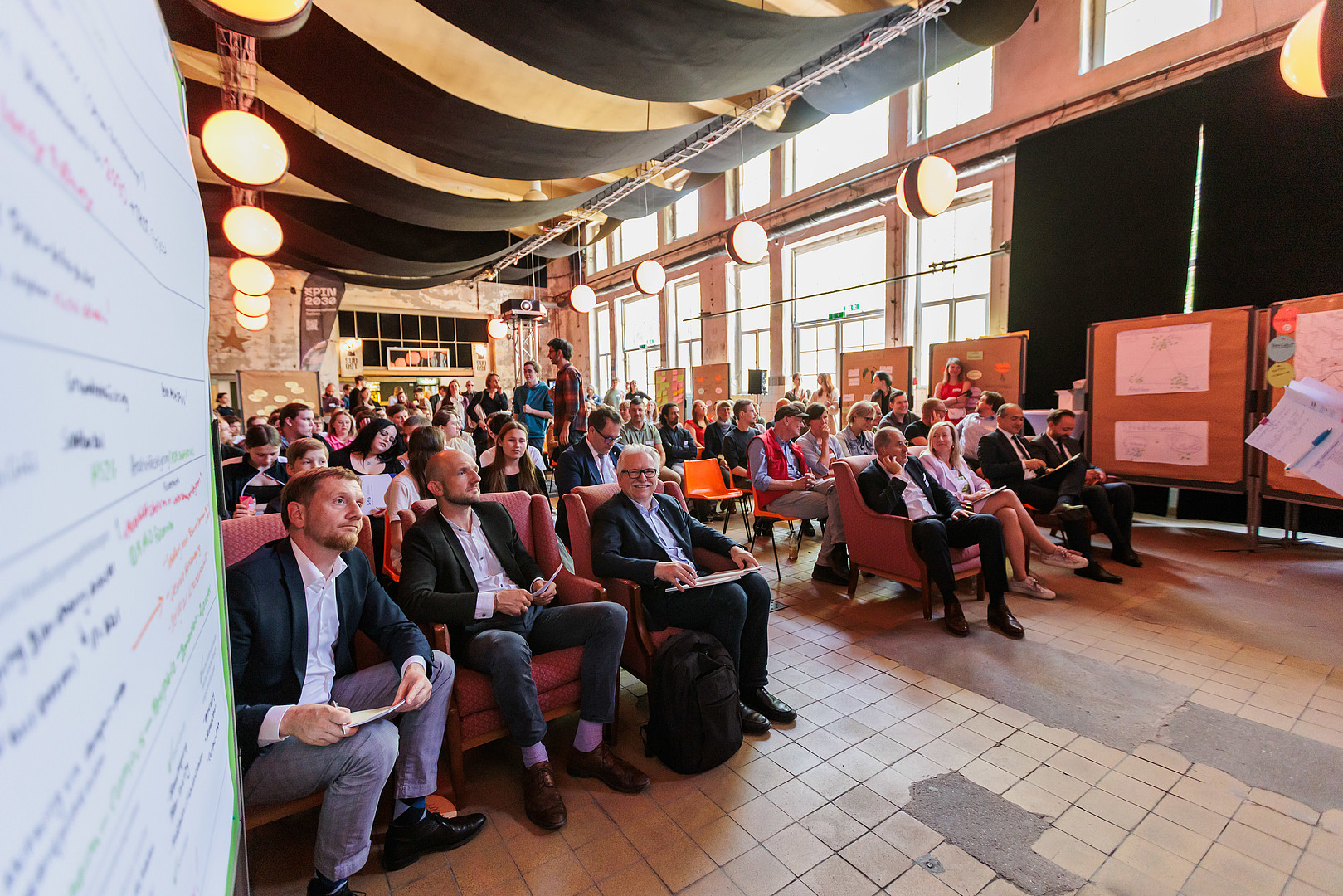
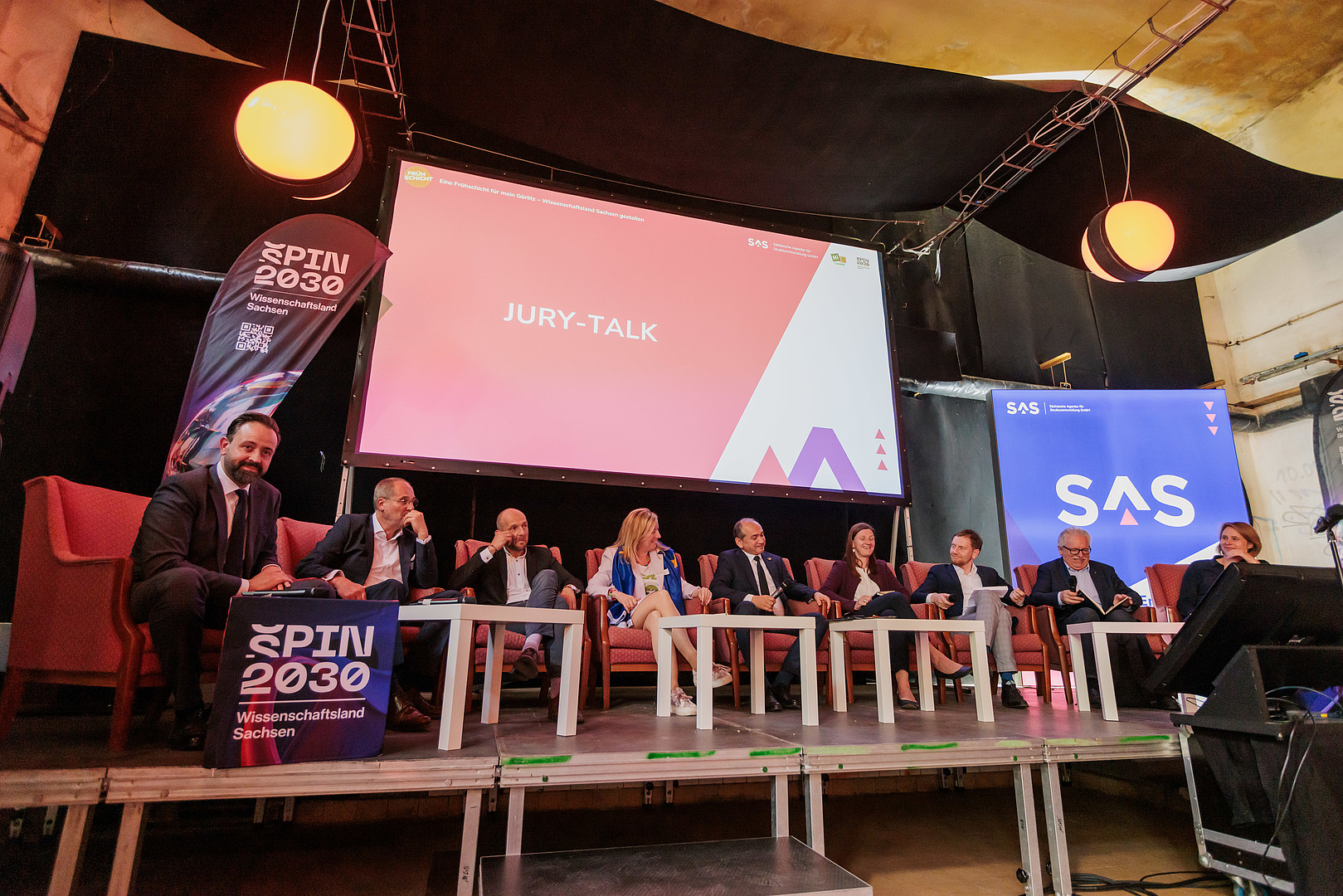
The results of the eight workshops were presented to a high-profile jury that included, among others, Minister President Michael Kretschmer, Minister of Science Sebastian Gemkow, District Administrator Stephan Meyer, the Vice President of HSZG, Prof. Dr. rer. pol. Sophia Keil, and the Mayor of Görlitz, Octavian Ursu. The jurors expressed their enthusiasm and admiration for the ideas and suggestions developed in the workshops. They emphasized that they were taking away many sustainable ideas to drive structural change in Saxony. The workshop sponsors will also pass on valuable suggestions to their respective networks.
Continuing to shape the future together
The event not only offered the younger generation the opportunity to exchange and develop ideas for their Görlitz, but also to make new contacts, learn more about the transformation of the entire Lausitz region and play an active role in shaping it.
For me, the Frühschicht was a project that offered a place for co-determination for the future of Görlitz. I opted for the HSZG workshop because I hoped to be able to actively contribute something where it would be heard and implemented. We collected a lot of ideas together during these hours and have already designed specific projects for the Future Campus 2030. It was very inspiring to see so many young, committed people and to listen to their visions for the future.
”
The HSZG is delighted with the high turnout and the creative ideas contributed by the young participants. The event has once again demonstrated the potential of the younger generation and how valuable their contributions are to the community. The HSZG will build on these ideas and incorporate them into the further development of the university and its campuses.
The Vice President, Professor Keil, thanks the topic mentors—Dean Professor Falk Maiwald, Dr. Ewa Wieszczeczyńska, Sebastian Benad, Christian Tiller, Julia Rülicke, and Daniel Winkler—as well as, in particular, all participating high school and college students for their contributions and dedication.

1st floor
2nd upper floor