How is the transfer of knowledge going?
The Year of Science, which opened on October 6, is dedicated to the "knowledge transfer of the future".
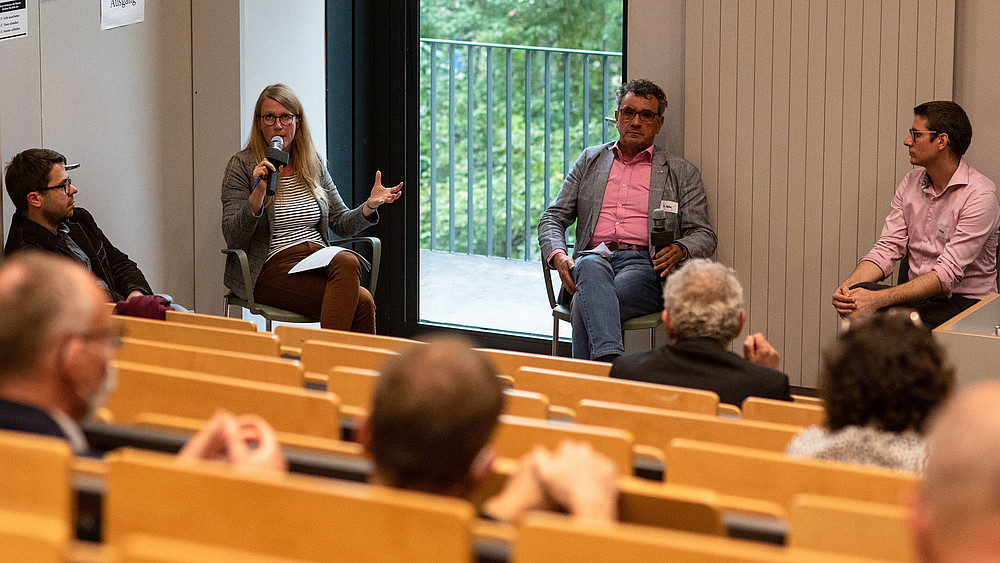
Every year, coinciding with the start of the semester, the Science Year kicks off, inviting researchers from HSZG as well as partners from business and society to reflect on a current topic. On October 6, approximately 25 guests gathered in person in the large lecture hall of the Görlitz Bluebox, and another 25 joined via livestream on BigBlueButton to exchange views on experiences and future developments in the field of knowledge transfer.
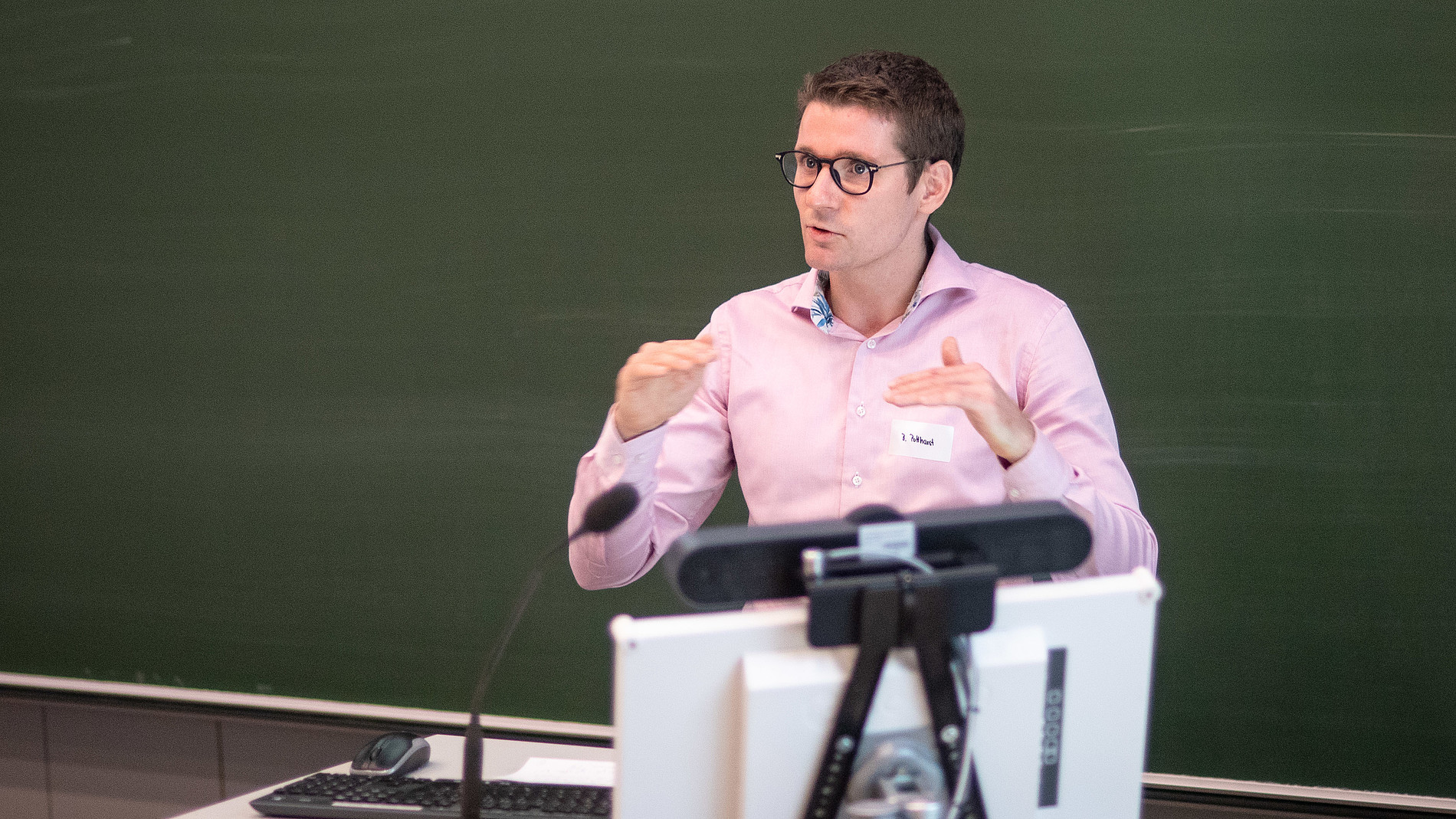
In brief: Prof. Raj Kollmorgen, in his capacity as Prorector for Research, opened the event and welcomed the guests; Bill Pottharst delivered a keynote address on the future of knowledge transfer; followed by a panel discussion with Leonie Liemich (HSZG), Prof. Jens Weber (HSZG), Matthias Weber (VHS Dreiländereck), and Bill Pottharst (HSZG), which was quickly opened up to input from the audience and concluded with refreshments at the buffet.
Bill Pottharst’s keynote address offered a glimpse into the future. Three scenarios were presented, titled “Big Data,” “Crowdscience,” and “Science Sells.” These are not only directions in which knowledge transfer at universities could develop, according to an analysis of public funding calls, but also address the fundamental question of what significance, tasks, and roles science should play for our society in the future.
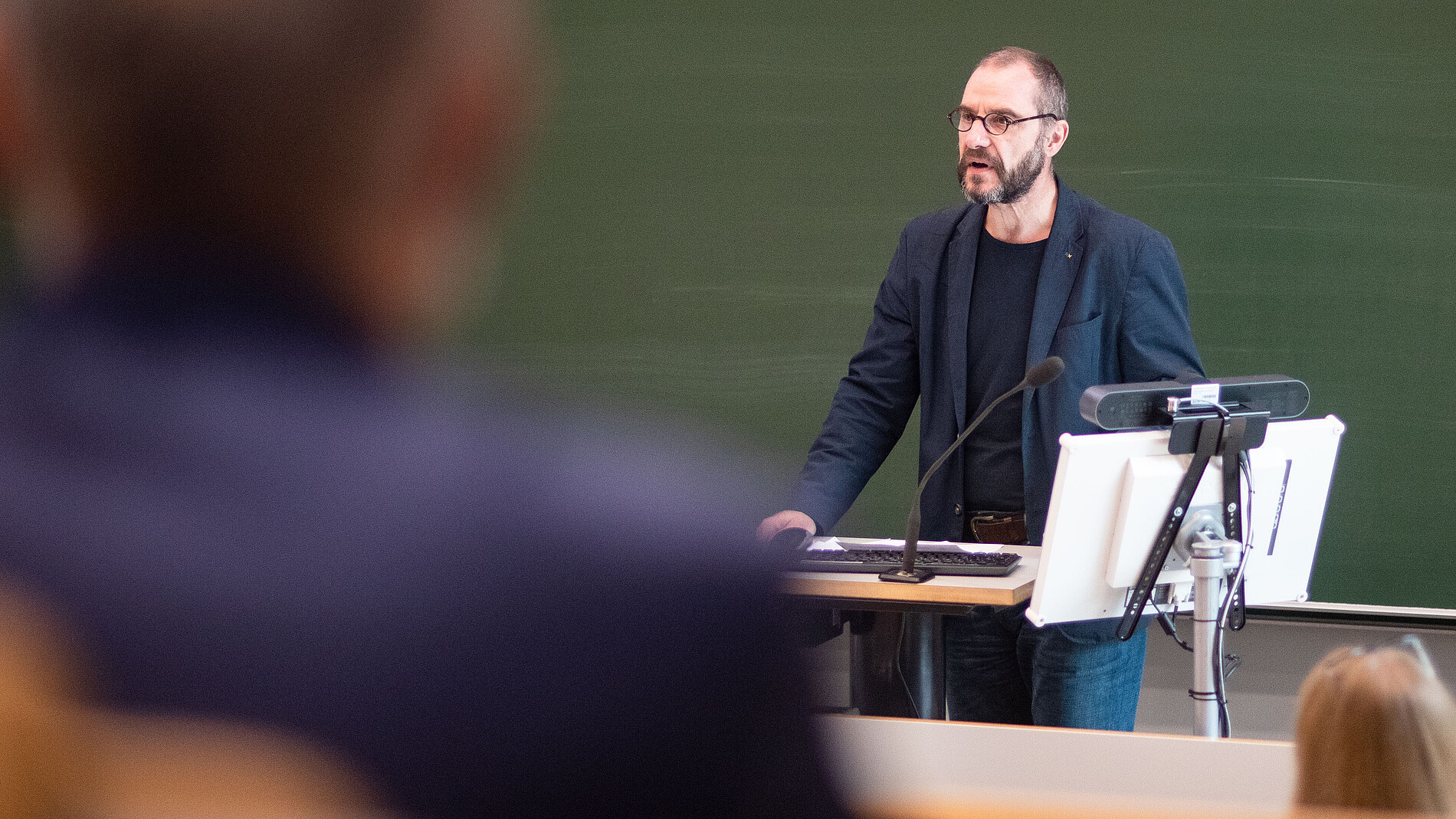
Prof. Kollmorgen gratefully accepted the food for thought on possible future developments and smoothly transitioned into the panel discussion. Prof. Weber took an autobiographical approach, focusing on the very practical, day-to-day challenges of knowledge transfer, noting that even the occasional unsatisfactory reaction should not be a cause for discouragement. He also provided information on this point: even people who currently seem unreceptive to the scientific consensus do listen to others.
Leonie Liemich’s remarks incorporated the perspectives and experiences of the HSZG’s large-scale “Life and Technology” project, which, in collaboration with several partners, has set itself the goal of strengthening Upper Lusatia and making it more attractive through technological and social innovations. Mr. Weber from the Dreiländereck Adult Education Center provided information about how important it is for the university to take knowledge transfer seriously and pursue it intensively. He also reported from his daily work that it is worthwhile to organize events that may not appeal to the broad masses. Through engagement with the “outside world” and the “translation” of specialized content for the respective target audience, understanding of the importance of science is fostered and enhanced.
Many thanks to everyone who attended the event, participated, or contributed to its success.
2nd floor