
Mechanical Engineering degree programme Paves the Way to the Future
The HSZG's Mechanical Engineering degree programme has successfully completed the Maschinenhaus Transfer Project in cooperation with the VDMA.
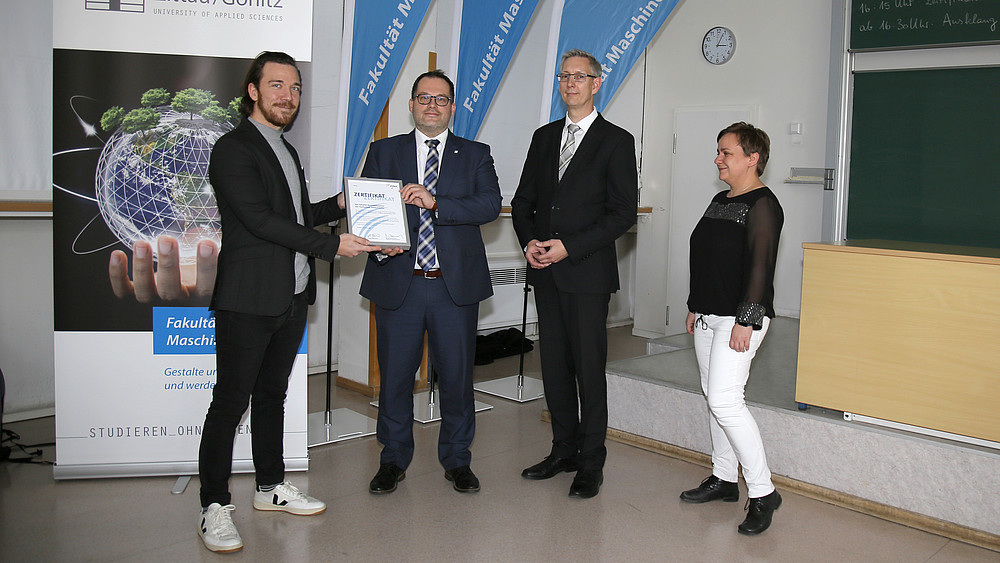
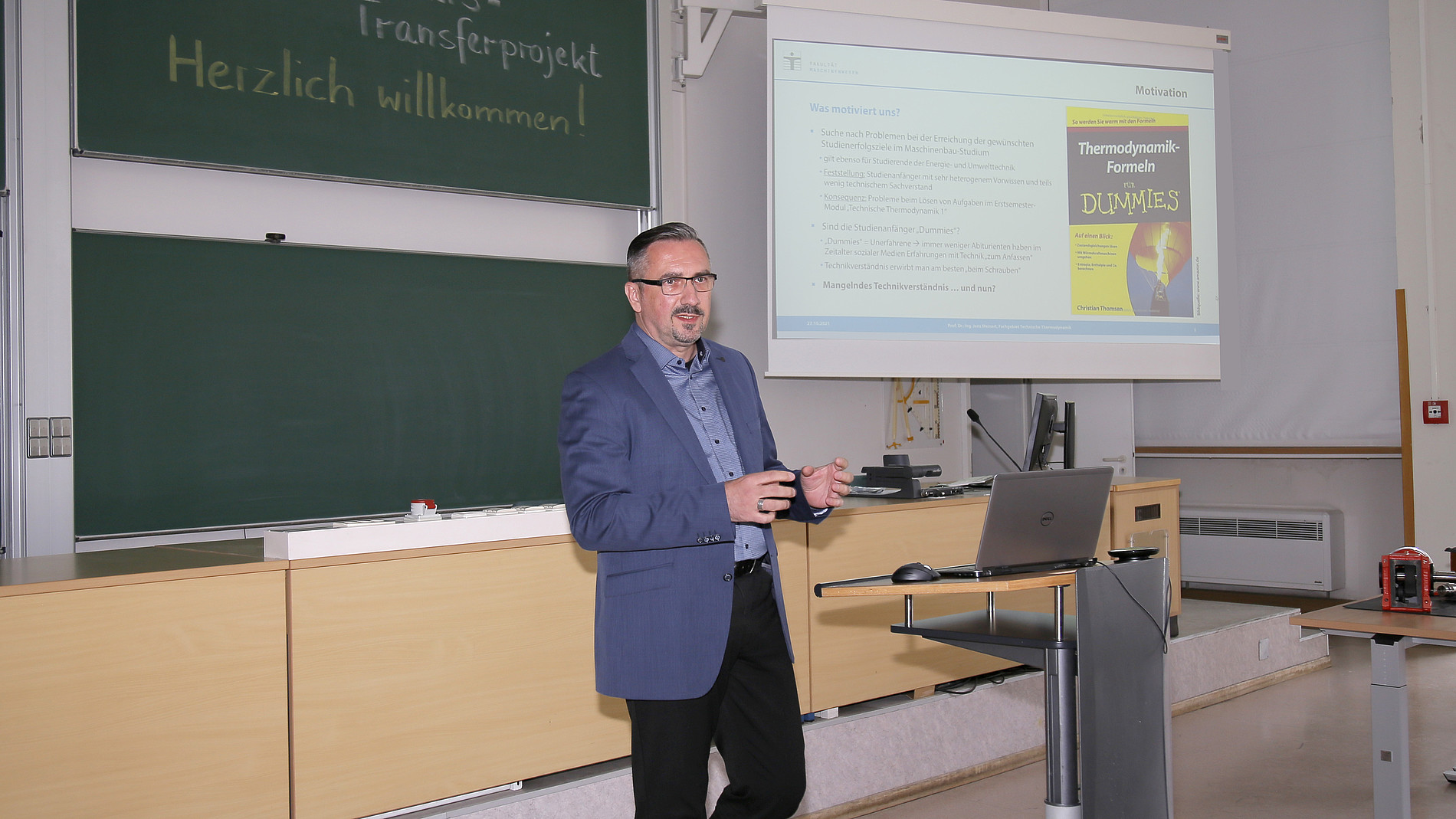
The implementation of course-integrated learning objects, an e-learning tool in the Technical Thermodynamics module, and a concept titled “Nurturing the Next Generation of Mechanical Engineering Professionals in a Time of Structural Change” —these and other results were presented by the Faculty of Mechanical Engineering and the German Engineering Federation (VDMA) at the concluding workshop of the Maschinenhaus Transfer Project. The goal of the VDMA’s Maschinenhaus initiative is to increase academic success in engineering and to advise and support universities in their teaching efforts.
How can student success be further increased? And how can we ensure a new generation of skilled professionals in the engineering field? These are just two of the key questions that were discussed as part of the transfer project during several roundtable discussions with program directors, faculty, students, and companies. The project at Zittau/Görlitz University of Applied Sciences was supported by experts from the VDMA and the HIS Institute for Higher Education Development (HIS-HE).
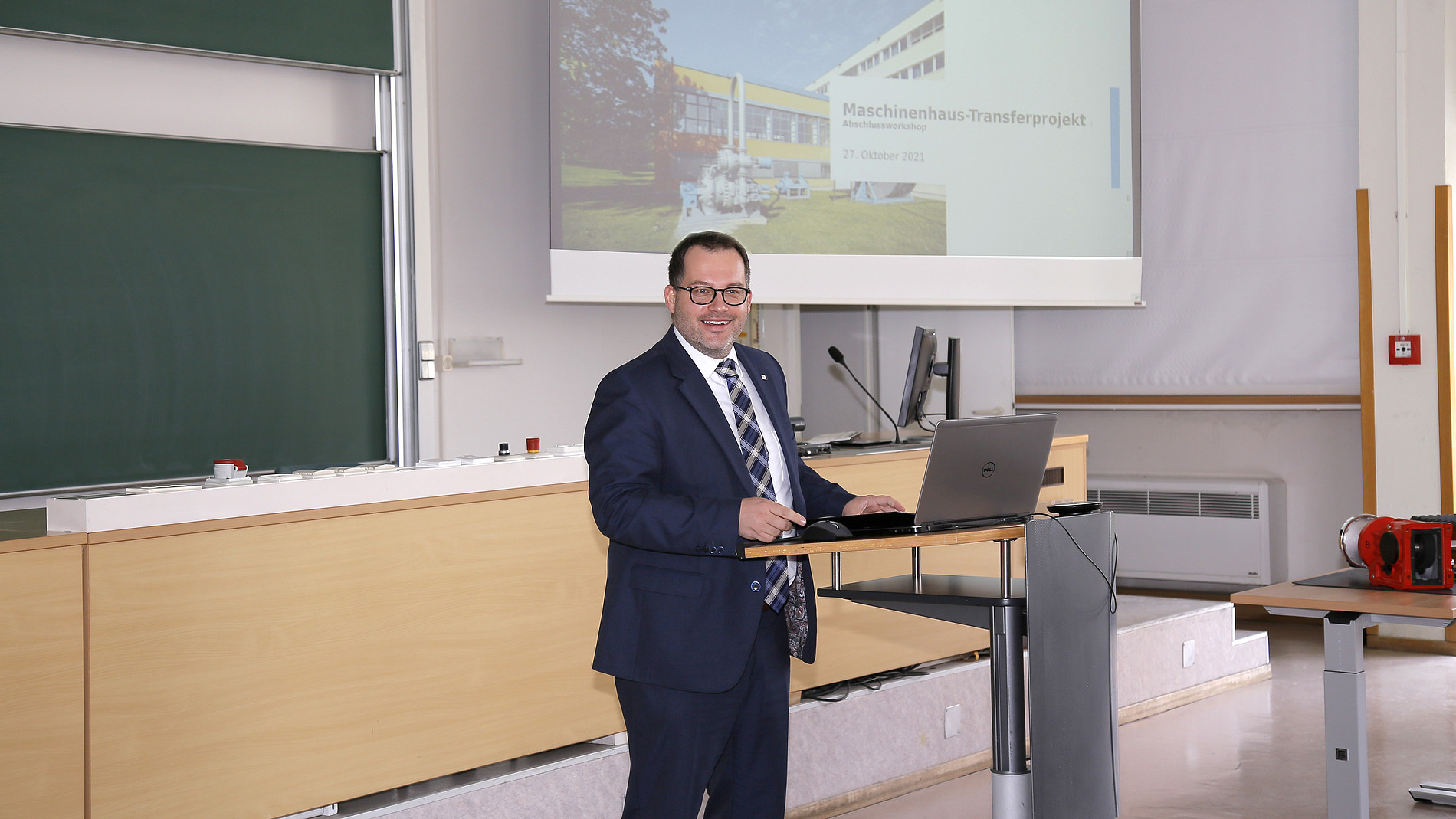
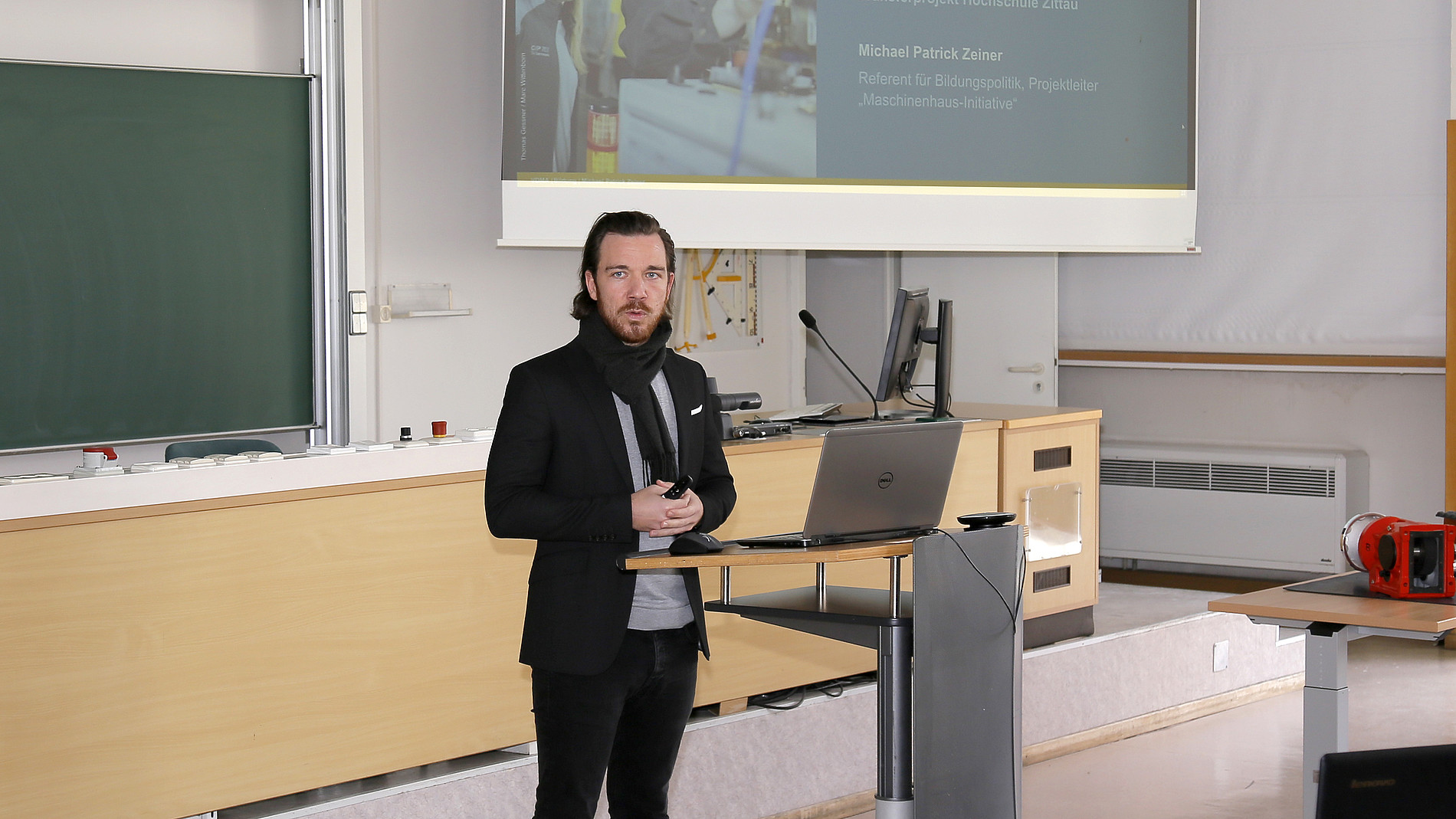
Uwe Krüger of HIS-HE sees a “major challenge for universities” in the fact that mechanical engineering programs must continue to offer first-year students degree programs “that open up sustainably good career prospects.” “And this against the backdrop of, in some cases, rapid advancements in technical capabilities—think Industry 4.0—as well as the ongoing differentiation of business sectors and job profiles,” adds Michael Patrick Zeiner, project manager of the VDMA Maschinenhaus Initiative.
Ensuring a New Generation of Skilled Workers
As part of the project, three core measures emerged, and implementation has already begun. To support interdisciplinary thinking, the teaching method of cross-module learning objects was adopted, and an initial learning object was developed, which serves as a model example across various academic disciplines.
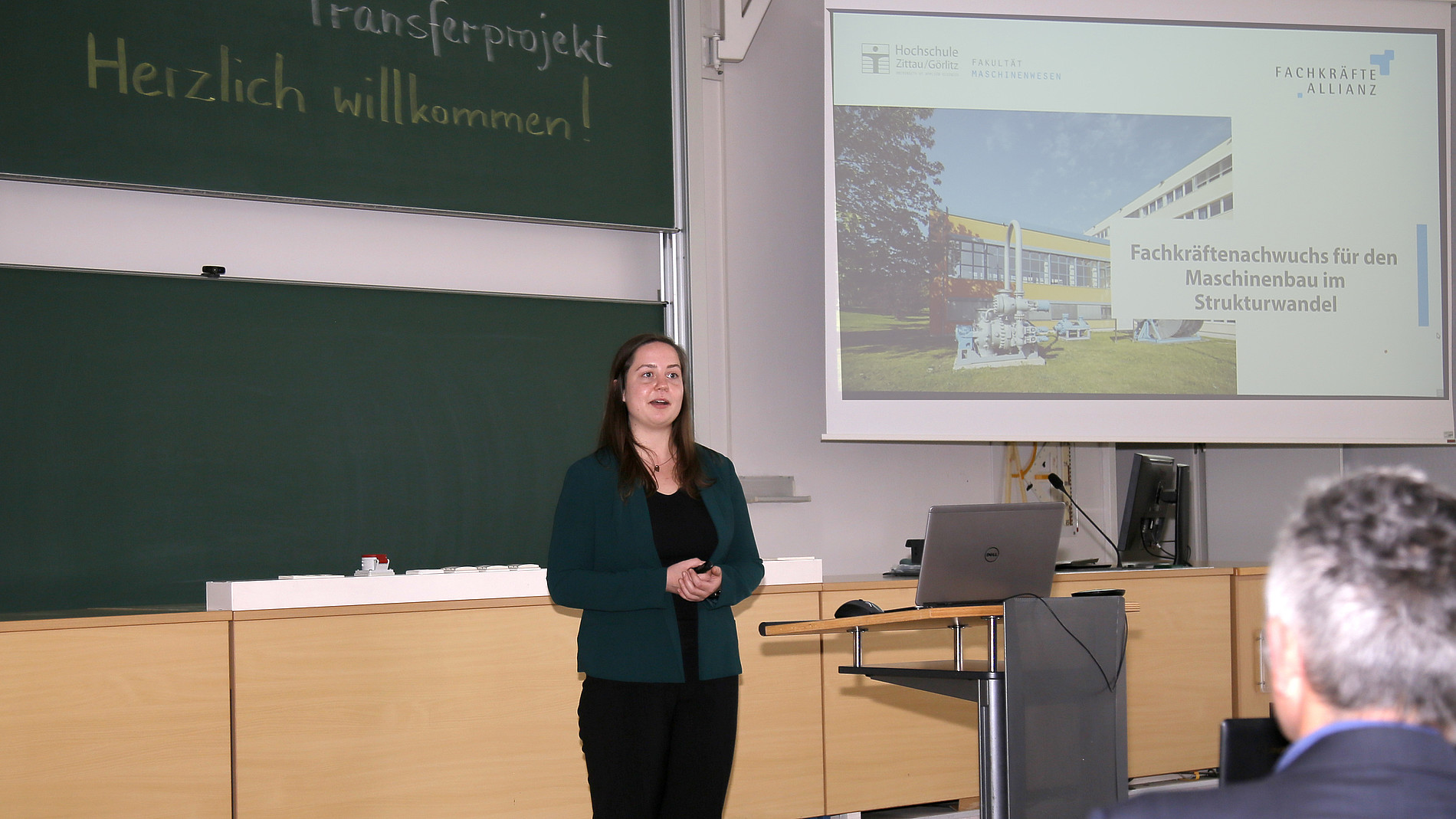
To support students in self-directed learning and to help them reflect on their own level of knowledge, an e-learning program was further developed within a foundational module. Last but not least, to ensure a supply of young professionals—particularly in the region—and to guarantee that graduates are professionally qualified, an action plan was developed to further strengthen the HSZG’s collaboration with companies, educational and research institutions , and other key organizations such as the VDMA, to foster results-oriented collaboration.
Participation in the Maschinenhaus transfer project provided new impetus for the further development of our Mechanical Engineering degree programme. We were able to draw on the project team’s experience to integrate new approaches. The certification will help reassure prospective students that they will be completing a high-quality mechanical engineering program with excellent career prospects.” Prof. Dr.-Ing. Bernd Bellair, Dean
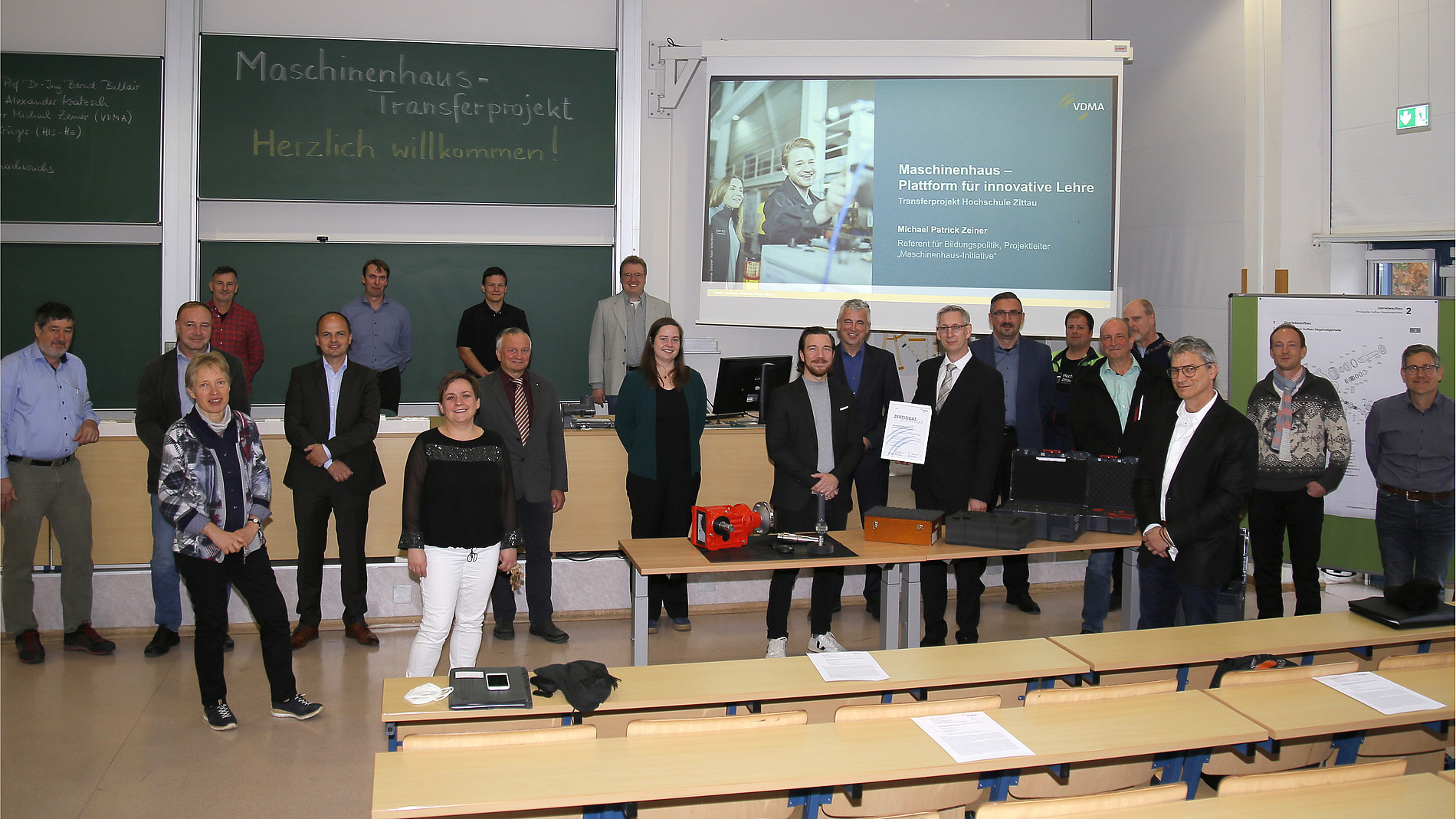
”In his speech at the closing workshop, Michael Patrick Zeiner, project manager of the VDMA’s Maschinenhaus Initiative, praised the project’s achievements: “Companies are looking for entry-level professionals who, even while still in school, have already begun tackling real-world professional tasks with an increasing degree of personal responsibility for problem-solving and the results. I am therefore very pleased that such opportunities are now being made possible in Zittau through great dedication—including teaching modules and e-learning offerings, as well as by leveraging corporate contacts.” As an award for successful participation in a transfer project and in recognition of the commitment of the Faculty of Mechanical Engineering, he subsequently presented the Zittau/Görlitz University of Applied Sciences with the VDMA “Maschinenhaus Certificate.”
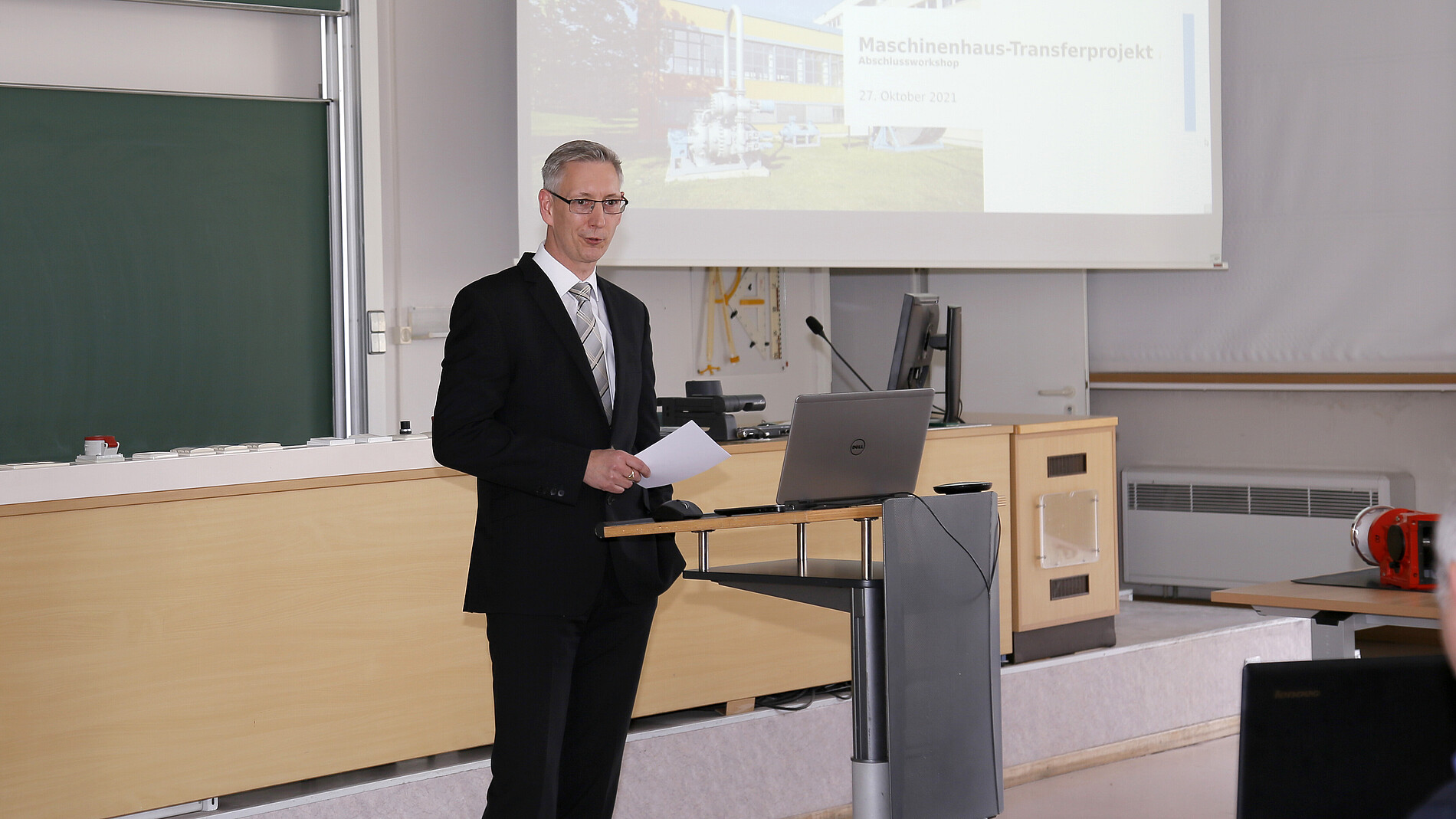
In his welcoming remarks at the certificate presentation ceremony, the Rector of the Zittau/Görlitz University of Applied Sciences, Prof. Dr.-Ing. Alexander Kratzsch, emphasized the university’s importance as a hub for STEM education:
There is a very high demand for young, good-trained professionals in the field of engineering, both within the region and beyond. Zittau/Görlitz University of Applied Sciences is committed to its tradition as a university specializing in energy technology and engineering. Through its successful participation in the Maschinenhaus Transfer Project, Zittau/Görlitz University of Applied Sciences is gaining prestige and appeal as a place to study STEM fields.
”The HSZG's Mechanical Engineering degree programs:
Bachelor’s Degree Program in Mechanical Engineering
Diplom Program in Mechanical Engineering
Dual KIA (sandwich-style) degree course in Mechanical Engineering
Master’s Program in Mechanical Engineering
Through the Maschinenhaus initiative, the VDMA has been supporting faculties and departments in Mechanical Engineering, Electrical Engineering, and Computer Science since 2013 in further developing their teaching and improving student success rates. The Maschinenhaus sees itself as a “platform for innovative teaching” that connects stakeholders from universities, politics, and industry. The goal is to counteract the high dropout rates in engineering programs and ensure high-quality engineering education.
In the 62 transfer projects currently underway or already completed throughout Germany, theory is put into practice, and individual workshops are used to analyze the current state of teaching and design new measures. The Maschinenhaus Initiative compiles examples of successful best practices in innovative university teaching in a toolbox. For more information on the Maschinenhaus Initiative and the VDMA’s engagement with universities, visit vdma.org/ingenieurausbildung.

1st floor