
Using research data strategically: Success factor for excellent and reusable research
Successful research funding depends on very good research data management. This is demonstrated by the introductory workshop at the HSZG.
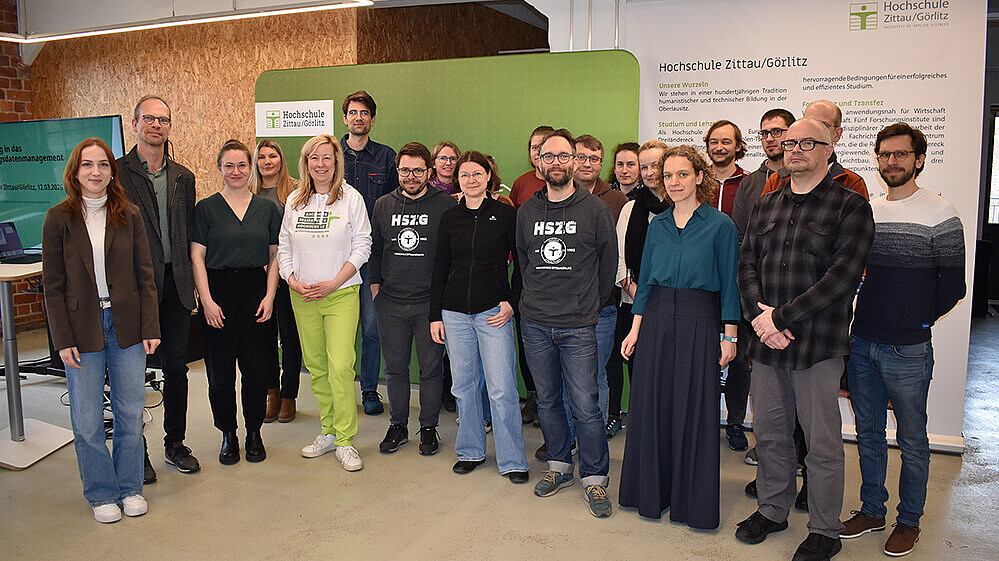
In mid-March 2026, the workshop “Introduction to Research Data Management” took place at the Zittau/Görlitz University of Applied Sciences (HSZG) at the CELSIUZ in Zittau. After all, successful research funding also depends on good research data management.
The volume and complexity of scientific data are constantly increasing in everyday research. This heightens the need for researchers to document, store, and make available the data generated throughout the course of their projects and research. Good and responsible data management supports researchers in this endeavor—it ensures transparency and traceability of research results. By definition, research data management accompanies the research process from initial planning through archiving and reuse, and ensures a better overview and the reusability of the data.
Workshop Provides Insights and Theoretical and Practical Foundations
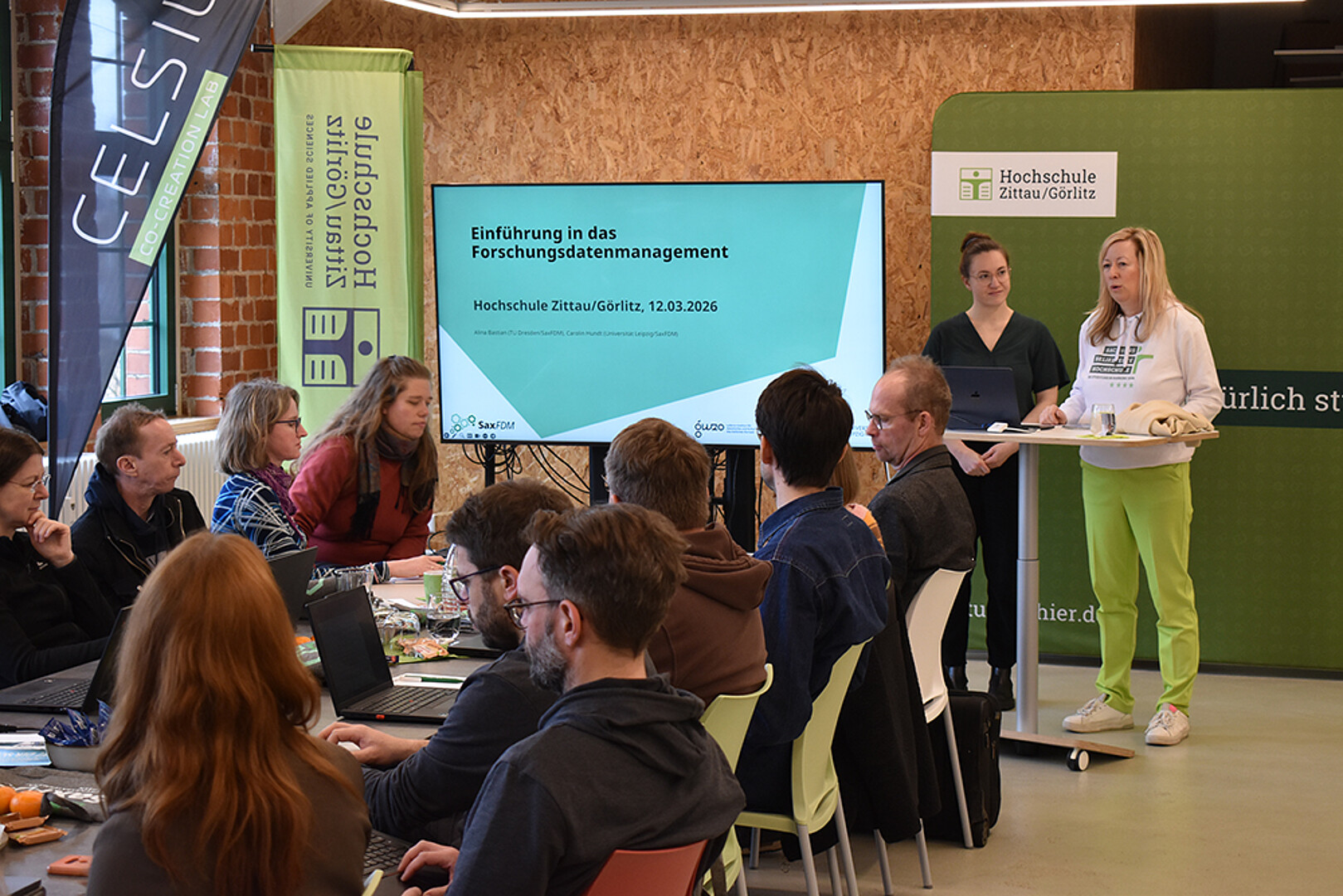
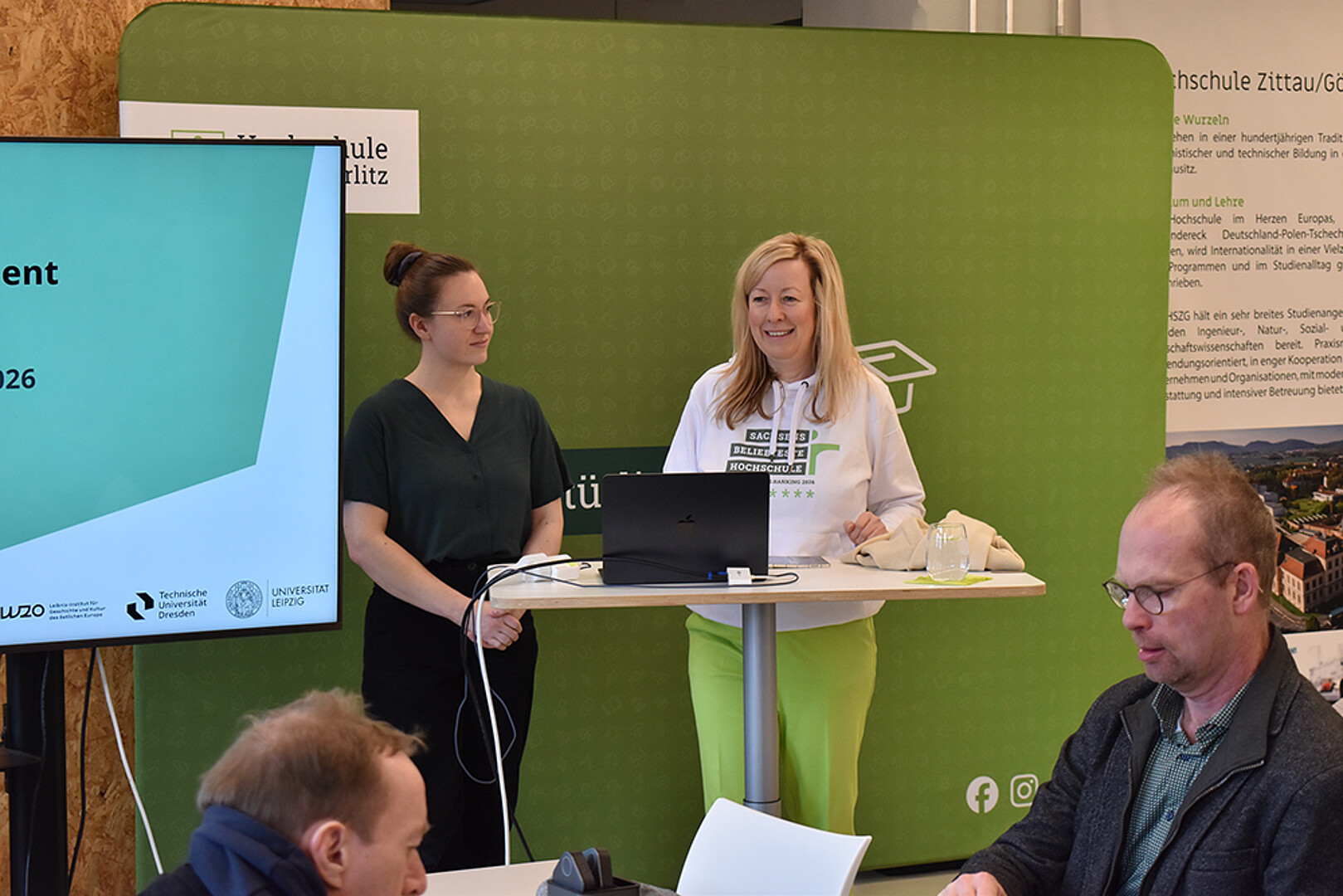
The workshop “Introduction to Research Data Management (FDM),” held in mid-March at the Co-Creation Lab CELSIUZ in Zittau, provided good insights into the topic. Alina Bastian and Carolin Hundt from the Saxon State Initiative for Research Data Management—SaxFDM—presented theoretical and practical fundamentals as well as subject-specific insights to the more than 25 workshop participants.
What is FAIRE data versus open data? What is metadata? How does data protection apply? What do technical terms like anonymization and pseudonymization mean? And how do I conceptualize, design, and finalize research projects that can be successfully implemented? Above all, through a good data management plan (DMP). DMPs are a project management tool that helps researchers maintain an overview of the data they use—even in (collaborative) projects with multiple national or international partners. “A DMP helps ensure that data remains findable, accessible, interoperable, and reusable even when used at a later date,” says Alina Bastian. And with that, she reveals the secret behind the importance of the FAIR data mentioned above.
Alina Bastian and Carolin Hundt also presented the finer points of a so-called DMP—as well as how related tools, such as an RDMO (Research Data Management Organizer), can be used for this purpose.
A practical and inspiring workshop: After all, data management is increasingly becoming a cornerstone of good scientific practice (GWP)—and is increasingly expected by research funding agencies such as the BMFTR (Federal Ministry of Research, Technology, and Space), the EU in programs such as “Horizon Europe,” or the DFG (German Research Foundation). The DFG reaffirms this on its website, stating: “The discipline-specific and appropriate handling of research data that underlies scientific projects or is generated during their implementation is an essential component of quality-oriented and reproducible research.”
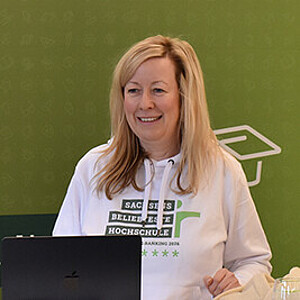
Research data is the foundation of modern science. Only when it is structured, comprehensible and accessible can research results unfold their full impact - in science as well as in the transfer to business and society. Professional research data management is therefore not an add-on, but a central building block for quality, connectivity and innovative strength.
”Praise for the interdisciplinary and lively exchange during the workshop
Prof. Dr. Steffi Höse from the Faculty of Business Administration and Engineering Management at HSZG says: “I am grateful that the organizers addressed this important topic in the form of a workshop and created an environment that fostered open exchange and lively discussions. The workshop showed me how much more efficient and transparent research processes become when research data is consistently organized and documented. I would especially like to highlight presenter Alina Bastian, who conveyed the topic not only with solid technical expertise but also in a practical, clear, and engaging manner.”
And what specific takeaways can be applied to individual project management or research projects from the workshop?! – “For my field of research, I’ve learned just how much clear standards and structured data processes facilitate collaboration and the reuse of findings and data, enhance the quality and integrity of research, and thus make an important contribution to society. The workshop confirmed my previous approach and motivated me to engage with the topic even more critically and, above all, more consciously. I will immediately integrate some of the methods and tools presented into my own classes / courses, ” said Prof. Dr. Steffi Höse.
New Strategies and Methods That Can Be Applied Immediately
Bernadette Rohlf, a research associate at the TRAWOS Institute at HSZG, sums it up: “I’ve come to realize the importance and feasibility of responsible research data management. I’m glad I attended the workshop shortly before starting my new project, so that I can integrate the newly learned strategies and insights into my project work right from the start. The workshop has enabled me to approach research data management in a more structured way in the future, because it provided concrete step-by-step procedures and components. I have learned how important structured research data management is—not only for the archiving and reuse of data, but also for making ongoing project work clearer, more transparent, and more secure through conscious research data management.”
Prof. Dr. Jörg Kretzschmar from the Faculty of Natural and Environmental Sciences at HSZG says: “Research data management has always played an important role in terms of the usability (access) and verifiability (quality) of research data. Not least for this reason, it is becoming increasingly important—for example, when applying for third-party funding or to ensure the usability of data generated with grant funds. To improve the usability and verifiability of research data in the future, good planning and consistent implementation of research data management are indispensable. Online tools and templates can provide excellent support in this regard. The workshop motivated me to professionalize my existing approach to research data management and to use available tools in the future, such as electronic lab notebooks for documenting research data or SaxFDM-RDMO for creating data management plans (DMPs).”
Text: Frank Leberecht
Photos: Lucas Wenzel
1st floor