
BASA IV is recommended by the GB Psych Compass
Since 2016, the BASA has been further developed at the HSZG as a tool for carrying out risk assessments of mental stress in companies. It now also meets the strict requirements of the GB-Psych-Kompass.
BASA, which stands for “Psychological Assessment of Working Conditions, Screening for Job Holders,” was developed and publishedby the Federal Institute for Occupational Safety and Health (BAUA) . The goal of this project was to develop an effective method for good identification and addressing of psychological stress in the workplace. Prevention played a crucial role in achieving long-term effectiveness.
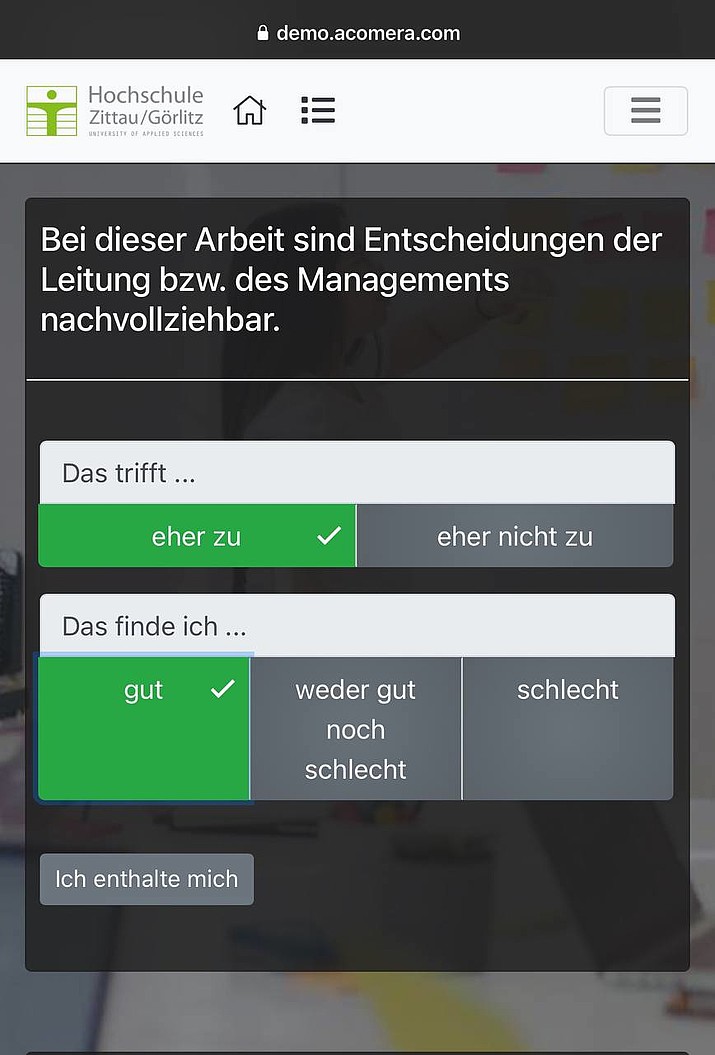
Since 2016, BASA has been further developed and digitized at the Zittau/Görlitz University of Applied Sciences as part of the BASA Network. The current version, the digital BASA IV, is based on the laws, regulations, and standards currently in effect. The digital implementation is carried out using the ACOMERA platform.
The stakeholders in the BASA Network are all the more pleased that BASA IV now also meets the strict official requirements of the GB-Psych-Kompass. As of July 12, 2024, BASA IV is explicitly recommended in the GB-Psych-Kompass for the German-speaking world to assess psychological stress in the workplace. The goal of the GB-Psych-Kompass online tool is to support workplace stakeholders in finding and selecting instruments for assessing psychological stress in accordance with the risk assessment required under Section 5 of the Occupational Safety and Health Act (ArbSchG). In the long term, this is intended to help promote the consideration of psychological stress within the framework of risk assessments and to improve their quality.
Not every assessment method is included in the GB-Psych-Kompass. There is a rigorous selection process that can take several months. The primary goal of the GB-Psych-Kompass review process is to identify scientifically sound yet practical instruments for conducting the risk assessment of psychological stress (GB-Psych). To this end, instruments are researched and independently evaluated based on criteria developed specifically for this purpose.
Six criteria to be fulfilled
Six criteria were developed that the 170 identified instruments had to fulfill for inclusion: goal orientation through the assessment of psychological stress (1), user orientation for users (2) and respondents (3), inclusion of employees in the HR-Psych process (4) and empirically tested validity (5) and reliability (6). Of the 170 instruments identified, 51 met the inclusion criteria and were included in the online tool. These mainly include questionnaire procedures, workshop procedures and observational interviews.
The research results show the existing diversity of instruments for CB psych in German-speaking countries. The criteria developed considerably reduced the number of instruments included and ensure that only high-quality instruments are made available to companies. The included instruments are made available to companies in an online tool that supports users from companies, especially SMEs, in the selection of instruments for the implementation of CB-Psych.
A central challenge in the implementation of the HR-Psych lies in the high complexity and interdependencies of psychological stress factors. Many companies, especially SMEs, do not carry out the MH-Psych completely or not at all, which is due to a lack of resources, a lack of specialist knowledge and a low awareness of its importance. There is often a lack of clarity about responsibility structures and competencies as well as a lack of willingness to change fundamental company structures.
SMEs benefit from GB-Psych
The project provides companies with an overview of recommended tools for implementing HR psychology, which is particularly beneficial for SMEs. The results also reveal gaps in the current practice of using the instruments and specify the need for action for the further development of instruments. This analysis shows that the research project makes a significant contribution to the identification and evaluation of tools for carrying out risk assessments of mental stress in companies and offers practical solutions to the challenges in this area.
The BASA network is currently conducting research into mapping new requirements resulting from digitalization and AI as well as a multicultural working environment in several language versions.

First floor