Young talents compete at "NEISSE ELEKTRO"
At the 32nd International Electrical Engineering Olympiad, young technology enthusiasts from several countries meet at the HSZG to demonstrate their skills in theory and practice.
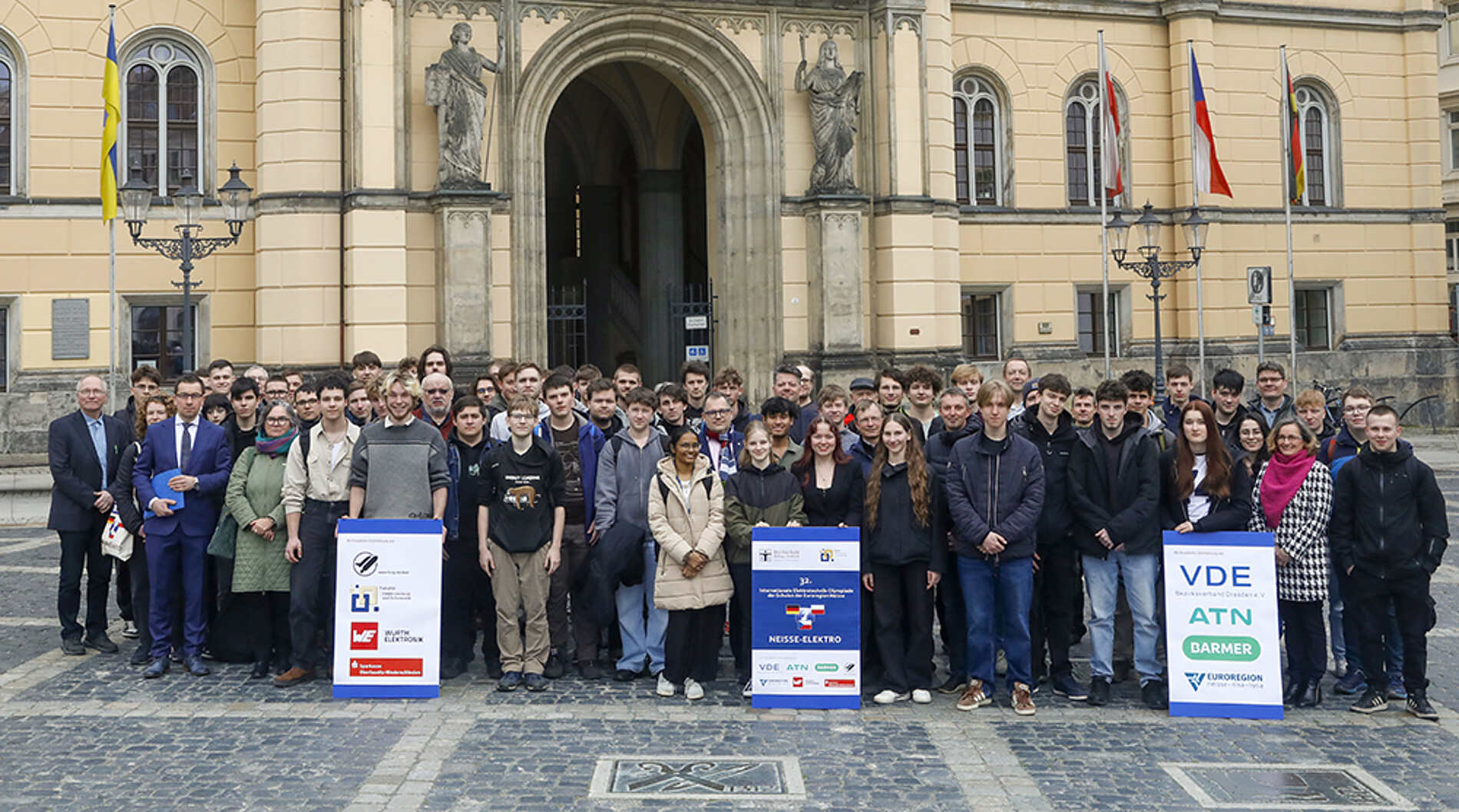
The long-standing “Neisse-Elektro” competition took place again in 2026, marking its 32nd edition this year. The (International Electrical Engineering Olympiad) once again brought together 54 talented students from Germany, Poland, and the Czech Republic to compete against one another in STEM subjects.
The event is organized by the “Neisse Elektro” working group, consisting of teachers and university staff, and is aimed at high-achieving young people with an interest in electrical engineering and physics. Each year, around 20 students from each of the three countries participate and demonstrate their skills in a challenging competition.
Competition and Schedule
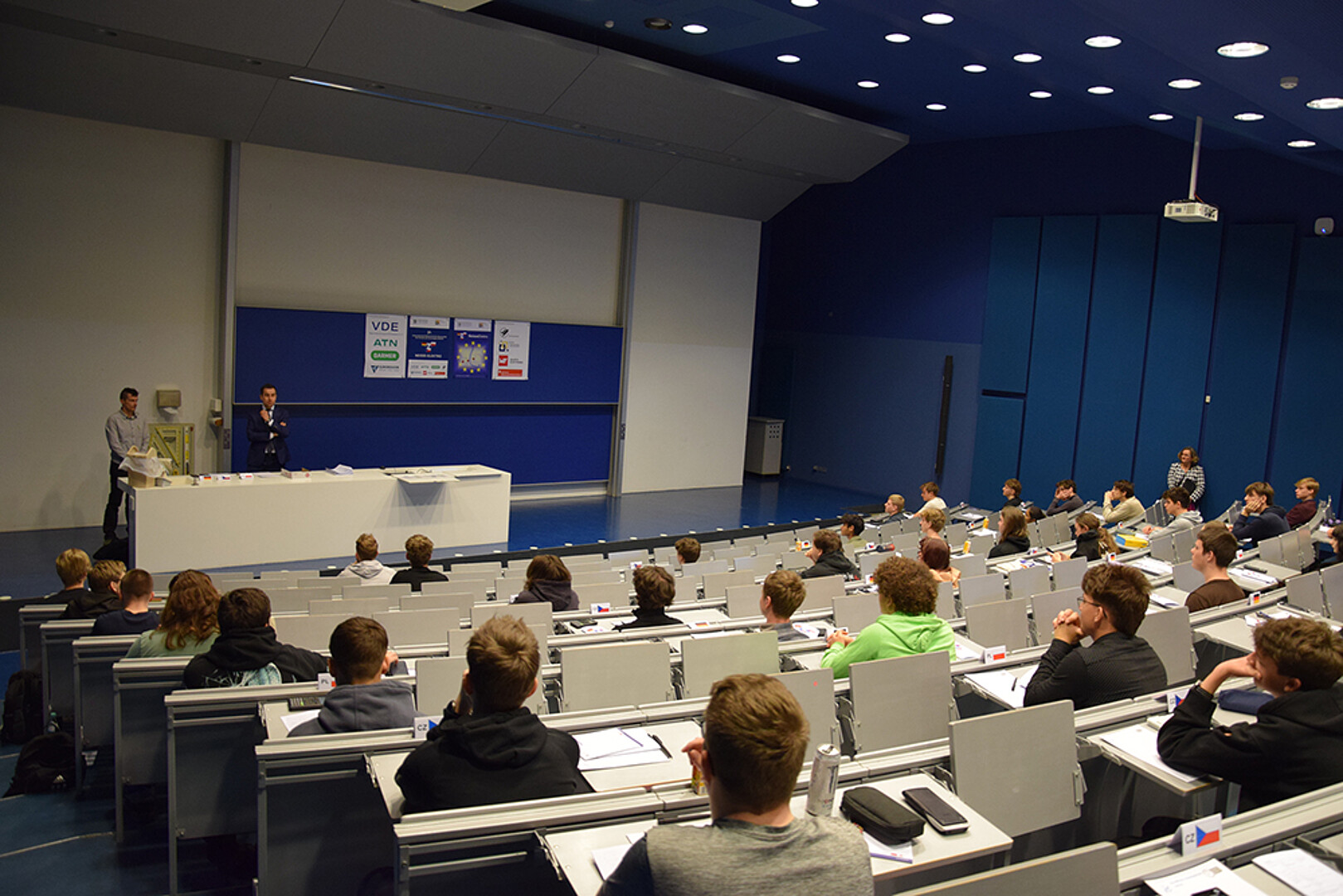
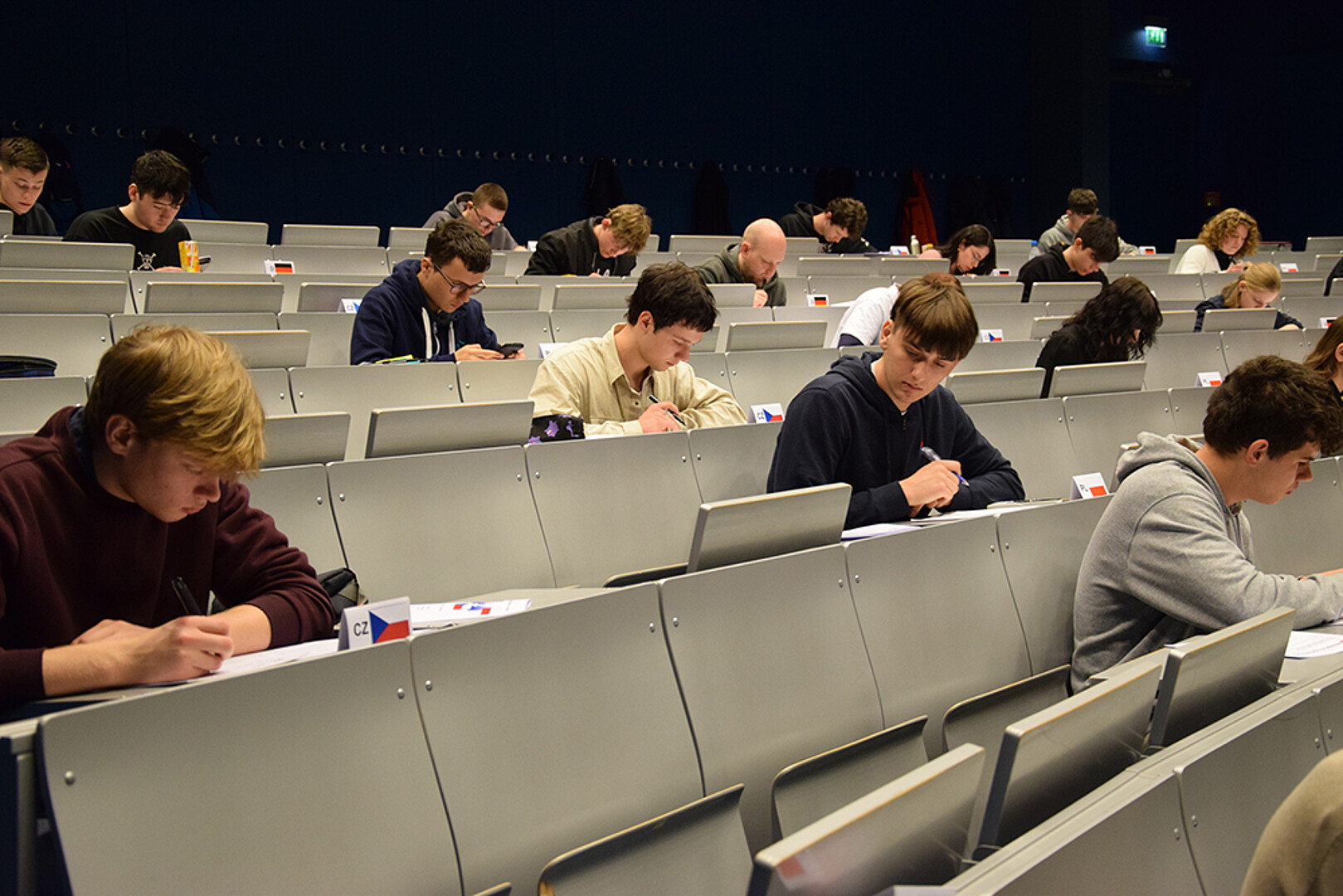
This year, the Olympiad took place on a Friday for the first time. As in previous years, the centerpiece of the Olympiad was the 90-minute invigilated (written) examination, which includes problems at the level of a technical degree program. Participants must apply their knowledge in areas such as electrical circuits, resistor networks, and electric and magnetic fields.
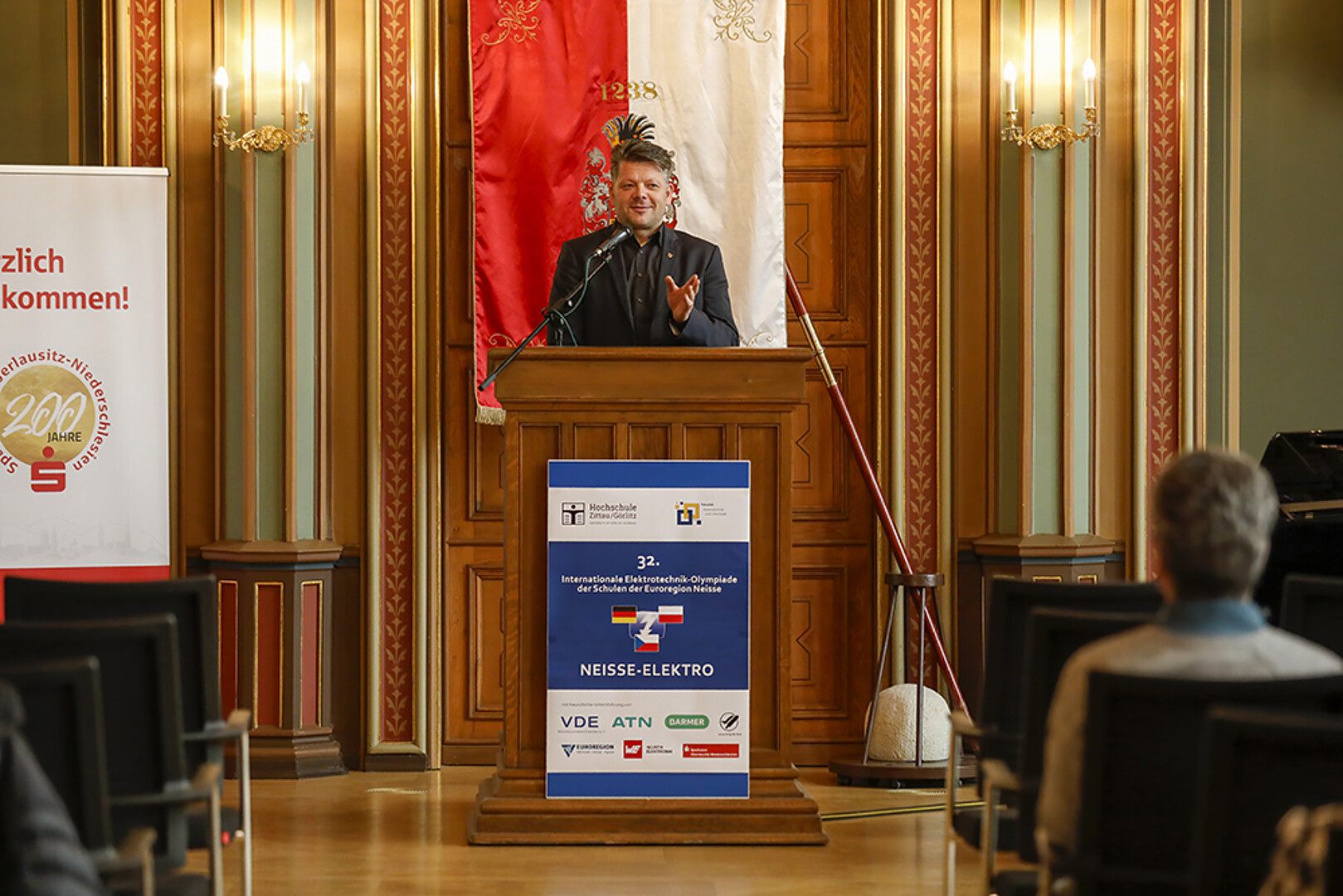
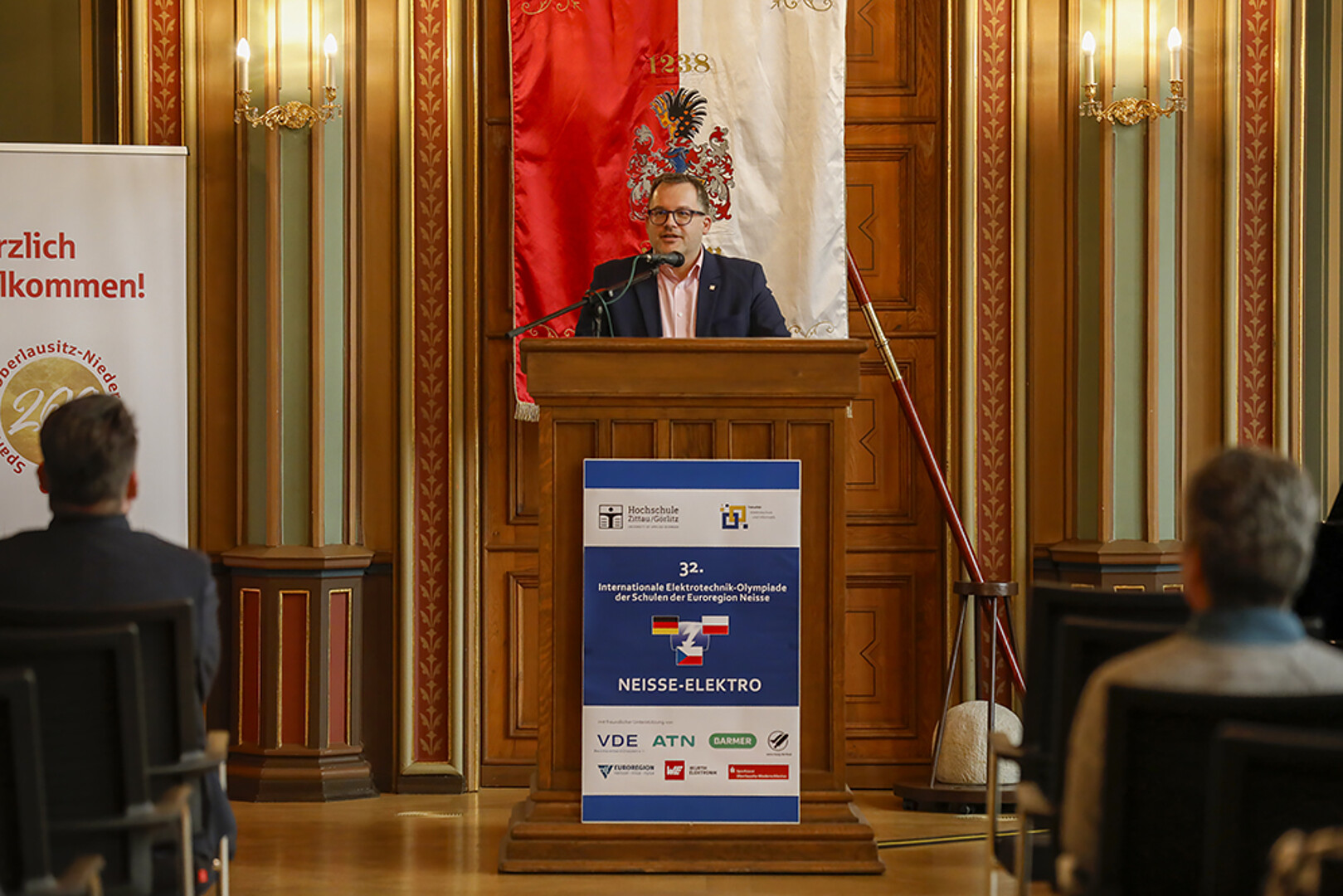
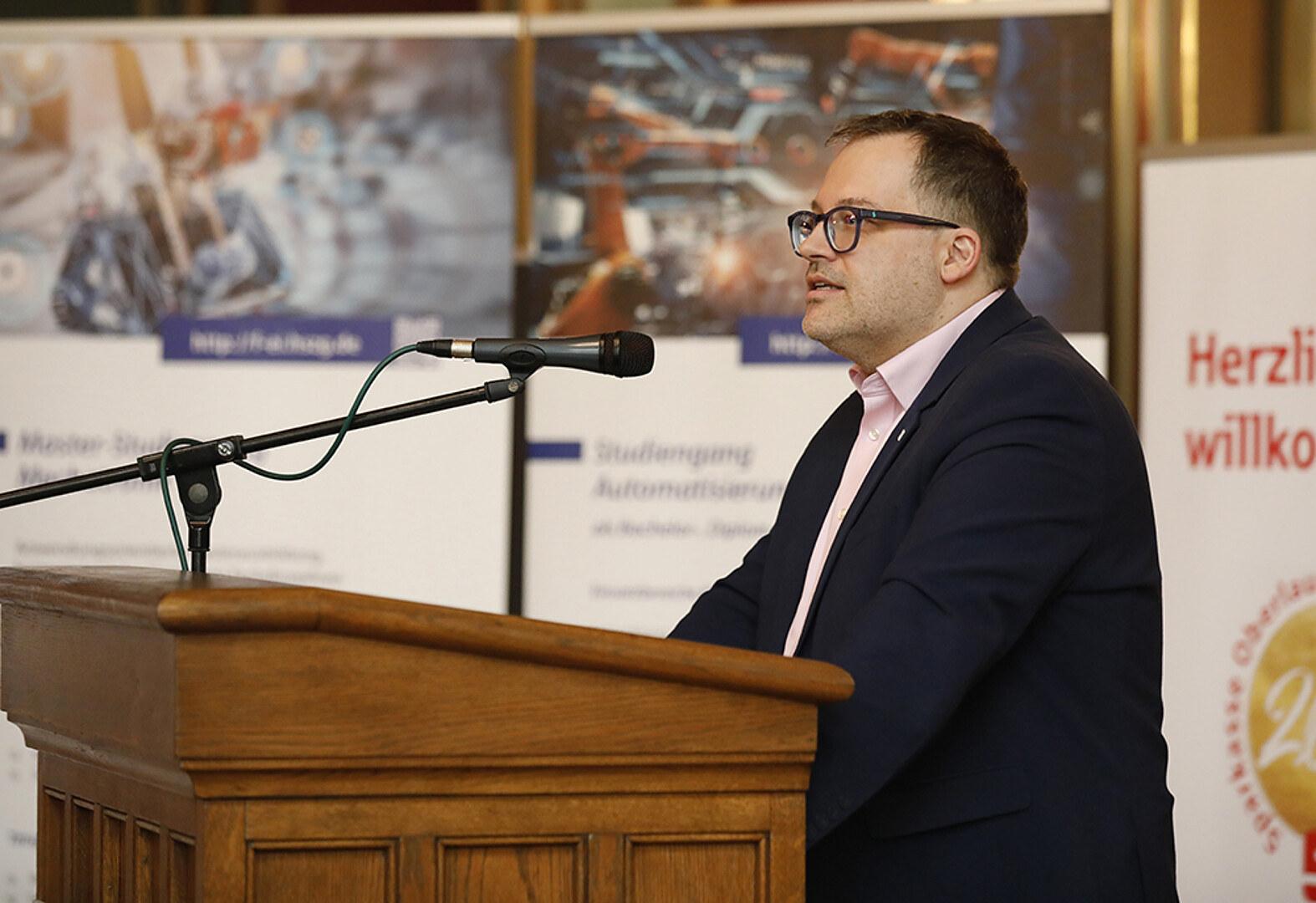
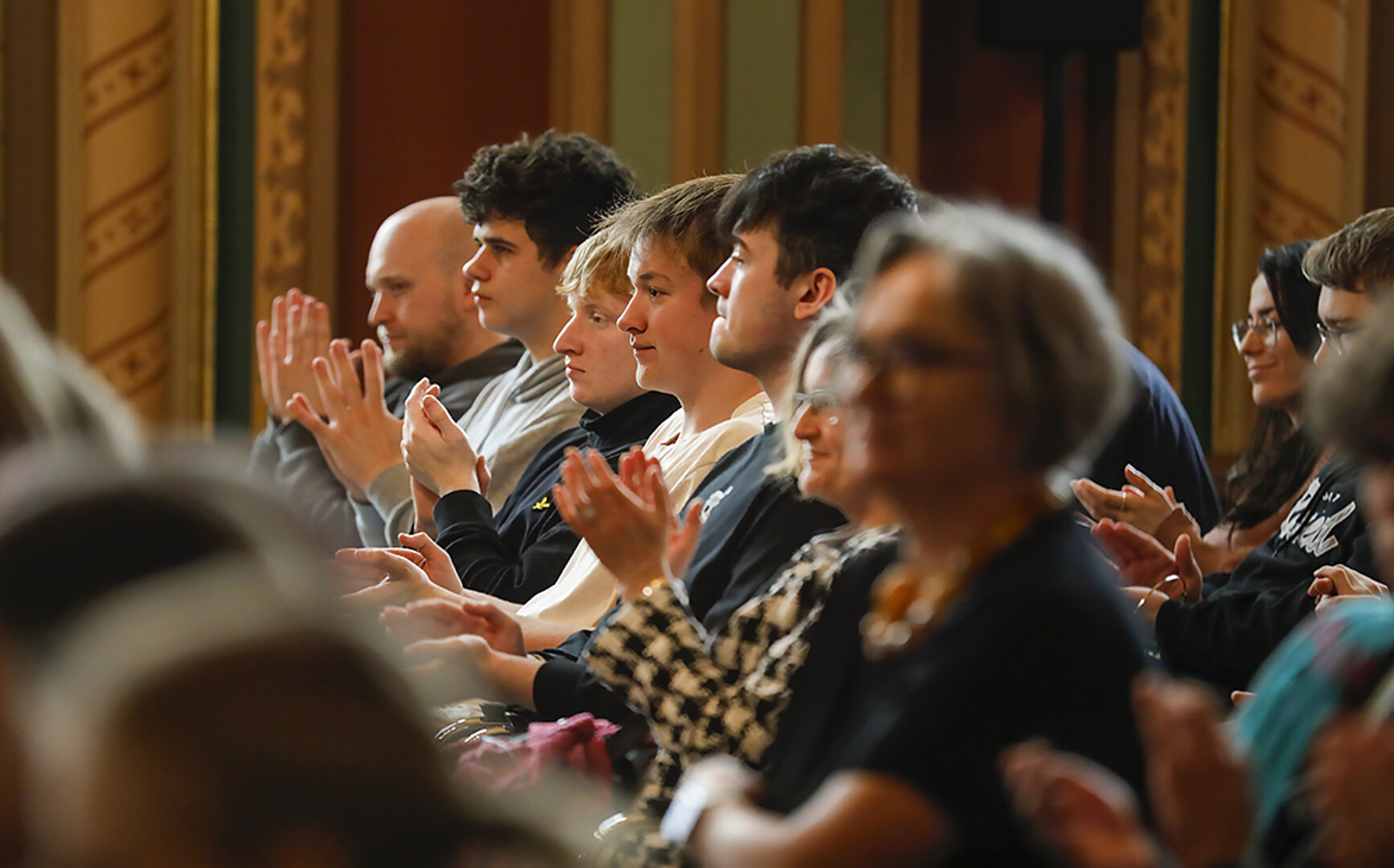
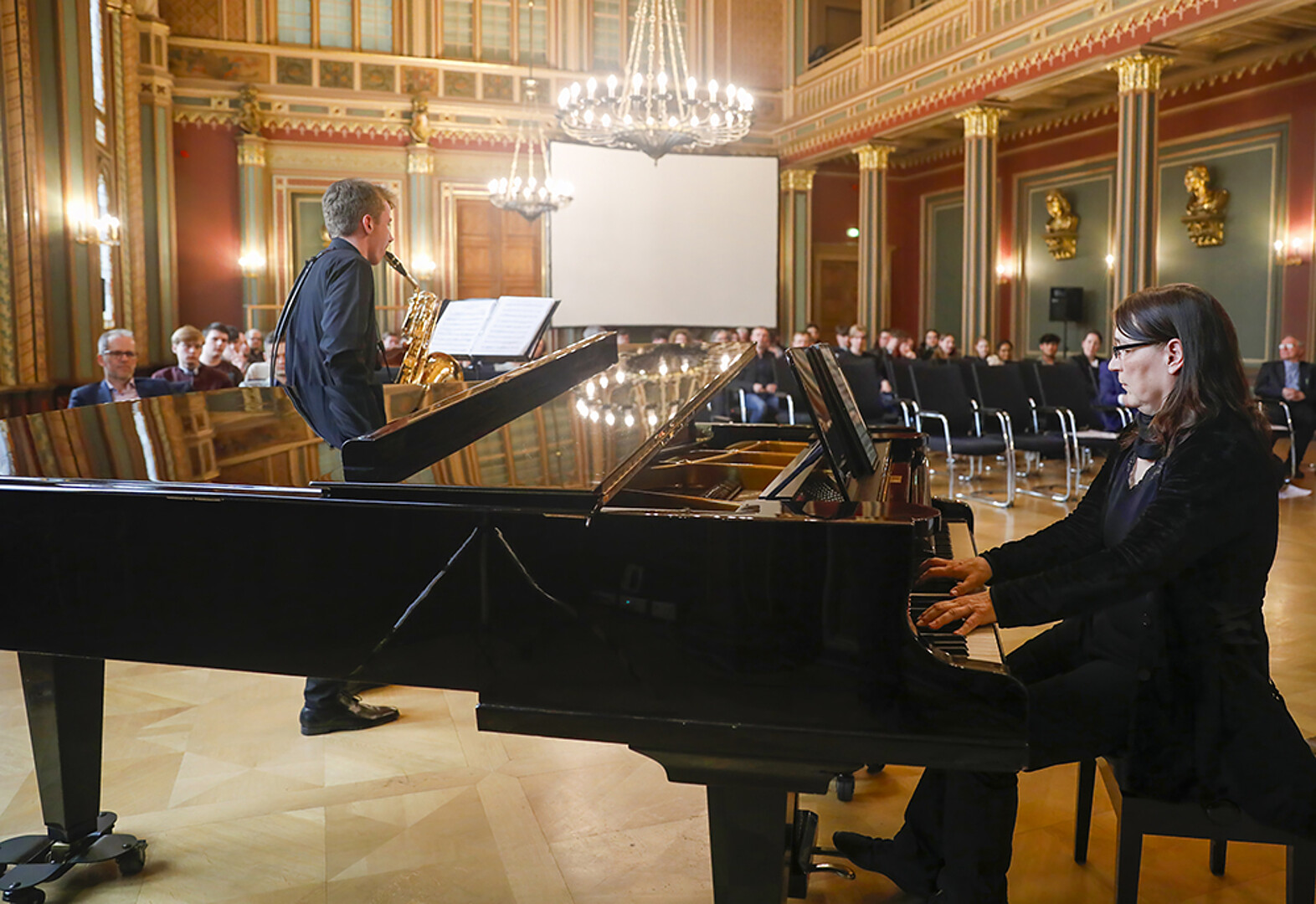
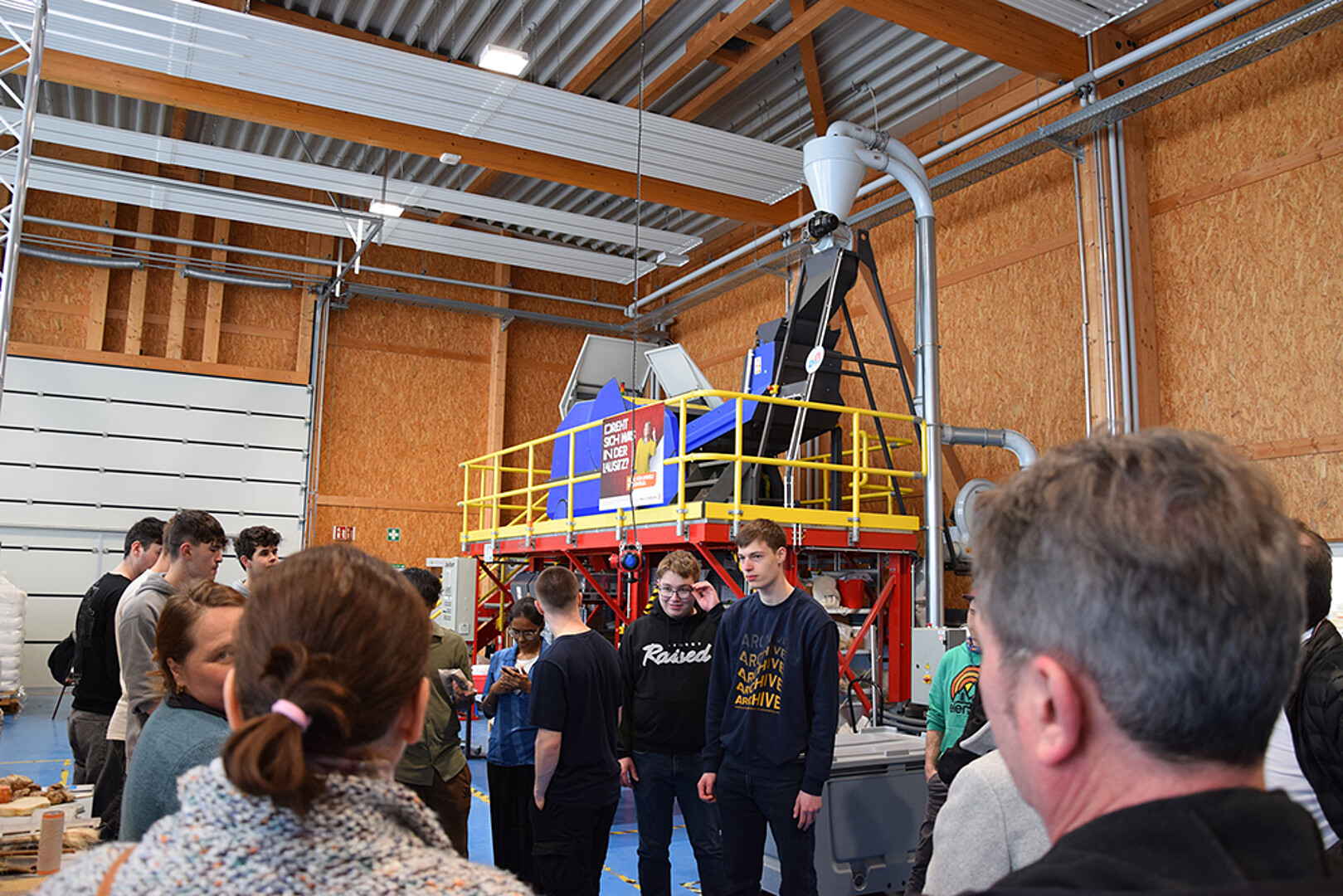
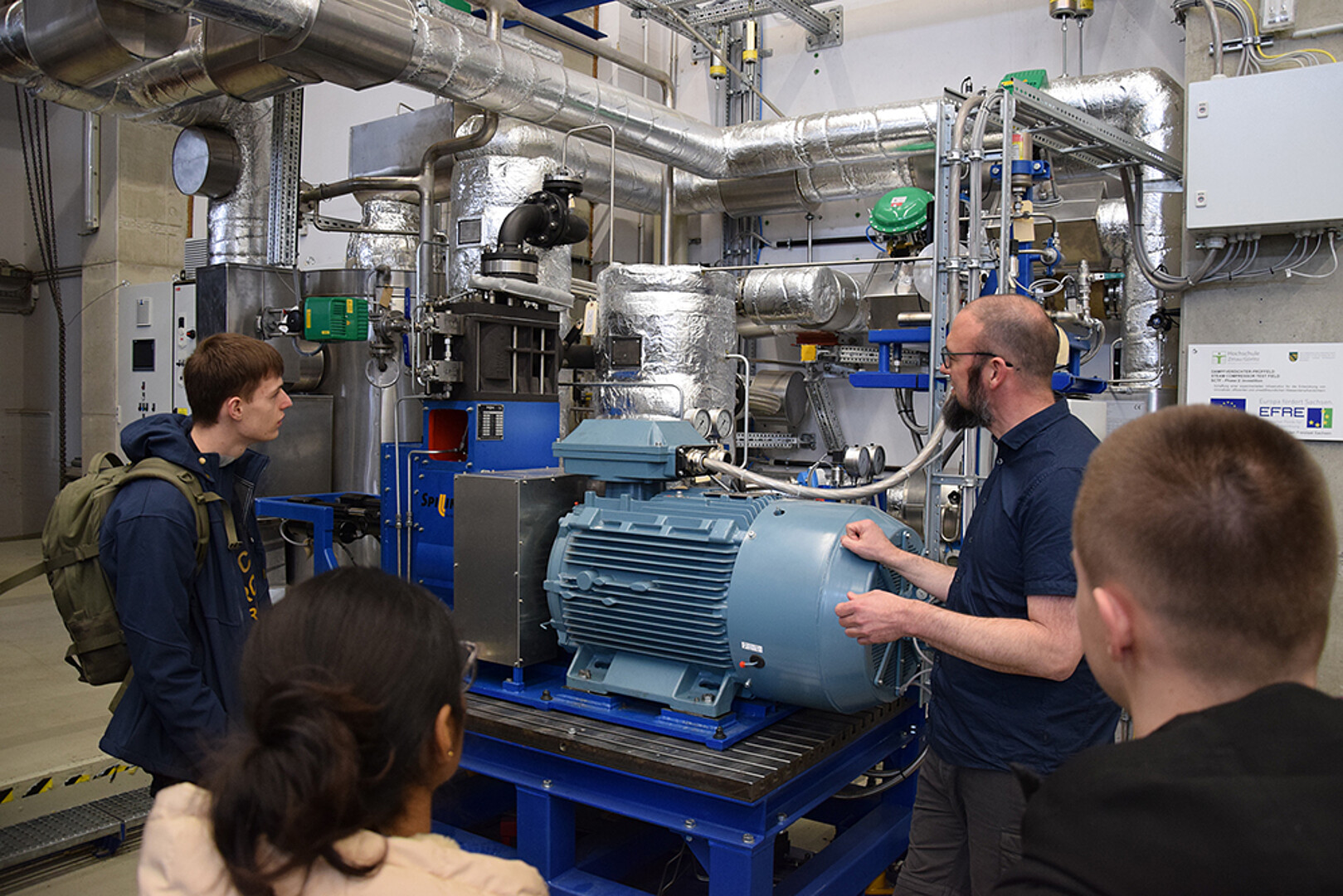
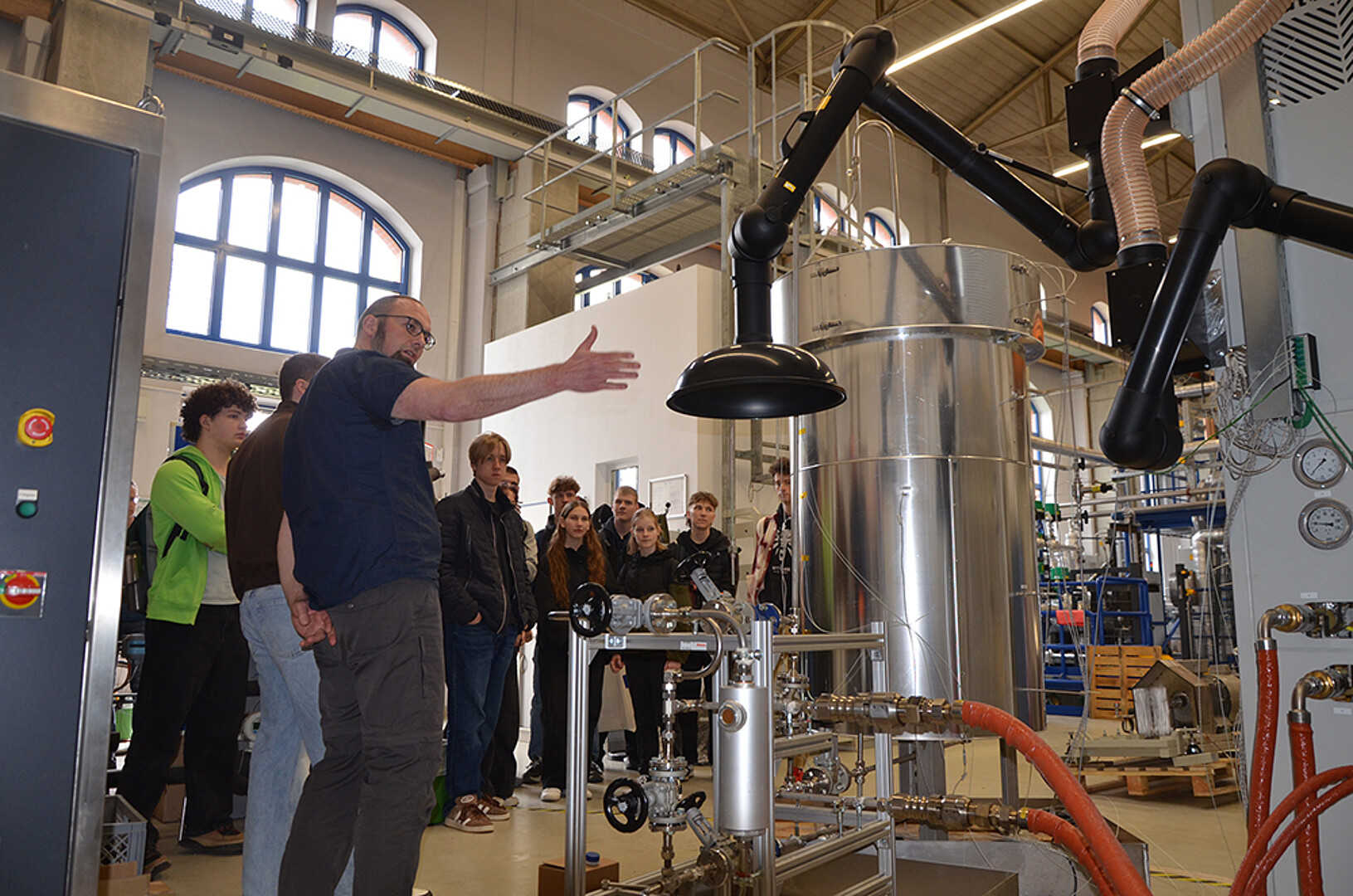
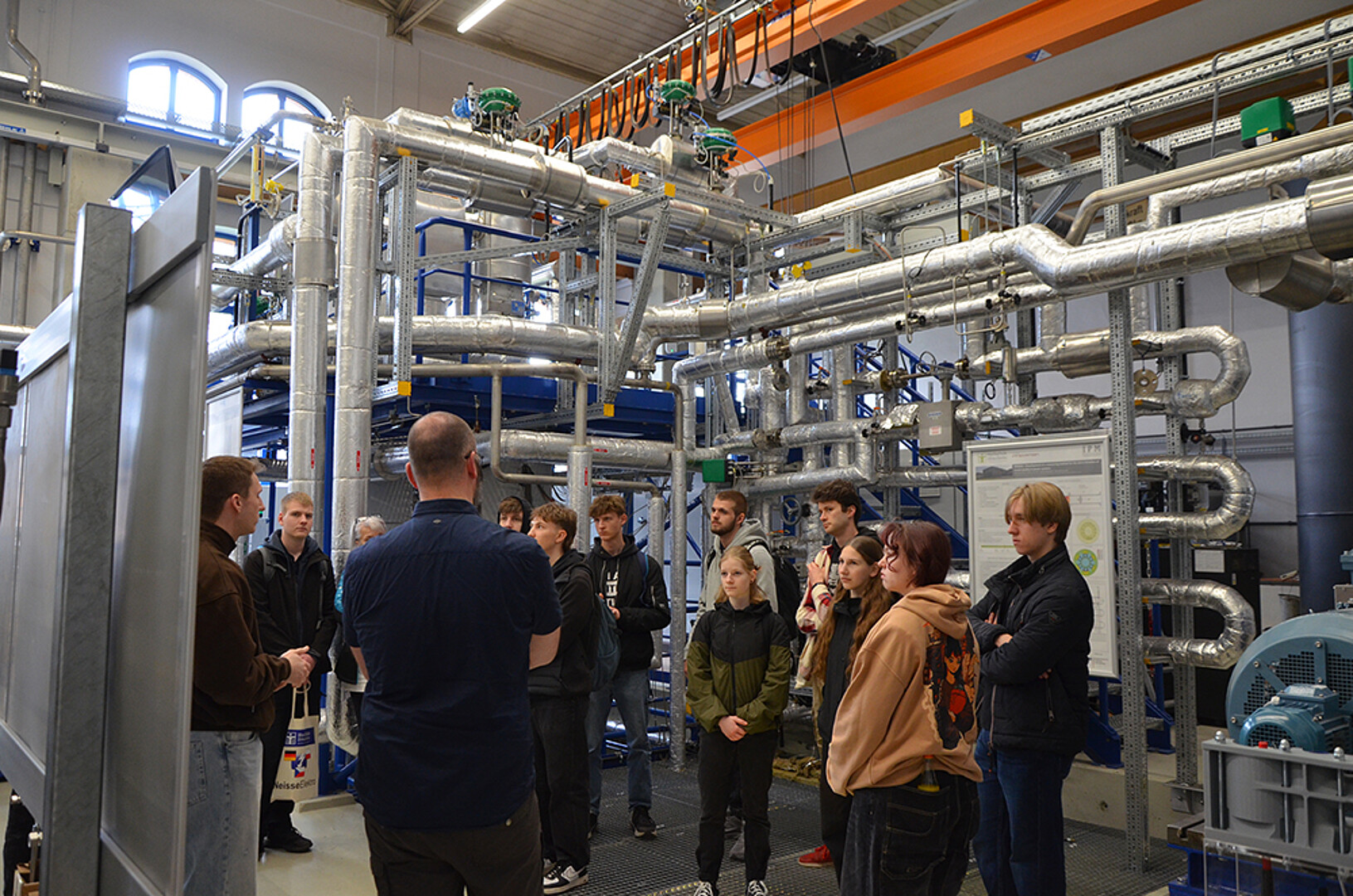
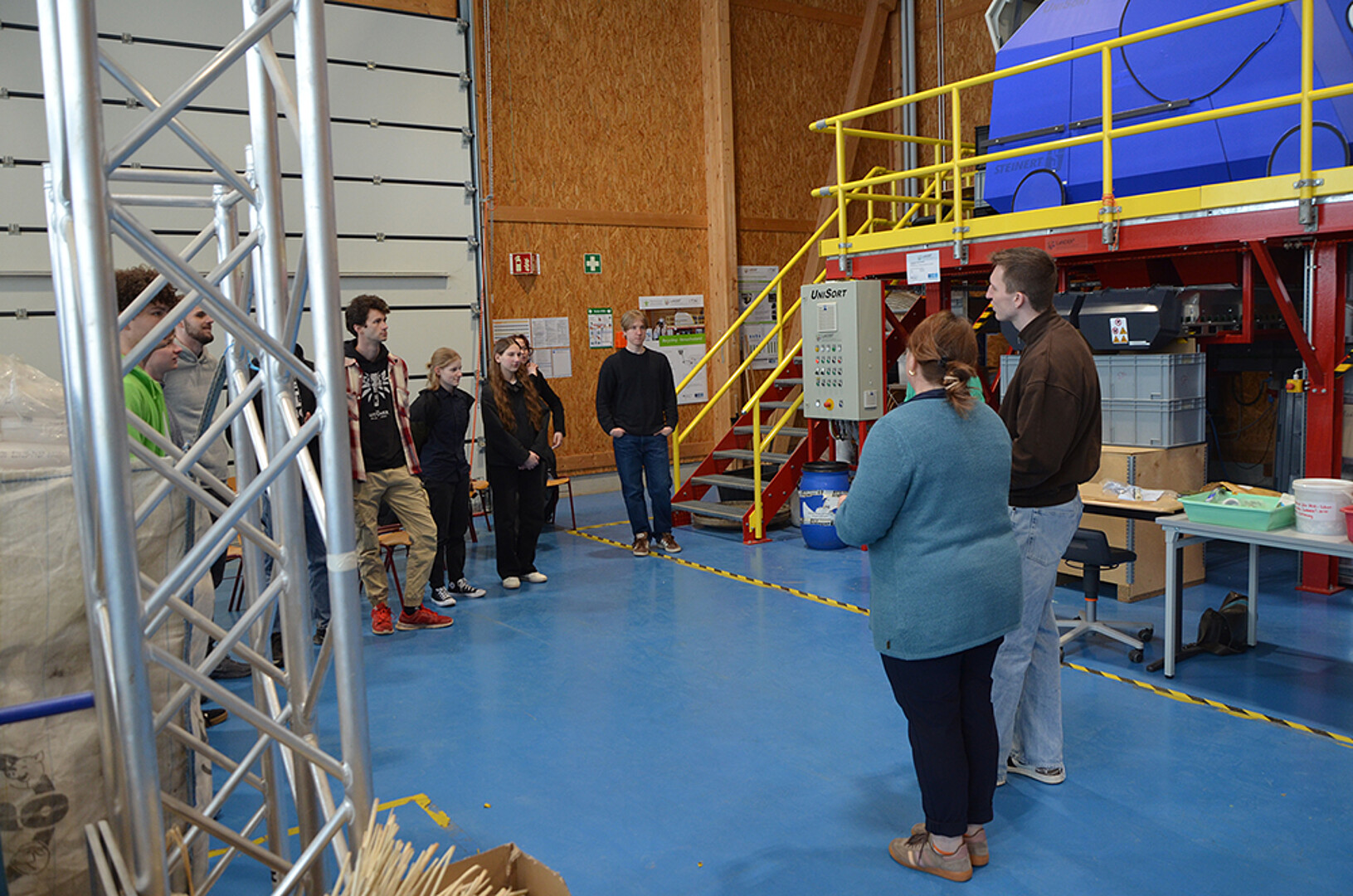
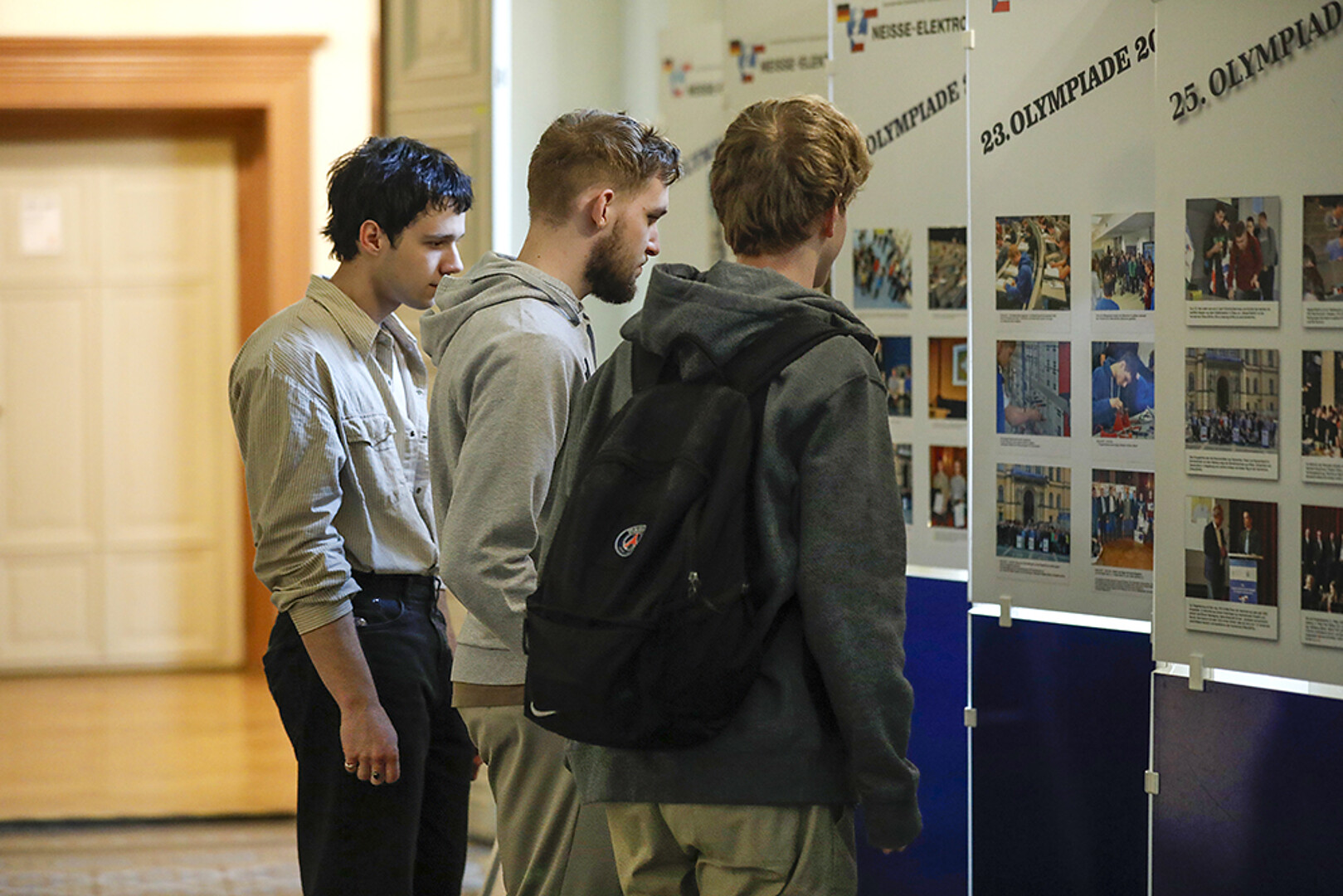
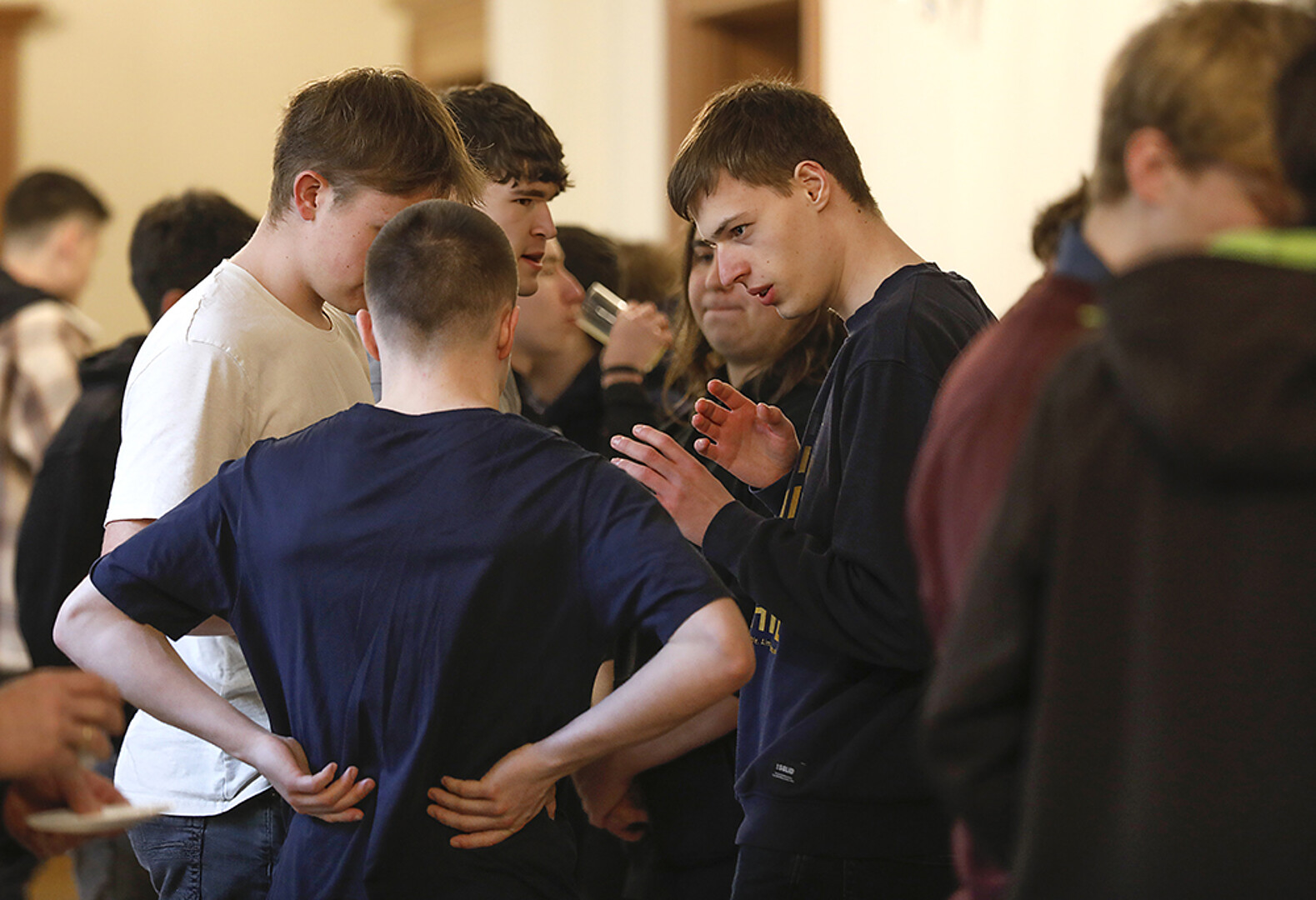
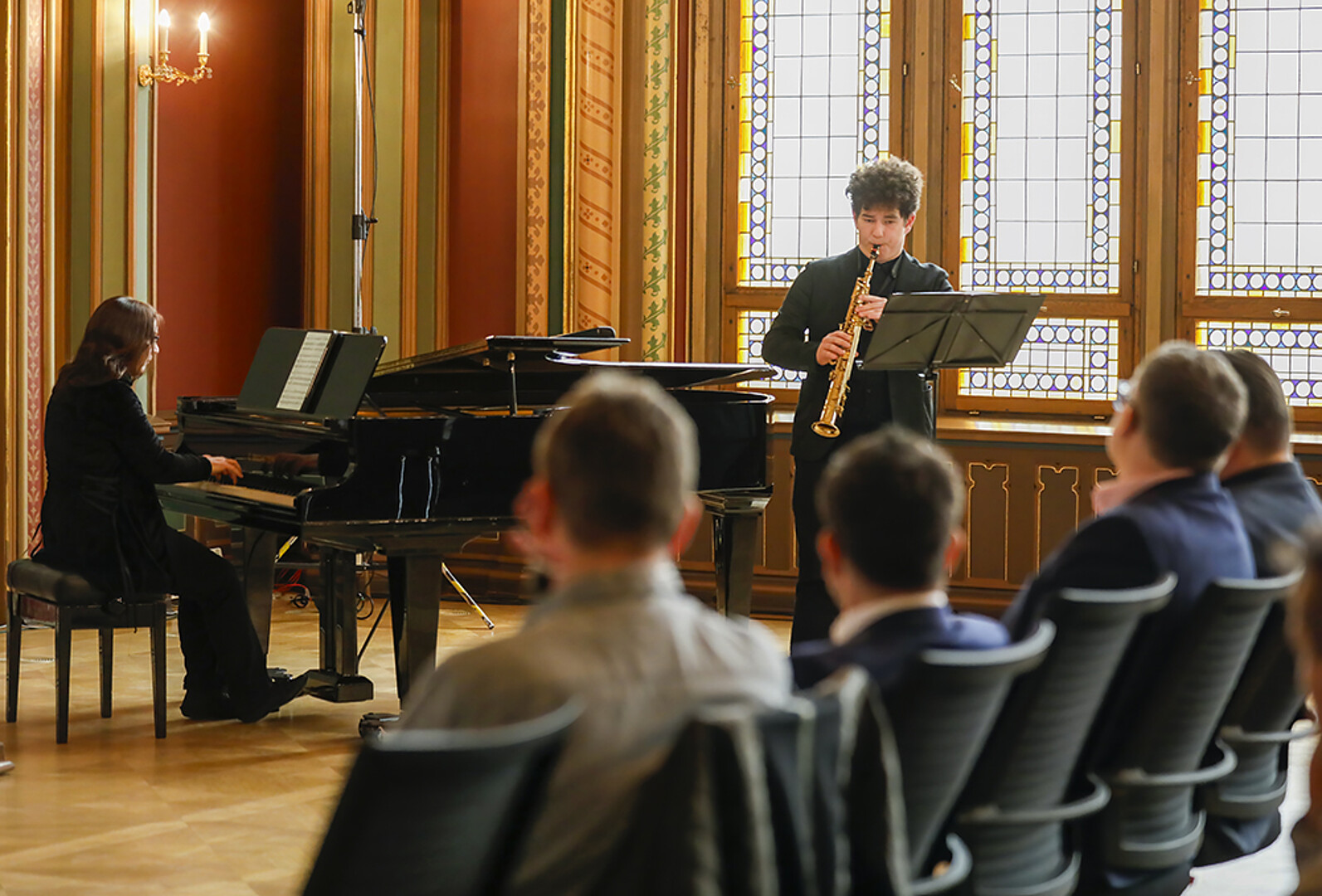
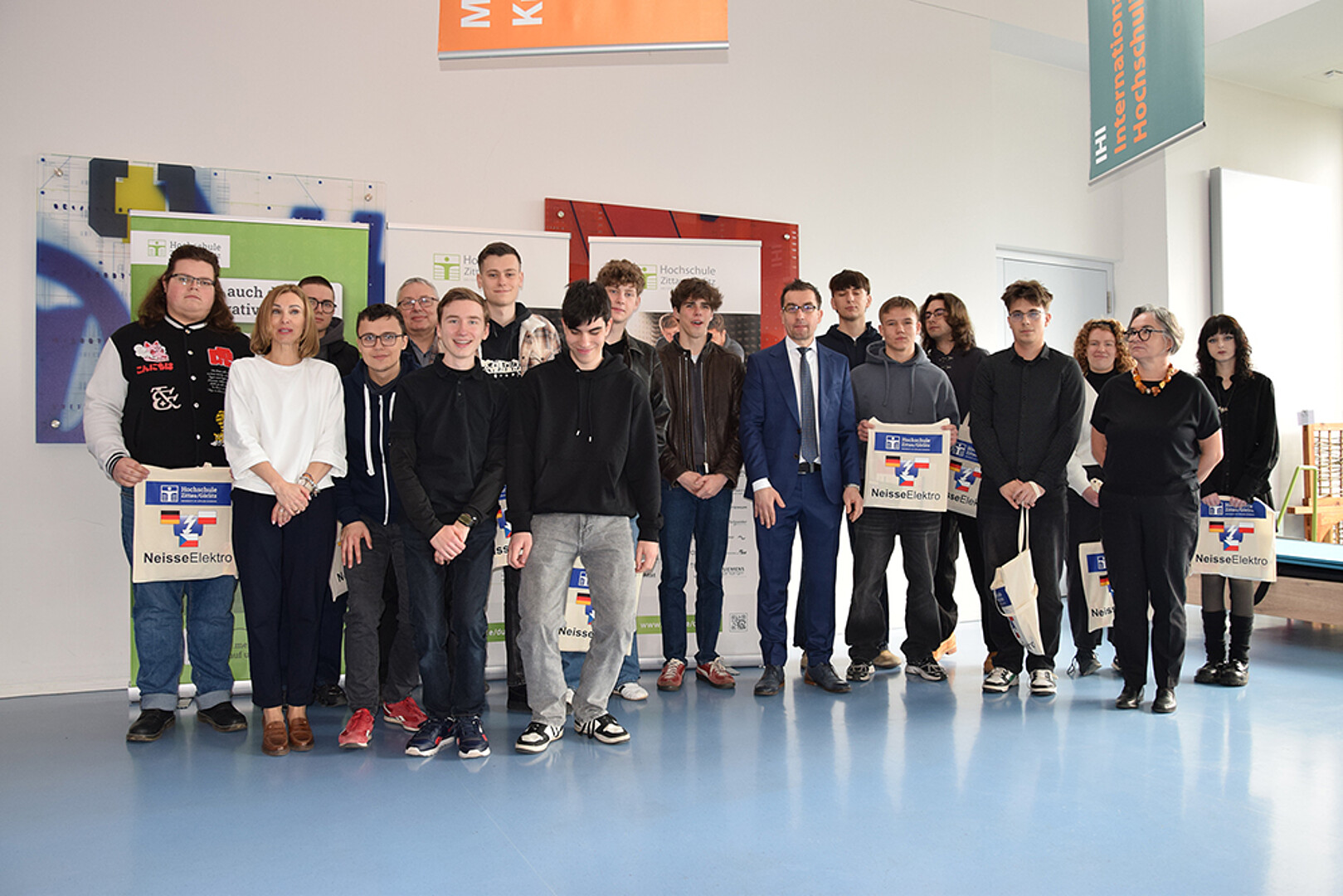
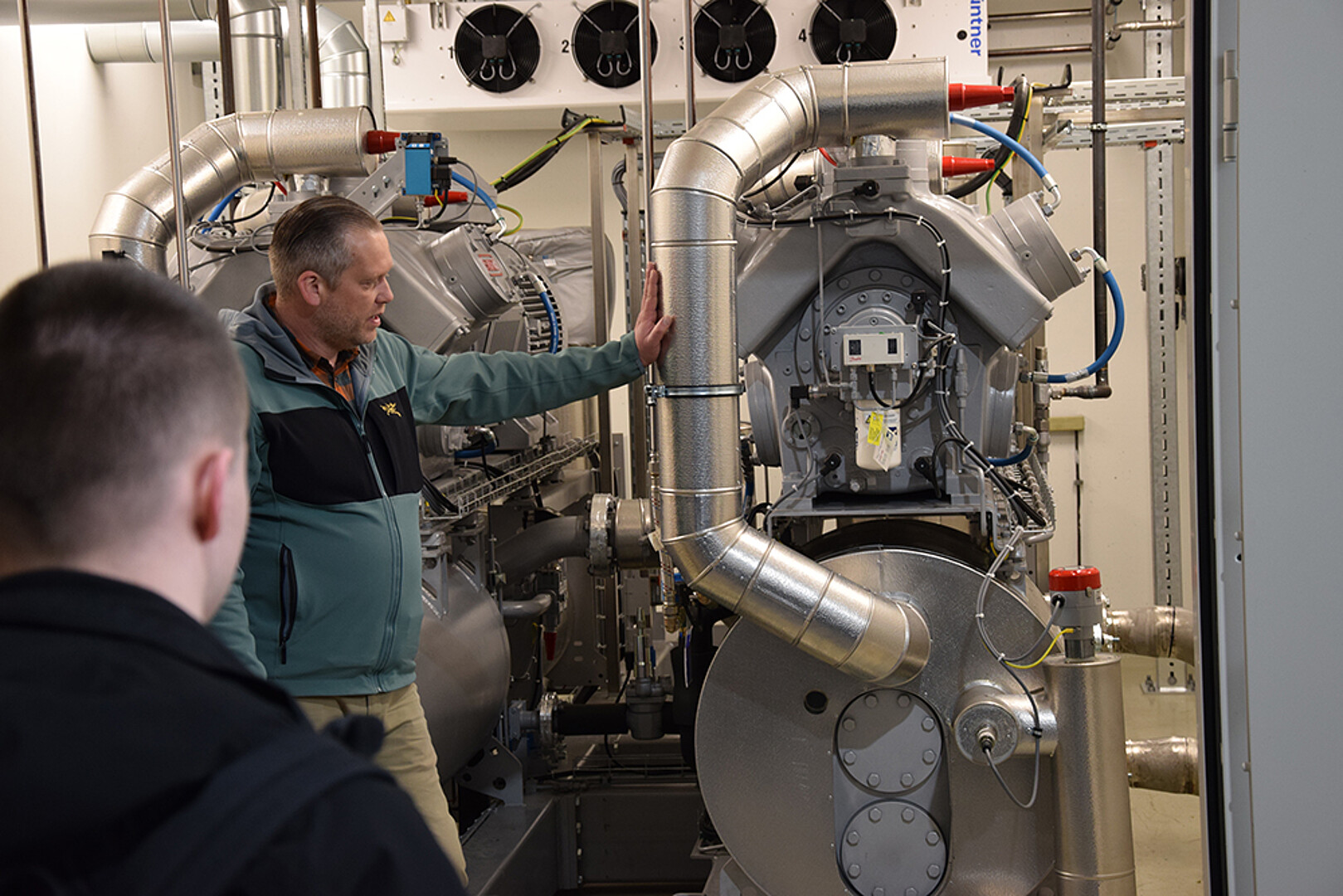
This was followed by a group social program. After a group lunch in the student canteen, this year’s program included exciting field trips to the Lander³ Hall, the power plant laboratory, and the AquaHeat test facility. In the afternoon, there was the customary group photo in front of Zittau City Hall, a light afternoon snack, and the awards ceremony in the Bürgersaal. The ceremony was simultaneously interpreted for the Polish and Czech guests and accompanied by saxophone and piano music. In addition to Zittau’s Mayor Thomas Zenker and the university’s Rector, Prof. Dr. Alexander Kratsch, representatives from the Polish and Czech schools also delivered welcoming remarks.
The Zittau Power Plant Laboratory (ZKWL) at Zittau/Görlitz University of Applied Sciences was established under the leadership of the Institute for Process Engineering, Process Automation, and Measurement Technology (IPM) and is dedicated to the experimentally supported development of measures to increase the energy efficiency of power plants, the development of energy storage systems, and the development of solutions for improved utilization of renewable energy sources. A central component of the laboratory is its impressive large-scale test facilities, which were designed and built as part of several research projects.
In the test facility of the AQVA HEAT III project visited by the participants, an innovative overall concept for the year-round provision of heat based on surface waters (Mandau) is being realized and a seasonal test including aquatic ecological monitoring is being carried out. This concept can be a building block for a future heat supply based on renewable energies and serves to transform innovative heat generation systems from research into application, for regional heat suppliers and beyond. The project is funded as part of the Energy and Climate funding guideline of the Free State of Saxony (FRL EuK 2023, SAB).
The LaNDER³-Technikum, the natural fiber center of the HSZG, is dedicated to the development of everyday and consumer goods based on renewable raw materials, in particular local natural fibers. The entire process, from the extraction of the natural fibers to the recycling of the goods at the end of their life cycle, is taken into account. Here, the Neisse-Elektro participants also had the opportunity to experience a modern sorting plant for plastic waste in action.
International Cooperation
Since its founding in 1995, “Neisse-Elektro” has been a significant cross-border educational project. It exemplifies the close cooperation between schools and educational institutions in the Neisse Euroregion.
The goal of the Olympiad is not only to promote technical skills but also to strengthen international exchange among young people and to spark enthusiasm for technical fields of study.
Preparation and Support
Participants receive intensive preparation in advance—both at their schools and through special workshops and courses at the university. This includes, for example, experimental presentations or hands-on exercises in analyzing electrical circuits.
Thanks to the support of numerous partners and sponsors, participation is free of charge for students.
A big thank you goes out to the 2026 supporters:
- Barmer
- VDE
- ATN
- Sparkasse Oberlausitz-Niederschlesien
- Würth Electronics
Results
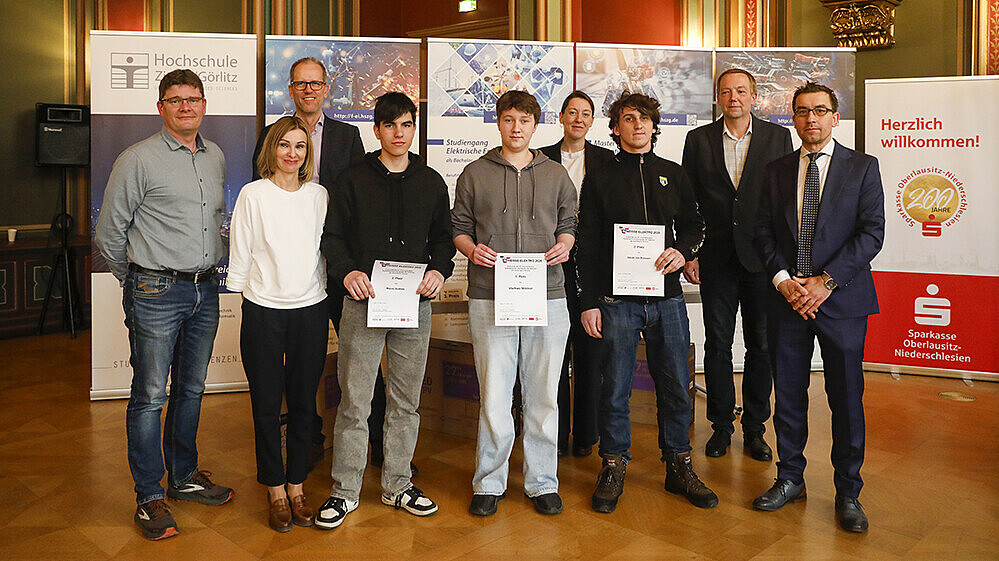
First place went to Mathias Mildner from 2026, and second place to Jakub Jan Prousek, both from SPSSE a VOS Liberec. Third place went to Maciej Szabala from LZN Wroclaw.
The good national team came from the Czech Republic, ahead of Poland and Germany. Congratulations to everyone!
Text: Prof. Patricia Stange, Dr. André Seeliger