Project D2C2
Project description:
Implementing digitization in disciplines in a participatory way :: Competencies Connected (D2C2) is a collaborative project of 10 Saxon universities and the BA Sachsen, funded by the Foundation Innovation in University Teaching and coordinated by the Higher Education Didactic Center Saxony (HDS). The goal is evidence-based teaching development in the field of digital teaching, for which specialist networks for exchange are being established and teachers are being supported in the implementation of digital methods and tools. General information about the joint project can be found on the HDS website. (https://www.hd-sachsen.de/projekte/d2c2)
The staff of the D2C2 project is in continuous exchange with university and media didactic actors both within the HSZG (e.g. Digital Higher Education, Center for eLearning of the HSZG, University Didactics Officer) and within the Saxonian network in order to share the knowledge gained from experience and thus benefit from each other instead of "reinventing the wheel". The goal is to create offerings that meet the needs of good teaching and promote it.
Offers of the association:
-
SUBJECT-SPECIFIC PROFESSIONAL LEARNING COMMUNITIES: SUBJECT COMMUNITIES
D2C2 focused on five departments in higher education. In these departments, cross-university teaching-related networks and communities were established.
The teaching networks and communities were coordinated by colleagues from the respective disciplines at one of the participating universities. These individuals served as points of contact for faculty in their respective fields and, for example, facilitated connections and organized exchange meetings.
For an overview of all PROFESSIONAL LEARNING COMMUNITIES: SUBJECT COMMUNITIES, visit: https://www.hd-sachsen.de/projekte/fachcommunities
The HSZG coordinated the Saxony-wide engineering network. -
DIGITAL TURNING POINTS
As part of the project consortium, colleagues focused on specific areas of digitization in teaching—the so-called “Digital Turning Points.” Drawing on their expertise, they supported faculty members at all universities in developing new applications and teaching-and-learning scenarios and worked closely with colleagues from the Digital Change Support teams at all universities.
Focus Areas:
- Students’digital skills in undergraduate education (details and contact)
- Pedagogically sound digitized workshop and lab work (Details and Contact)
- Pedagogically sound use of an OER assignment pool for mathematics (details and contact)
- Digital assessment (Details and Contact)
-
ON-SITE SUPPORT
Colleagues in the Digital Change Support team worked at all universities in the network. These colleagues provided on-site support to faculty members in implementing innovative teaching and learning scenarios, using digital tools, and conducting research on their own teaching (SoTL).
On-site support also included the “Digital Teaching Exchange” forum . Every 14 days on Friday afternoons, the digital space opened with engaging presentations from faculty members who shared their experiences with digital tools using practical examples. This was followed by an opportunity for questions and discussion. For more information, visit: https://bildungsportal.sachsen.de/opal/auth/RepositoryEntry/16440852481/CourseNode/1666232962460056012?10
- Key findings from the project consortium
HD Saxony publishes lessons learned, publications, SoTL formats, and other project results
(visit the website)
- Establishing and Coordinating Subject-Specific Professional Learning Communities
Insights from community coordinators on requirements, challenges, action strategies, and lessons learned (to the publication)
- Good-Practice Insights in the Transfer Kiosk
D2C2 publishes case studies of selected initiatives, recommendations, and other project results on the new platform of the Foundation for Innovation in Higher Education
(visit the website)
- Innovative Concepts for Assessing Knowledge
D2C2 supports the further development of teaching innovations at the 2024 e-Exam Symposium at the Technical University of Munich’s Garching Science Campus. (more)
- New Impulses for Future-Oriented Degree Programs
D2C2 is supporting the development of learning programs focused on “Future Skills” for the semiconductor industry. (read more)
- Perspectives on Teaching. Journal for Higher Education and Academic Development
Implementing Digitalization in Disciplines in a Participatory Manner :: “Competencies Connected” (special issue)
- A Model Format
Two years of the “Digital Teaching Exchange” at HSZG offer inspiring insights into the world of digital teaching methods: A review and outlook. (more)
- Discovering the Future of Higher Education in Virtual Spheres with D2C2
Launch of the D2C2 special issue (event details)
- D2C2 supports the development of innovative teaching formats
Further development of an e-learning system to promote digital skills in engineering (more on this)
- “Students as Partners” in the D2C2 project consortium
Reflections from the consortium locations (read the article)
- Digging Deeper Together
How Three Unusual Exchange Formats Improve Digital Collaboration (more on this in the HFD blog)
- Interactive Math Problems with JSXGraph in OPAL/ONYX
Members of the D2C2 project have experimented with the prototypical integration of JSXGraph into ONYX (more on this)
- Green Light for D2C2
To the great relief of all universities, faculty, and students who have benefited from D2C2’s activities in recent years, the project is being extended (more on this)
- The successful “Students as Partners” concept is bearing fruit
Students are actively supporting the digitization of studies and teaching (more on this)
- Outstanding Teaching Methods in Engineering
Faculty members acknowledge the D2C2 project’s active support in designing and implementing innovative teaching and learning formats (more information)
- Growing Interest in Gamification in Higher Education
Dr. Stefan Keck, who teaches in the Faculty of Mechanical Engineering at the Zittau/Görlitz University of Applied Sciences, came up with the idea for a quiz app. He recognized the need for a suitable tool that would allow students to review course material on their own outside of class hours... (more on this)
- Computer Science Teaching Network
A Saxony-wide teaching-focused network within the Department of Computer Science, in which faculty and students work on specific topics. (Details)
- D2C2 Support for Innovative Concepts in Knowledge Assessment
HSZG presents a learning concept at the 2023 e-Exam Symposium at RWTH Aachen University. (Read the article)
- Discussion on Digital Teaching at HSZG
After a year filled with many exciting developments in teaching and learning, we look back and, at the same time, look ahead. (more)
- Didactic Simplification in Laboratory Courses
Podcast – Dr. Julia Franke (D2C2 Consortium) (more on this)
- Engineering Quiz App
Mittweida University of Applied Sciences is collaborating with Zittau/Göritz University of Applied Sciences to develop a learning app for engineering students. (more)
Lunch in the Digital Space
New exchange format on digitally supported teaching at HSZG. (Read the article)
- On the Path to a Digital Identity
Following peer-to-peer strategy consulting, HSZG is implementing measures to digitize studies and teaching through a participatory process. (Read the article)
- Engineering Sciences Teaching Network
Establishment of a Saxony-wide teaching-focused network within the engineering departments. (Details)
- Subject-specific and to the point!
Implementing digitization in academic disciplines through a participatory approach. The Competencies Connected (D2C2) project at HSZG is pursuing this goal and offers support services. (Read the article)
Network structure:
The following universities and colleges are part of the D2C2 network: TU Dresden, TU Chemnitz, HTW Dresden, HS Mittweida, Westsächsische HS Zwickau, ehs Dresden, HTWK Leipzig, HS Zittau/Görlitz, HfBK Dresden, Berufsakademie Sachsen (details and contact).
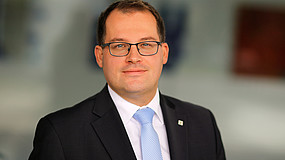
The sub-project management is in the hands of the respective prorectors for education, at the Zittau/Görlitz University of Applied Sciences in the hands of the prorector for education and international affairs, Prof. Dr. rer. Pol. Sophia Keil. At the Zittau/Görlitz University of Applied Sciences, the D2C2 project is affiliated with the Center for Knowledge Transfer and Education.
Project staff HSZG:
Lydia Laarz (lydia.laarz@hszg.de)
Ronny Freudenreich (ro.freudenreich@hszg.de)
Translated with www.DeepL.com/Translator (free version)
Collaborative Structure:
Overall coordination of the project was handled by the Saxony Center for Higher Education Pedagogy (HDS). The Prorectors of the HDS leadership formed the project’s steering committee. The HDS Scientific Advisory Board and the E-Learning Working Group of the Saxony State Rectors’ Conference formed the project advisory board.
The D2C2 consortium included the following universities and institutions of higher education: TU Dresden, TU Chemnitz, HTW Dresden, Mittweida University of Applied Sciences, West Saxon University of Applied Sciences Zwickau, ehs Dresden, HTWK Leipzig, Zittau/Görlitz University of Applied Sciences, Dresden Academy of Fine Arts, and the University of Cooperative Education in Saxony (now Saxony Cooperative University).
Details and contact information.
Project management HSZG
1st floor
Upper floor
Project staff

First floor
The project runs from 01.07.2019 to 31.12.2023 and is financed with a total volume of € 3.7 million by the Saxon State Ministry for Science and the Arts.