News
Saxony⁵ supports energy ambassadors in the Görlitz district
At CELSIUZ, the Görlitz District’s energy ambassadors and climate management team, in collaboration with Saxony⁵, tested the “Municipal Heat Planning” simulation game, focusing on stakeholder perspectives, conflicting goals, and cooperation.
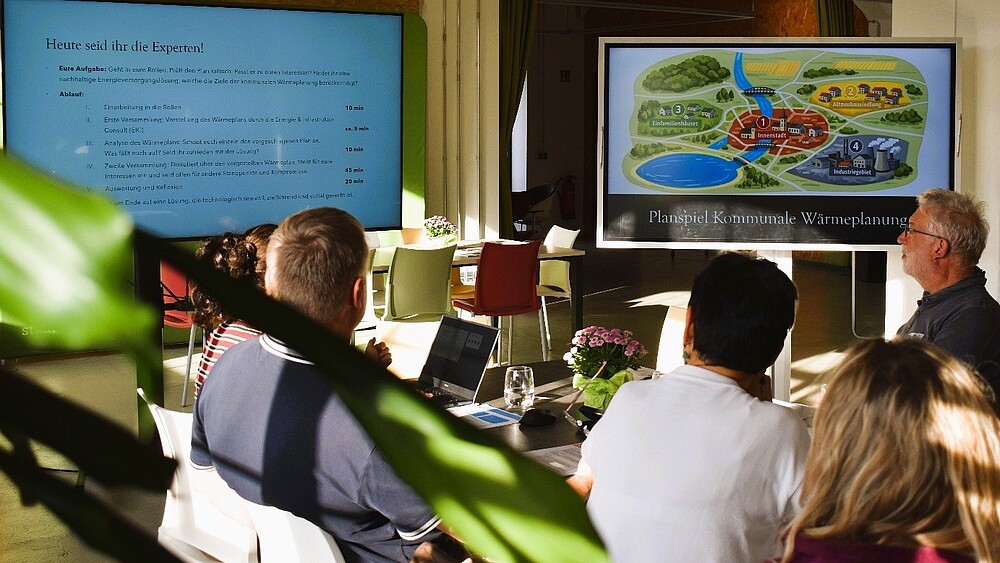
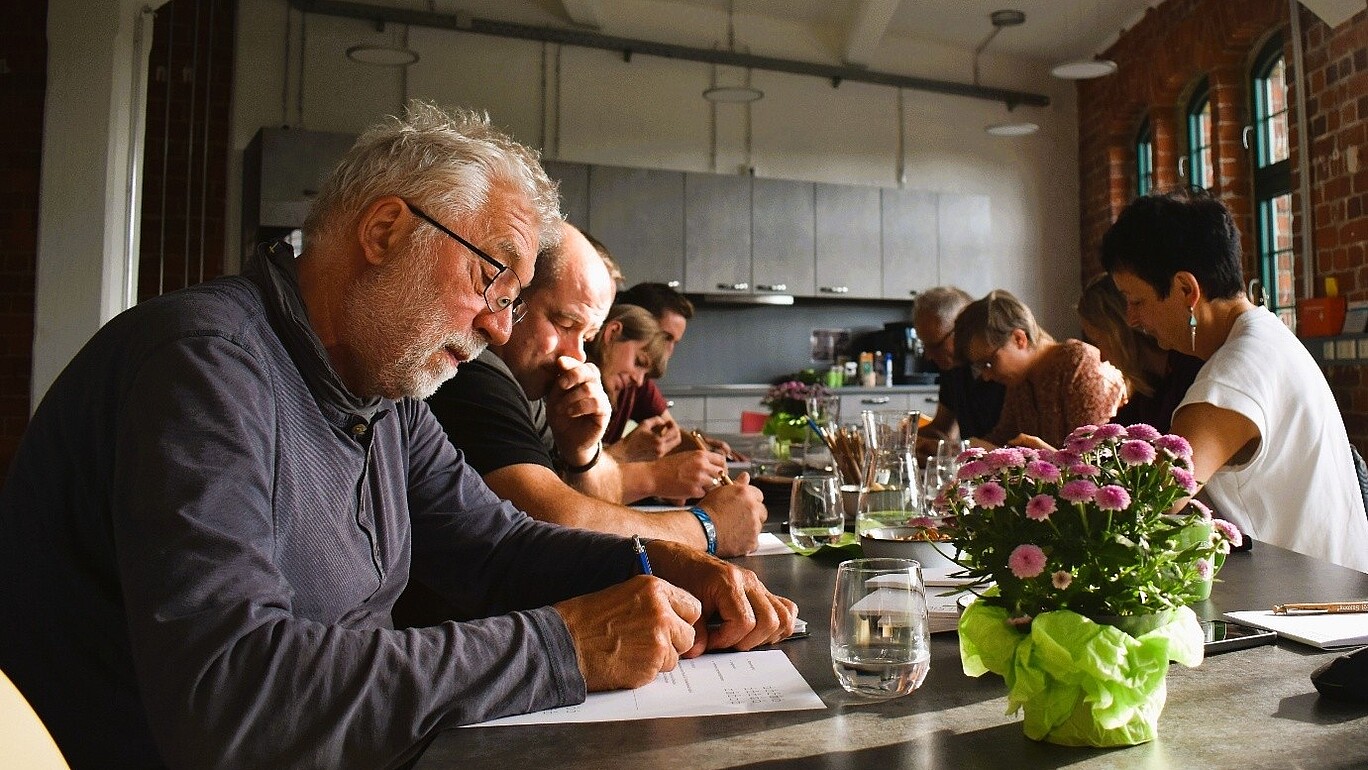
On Wednesday, September 30, 2026, a workshop on the “Municipal Heat Planning” simulation gametook place from 4:00 p.m. to 7:00 p.m. in the CELSIUZ Transfer Room at the Zittau/Görlitz University of Applied Sciences. The event was organized by the Energy Transfer Field as part of the transfer project Saxony⁵ with Martin Herling and Hanna Al Akel. Participants included the energy ambassadors of the Görlitz district as well as the district’s climate managers, Anna Kunath and Robert Knothe.
The Simulation Game as a Transfer and Participation Tool
The energy ambassadors are active in the Görlitz district as multipliers for the energy transition. They provide information, facilitate networking, and offer support on the ground—especially where specific questions, acceptance issues, and implementation barriers arise, and where the goal is to bring people and institutions “to the table.” The workshop at the HSZG built on this by providing a hands-on experience of the perspectives of key stakeholder groups in municipal heat planning.
The goal of the simulation game was to raise awareness of different stakeholder perspectives, highlight conflicting goals, and identify opportunities for cooperation. At the same time, the meeting served to evaluate and further develop the simulation game as a tool for knowledge transfer and public participation.
Municipal heating planning requires courage
The following were identified as key “aha moments”: Technically or economically optimal solutions in municipal heat planning often emerge only when stakeholders cooperate and make coordinated decisions. Equally important is conducting an economic assessment of potential solutions and weighing the pros and cons of centralized versus decentralized approaches. In practice, however, this is often only possible to a limited extent, as central framework conditions are uncertain—such as future energy prices, interest rates, or funding opportunities. Furthermore, it became clear that while factors such as security of supply and resilience are crucial, they remain difficult to quantify in monetary terms. Consequently, the decision—for example, whether or not to establish a heating network—depends not only on hard factors such as heat production costs and heat line density, but also, particularly in rural areas, primarily on the people and their willingness to commit to such a project.
This issue is particularly relevant because many small municipalities (up to 100,000 residents) have yet to carry out their heat planning. It is crucial that heating planning takes local conditions into account while simultaneously creating a (re)usable database—as the foundation for the subsequent neighborhood projects, which are particularly important for implementation.
Martin Herling emphasizes the format’s commitment to knowledge transfer:
With this simulation game, we have developed a tool that is good at helping us better understand the perspectives of various stakeholders on heat supply in the early stages of planning. With the goal of actively involving people—especially in the region’s small communities—and bringing stakeholders together, we intend to establish it as a program offered by the university in the future, for example, as part of participatory processes.
”Interested municipalities, initiatives, and other stakeholders in the region who are addressing issues related to municipal heat planning, the involvement of relevant stakeholder groups, or the preparation of specific neighborhood projects are welcome to contact the team at Saxony⁵ (Energy Transfer Field) as well as the Climate Management Office of the Görlitz district. Both provide support in networking, in assessing approaches, and—as needed—with formats such as simulation exercises to stimulate dialogue and participatory processes.
Energy Ambassadors in the Görlitz District: Drive and a Will to Shape the Energy Transition

2nd upper floor