
News
New addition takes off with ICT systems
With Dr. Nikolay Belov, SCO-TTi is researching possible applications for energy self-sufficient ICT systems - a contribution to the environment, society and the economy.
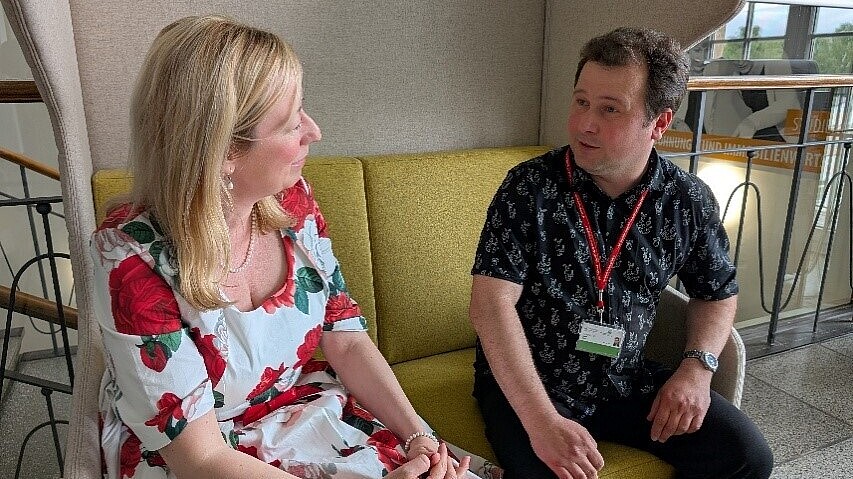
With Dr. Nikolay Belov, the SCO-TTi research team is launching application-oriented research into new areas of application for miniaturized harvesting modules aimed at reducing the energy consumption of information and communication technology (ICT) systems.
Since mid-April, Dr. Nikolay Belov has been working as a research associate at the Zittau/Görlitz University of Applied Sciences in the SCO-TTi research group —and is bringing new expertise to the research project for energy-autonomous communicationand information technologyin Saxony(EKI-Saxony for short) .
The EKI research network aims to reduce the energy consumption of information and communication technology (ICT) systems to such an extent that, for the first time, these systems can be powered in an environmentally friendly manner via miniature harvesting modules using “free” energy sources (light, temperature, motion, etc.). For the first time, these miniature harvesting modules are expected to have dimensions as compact as those of microchips—on the order of a few millimeters. This would represent a revolution for energy-self-sufficient ICT systems, such as wireless sensors. As a result, essential contributions can be made to the environment, society, and the economy—including reducing the energy consumption of and by ICT.
Under the leadership of Prof. Dr. rer. pol. Sophia Keil, the HSZG team is focusing on researching potential applications in business (e.g., production and logistics systems) and society.
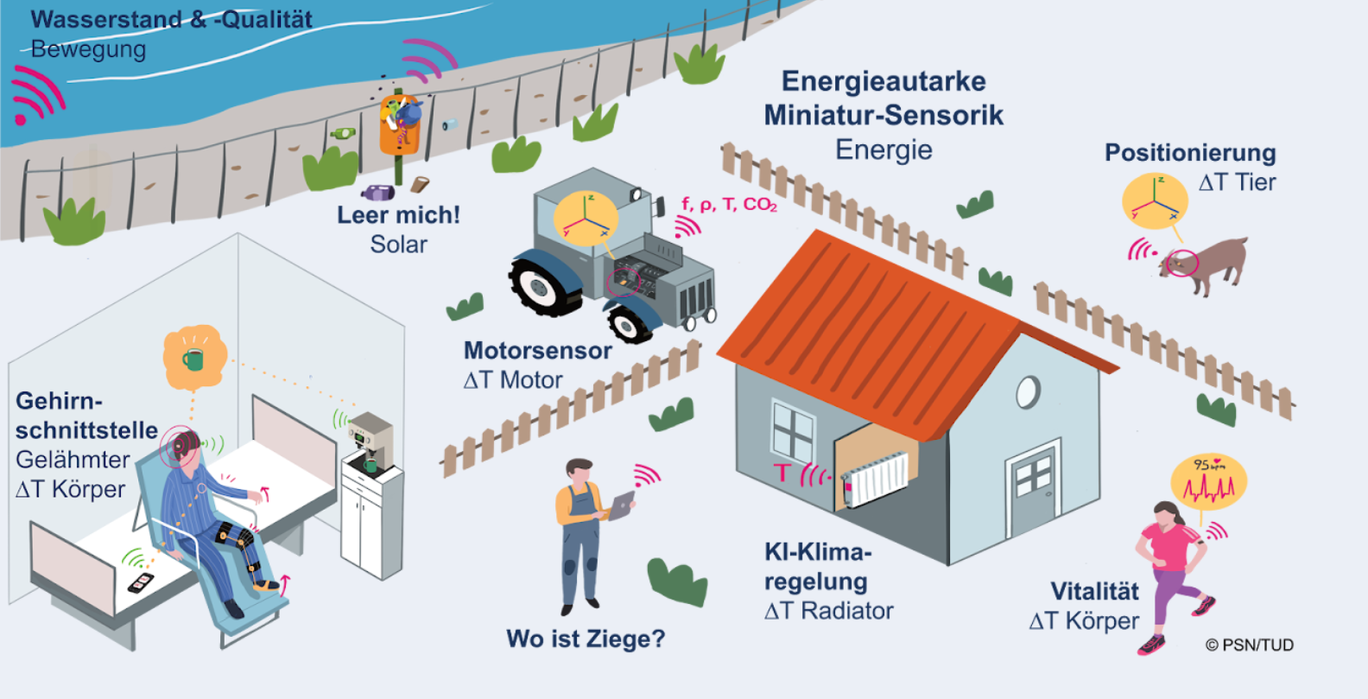
The graphic above shows an exemplary application landscape of energy-autonomous miniature sensors as part of the EKI-Saxony. Various battery-free or long-term operated sensor/actuator nodes only record event-driven measured values and communicate on-demand in order to save energy and minimize radio load.
The project is intended to cover the following potential applications, among others:
- Environmental monitoring: Water level and quality along a body of water.
- Waste/Infrastructure: “Empty me!” notification from a solar-powered container.
- Smart Agriculture / Machinery: Engine sensors on a tractor (e.g., pressure, temperature, gases).
- Smart Home: AI-powered climate control on radiators, building/fence sensors.
- Animal & Asset Tracking: Location/status of livestock (“Where is the goat?”).
- Health & Wearables: Vital signs/body parameters; neuro/BCI interface in a care setting.
I am delighted to be part of this forward-looking project. I find the collaboration with partners from research and practice and the opportunity to help shape research regionally and in an application-oriented way particularly exciting.
”
First networking steps
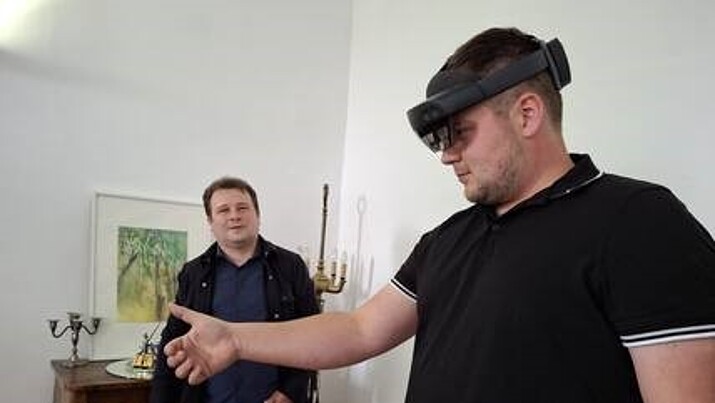
Back in May, Dr. Belov and Prof. Keil designed the workshop "Possible applications for artificial intelligence in the skilled trades", which took place as part of the AI Academy at Gröditz Castle. In discussions with craft businesses, it became clear that, in addition to software approaches - such as automated quotation preparation - hardware interfaces for a wide variety of sensors are urgently needed.
The discussions gave rise to the idea of using Gröditz Castle as a pilot site for the EKI-Saxony research project and demonstrating energy self-sufficient communication modules in real work processes there.
An Important Step
With the launch of the project at HSZG, an important step has been taken toward implementing Saxony’s contributions within the EKI-Saxony consortium.
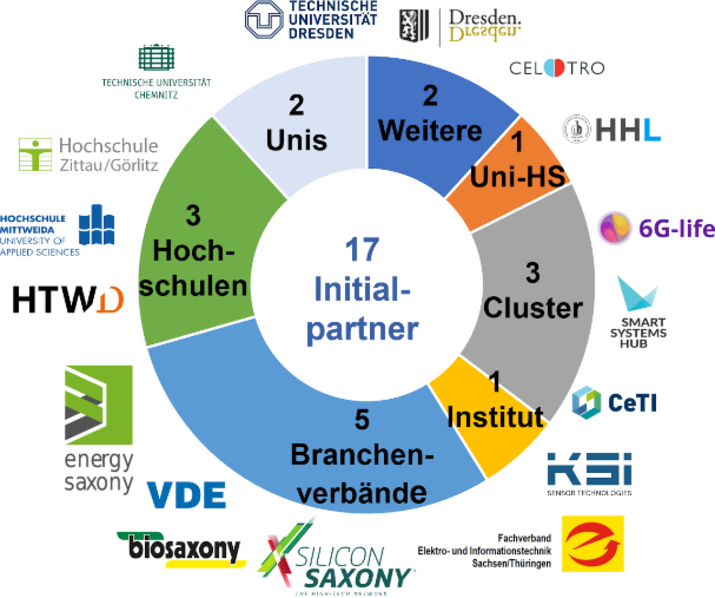
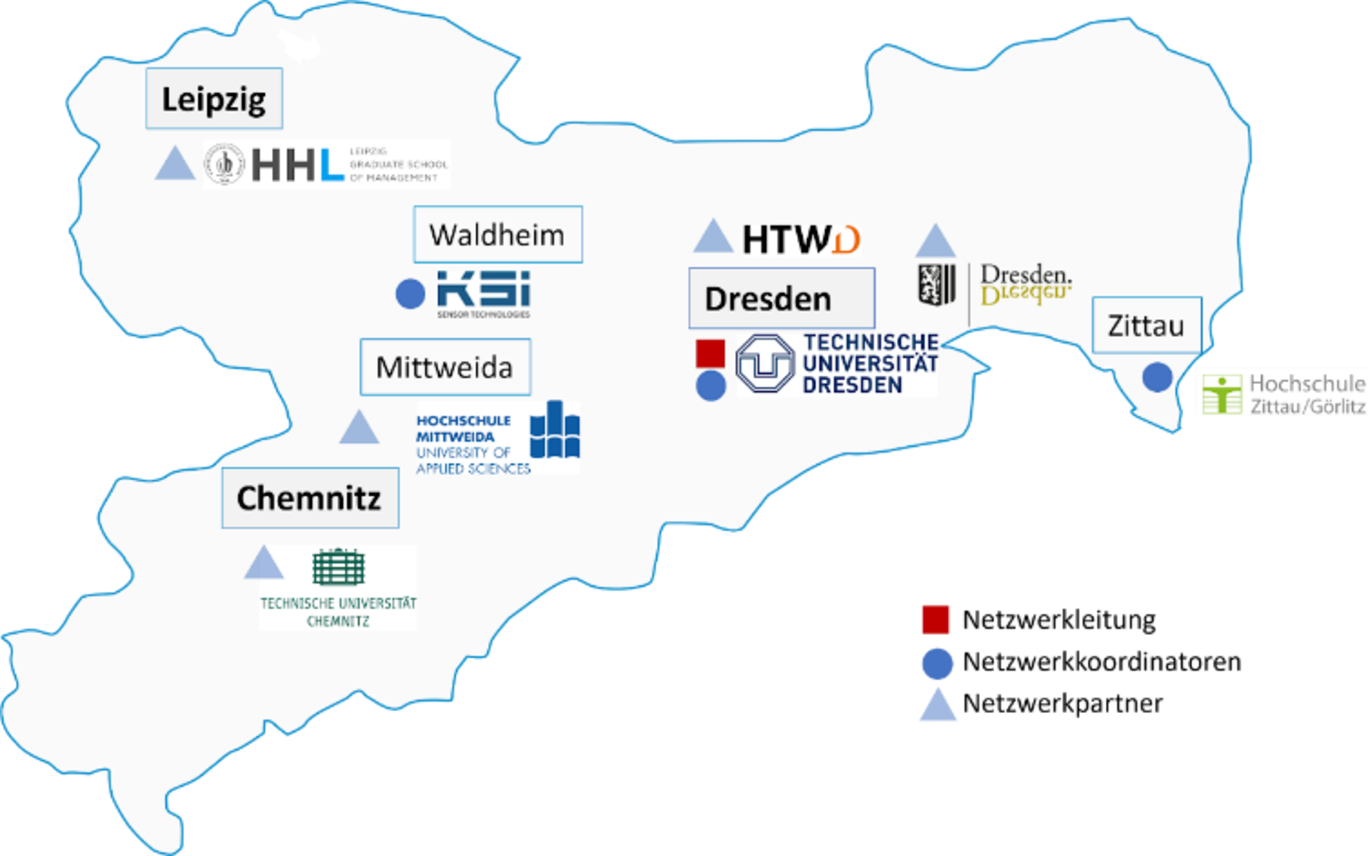
EKI-Saxony (Energy-Self-Sufficient Communication and Information Technology in Saxony) is a Saxony-wide research network that brings together complementary expertise in electrical engineering, computer science, sensor technology, microelectronics, mechanical and energy engineering, and logistics to advance energy-autarkic ICT using extremely energy-efficient chip electronics and mini-harvesting.
The consortium began with 17 initial partners—spread across the innovation centers in Leipzig, Chemnitz, Dresden, Zittau, Mittweida, and Waldheim. The partner categories include 2 universities, 3 colleges, 1 private university, 1 institute, 3 (excellence/innovation) clusters, 5 industry associations, and 2 additional partners.
With Dr. Nikolay Belov, our research group is gaining valuable expertise to conduct even more targeted research into the socially, ecologically and economically relevant applications of energy self-sufficient ICT systems. The EKI research network in particular shows how much potential there is in collaboration across disciplines - if we manage to combine our strengths, we can make a real difference: for more sustainable digitalization, for Saxony as a science location and ultimately for a future worth living.
”In future, the team from the SCO-TTi research group also wants to explore possible applications of energy-autonomous ICT systems for the city of the future - with the aim of making rural living spaces more sustainable, networked and future-proof.