

About the degree programme
Electric power is the backbone of our modern society and, at the same time, a key to addressing the climate crisis. In the dual-track Diplom degree course in electrical power systems, you’ll train to become a specialist who actively helps shape this future-oriented technology. Through the KIA (sandwich-style) degree course, you’ll combine in-depth engineering knowledge with practical professional experience and, after five years, graduate with two valuable qualifications: a Diplom in Engineering (FH) and a recognized vocational certification in an electrical engineering profession.
Forward-Looking Skills for the Energy Transition
In this practice-oriented degree programme, you’ll acquire comprehensive knowledge for designing a sustainable energy supply:
- Renewable energy generation (solar, wind, hydro)
- Smart grid technology and grid control systems
- High-voltage technology and transmission systems
- Energy storage and electric mobility
- Protection and control technology for energy systems
- Building automation and energy management
- Digitalization and IT Security in Energy Systems
Due to climate change, limited resources, and the transition to renewable energy, our energy supply is facing profound changes. In this dynamic environment, your knowledge will make you a sought-after expert who develops innovative solutions for a reliable, sustainable, and smart energy infrastructure. You will not only learn to understand existing systems but will also actively shape the decarbonization of the energy supply and the development of self-sufficient and autonomous energy concepts.
Study details
The most important facts at a glance:
| faculty: | Electrical Engineering and Computer Science |
| Location: | Zittau |
| Degree: | Diplom in Engineering (FH) |
| standard period of study: | 10 semesters |
| ECTS credits: | 240 |
| Language of instruction: | German |
| Enrolment for: | Winter semester |
| Application period: May 1 through September 30 | Start of studies: October |
| Admission restrictions: | No admission restrictions (no NC) Details |
| No prerequisite internship | Student Advisory Service |
| Accreditation status: | Accredited |
Course content
Your degree program follows a well-thought-out curriculum that optimally combines academic education with professional practice. In the first phase, you’ll acquire a foundation in mathematics, natural sciences, and electrical engineering. You’ll alternate regularly between the university and a training company, linking theoretical knowledge directly to practical application, and after about two and a half years, you’ll graduate with your first vocational degree as an electronics technician.
After this intensive foundational phase, you’ll specialize in one of two areas of focus: Renewable Energy Systems or Intelligent Networks and Systems. You’ll deepen your knowledge in advanced subjects such as high-voltage engineering, power generation, and grid protection technology. An engineering internship gives you the opportunity to apply your knowledge in an industrial setting. As you progress through the program, you’ll tackle complex topics such as grid control systems, smart grid management, and modern power generation facilities. Throughout your studies, you’ll have the opportunity to participate in research projects conducted in collaboration with industry partners or at the university. Your Diplom thesis serves as the crowning degree of your studies and demonstrates your ability to independently solve complex problems in energy engineering.
The semesters marked in light green (2.1 / 2.2 / 3.1 / 3.2) are part-time semesters. Here, the 2nd and 3rd semesters of the Diplom degree programme’s curriculum are each extended to two semesters. You will complete these in 4-week cycles at alternating learning locations (university/company). You will conclude this phase of your studies with your first professional certification (IHK chamber examination). As a result, the program consists of a total of 10 semesters.
- Engineering Mathematics I
- Fundamentals of Electrical Engineering - Stationary Processes
- Fundamentals of computer science
- Materials engineering
- Engineering Mechanics
- Physical fundamentals of mechanics & thermodynamics
- Business Administration
- Fundamentals of Electronics
- Fundamentals of Electrical Engineering—Electrical Networks
- Engineering Mathematics II
- Fundamentals of Electrical Engineering—Signals and Systems
- Measurement Techniques for Engineers
- Power Electronics
- Physics of Matter & Electromagnetic Waves
- Communication networks
- Object-oriented programming
- Digital Technology/Microcomputer Technology
- Numerical Methods/Simulation
- Final Examination for the Training Program
- Electrical Machines and Drives
- Electromagnetic Compatibility
- Fundamentals of Electrical Transmission Systems
- High-Voltage Technology
- Control Systems I
compulsory elective module
- Secure and Fault-Tolerant Systems
- Solar Energy Technology
- Control Engineering I / Programmable Logic Controllers
- Switchgear and High-Current Technology
- Calculation of Electrical Networks
- Protection Technology
- Design of Electrical Power Systems
- Elective-Compulsory Area: Interdisciplinary Competencies
- Compulsory Elective Module, 5th Semester
- Storage Technologies/Electric Mobility
- IT Security and Data Protection
- Wired Energy Supply
- Control Systems/Industrial Data Communication
- Engineering Internship
- Metering Data Acquisition and Grid Control Systems
- Operation of Smart Grids
- Insulation Coordination and Grounding Systems in Power Engineering
- Building Automation/Energy Management
- Photovoltaics, Wind Power, and Hydropower
- Compulsory Elective Modules, 7th Semester
- Smart Grid Management
- Asset Management and Technical Diagnostics
- High-Voltage Measurement and Insulation Technology
- Economic Electrical Power Supply
- FEM in electrical engineering
- Final module (Diplom thesis and defense)
Career opportunities
Professional areas where you can get started

Grid Planning You design and size electrical power grids to meet the requirements of the energy transition. You calculate line capacities, simulate load flows, and strategically plan grid expansion for renewable energy. Your analytical thinking and methodological competence ensure a reliable and future-proof power supply, even as the share of volatile energy sources grows.

Plant engineering
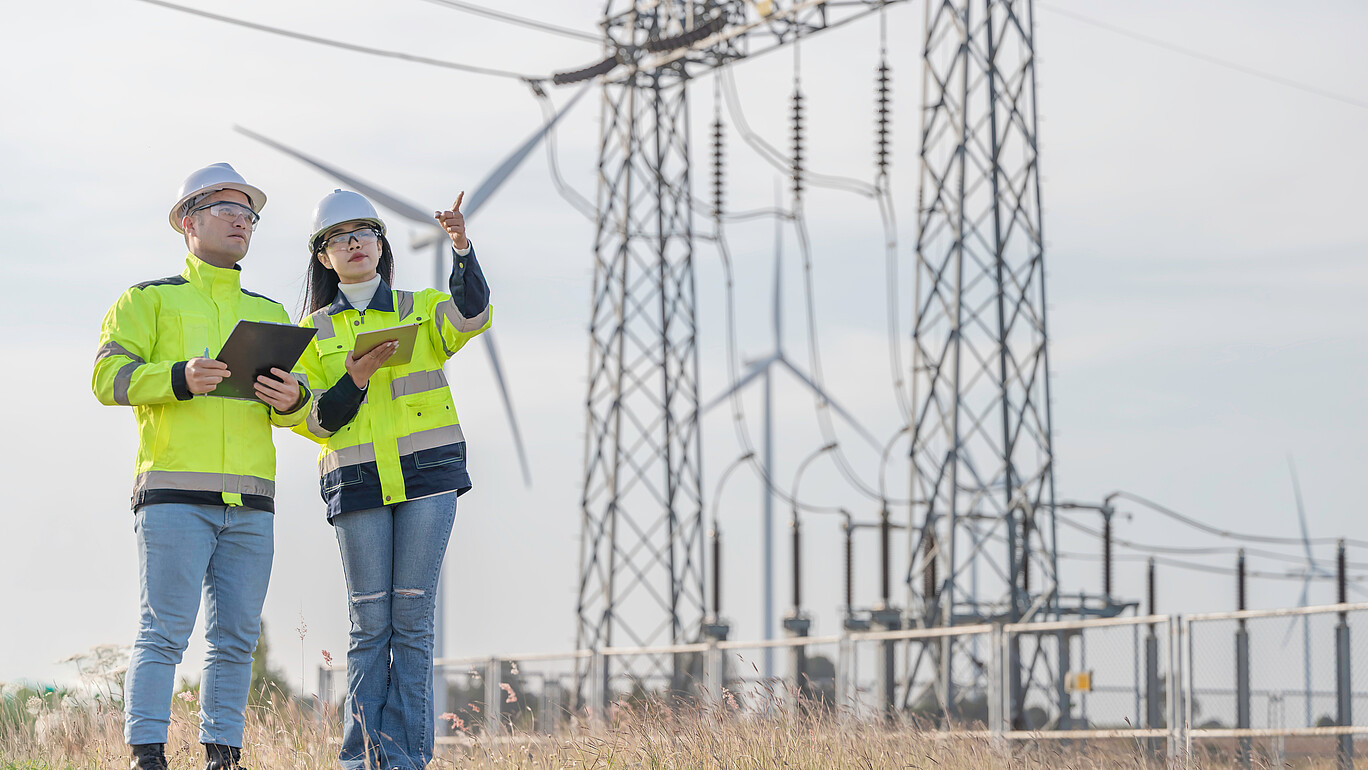
You will implement complex energy systems from initial planning through to commissioning. You will draw up circuit diagrams, supervise installation and commission substations, switchgear and power plant components. Your precise working methods and technical understanding ensure that these critical infrastructures function reliably and safely.
Grid management
You monitor and control electrical energy grids in real time. You respond to faults, carry out switching operations and ensure a balance between generation and consumption. Your decision-making skills and sense of responsibility ensure the continuous security of supply and stability of the electricity grid around the clock.
Renewable energy generation
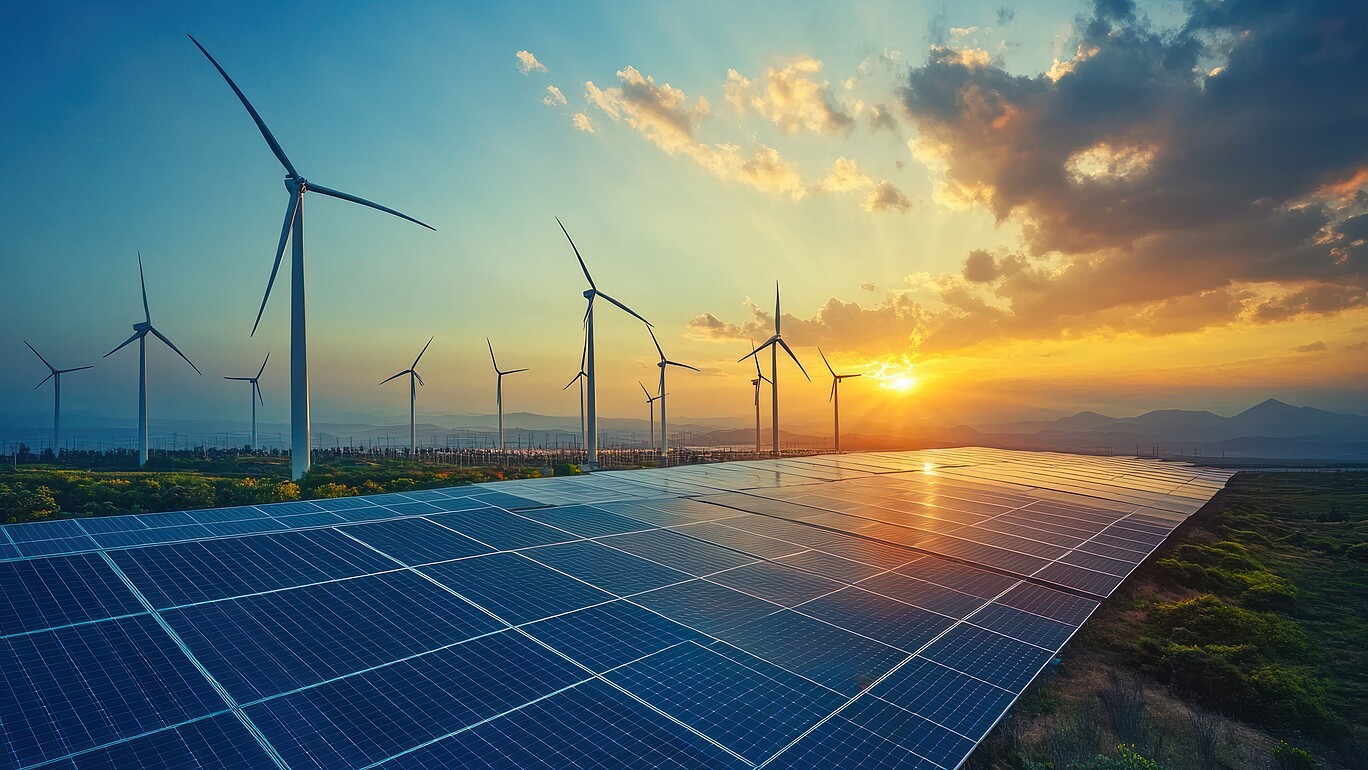
You will develop and optimize systems for generating renewable energy. You plan solar and wind power plants, calculate yields and integrate these energy sources into existing supply structures. Your innovative spirit and commitment to sustainability will make a decisive contribution to the transformation of the energy system and climate protection.

Protection and control technology
You develop and implement systems to protect electrical installations and grids. You program protective relays, configure network control systems and ensure secure data transmission in critical infrastructures. Your technical expertise and safety awareness prevent major faults and damage to valuable equipment.

Energy Consulting: You will analyze energy consumption and develop optimization strategies for industry, municipalities, and private households. You’ll conduct measurements, identify opportunities for savings, and provide advice on integrating renewable energy sources. Your communication skills and holistic understanding will help clients meet their energy needs in a sustainable and cost-effective manner.
FAQ
How does the dual degree program work?
KIA is a dual university program leading to a degree as a Diplom-Ingenieur (FH) — with integrated vocational training (including an IHK/HWK certification).
It closely integrates theory and practice, fosters an early connection to the future employer, and is therefore recommended by the State Government of the Free State of Saxony and expressly required by companies.
Our future KIA students submit applications to a company partnering with the university up to one year before the start of their studies; they must have a university entrance qualification, be interested in scientific problems, and possess the necessary mobility.
The companies enter into a cooperation agreement with the university and sign contracts with the applicants for vocational training (vocational training contract or internship contract) or—in the case ofKIApro—a qualification contract.
After signing a vocational training contract or internship contract with the company, you must still register at the university with your university entrance qualification—this is possible starting in mid-May.
The program typically begins on September 1 with a 4-week basic practical training period at the company. Afterward, depending on your degree programme, you’ll complete one to three semesters of study at the university.
The breaks between semesters are reserved for practical training at the company. On-the-job training at the company takes place during the foundational phase of the program according to the semester schedule (e.g., alternating between the company and the university every 4 weeks) and concludes with an examination administered by the relevant chamber (IHK or HWK). No separate vocational school instruction is provided. The theoretical knowledge required for vocational training is imparted through scheduled lectures and additional “job-specific” teaching units at the university. During the practical training period, you are entitled to vacation time as stipulated by the collective bargaining agreement and receive monthly compensation from the company based on the standard pay scale for trainees.
After completing the vocational training, the remaining semesters are completed as a full-time study programme while working (often with a student aid agreement from your company) and culminate in the desired university degree of Diplom-Ingenieur/in (FH).
What apprenticeship programs are offered?
- Electrical Systems Technician
- Electronics Technician for Energy and Building Systems
- Electronics Technician for Automation Technology
- Electronics Technician for Industrial Engineering
- Electronics Technician for Building and Infrastructure Systems
- Electronics Technician for Devices and Systems
- Electronics Technician for Machinery and Drive Technology
- Electronics Technician for Information and Telecommunications Technology
About the advantages of the dual study program | KIA
Here's what our students have to say about our university
- Module Handbook (Course Content and Structure)
- Program Flyer
- Application Information
- Flyer on the KIA (sandwich-style) degree course

1st floor

1st floor

First floor
Starting now, we're also offering our Student Advisory Service via WhatsApp. Just send us a message at: +49 173 2086748
Our promise to you
Studying in the wild east?
Studying with us is different. Above all, better. Why? We have a family atmosphere. There are small study groups and the lecturers are always there for you. There is a close connection to practice in all degree courses. And finding affordable accommodation is no problem here.
There are many other reasons, such as university sports or the student representatives, clubs and societies. Campus life in Zittau and Görlitz, the wild east, is unique.