
Is hybrid teaching the key to studying under coronavirus conditions?

Hello everyone. My name is Jasmin, I'm studying Tourism Management in my 5th semester and I'm going to tell you a bit about what it's like to study under the current situation. You can find out here what the advantages and disadvantages of online lectures are, how to work with students from Ecuador and Indonesia and what the biggest problem with the masks is.
But let's start at the beginning:
The new semester at university has begun and many students are looking forward to seeing their fellow students again, going to "Mensas" and enjoying typical student life. However, current circumstances seem to be putting paid to some of this.
While the tourism managers in the 4th semester did their internships in various cities and countries, classes for the students in the 2nd semester only took place online. During the lockdown, the university also had to close temporarily and quickly find alternatives to normal teaching. All classes / courses took place exclusively via the online networks, and the examination conditions were adapted in line with coronavirus. The change in teaching took some getting used to for everyone involved.
Especially us prospective tourism managers, who have just returned from the internship in the 4th semester, but also our "first-timers" are now expecting a lot of new things. After the internship semester proved difficult for some of us and stays abroad had to be cut short due to coronavirus, the question now is - how will everyday life at university be like now?
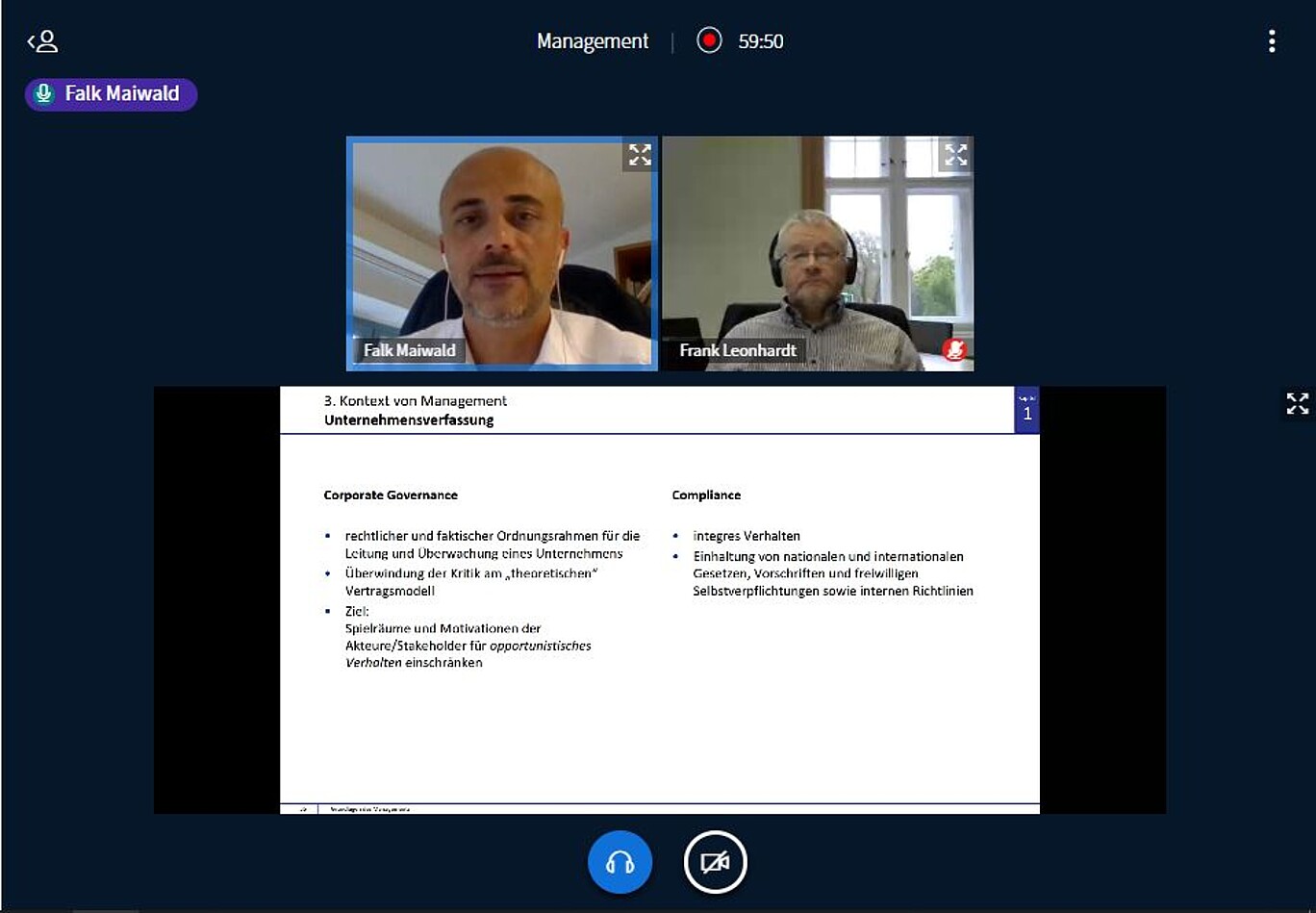
With the easing of restrictions for the coming winter semester, it is now possible to teach in hybrid form. Hybrid is generally understood to mean a mixture or composition of different components. In terms of teaching, this means that 60% of lectures should take place at the university, under coronavirus precautionary measures, and 40% online.
This sentence is now standard at the start of every class / course that takes place online. After the first two weeks at the latest, every student had figured out how to log into the right online lecture room and set up the camera and microphone. The lecture then takes place as usual - the lecturers display their teaching materials, start teaching and encourage the students to participate. You now have the choice of speaking via microphone or chat and giving your answer. We can certainly understand that online seminars are sometimes strange for teachers when they talk to their students who can't even see them. Why don't we all turn on our cameras? - Well, because we're still in bed with coffee when we don't have to leave the house! ;)
However, apart from small technical problems here and there, my fellow students and I agree that online events are generally a good thing. Under the right conditions, you can take part in the seminar just as good as in the university, except that some days you don't even have to leave the house. And that's something we're particularly looking forward to in the coming cold season, isn't it?
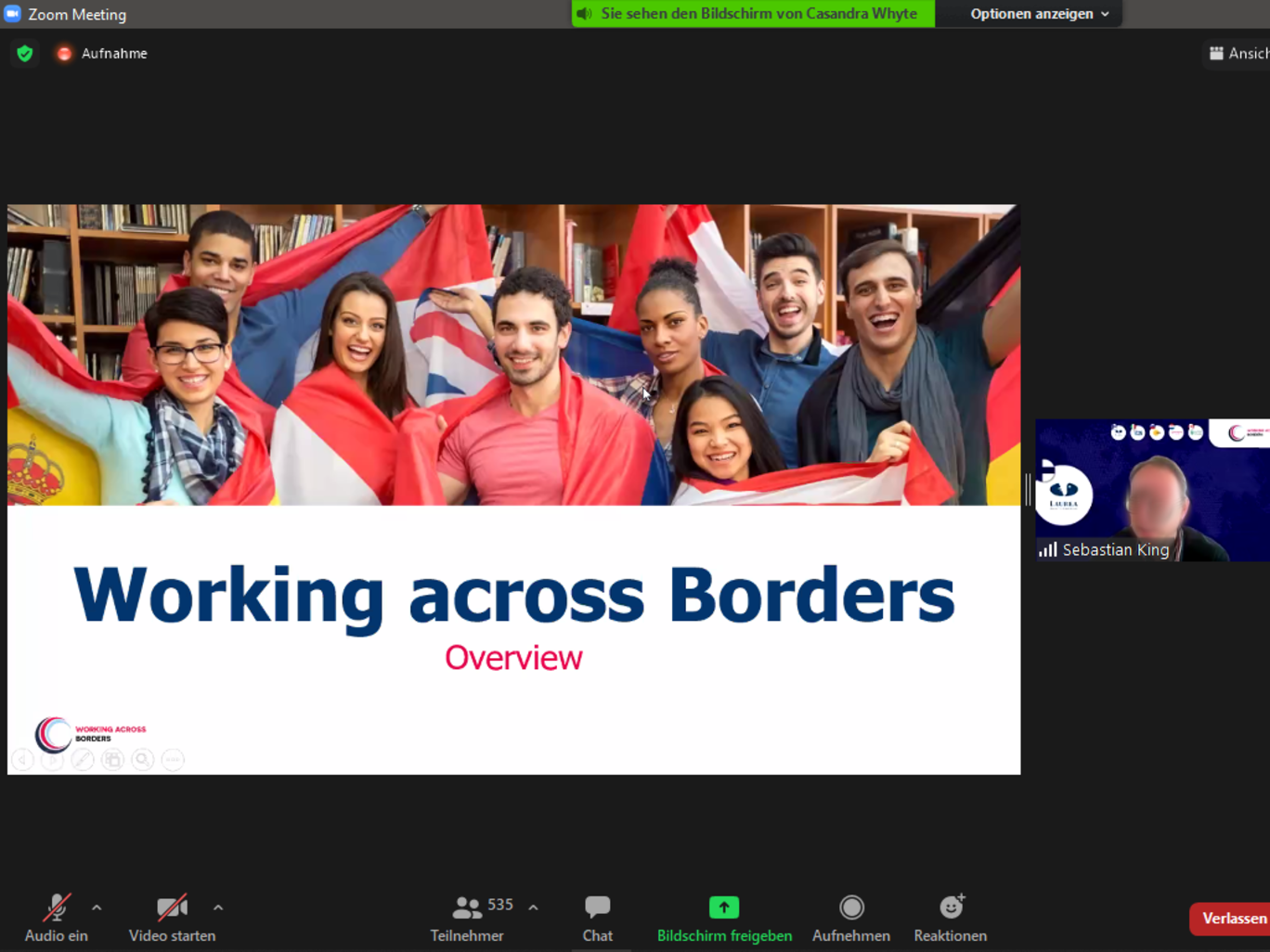
As always, the modules on the Tourism Management course are packed with practical projects, excursions, workshops and much more. The fact that teaching now takes place in a hybrid learning format is not a problem at all, in fact it is more of an opportunity. Working Across Borders will certainly be one of the most exciting projects for us.
In the 5th semester, we can look forward to a practical university and international project. Working Across Borders is an initiative of the UCLL in Belgium to network students from all continents and motivate them to work together. This fall, over 500 students from 11 different universities are taking part, including Durham College in Canada, Binus University International from Indonesia and other universities from Bangladesh, Italy, Slovenia, the Netherlands, Finland, Russia and Ecuador.
We overcome time zones and national borders to learn more about international business together and, at the same time, strengthen our team spirit and expand our soft skills. Of course, this would not be possible without various portals such as Zoom and MS Teams for communicating via video.
After all the universities were introduced to each other for the first time in a kick-off meeting, the exciting part now begins, with international teams being formed to develop new business ideas for a client. Challenges will not only be the time difference and possible language barriers, but also the consideration of sustainability and fairness. As a final result, each team will produce a video with the results of their work.
We are excited to see what's in store for us!
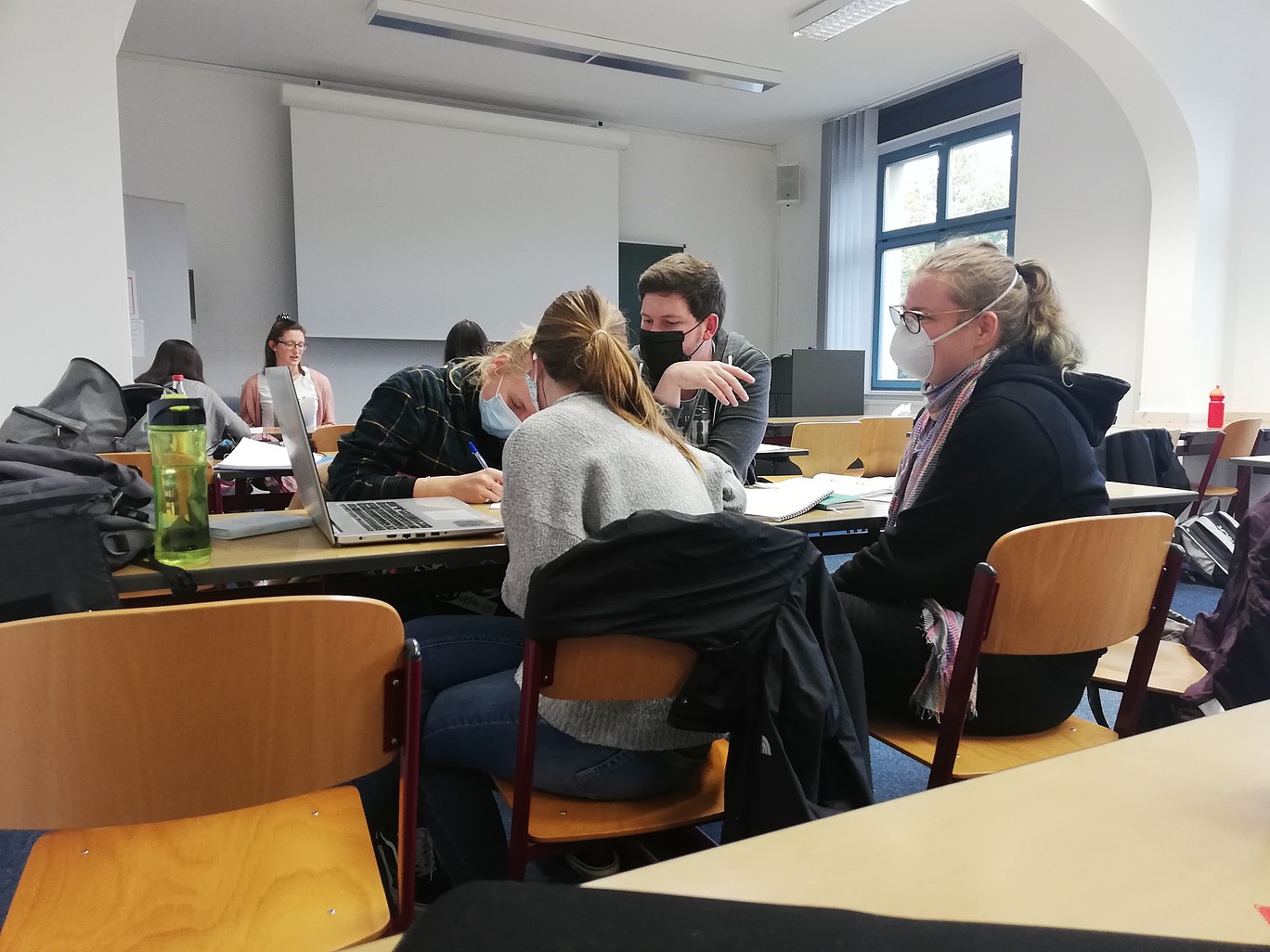
Nevertheless, we are also happy not to have to do without being on campus completely. Group work simply works better when you can talk and discuss with your team members in person. The best example of this is the business game in the Destination Management module, which we students will be carrying out throughout the semester. As employees of a fictitious Alpine resort, we discuss decisions for our companies, conduct negotiations and learn how to do business. The size of the course means that it is not always possible to keep the minimum distance, which makes it necessary to wear a mask in the seminar.
It only becomes problematic when the lecturers throw a question into the room and some mask mumbles something back. It's understandable that the teacher finds it difficult to recognize where the answer came from and, above all, which smart guy is behind it.
Both have their advantages. Group work, discussions and conversations with lecturers in face-to-face teaching cannot simply be replaced by video calls - that much is clear. However, online teaching is a good addition to the classroom and even enables international networking and a glimpse into the future of the working world, in my opinion.
The combination of online and offline is a good solution at the moment and can hopefully be continued throughout the semester.