
Cutting-edge research in Upper Lusatia
The "Business meets science" event focused on the question of how local business and science benefit from regional research.
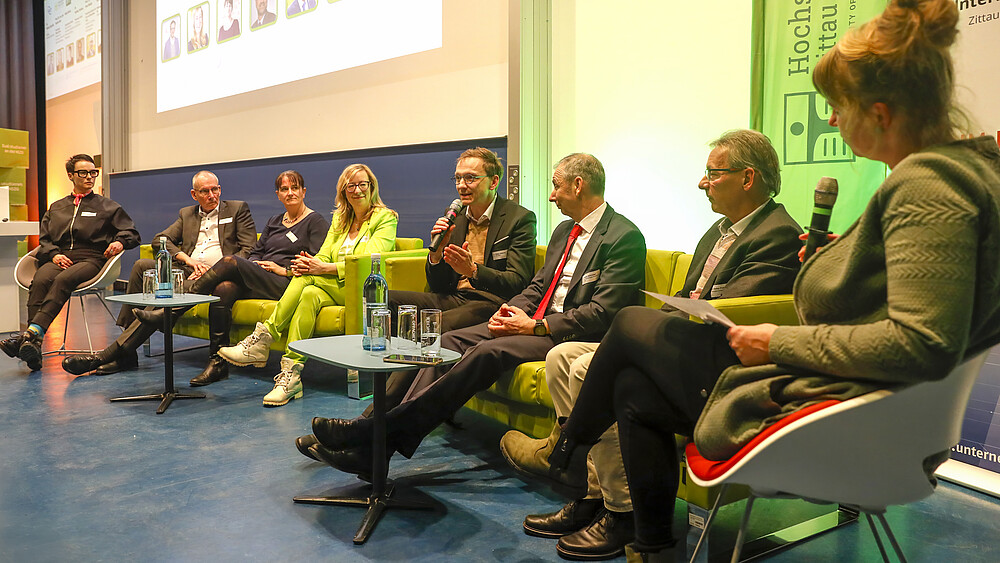
Under the theme “Cutting-Edge Research in Upper Lusatia—How WE, the Local Economy, and Academia Benefit,” the Zittau/Görlitz University of Applied Sciences (HSZG) hosted an event in Zittau on January 15, 2026, as part of the “Business Meets Science” series, in collaboration with the Dresden Chamber of Industry and Commerce, the Dresden Chamber of Crafts, and the General Entrepreneurs’ Association of Zittau and Surrounding Areas e.V.
The event “Cutting-Edge Research in Upper Lusatia—How WE, the Local Economy, and Academia Benefit” addressed developments and prospects arising from major projects such as the establishment of the semiconductor manufacturer European Semiconductor Manufacturing Company (ESMC) in Dresden, the future establishment of the German Center for Astrophysics (DZA) in Görlitz, or regional and (inter)national research activities by the Fraunhofer Society, the German Aerospace Center (DLR), and the Zittau/Görlitz University of Applied Sciences. What opportunities does this open up for small and medium-sized regional businesses in Saxony and Lausitz? Where are concrete points of intersection emerging? And how can academia and industry benefit from one another and jointly shape the future in Upper Lusatia?
With the German Center for Astrophysics (DZA), for example, a research center is being established in Lausitz with—as the DZA states on its website— “forward-looking scientific program: a center for digitalization that consolidates data streams from astronomical observatories worldwide, and a center for cutting-edge technologies that cooperates closely with industry and technology centers in Saxony and around the world.” But the German Aerospace Center (DLR), the Fraunhofer Society, and the Zittau/Görlitz are demonstrating through their research projects in the region how Upper Lusatia can successfully navigate structural change—from a region focused on lignite mining to one that is a potentially attractive hub for science and business.
Innovations and new partnerships that benefit regional companies
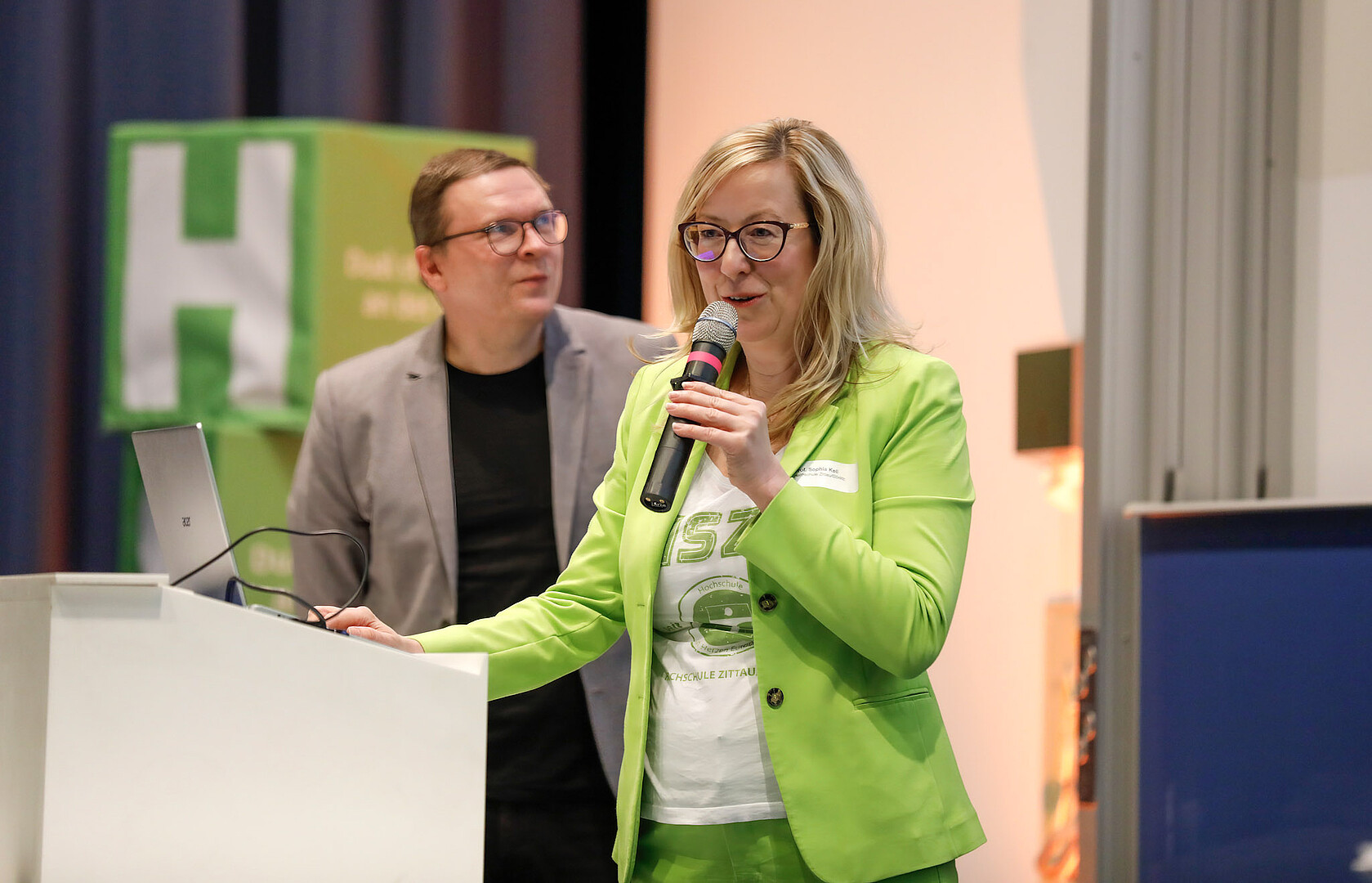
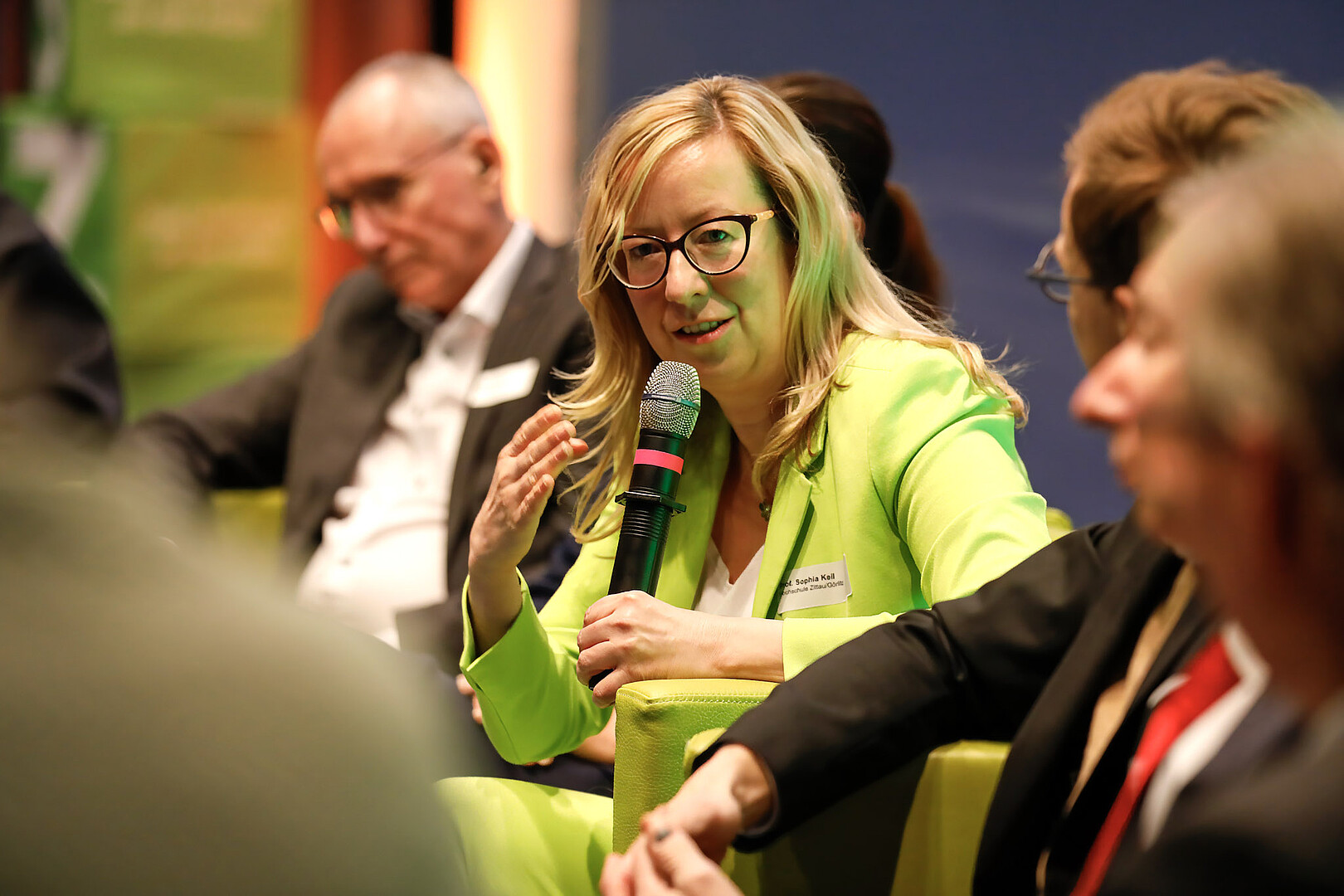
"Cutting-edge research and technology-leading companies often seem far removed—yet for businesses in our region, there is a real opportunity to benefit from innovations, new partnerships, and supply chain opportunities. It is particularly important to Zittau/Görlitz University of Applied Sciences to identify ways in which small and medium-sized enterprises can gain access to our university, other major research institutions, and high-tech companies. As an economist, I know that research is not an end in itself—it only realizes its full potential when innovations and new technologies flow directly into businesses. “A continuous exchange between academia and industry is therefore crucial for sustainably strengthening the region’s innovative and economic potential,” says Prof. Dr. Sophia Keil, Vice President for Research, Transfer, and International Affairs.
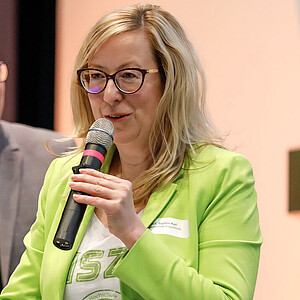
As an economist, I know that research is not an end in itself - it only becomes fully effective when innovations and new technologies flow directly into companies. A continuous exchange between science and business is therefore crucial in order to sustainably strengthen the region's innovative and economic power.
”Pioneering spirit and work as a guarantee for success
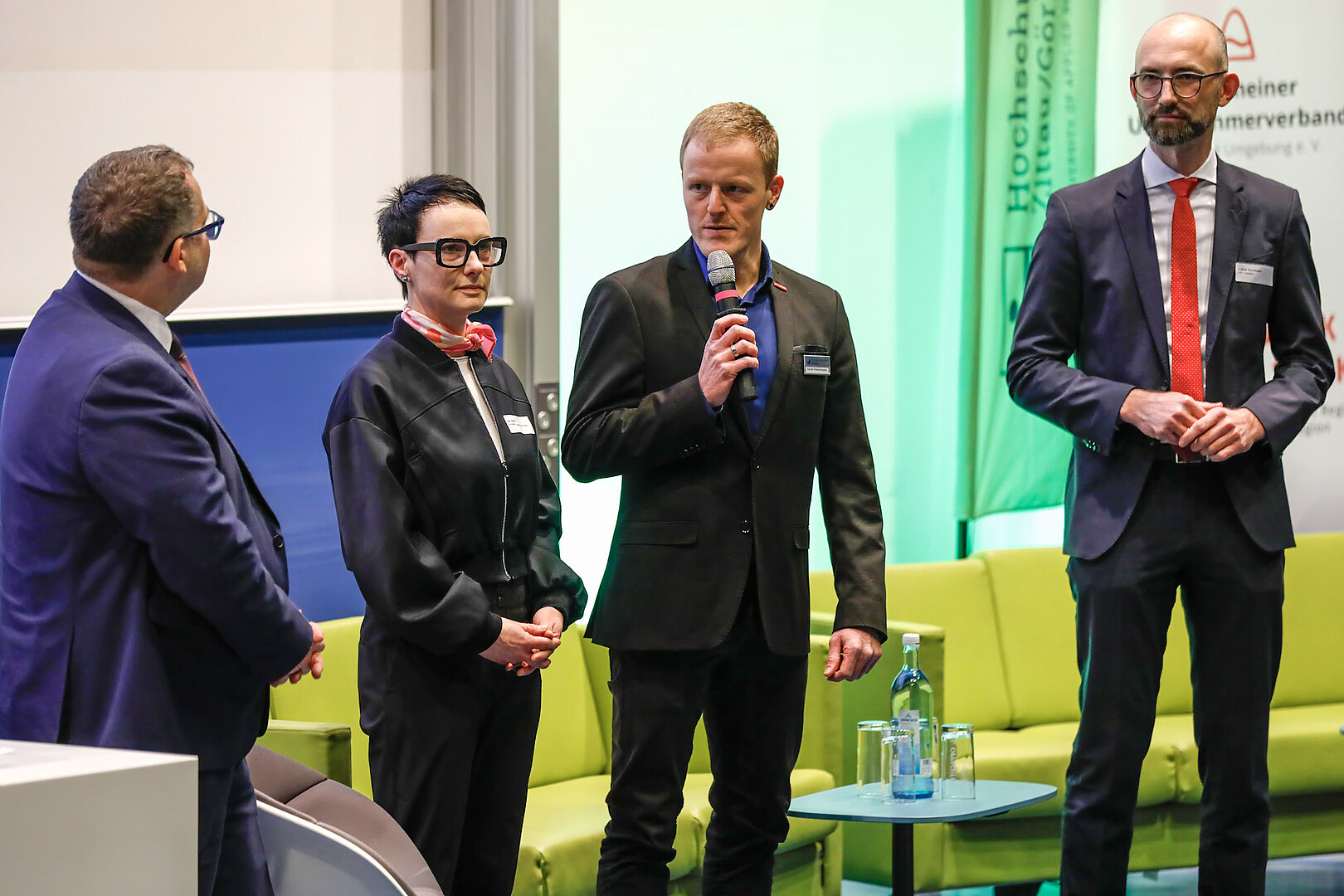
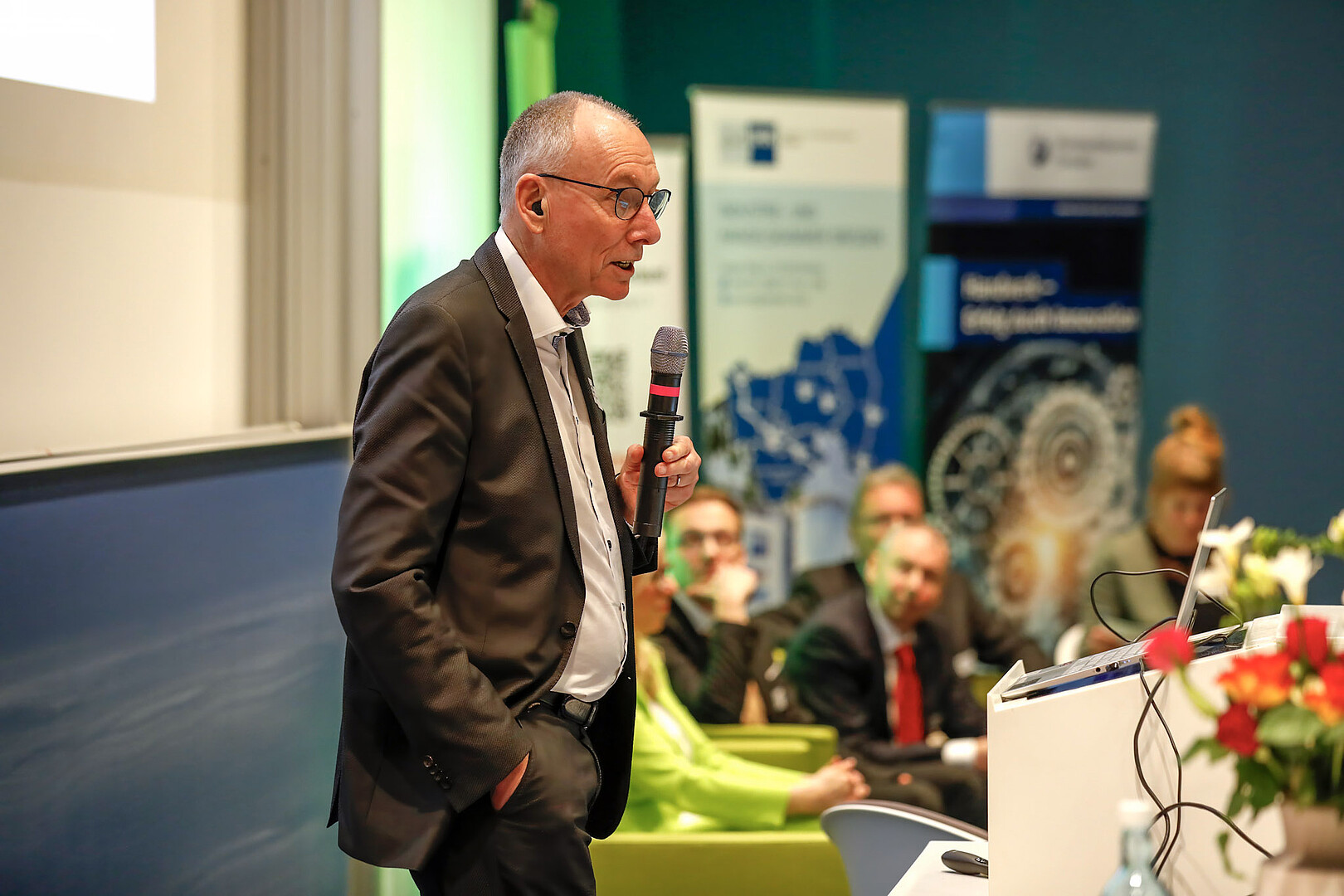
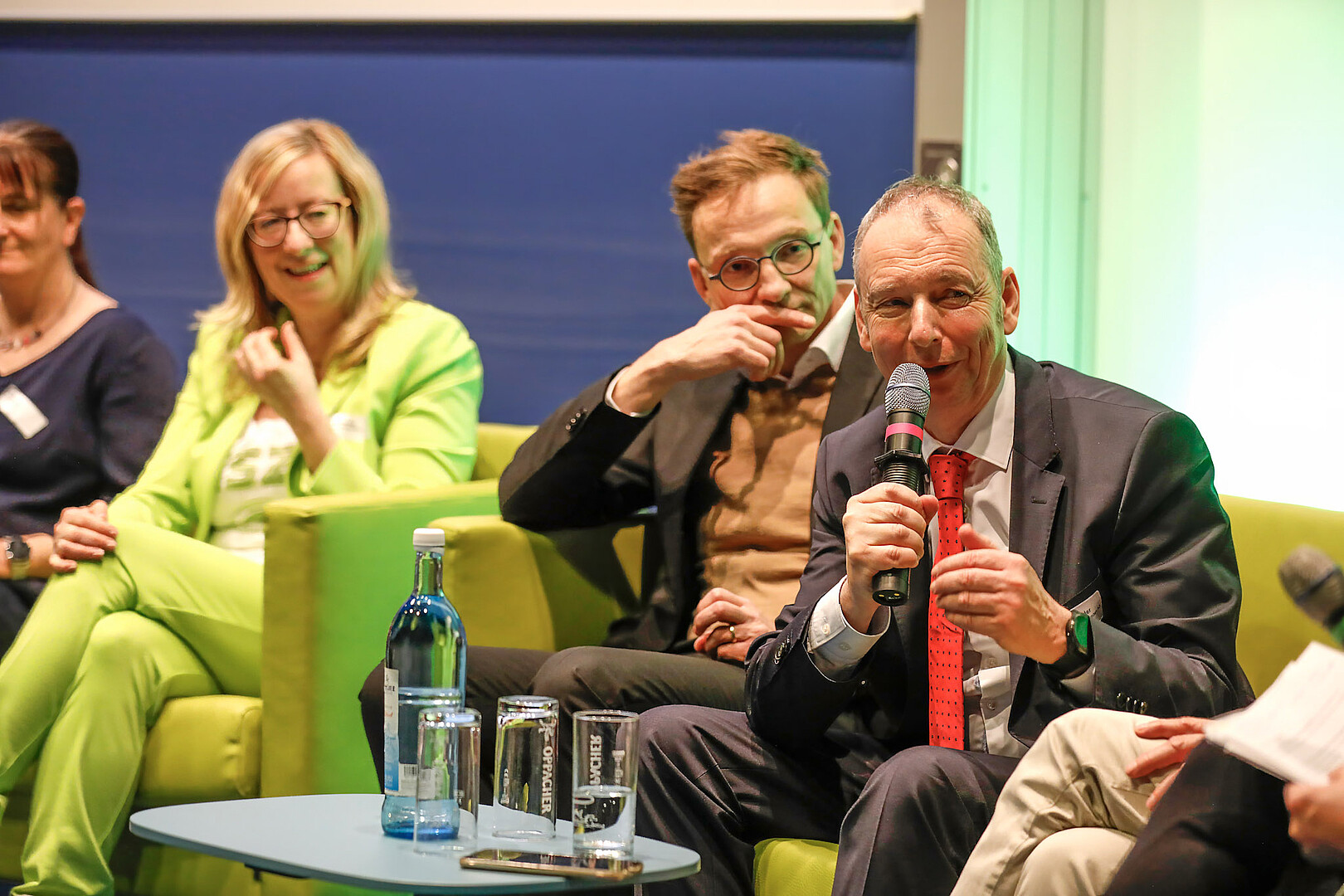
In the keynote speech "Chips made in Europe - Opportunities for SMEs in Upper Lusatia", Dr. Germar Schneider, a long-standing expert in the semiconductor industry and Senior Manager at Infineon in Dresden, and Dr. Steffen Pollack, founder and former Managing Director of Fabmatics GmbH, outlined the development of the semiconductor industry in Germany and specifically in the Dresden area. "We want to show SMEs and research institutions the opportunities that are opening up for Upper Lusatia through the expansion of the semiconductor factories in the north of Dresden," says Germar Schneider. Schneider, who was born in Augsburg, refers to his home state of Bavaria before the 1980s, when it was still largely characterized by agriculture. "Today, Bavaria is a high-tech state. And in Saxony, our high-tech ecosystem continues to grow thanks to investments in the semiconductor industry - including with SMEs."
Dr. Steffen Pollack adds: "You need patience and perseverance to build up a company. If you combine that with a vision, your company's genuine expertise and a pioneering spirit and pioneering work, then you have a basis for entrepreneurial success." Pollack founded the company HAP GmbH (Handhabungs-, Automatisierungs- und Präzisionstechnik GmbH Dresden) in 1991. 13 years later, his company had 25 employees; by 2026, there were 350. In 2017, the company changed its name to Fabmatics, partly because the letter "H" is difficult to pronounce in Asia. "Fabmatics is now a nationally and internationally recognized company," says Pollack.
Investing in the future through curiosity
So how does sustainable and successful growth come about—especially in the new federal states? Rainer Gropp, president of the Leibniz Institute for Economic Research in Halle, told *Der Spiegel* (January 9, 2026 issue): “Investments in the future don’t come from subsidies, but from curiosity—in corporate research departments, at universities, and in startups. If the government truly wants to spur investment, it must create excellent research conditions for people who want to turn an idea into a company.” And in doing so, he makes a (di)rect reference to the pioneering spirit and the genuine entrepreneurial ethos that Schneider and Pollack shared with the audience in their keynote speech at “Business and Science.”
However, for the Free State of Saxony, this curiosity about entrepreneurial spirit has paid off economically. The Baden-Württemberg State Statistical Office (source: Der SPIEGEL, January 9, 2026) projects a (price-adjusted) increase in Saxony’s GDP (gross domestic product) of 9.7 percent from 2014 to 2024—the highest figure among all the new federal states. By comparison: Saxony: +9.7 percent, Mecklenburg-Western Pomerania: +9.4 percent, Brandenburg: +4.1 percent, Thuringia: +3.5 percent, Saxony-Anhalt: -0.7 percent.
Putting research into practice
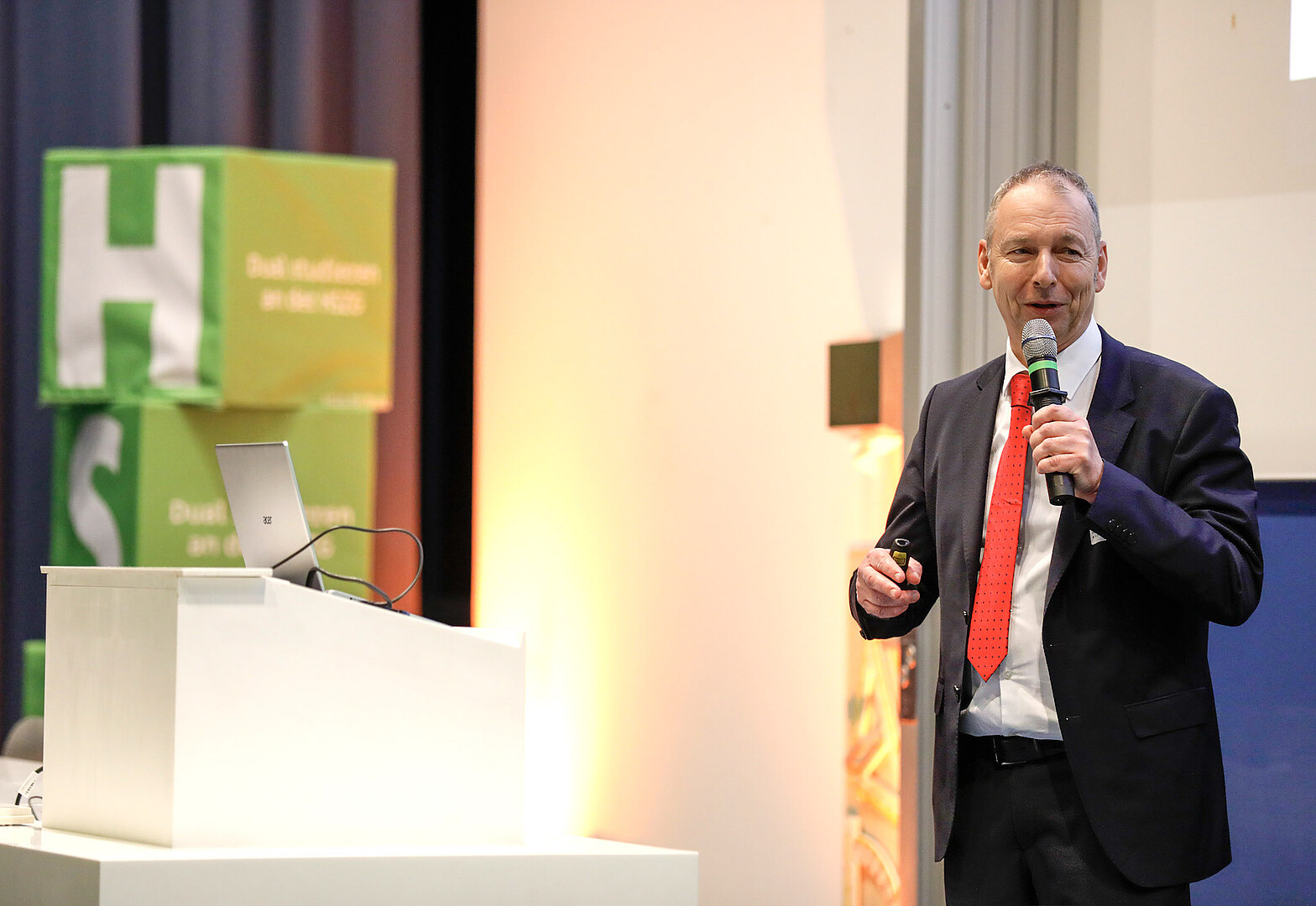
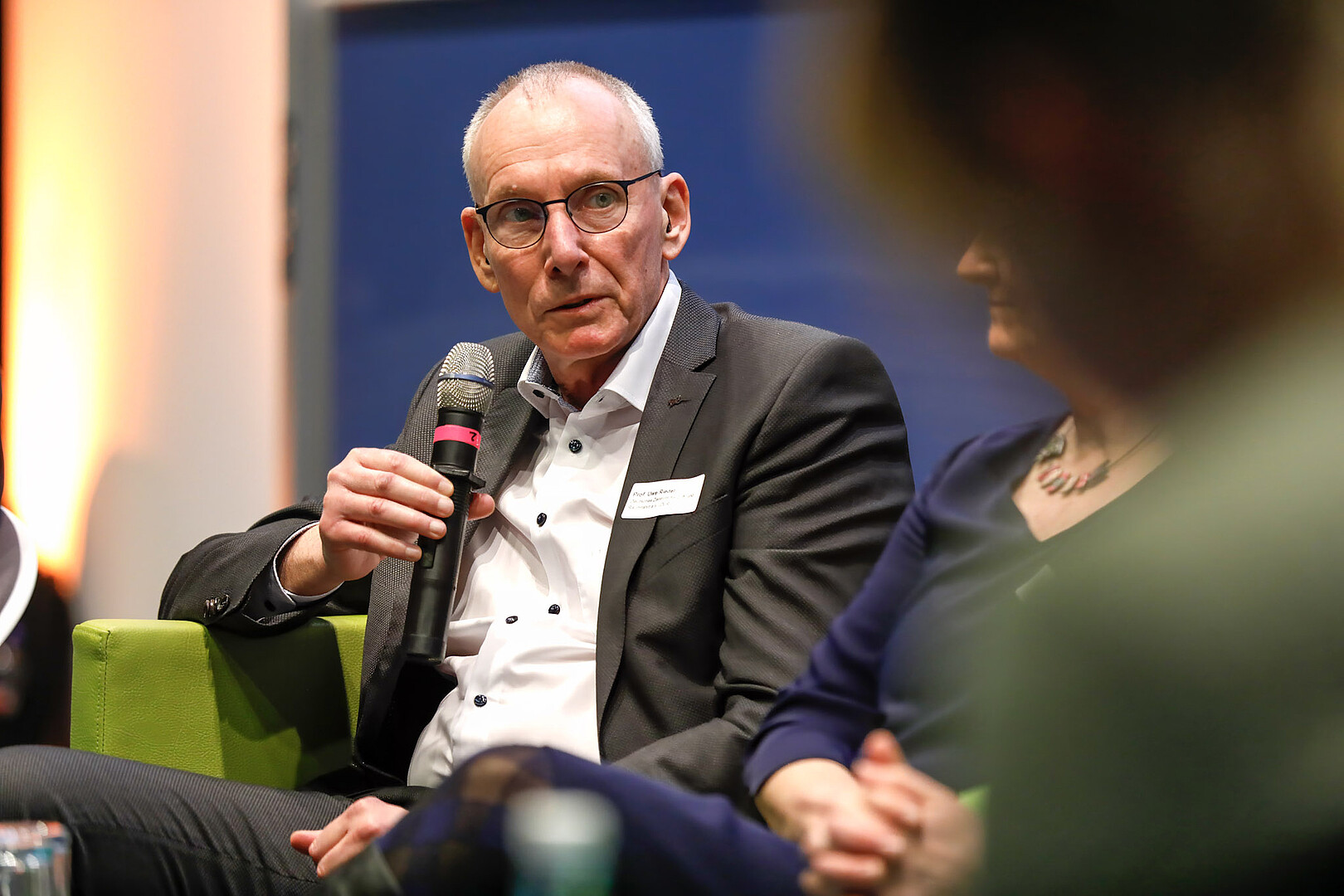
The subsequent keynote presentations at “Business Meets Science” by Dr. Stefan Jakschik (Managing Partner of ULT AG), Professor Sophia Keil and Marcus Will (HSZG), and Dr. Uwe Riedel (Director of the DLR Institute for Low-Carbon Industrial Processes) primarily outlined the future exchange between science and industry. “Our building is open. Science thrives on collaboration and personal exchange. At our campuses in Zittau and Görlitz, a variety of spaces invite people to come together, share ideas, and develop innovations—for example, in the CELSIUZ transfer space at the Mandauhöfe in Zittau. As a university, we see ourselves as an open, vibrant innovation hub for the region, ” said Prof. Dr. Sophia Keil. “The DLR sees it as its mission to put research into practice,” explained Dr. Uwe Riedel. “Chips—that’s not for me. That’s something for big corporations,” is what some of the participants present had thought beforehand. But: The more complex the respective ecosystems are (in this case, in the field of semiconductors), the greater the opportunities for small and medium-sized enterprises in Upper Lusatia to benefit from them,” says Dr. Stefan Jakschik.
Establishment of a communicative interface for exchange and dialog
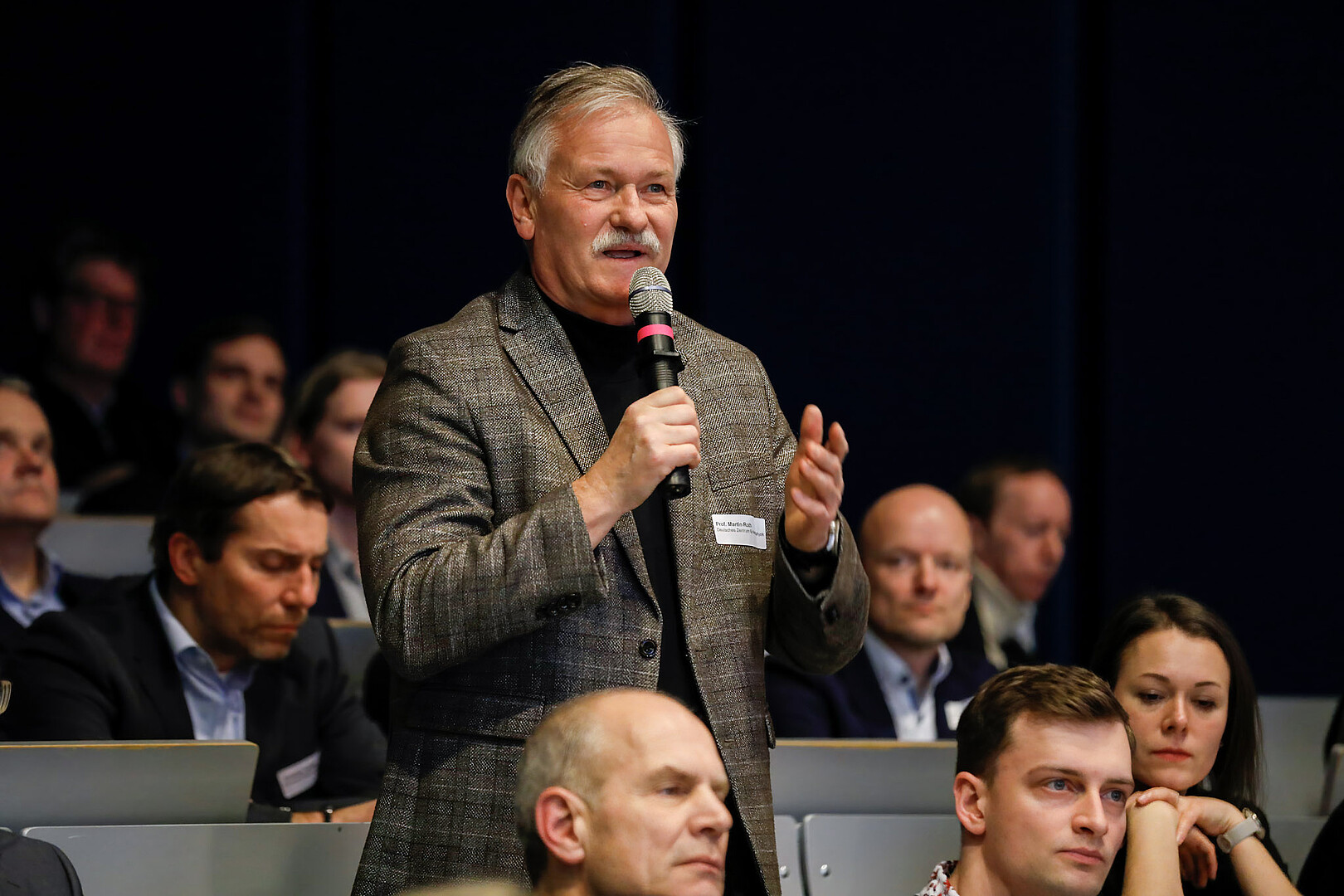
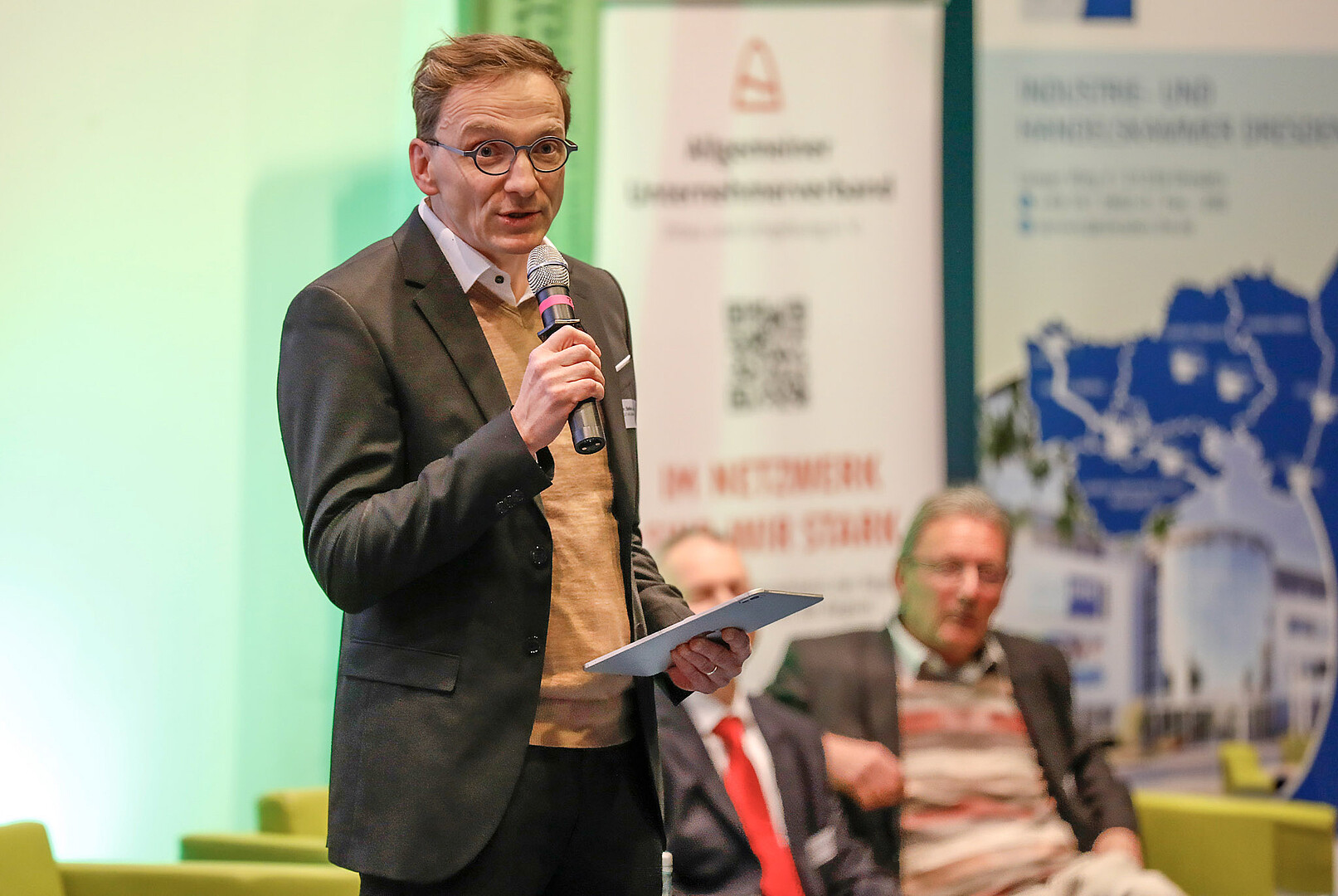
However, there was also some skepticism in the audience and among the participants about how to approach research institutions in terms of communication. "I have an office equipment company. Should I contact the German Aerospace Center directly if I have a new office chair in my range?" was a pointed comment from the regional Zittau business community. "We need better communication. We still don't really know how to communicate with companies and research institutions," says Ina Ultsch, Deputy Chairwoman of the General Business Association of Zittau and the surrounding area. "We know that a communicative interface is still missing here at the moment. That's why we want to build a communicative platform in the future that makes this possible - a dialog between regional companies in the skilled trades, business and science," says Ultsch.
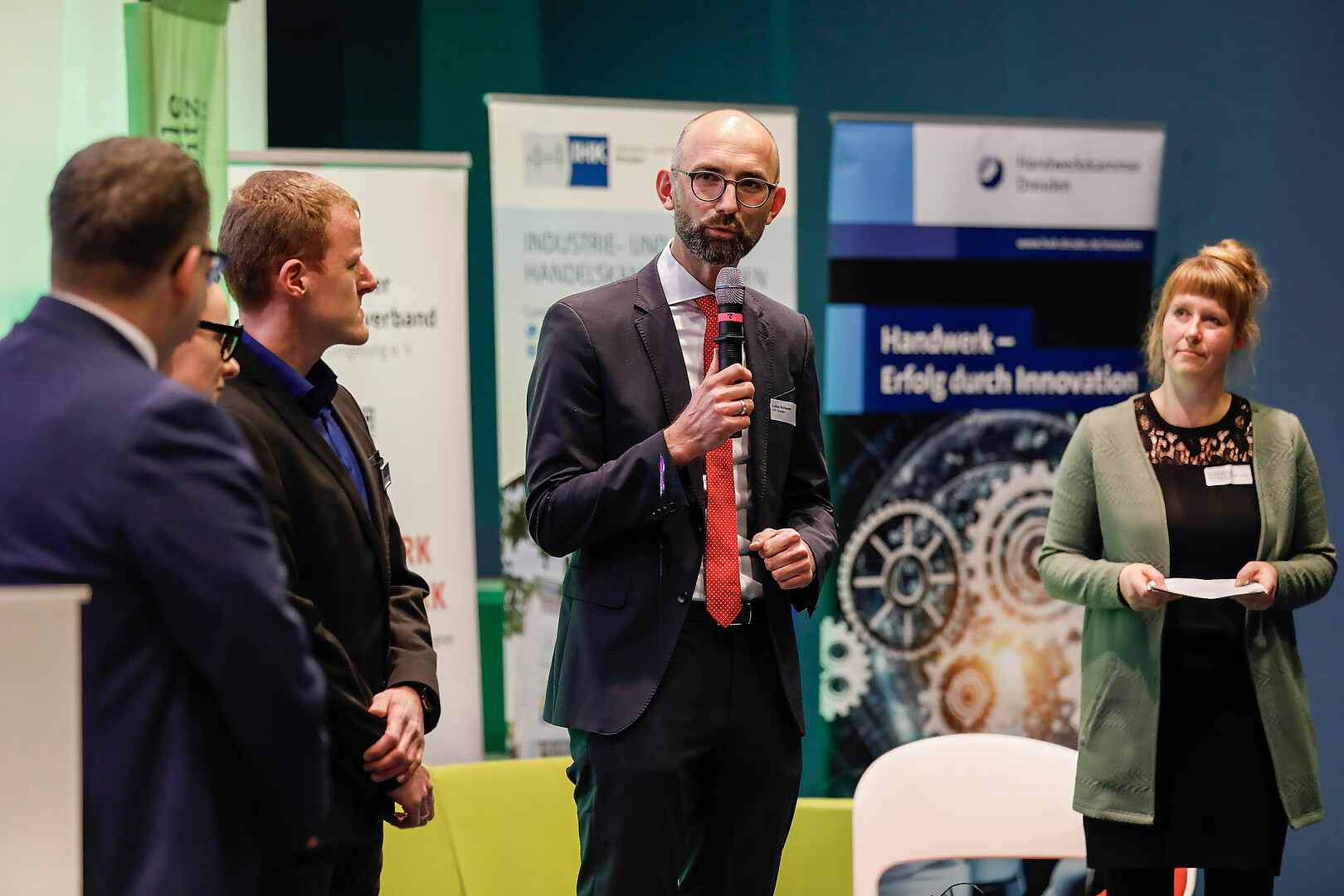
The Dresden Chamber of Skilled Crafts appeals: "Go to the topic tables and formulate your needs. Cooperation between science and industry can only work through exchange," emphasizes Daniel Hübschmann, Head of Innovation and Technology at the Dresden Chamber of Skilled Crafts. The Dresden Chamber of Industry and Commerce confirms the positive development of the Görlitz/Zittau locations and the border triangle: "We are here in the border triangle between Germany, Poland and the Czech Republic. This is a location that is worth keeping an eye on regionally, nationally and internationally," says Lukas Rohleder, Managing Director of the Dresden Chamber of Industry and Commerce.
Important impetus for cooperation between science and industry
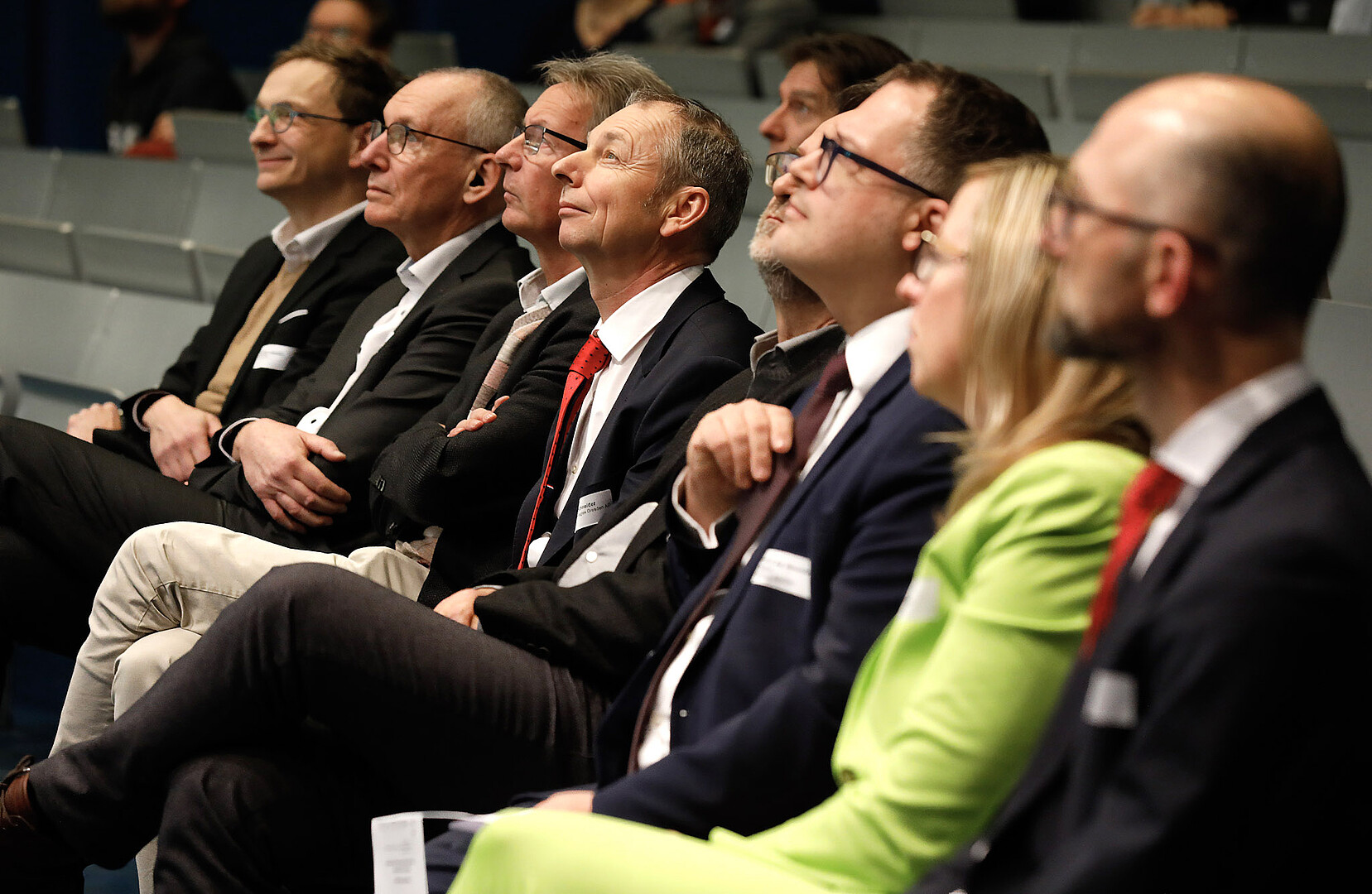
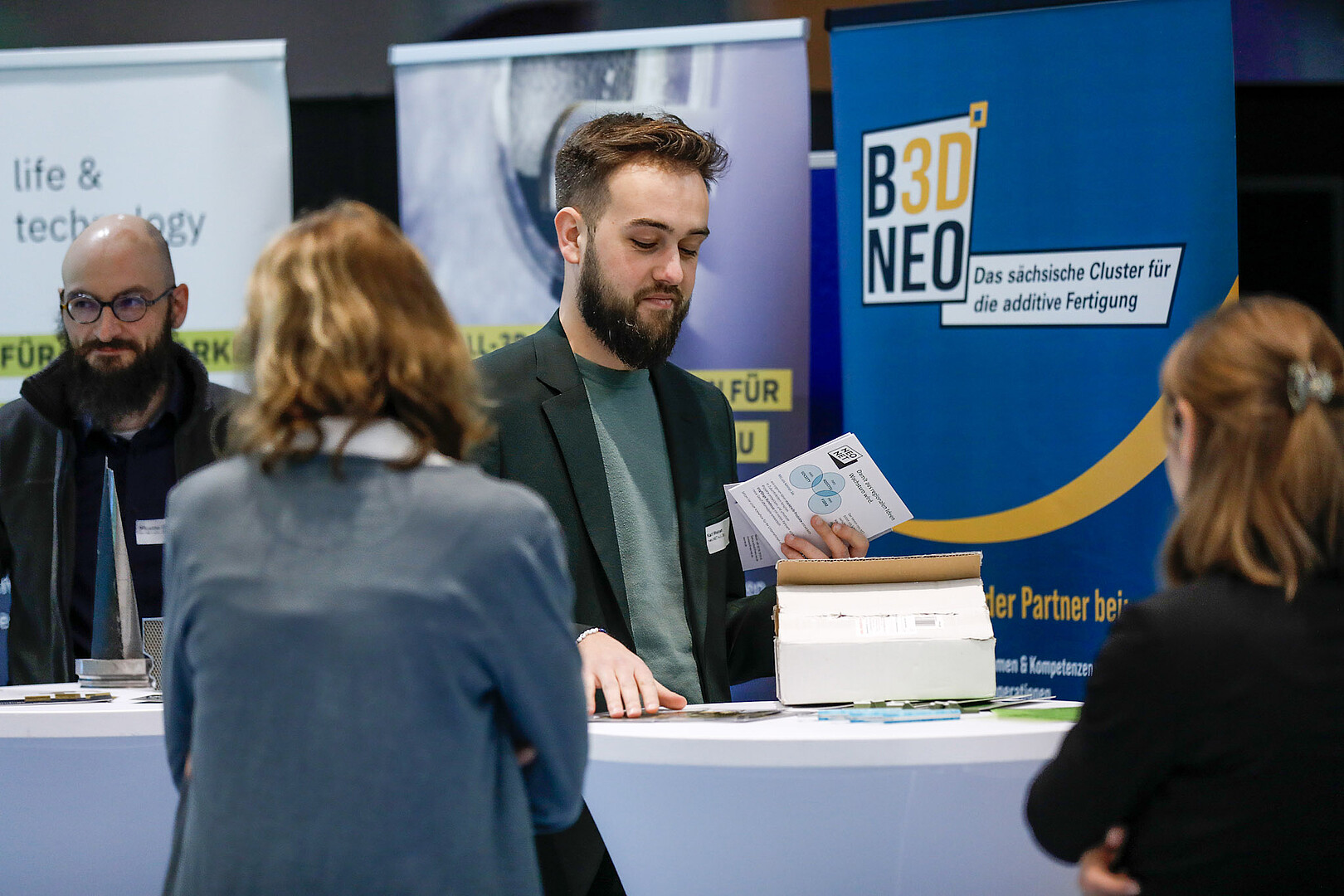
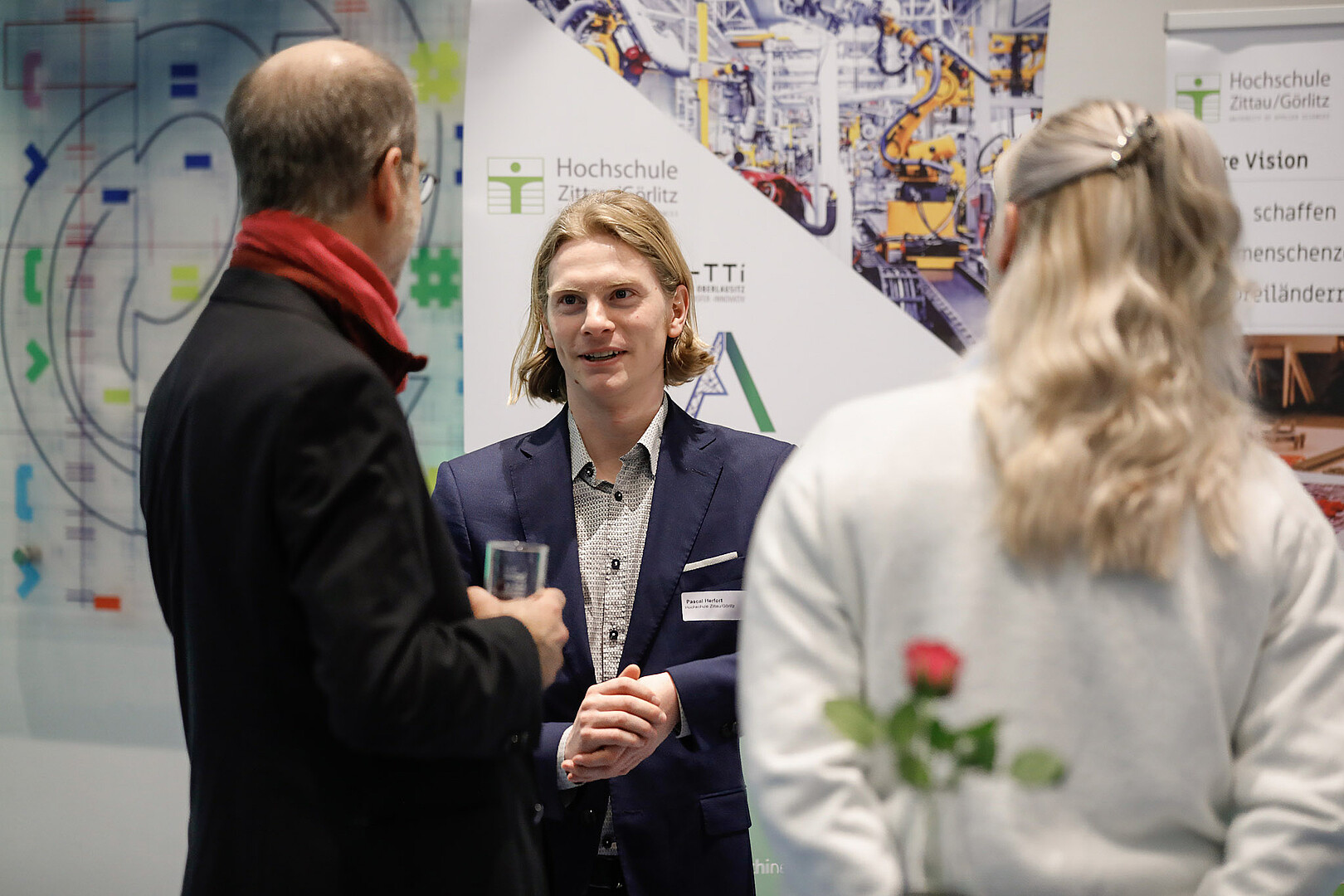
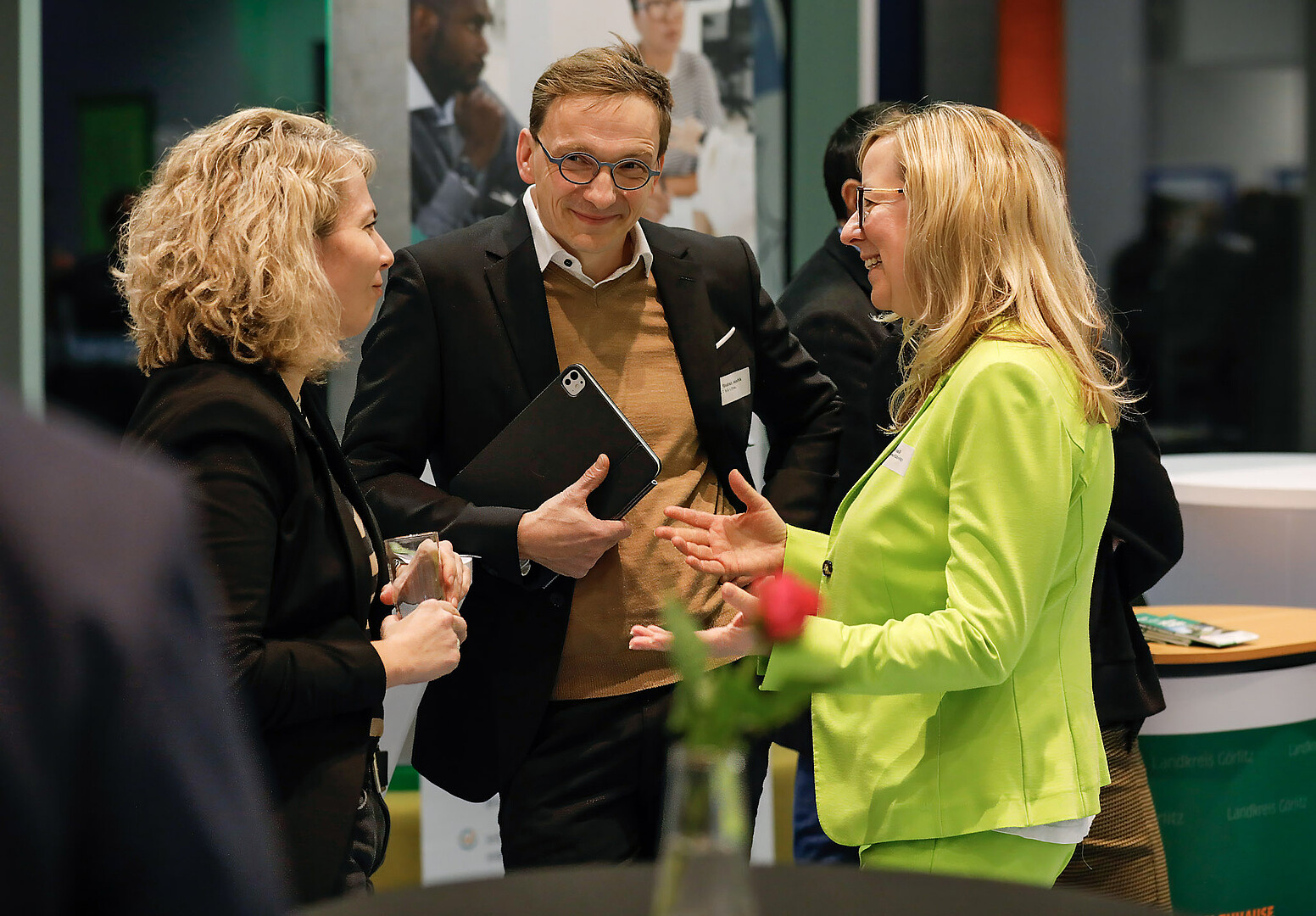
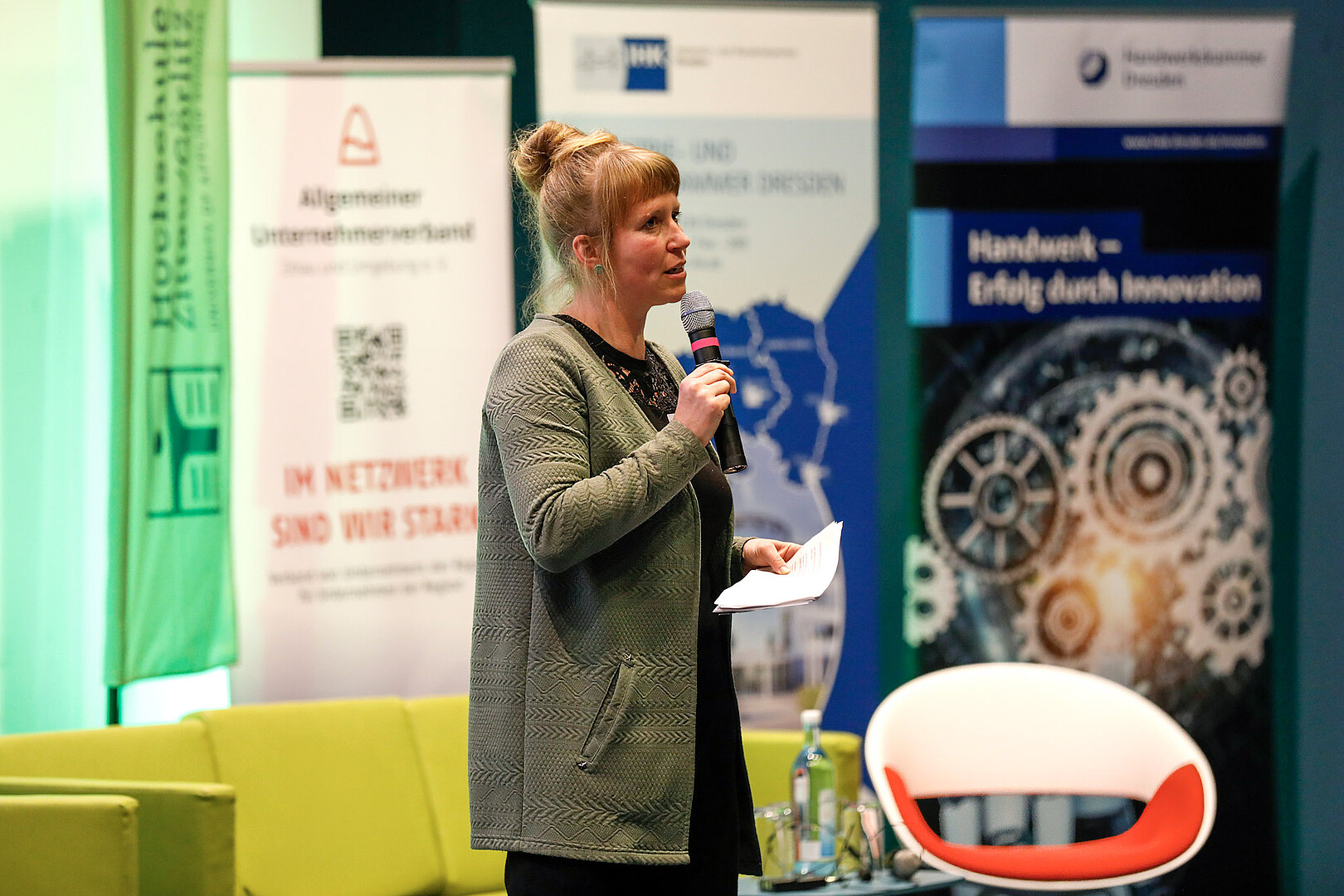
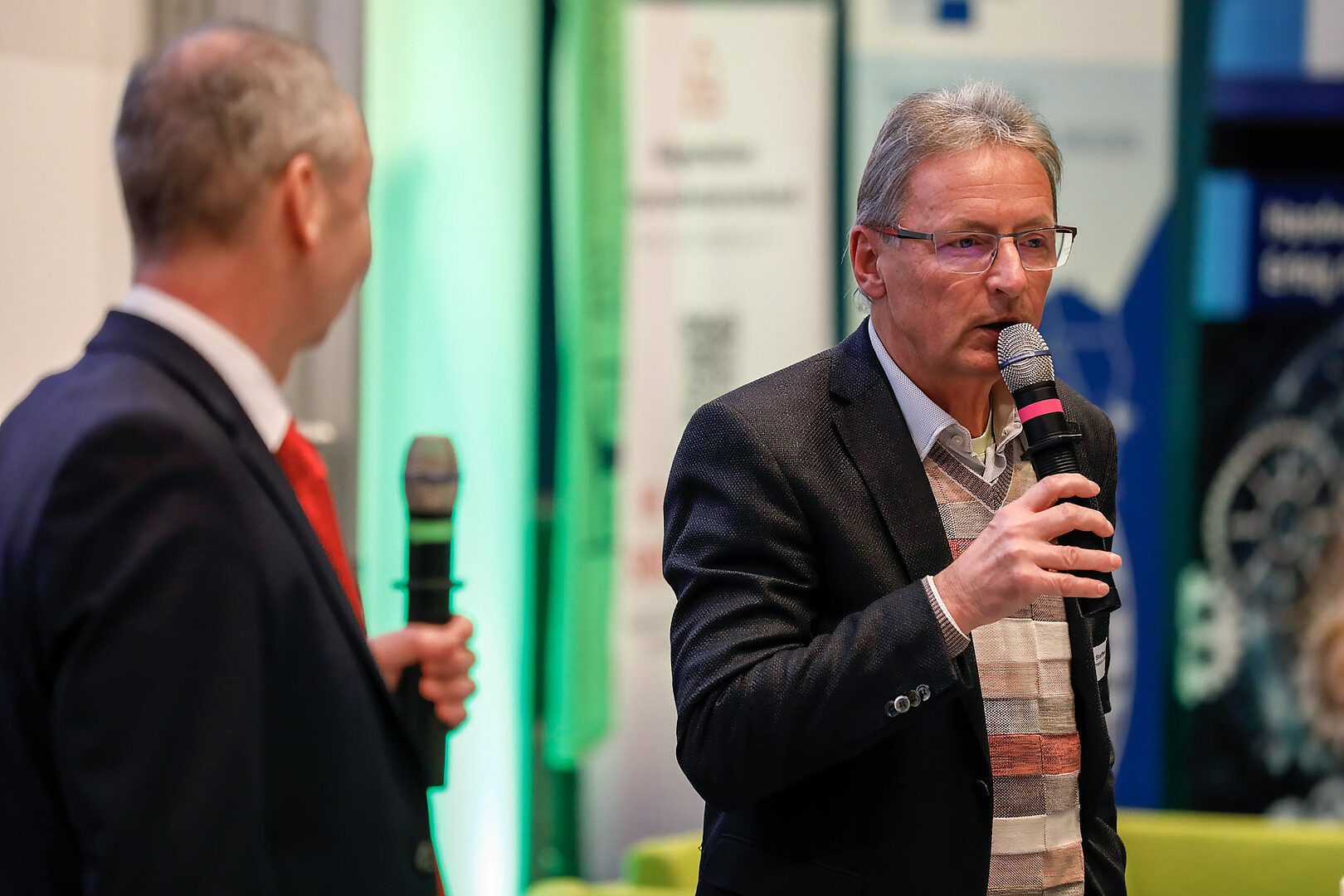
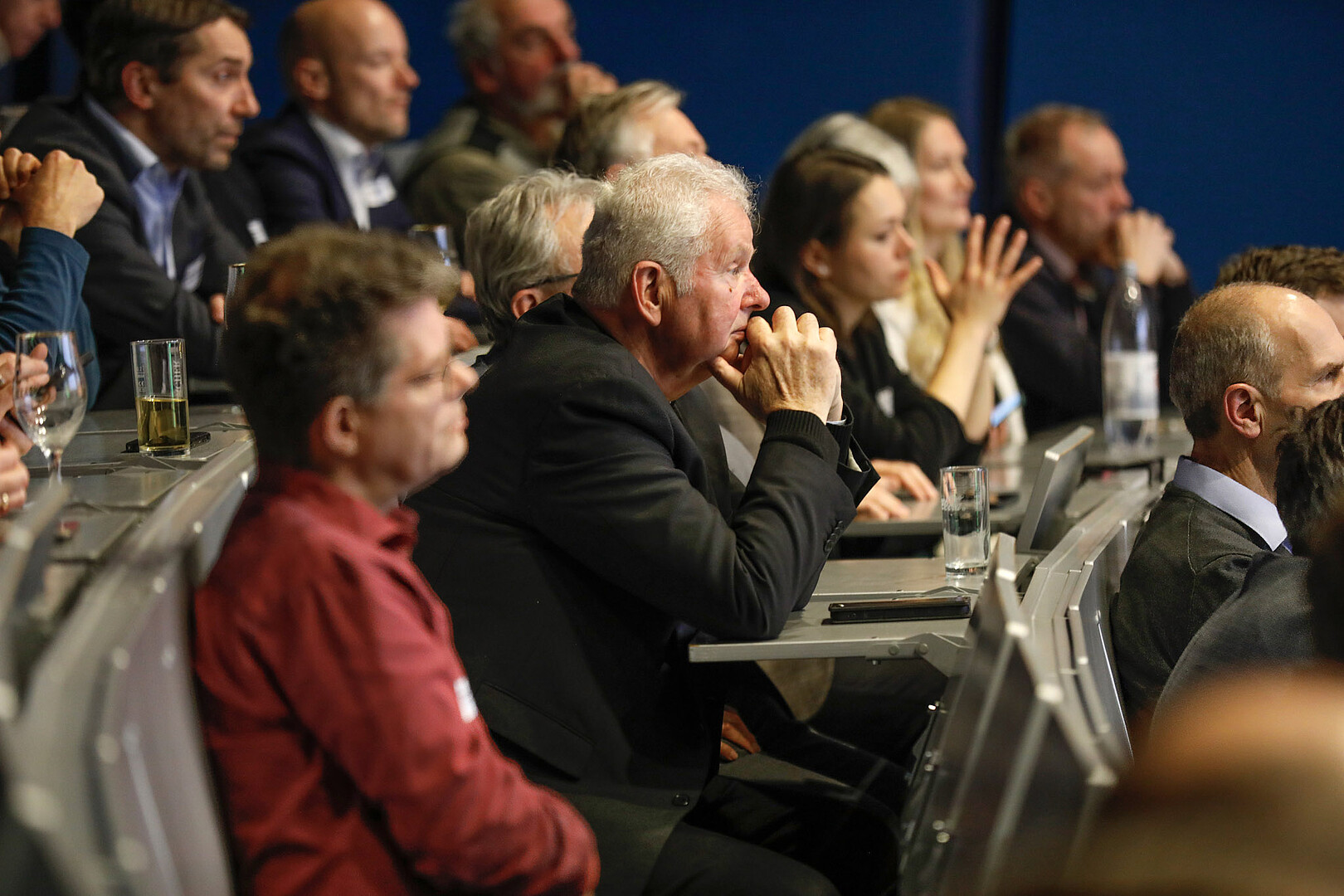
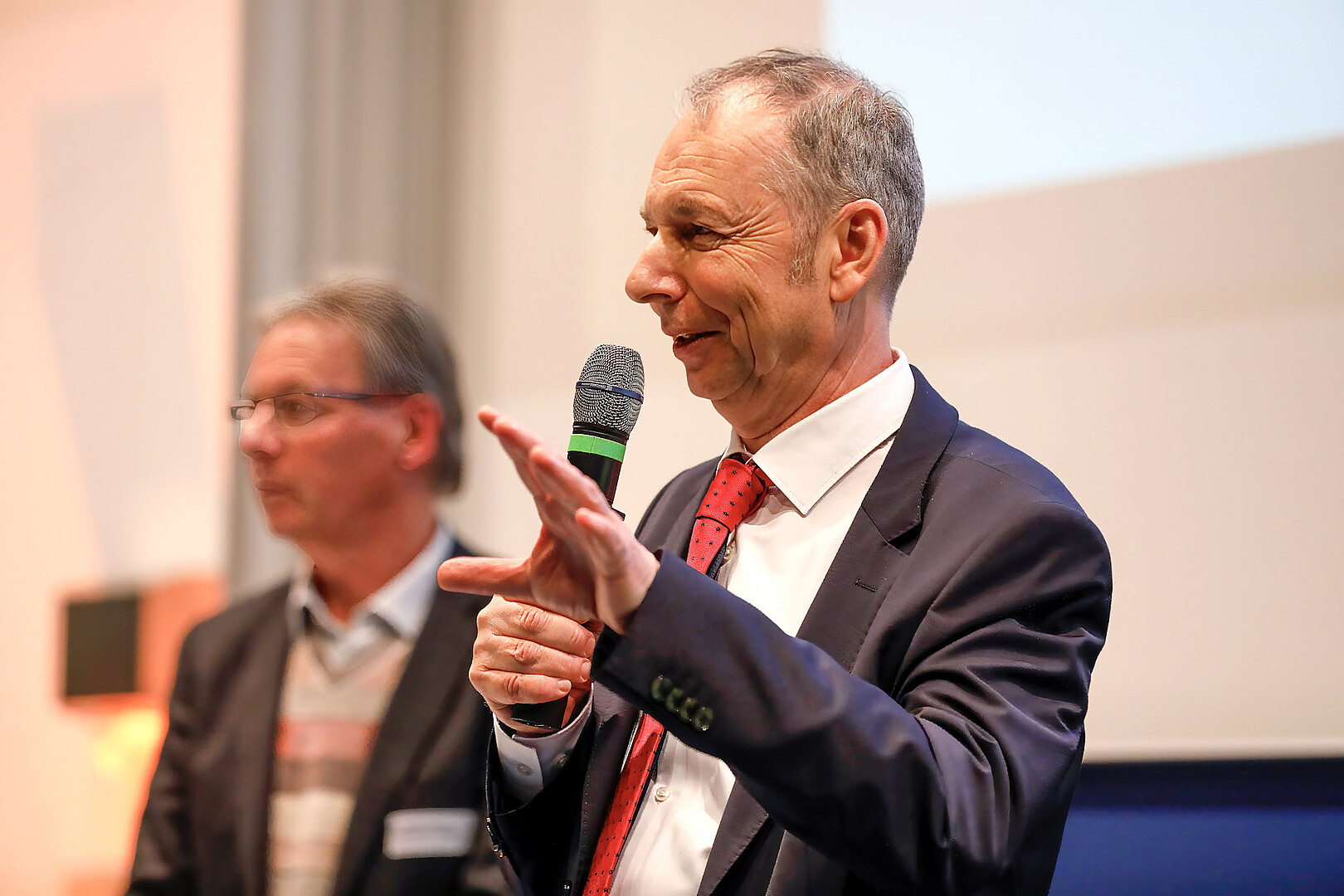
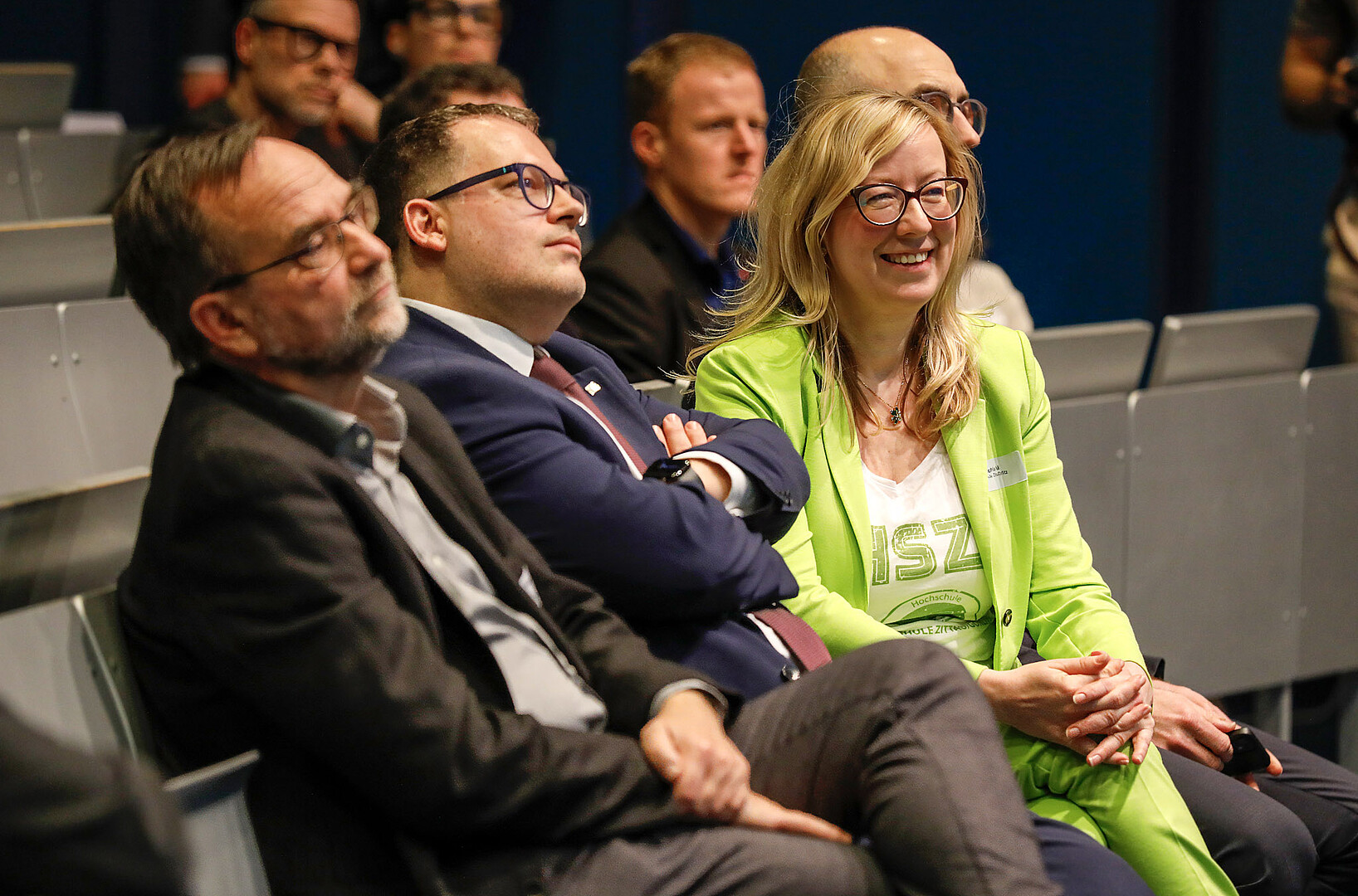
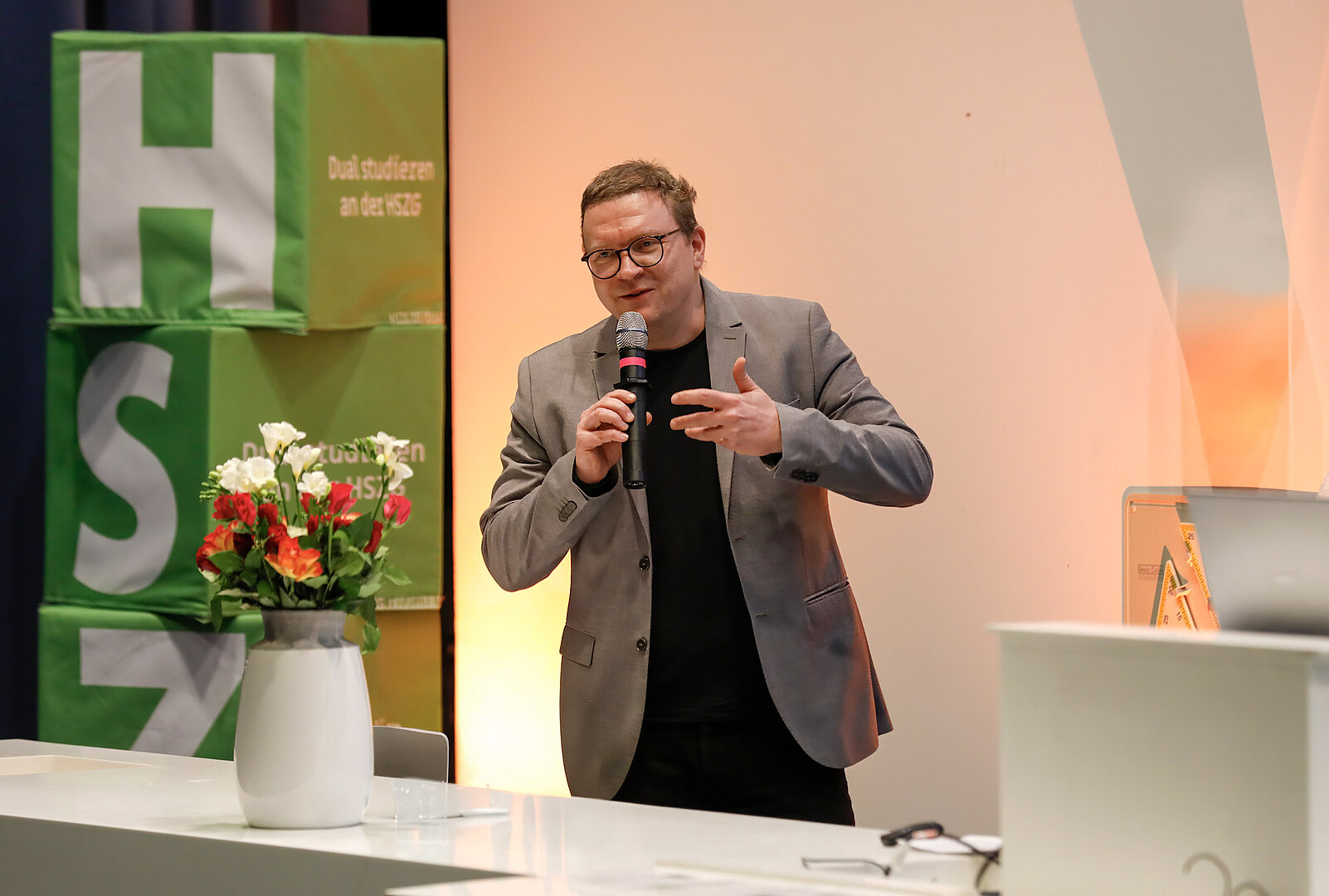
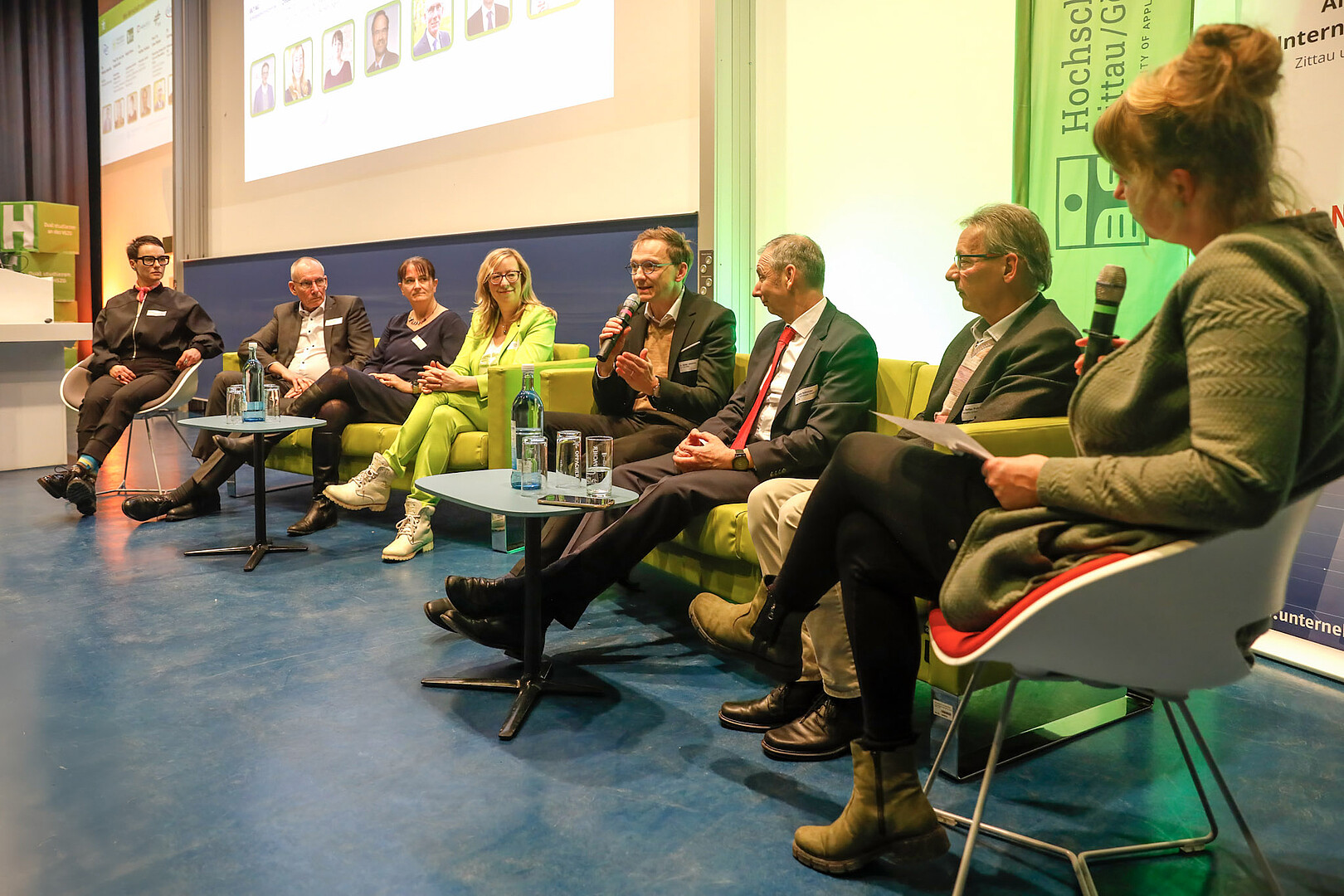
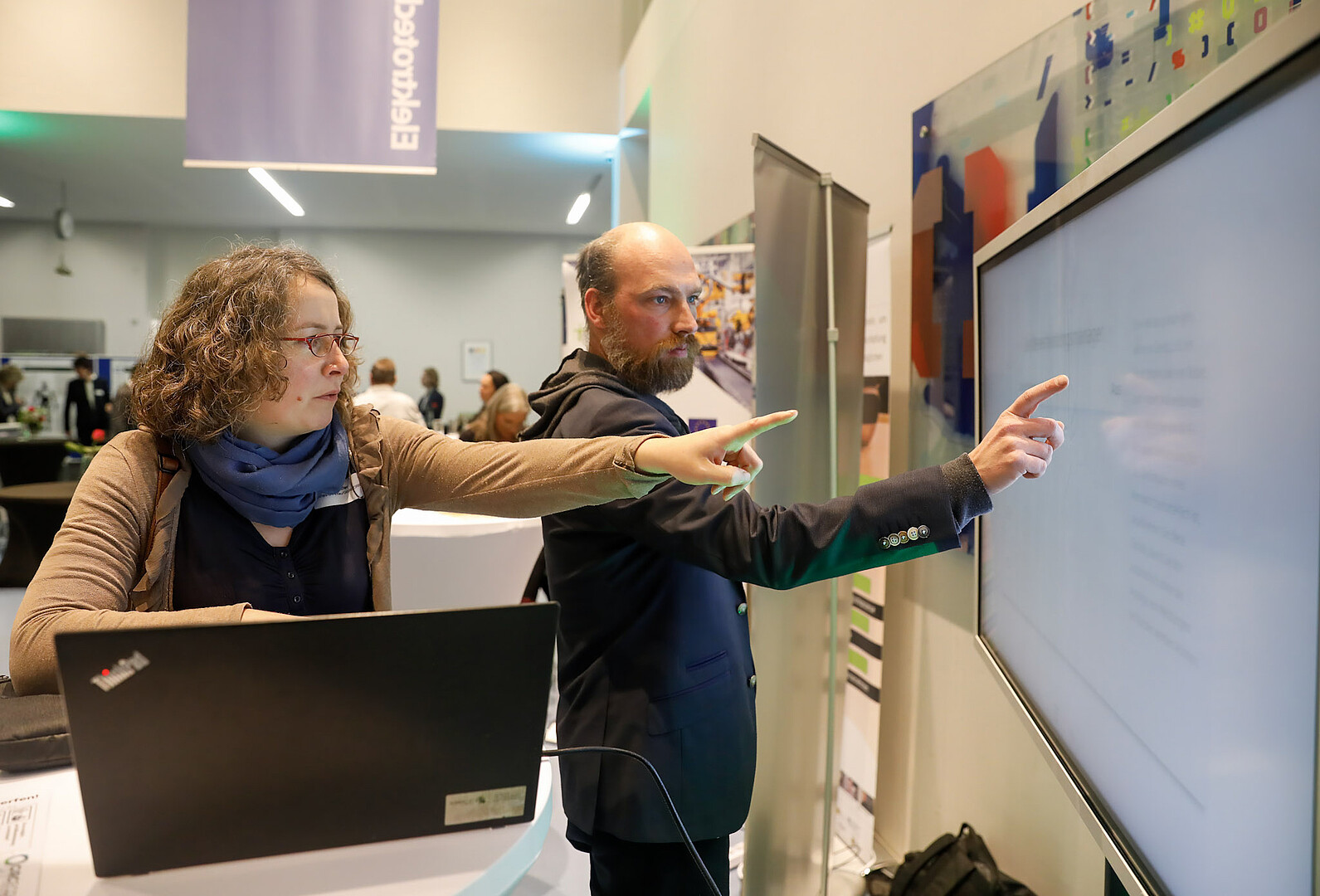
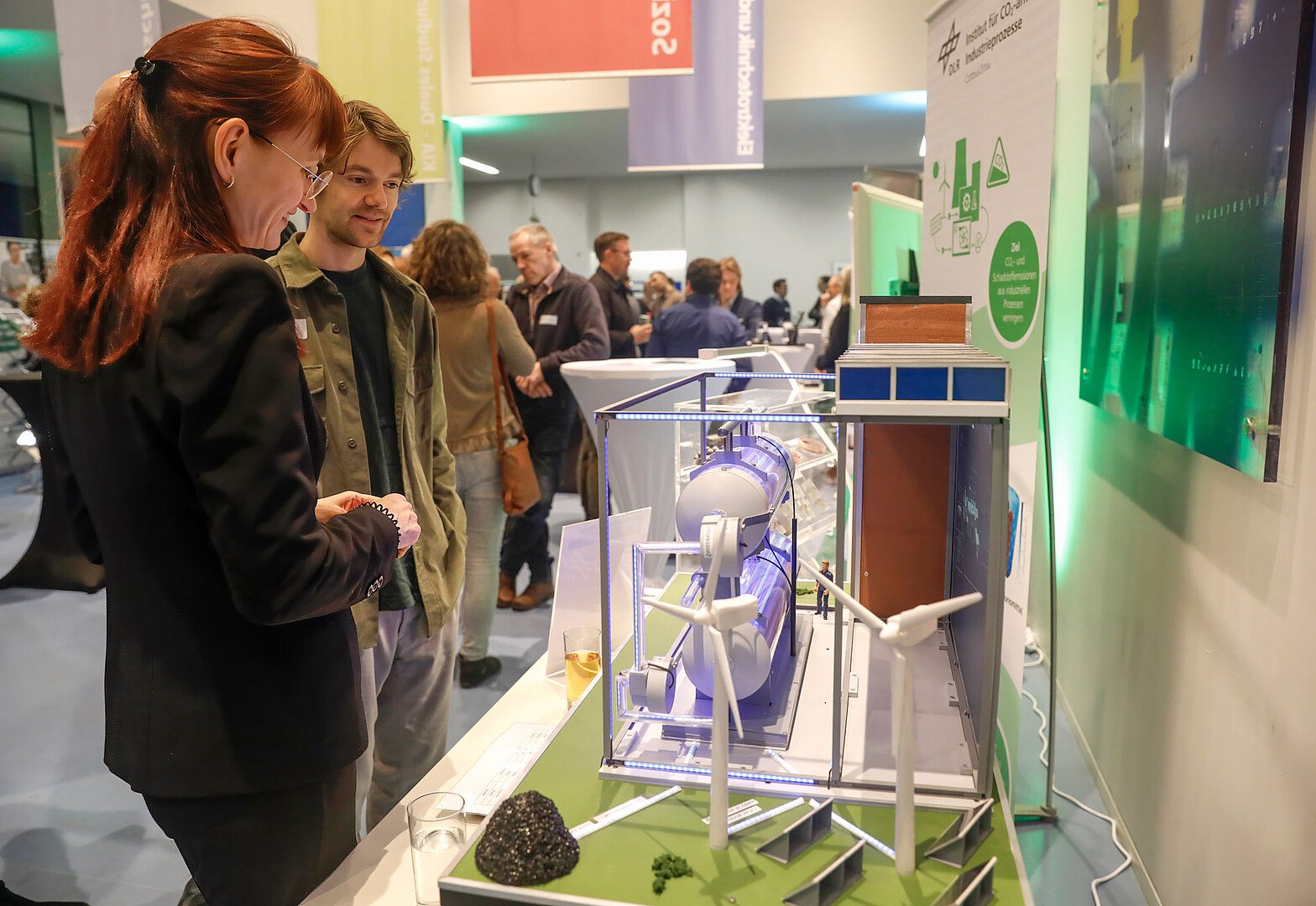
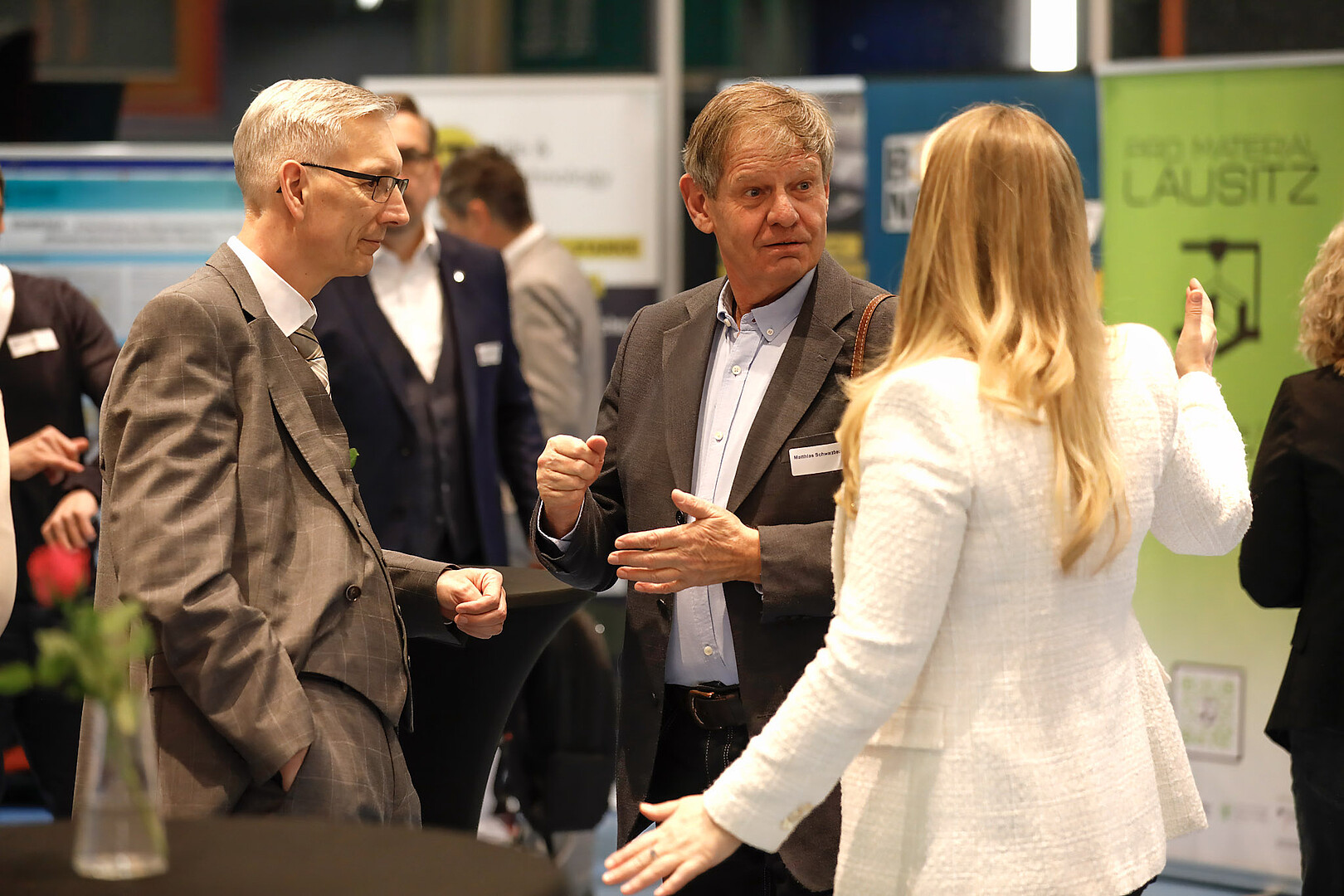
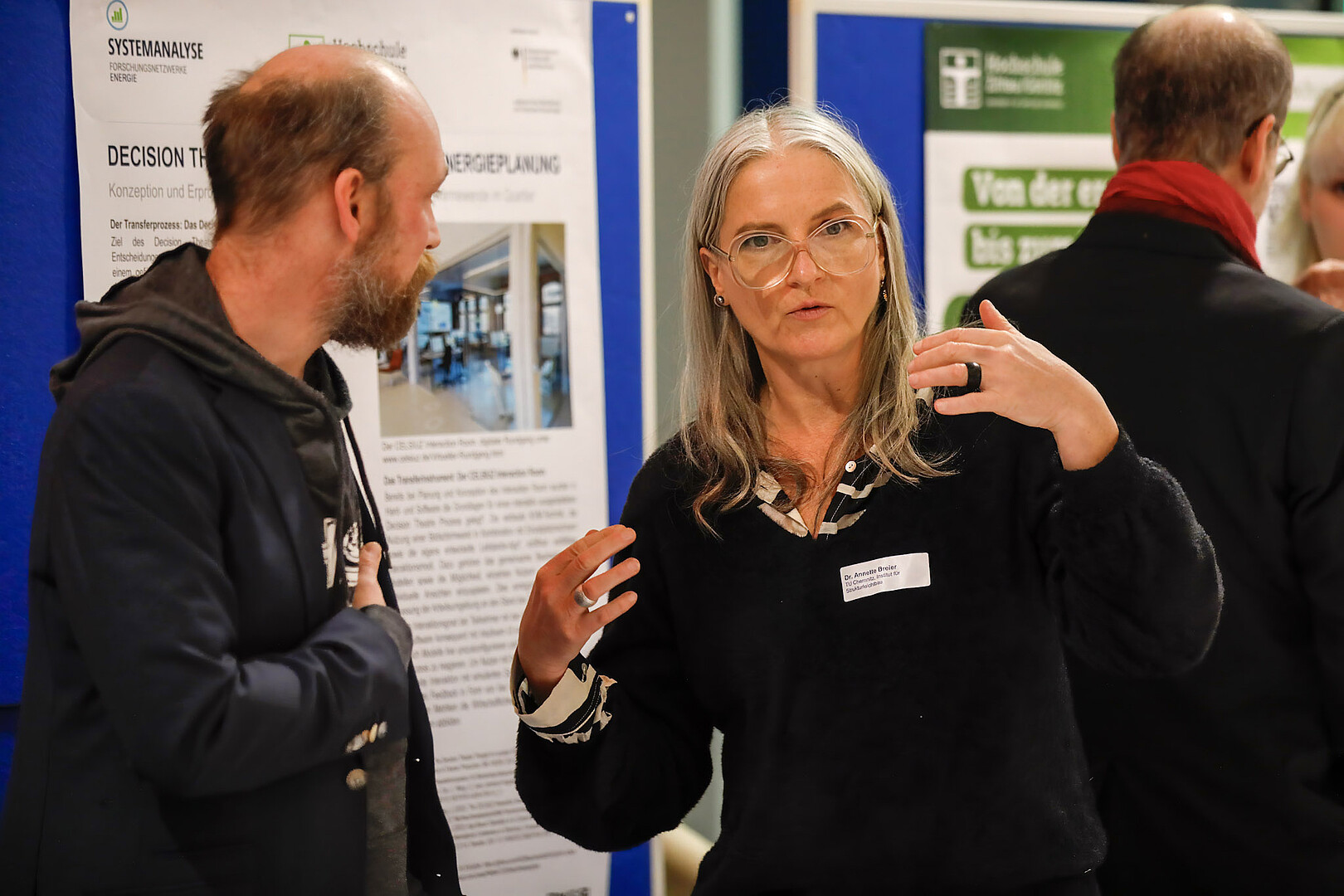
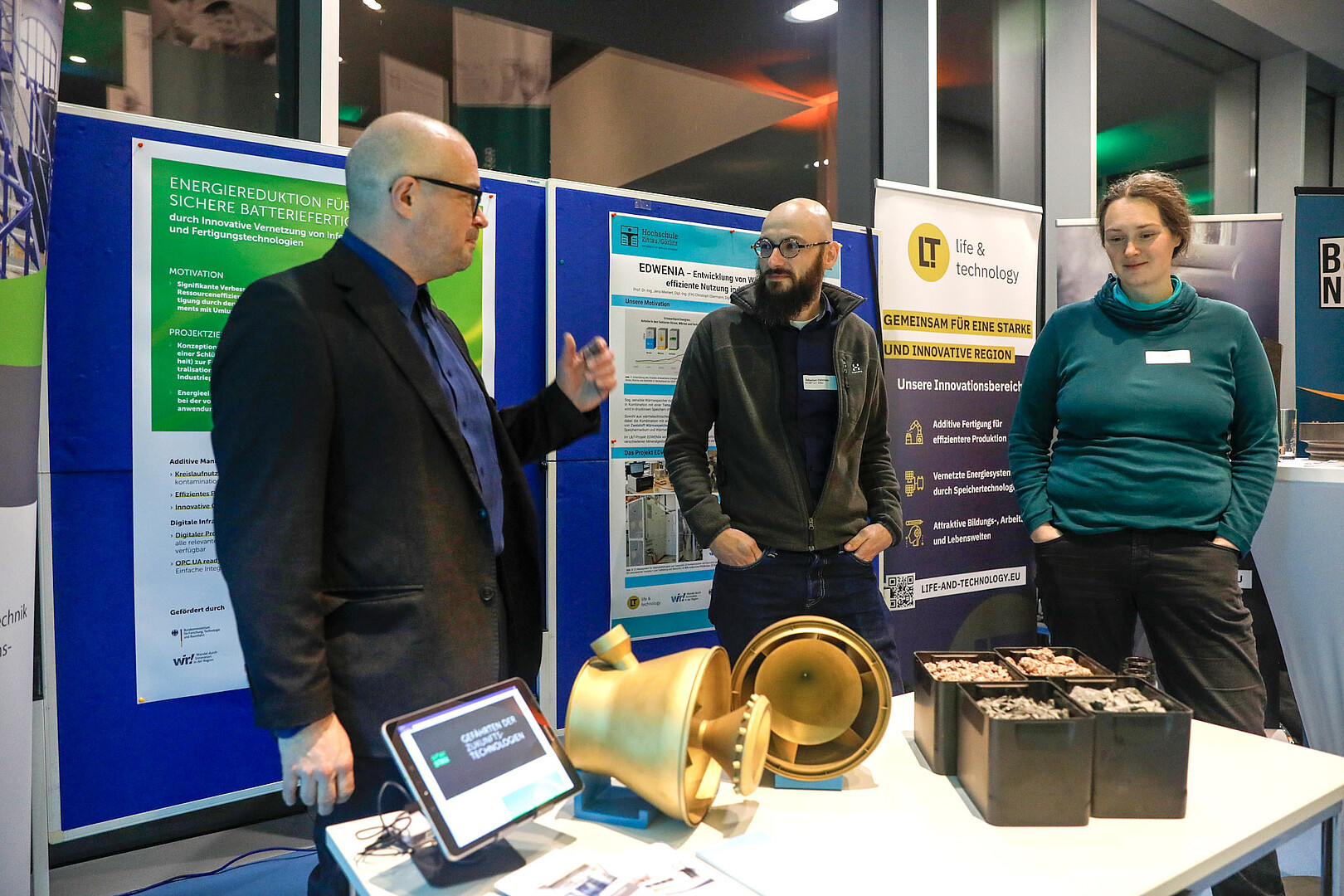
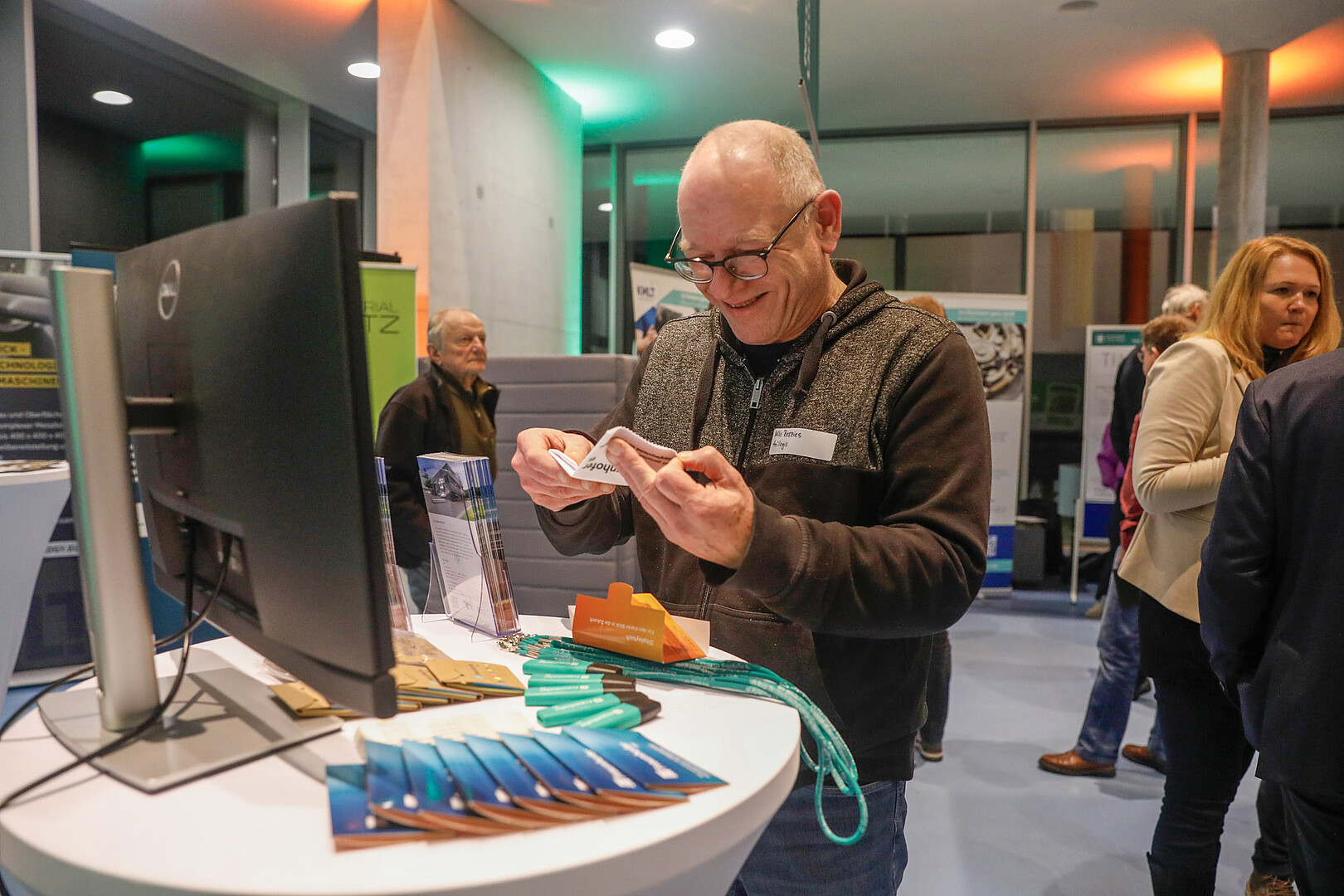
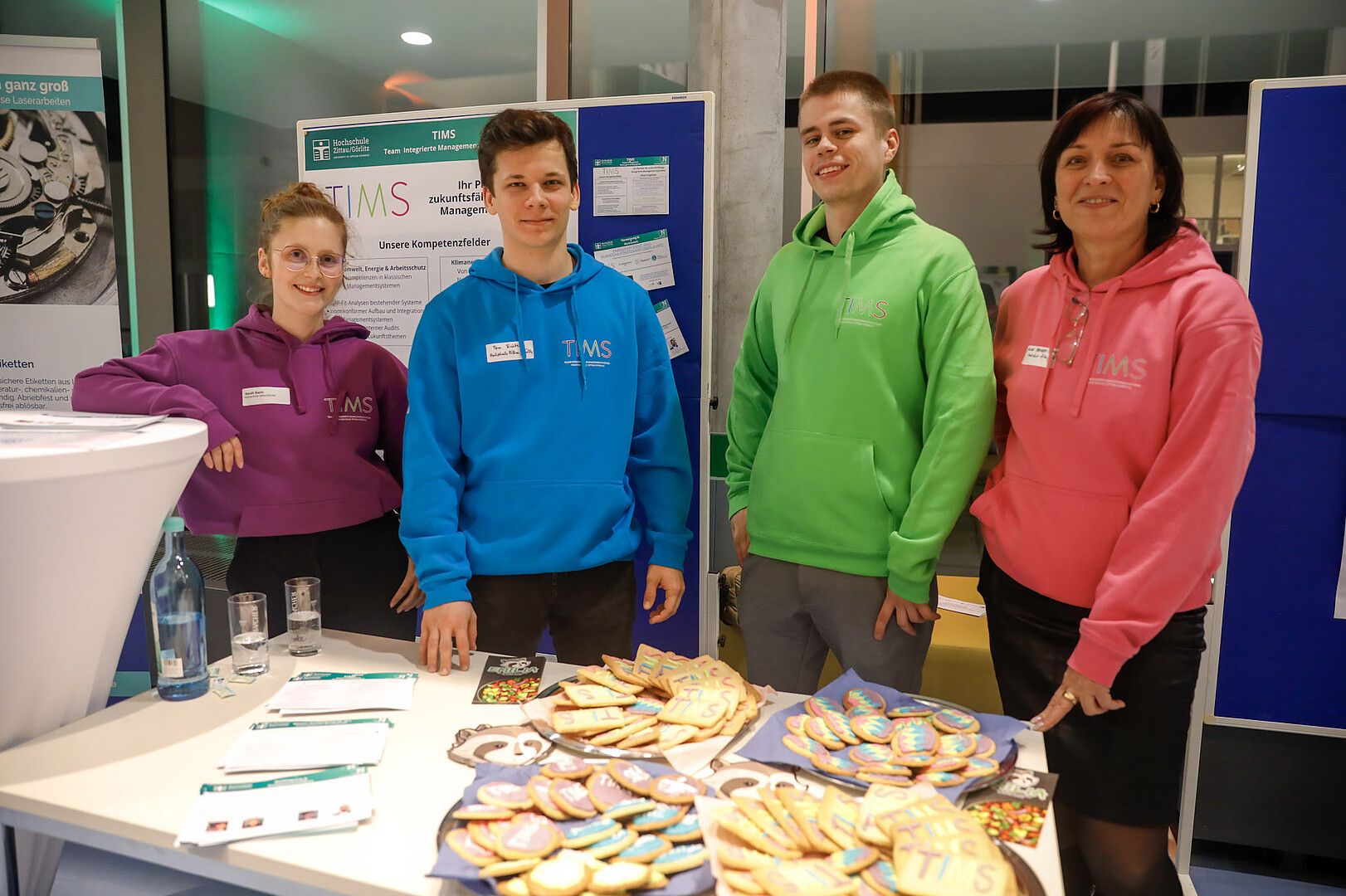
Following the event, an accompanying exhibition featuring research projects from the Zittau/Görlitz University of Applied Sciences, complete with themed tables, invited the more than 160 guests to a casual “get-together” for exchange and dialogue—and to explore current and upcoming opportunities for collaboration between business and academia. The event “Business Meets Science,” moderated by Leonie Liemich, project coordinator for the Lausitz – Life & Technology Alliance, thus proved to be an important platform for dialogue between the university, research institutions, and the regional business community. It provided crucial impetus for the development of the Lausitz region and underscored the importance of collaboration between research and business.
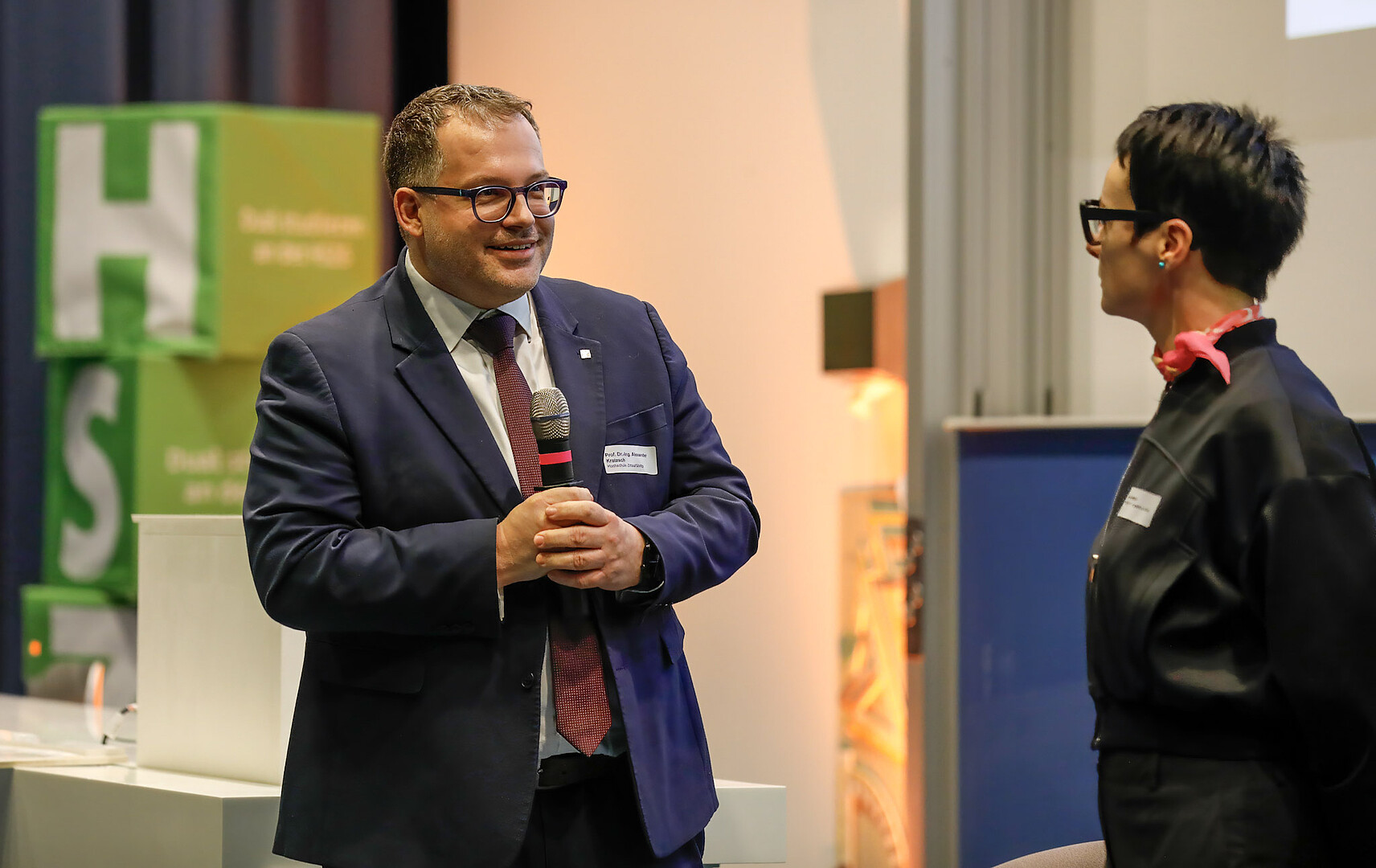
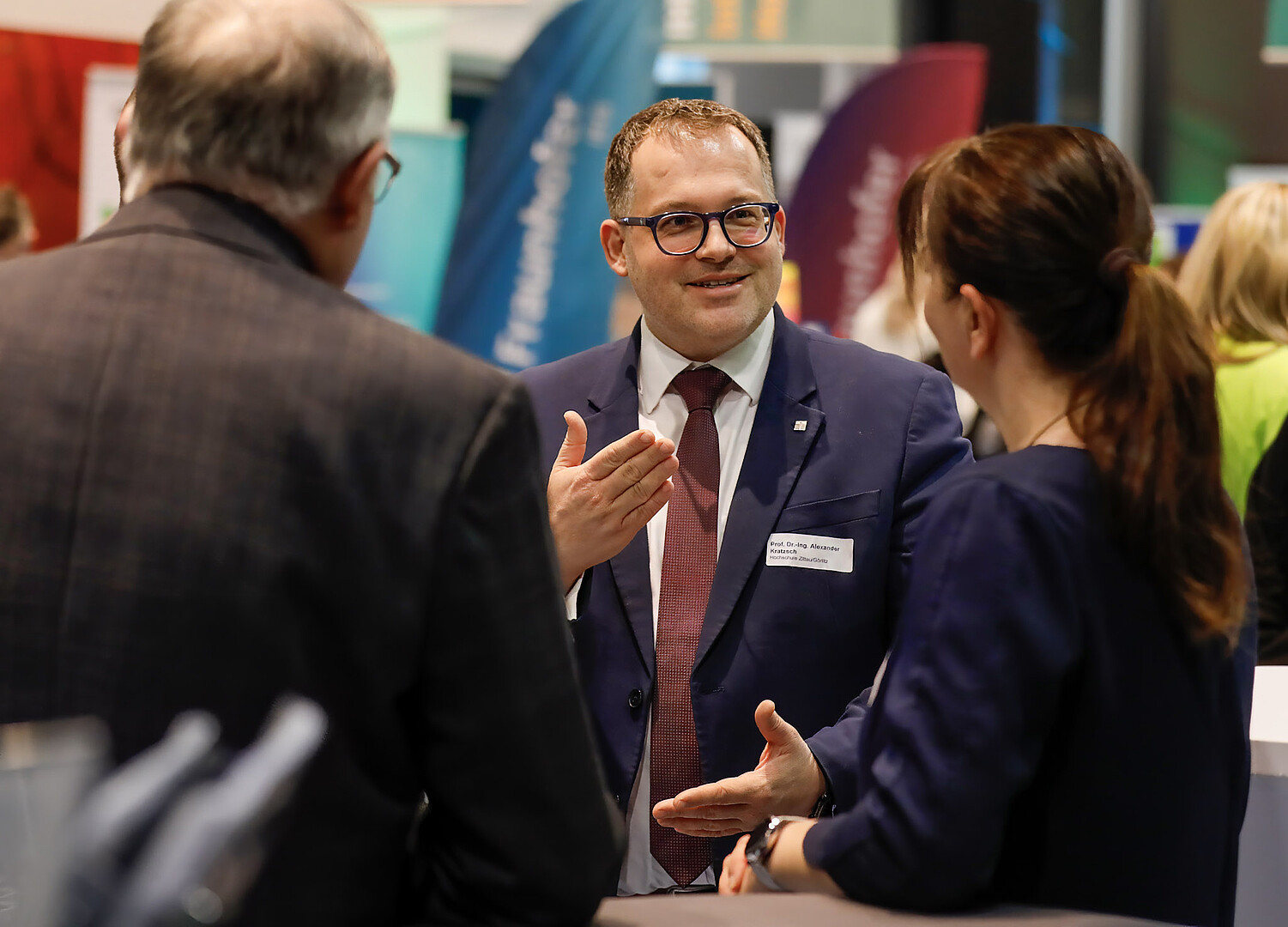
“I am grateful that we were able to successfully organize this event for the 17th time together with our partners—the Dresden Chamber of Commerce and Industry (IHK Dresden), the General Entrepreneurs’ Association of Zittau and Surrounding Areas e.V., Zittau/Görlitz University of Applied Sciences, and the Dresden Chamber of Crafts,” said Prof. Dr. Sophia Keil, Vice President for Research, Transfer, and International Affairs. Prof. Dr.-Ing. Alexander Kratzsch, Rector of Zittau/Görlitz University of Applied Sciences, said in his welcoming remarks: “When I see how full the hall is, I know this event will be a great success.”
Free State of Saxony strives for further cooperation in the chip industry
The Sächsische Zeitung reported on January 16, one day after the “Business Meets Science” event: “Upper Lusatia’s efforts to attract Taiwan’s chip industry continue. On January 18, 2026, Florian Oest (CDU), a member of the Bundestag representing Görlitz, traveled to Taiwan with Alexander Kratzsch, the Rector of the Zittau/Görlitz University of Applied Sciences. They are part of a group of Bundestag politicians and business representatives, including Lukas Rohleder, chief executive of the Chamber of Industry and Commerce (IHK). The delegation’s itinerary is specifically geared toward expanding cooperation in science and business.”
The “Business Meets Science” event on January 15, 2026, thus served as a successful prelude to further international activities by the Free State of Saxony in the fields of research and business—from which small and medium-sized enterprises in the region will also be able to benefit in the future.
Text: Frank Leberecht, Photos: Rafael Sampedro



1st floor