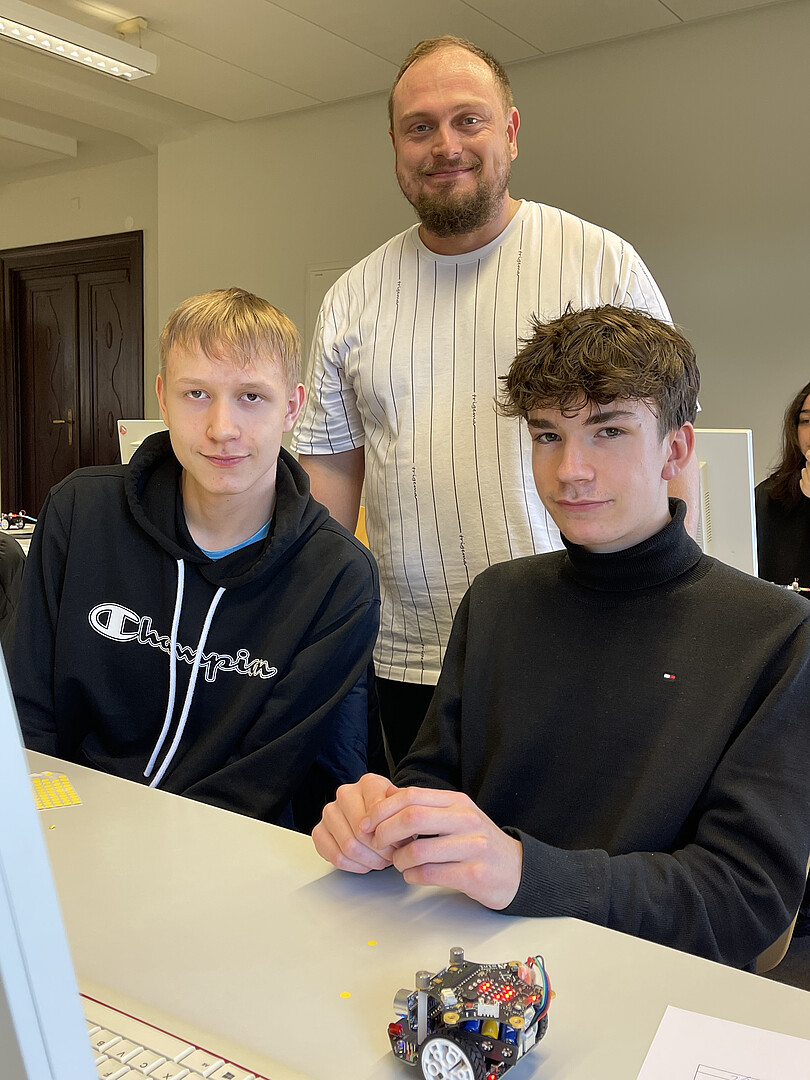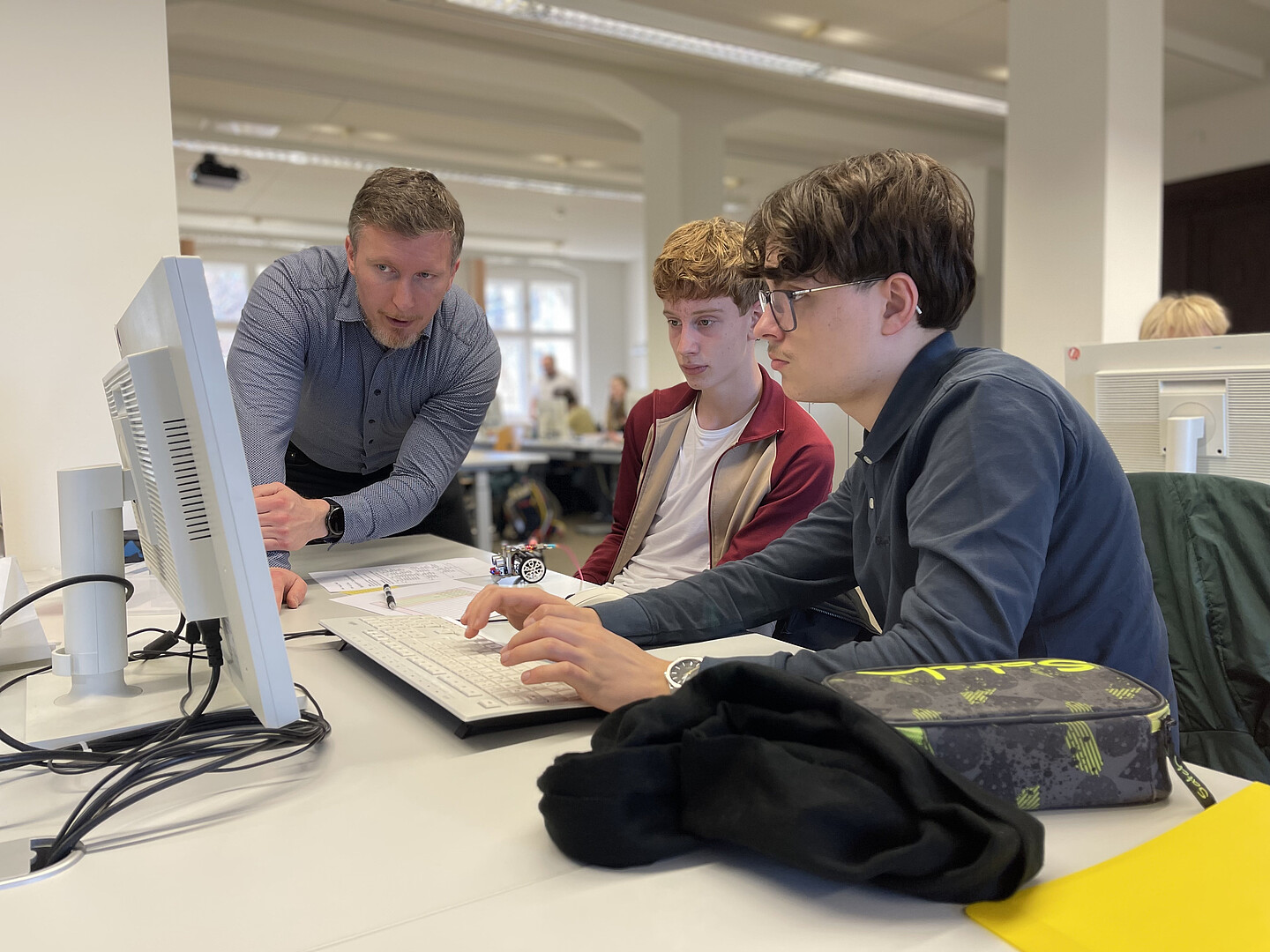
With the modular profile lessons of the Joliot-Curie-Gymnasium Görlitz in the field of computer science, tenth graders are expanding their knowledge in robotics with the support of the HSZG.
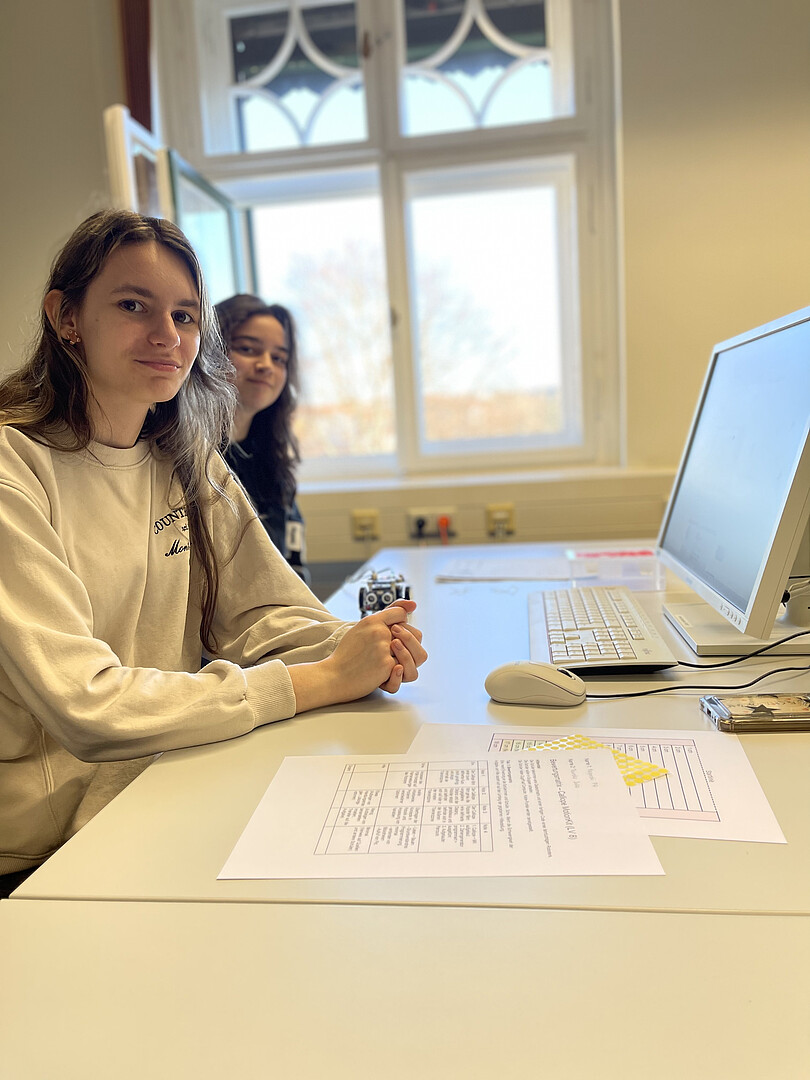
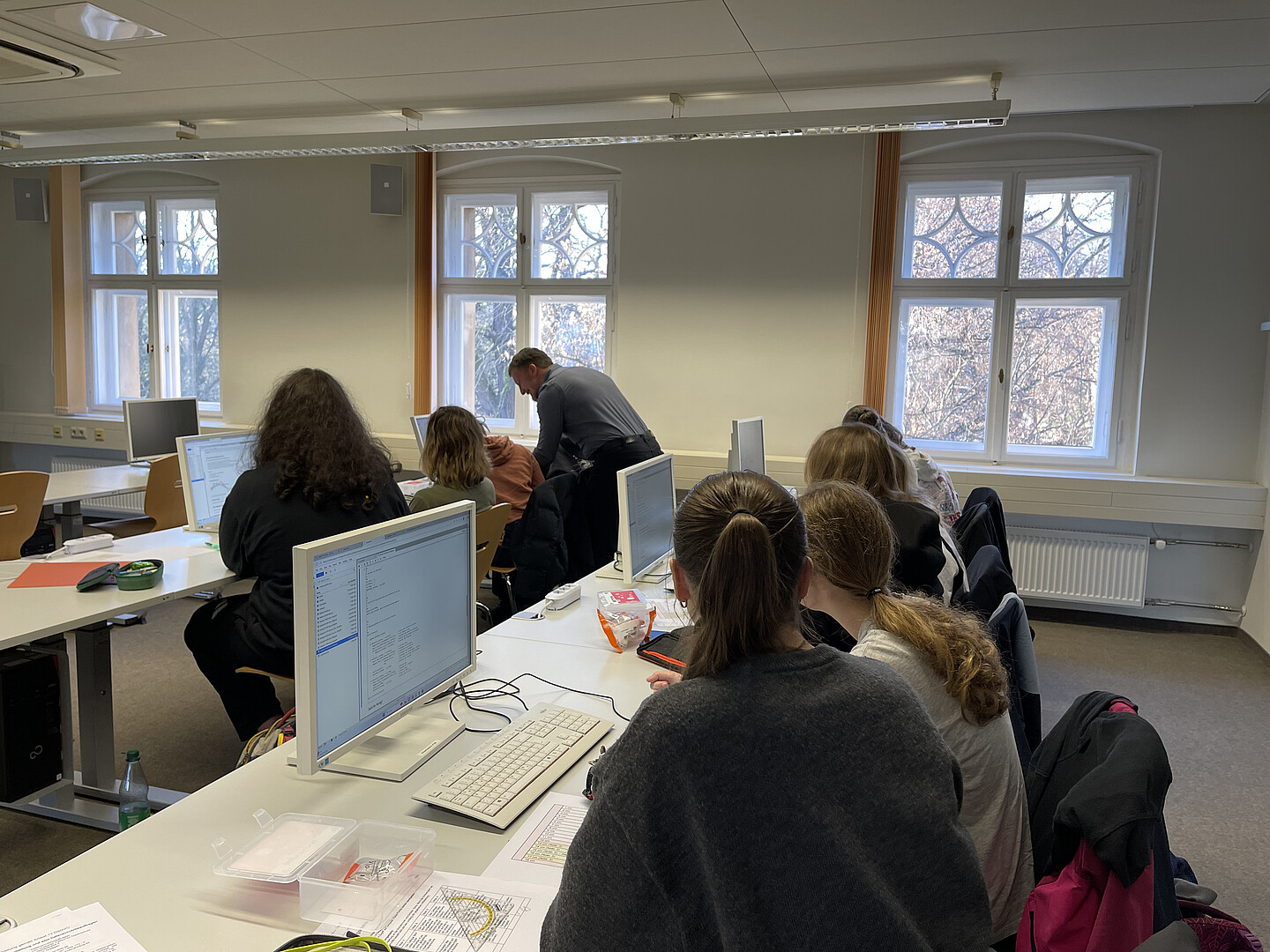
Every two weeks, 25 tenth-graders from Joliot-Curie-Gymnasium Görlitz immerse themselves in the world of robotics for 90 minutes as part of their modular profile lessons. The course takes place at the Zittau/Görlitz University of Applied Sciences in the field of computer science and offers pupils the opportunity to get a taste of university life and learn more about computer science. This takes place in a combination of lecture and exercise units.
Last October presented the course with some very special challenges: Public holidays and vacations meant longer breaks between attendance dates. However, the students did not let this slow them down. With remarkable initiative, they worked independently on the Jupyter notebooks provided, used the interactive learning environment for repetition and consolidation and thus continuously expanded their knowledge outside of the classroom.
A Jupyter notebook is an interactive, web-based working environment that combines live code, visualizations, text and multimedia in a single document. Interactive code execution in the Python programming language is used in the profile lessons at the Joliot-Curie-Gymnasium. The code is executed directly in so-called "cells". The results are immediately visible. The Jupyter notebooks are also used for documentation and visualization. They contain explanations of the teaching material and are used for self-study.
The school year began for the course participants with a thorough introduction to programming with Python. In addition to basic language concepts, the students also dealt with a central principle of robot programming: state machines. Using illustrative examples, they learned how complex behavior can be modeled using clearly defined states and transitions. This concept formed the basis for all subsequent practical projects.
Instead of relying on the usual block programming, the young people worked with the widely used Python programming language right from the start. To make it easier to get started, the university team developed a virtual Calliope environment for Jupyter notebooks. The first programs could be written, tested and understood in this secure environment before being transferred to the real microcontroller.
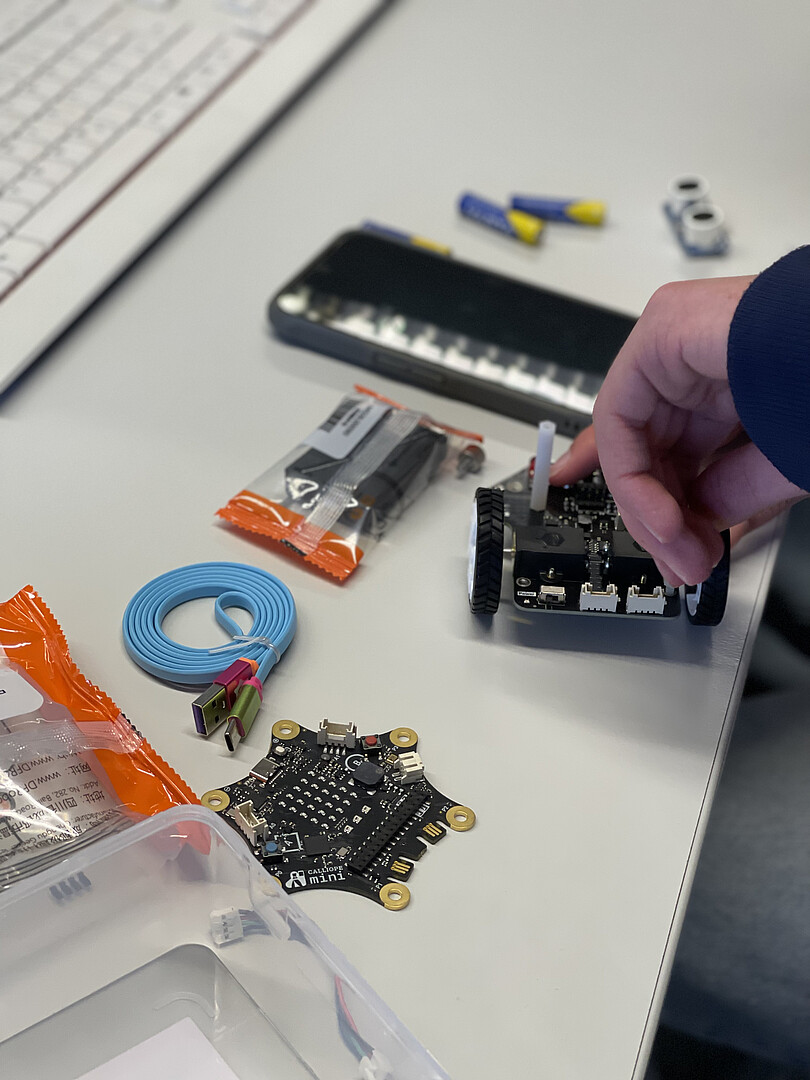
The Calliope mini 3 then became the central learning tool. With its sensors, the LED matrix and the loudspeaker, which was particularly popular with all the pupils, it offered numerous opportunities to make program code directly tangible.
Calliope mini is a small, programmable microcontroller that has been specially developed for educational purposes - primarily for use in schools to teach children and young people about programming and the basics of computer science in a fun way.
The Calliope mini has various sensors (e.g. temperature, brightness and motion sensors), an LED matrix, two programmable buttons, a loudspeaker and a Bluetooth interface. It can be programmed using simple programming languages such as MakeCode (block or JavaScript editor) or Python.
The Calliope mini is an open source project and is developed in Germany. It is particularly popular because it can be used without prior knowledge and enables many creative projects - from simple games to more complex applications with external sensors.
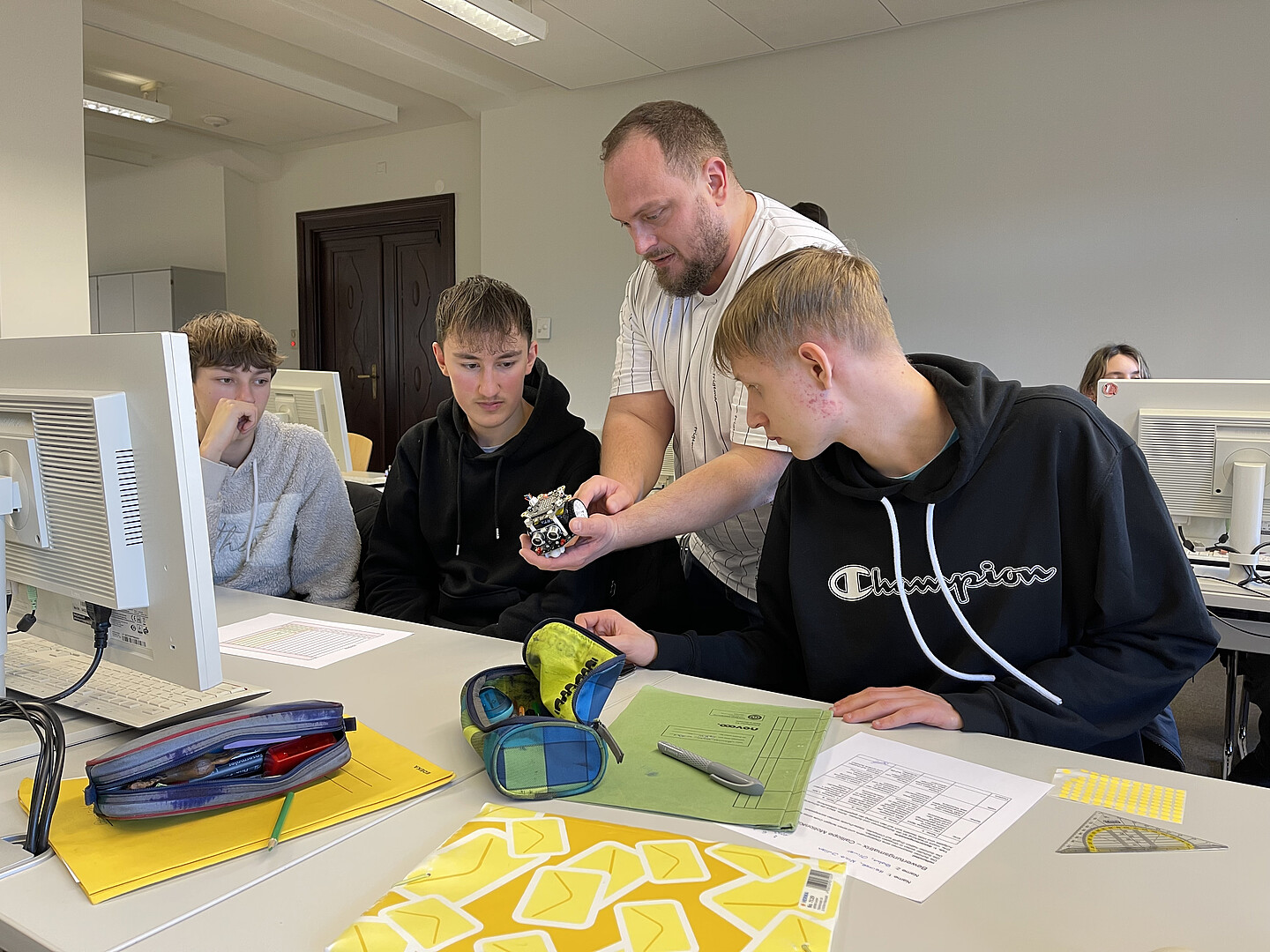
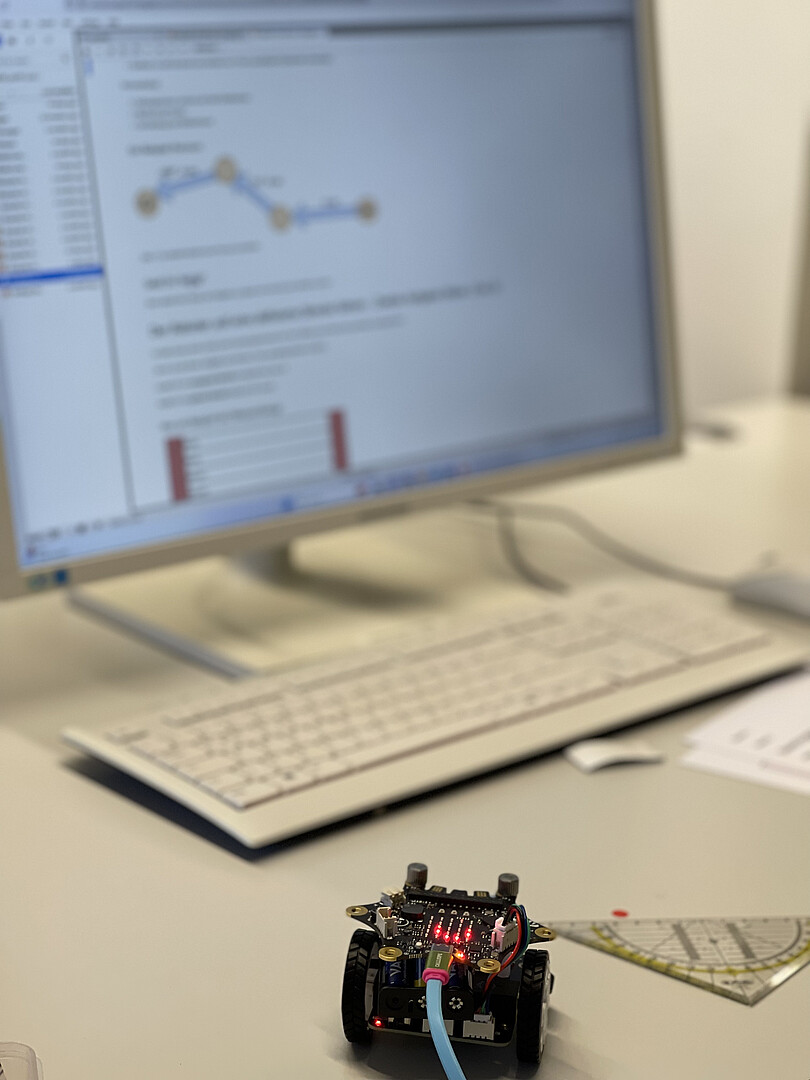
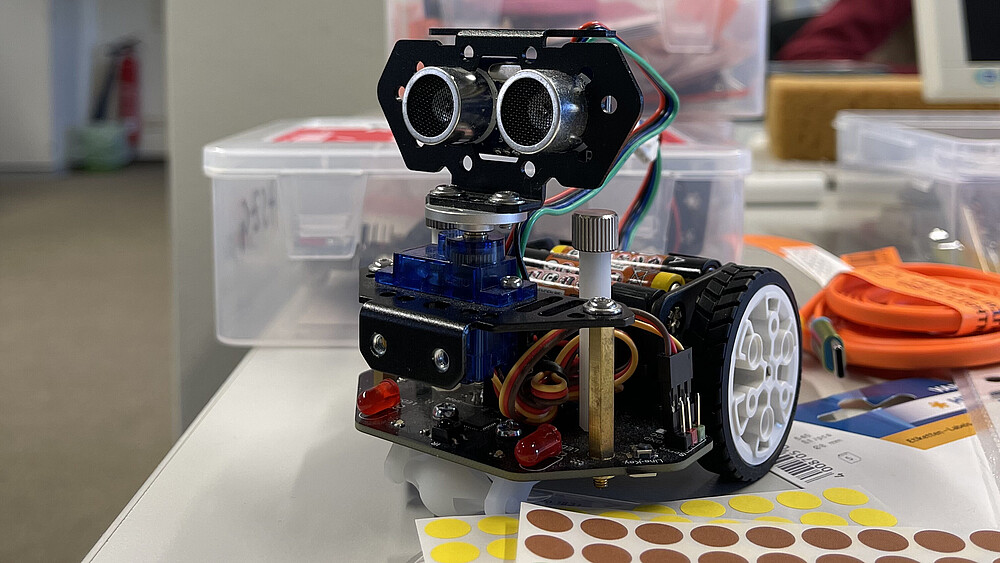
Once the basics had been learned, the next step followed last December: expanding the Calliope mini with the Motion Kit. First on the program was the mechanical assembly, in which the students assembled their robots independently and developed a better understanding of the hardware. A course was then designed, the course of which was determined by a self-programmed random generator.
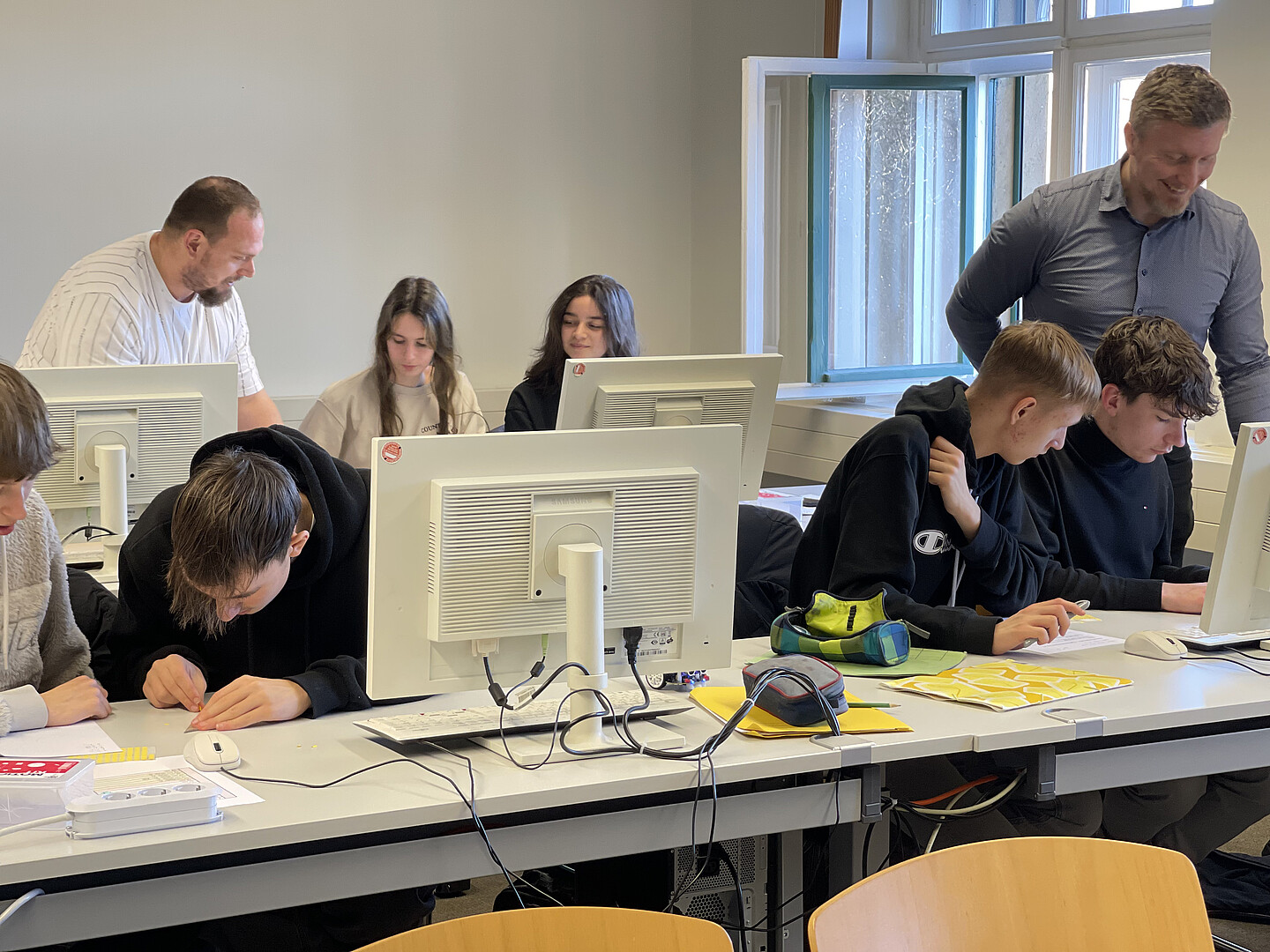
The course was mapped directly on the work tables using sticky dots. In order to implement the routes correctly, a set square, a sense of proportion and spatial imagination were required. The robots were programmed to cover certain distances as accurately as possible. At the end of the degree, the robots had to complete the entire course autonomously and optimize the programs step by step.
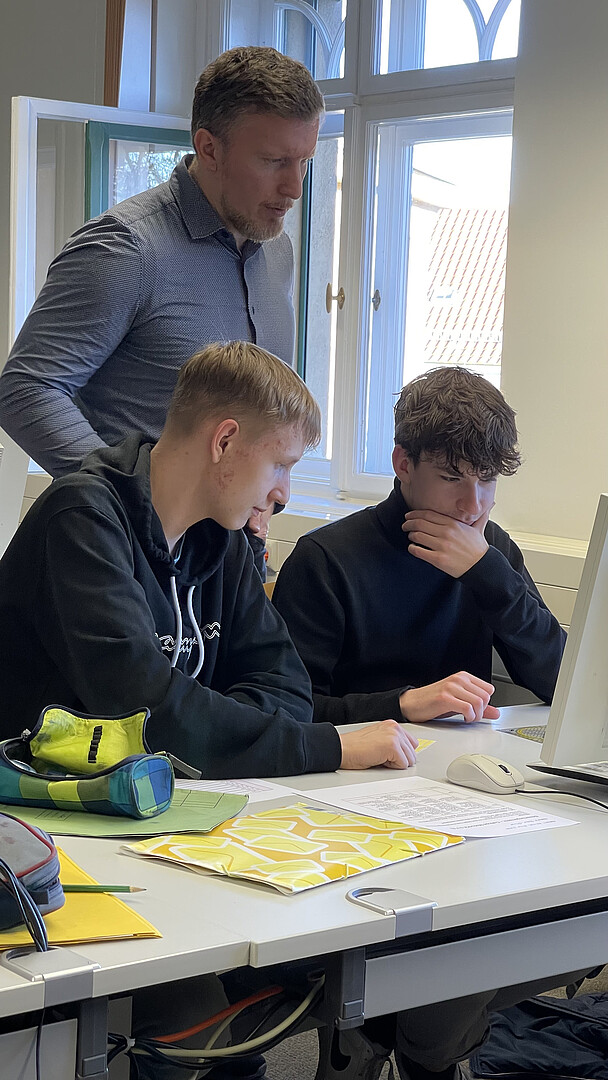
The students worked in small groups, supporting each other, analyzing mistakes and discussing solution strategies. Two teachers from the faculty accompanied the course and provided expert advice. There was great enthusiasm when the robots successfully mastered their first course. Laughter, cheers and proud faces included.
A special highlight awaited the participants in January: the use of robot dogs. The aim is for the students to develop a deeper understanding of sensor-based control and learn how complex systems perceive and react to their environment. Course tasks are used to illustrate how sensors, actuators and software interact and the challenges that arise when programming autonomous systems.
The modular profile lessons impressively demonstrate that programming is much more than just writing code. Teamwork, creativity and perseverance are just as important as technical understanding. The combination of Python, Jupyter notebooks and practical robotics projects inspires pupils. It also provides a solid foundation for future academic and professional paths in the STEM field.
The term "MINT" is an acronym formed from "mathematics, computer science, natural sciences, technology". It is used to designate both teaching and study subjects as well as professions in these fields. The MINT sector is the central economic innovation sector.