A look back at the Winter School "AI & HR" 2025
Author: Sebastian Benad
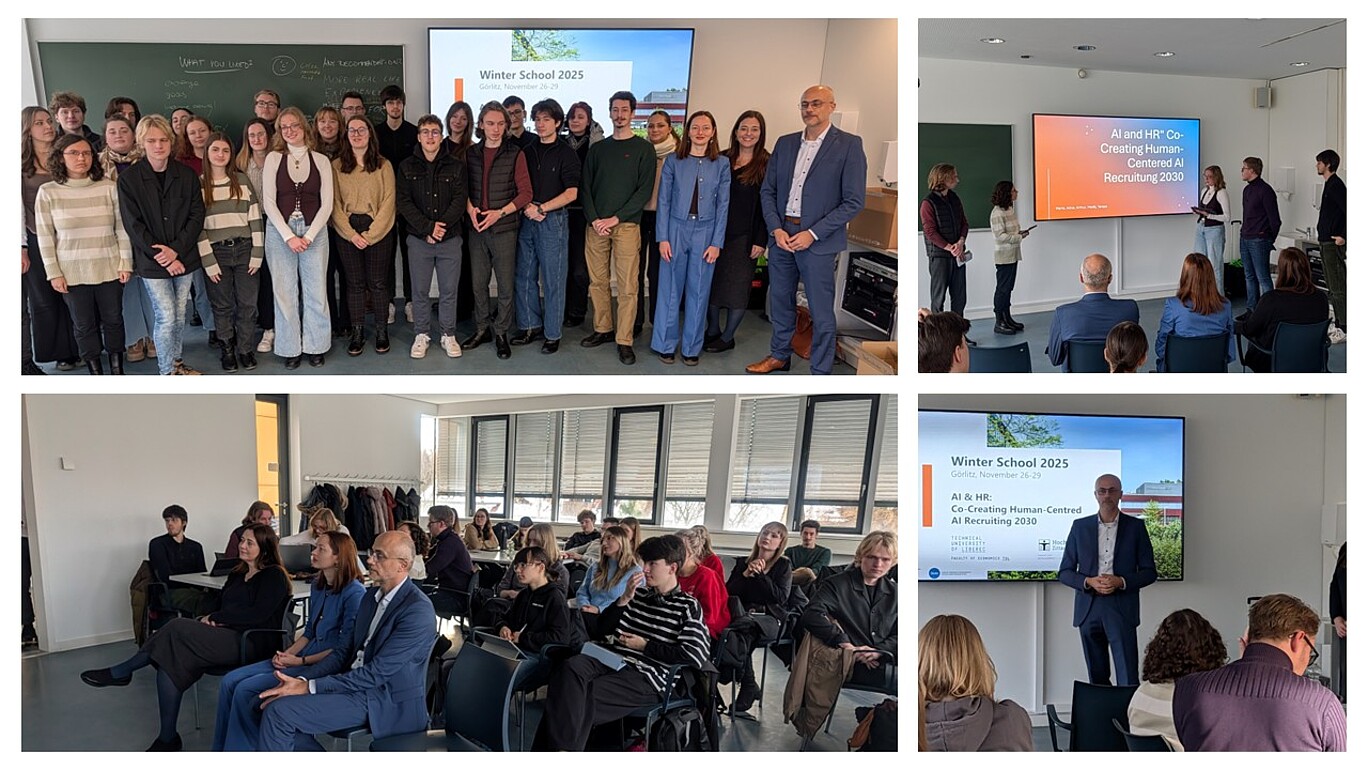
How much artificial intelligence can an application process tolerate - without losing the human element? This question was the focus of the "AI & HR" Winter School, which took place at Zittau/Görlitz University of Applied Sciences (HSZG) at the end of November. Together with the Technical University of Liberec (TUL), students spent three days working in international teams on concepts for fair and sustainable recruiting in the year 2030+. It quickly became clear that good ideas don't just come from facts - but above all from good cooperation.
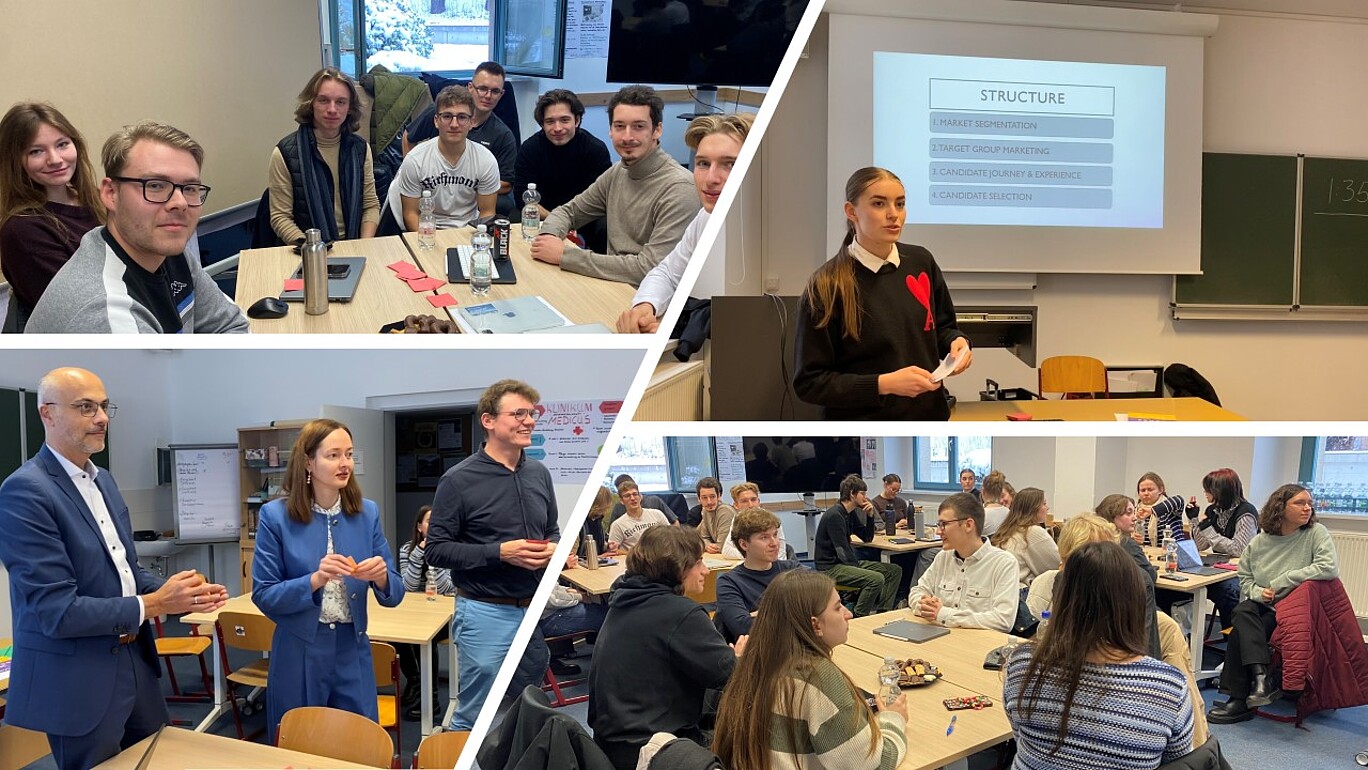
The Winter School was deliberately designed differently. No long lectures, no rigid tasks - instead an open learning format with a clear structure, but plenty of room for personal responsibility.
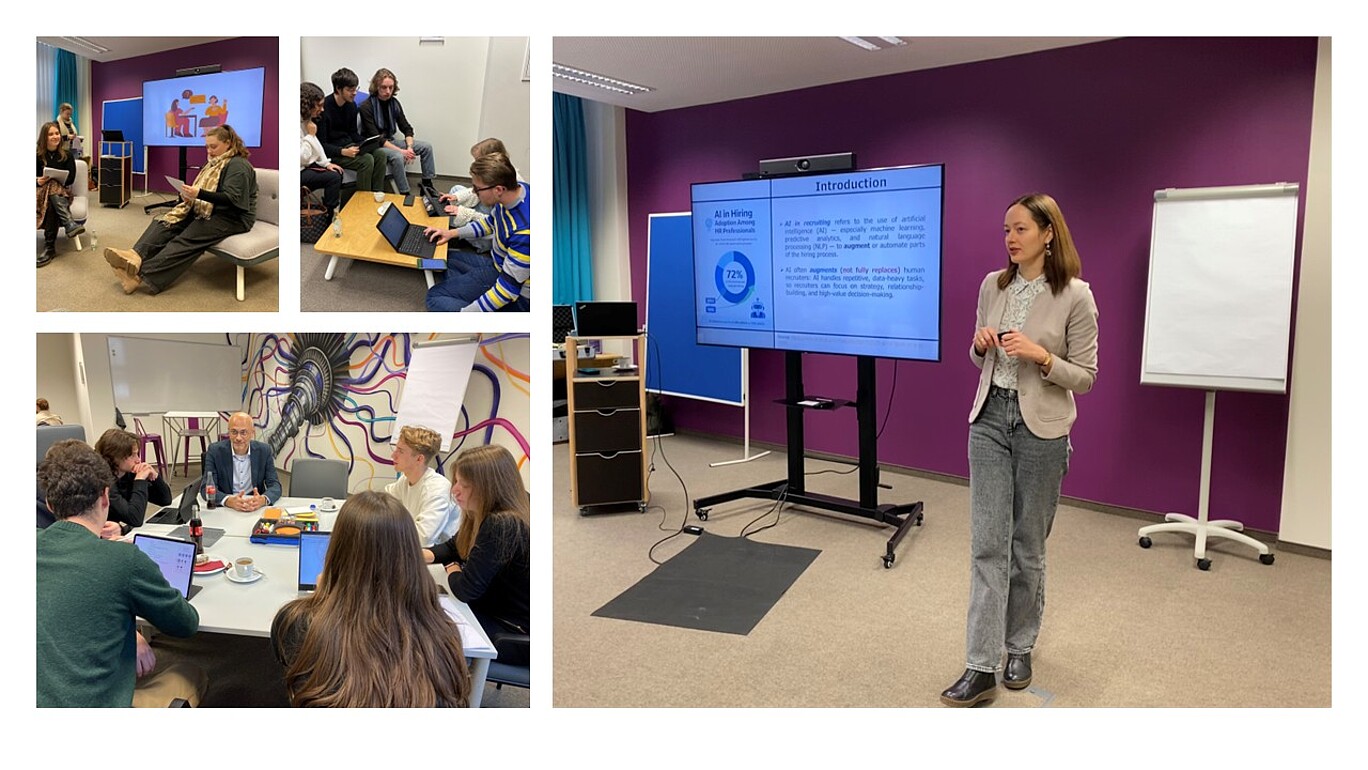
Falk Maiwald and Sebastian Benad kicked things off with team-building formats such as interviews, mission pitches and group tasks. Anastasiia Mazurchenko, Ph.D., Assistant Professor, TU Liberec, provided expert input on artificial intelligence in recruiting, supplemented by student contributions on the recruiting process and personnel selection from Magdalena, Lilly, Pia and Kim. The impulses provided a direction - the path was developed by the teams themselves.
They worked with the Candidate Journey, Empathy Mapping and the Candidate Value Proposition Canvas to evaluate AI touchpoints, among other things. A central challenge: a good reason had to be given for every use of AI - and it also had to be made clear where human interaction remains indispensable.
The workshops took place in modern workspaces on the Görlitz campus and in Siemens Energy's Business & Event Zone - a change of perspective that made professionalism and practical relevance tangible. At the end, the teams presented five well thought-out digital posters and pitches that not only showed the interplay of the candidate journey and recruiting process with AI and human touchpoints, but also brought team performance, creativity and ethical reflection to life.

A special feature of the Winter School was the intercultural cooperation. Students from the HSZG and TU Liberec worked in mixed teams - linguistically flexible, culturally open and with a common goal: to develop a convincing, human-centered recruiting solution.
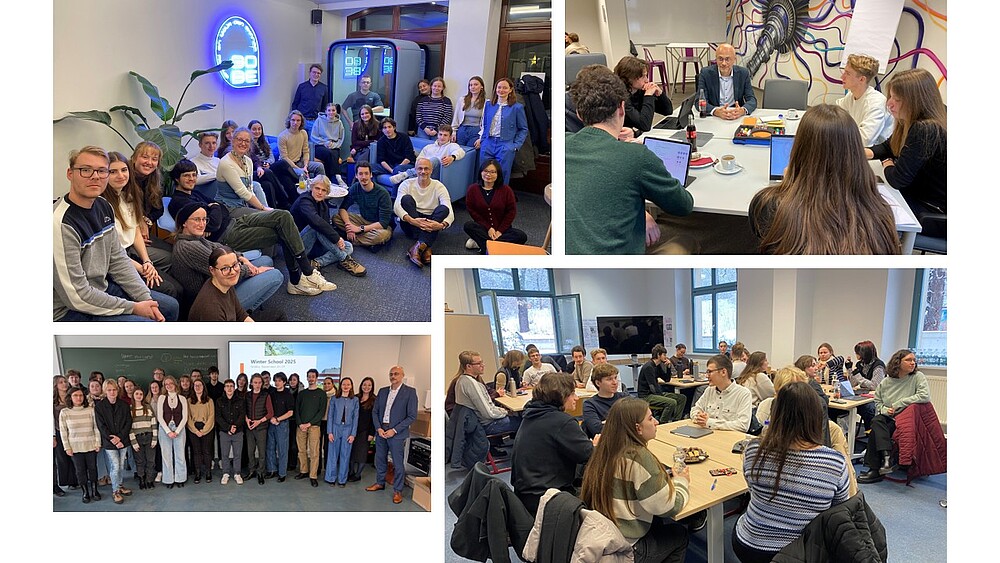
The introduction was facilitated by formats such as speed interviews, team missions and mini-pitches. This quickly turned uncertainty into curiosity and collaboration. The Intercultural Evening at the "Go Be" in Görlitz, which was organized by the WTb23 student class and supported by Prof. Dr. Martina Zschocke, was particularly successful. In a relaxed atmosphere, not only friendships were formed here, but also the necessary team spirit for the working days ahead.
The feedback from the colleagues from Liberec underlined this: they were impressed by the openness and commitment of all participants - a strong signal of interculturality in action and an important contribution to the Faculty's strategic goal of firmly anchoring European cooperation in everyday university life.
What remains after three intensive days? A clear message: artificial intelligence needs people.
It became clear in all teams that the use of AI in recruiting cannot be viewed in isolation. Technology can only provide meaningful support if empathy, transparency and human judgment are retained. The students developed well thought-out concepts with AI-supported processes in which human touchpoints were deliberately retained - for example in the final interview or when providing critical feedback.
The ethical risks - for example in relation to bias, data protection or over-automation - were also discussed in depth. Each team developed its own trust factors, including clear disclosure of the use of AI, human control over decisions and options for challenging algorithmic assessments.
The Winter School was also a logistical tour de force for the organizers. Thanks to the dedicated support of Anne Tischer and Gregor Hummel as well as the photographic support of Thi from WGm25, the event not only ran smoothly, but was also documented and communicated.
What remains?
The Winter School "AI & HR" has shown how central goals of the F-MK faculty can be realized in teaching: Interdisciplinarity, practical relevance, innovative strength and inclusion.
It created spaces in which students could grow - professionally, personally and culturally.
It was clear to everyone involved: this is how future education works.