Report on the event on January 23, 2026, at the HSZG
Report by Melanie Müller
Der zweite PrThe second production day took place at Zittau Görlitz University of Applied Sciences for the young people involved in the project. As part of their project studies, social work students prepared a supporting program on regional structural change. The aim of the day was to introduce the young people to the effects of regional structural change and to encourage them to discuss their interests, wishes and demands.
A short warm-up exercise helped the young people get to know each other and the social work students. Through targeted questions, the participants were able to express their views on topics such as shaping the future and working methods.
Afterwards, participants were given an insight into student life through a campus tour. They were introduced to the courses offered by the university and its facilities. The lecture hall and library in particular left a lasting impression on the young people.
After a short break, the social work students gave a presentation on important aspects of regional structural change in the border triangle. It was striking that the participants had previously had little contact with the topic of structural change, but they were able to empathize with the effects and share their own impressions. Almost all participants reported a lack of opportunities and places to spend time in the area and discussed the increasing isolation caused by digital media. An important part of the presentation was youth participation. The young people were aware of only a few opportunities to make their voices heard and get involved. This is where the Youth Vision Action project comes in.
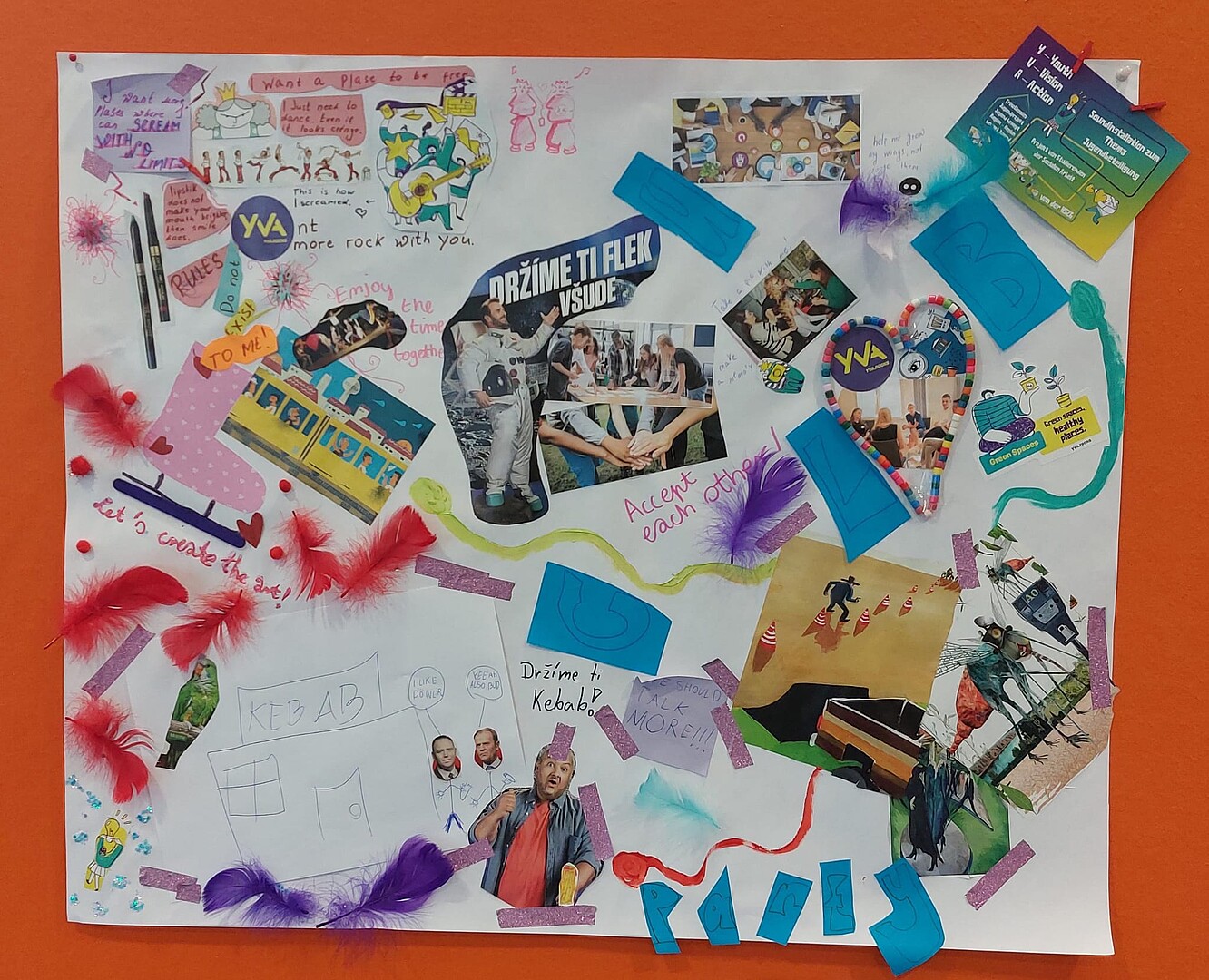
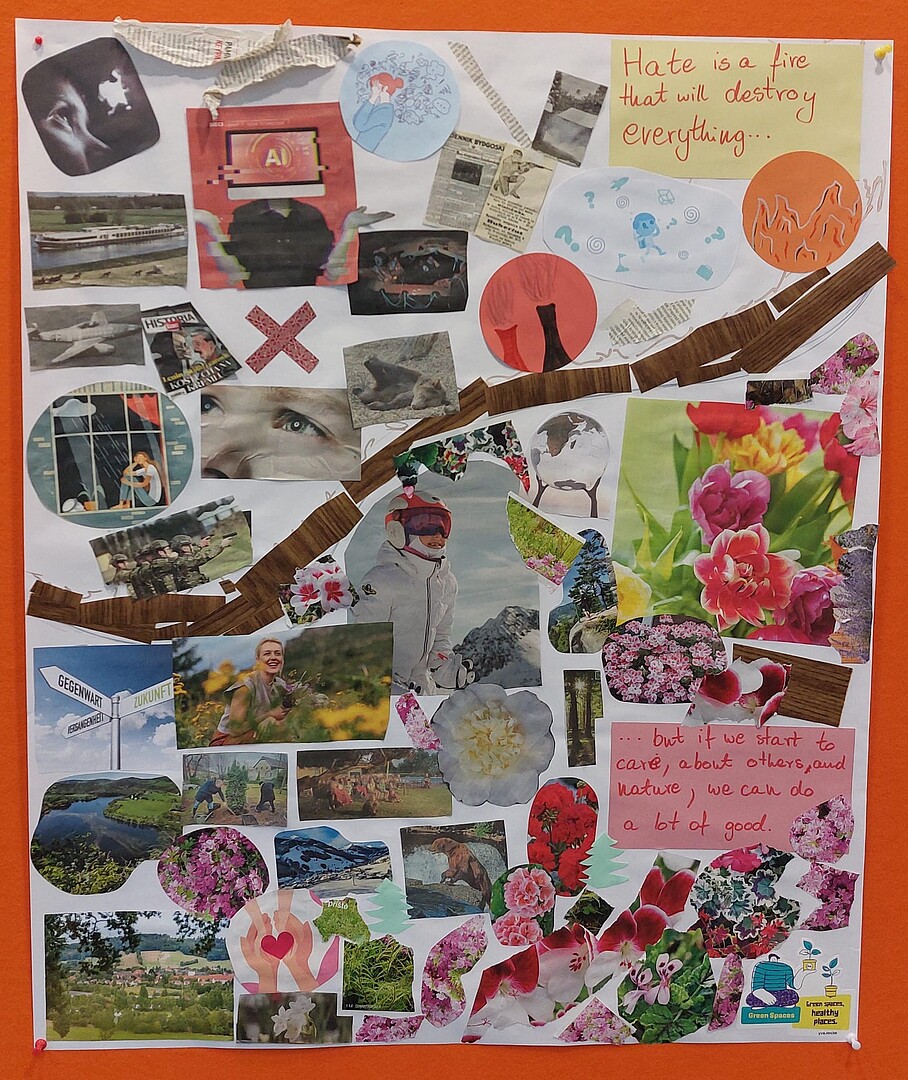
In order to identify existing points of contact with regional structural change and to engage in a more detailed exchange of interests, wishes and demands, the participants were able to create collages in a group work session. Two groups were formed to focus on different topics. One group created a collage in which they recorded their fears and demands regarding the future of the region. The topics of environmental protection and diversity were particularly prominent. The other group's collage dealt with the topic of youth participation. Here, the demand for places to spend time outside of school and family life became clear. Young people want places where they can interact with their peers and develop their creativity. The results were proudly presented and stimulated discussion. They will subsequently be displayed at the university.
It became clear that goals can be achieved when people work, communicate and live together, whether in terms of regional structural change or in their private lives.
At the end of the day, the activities were evaluated and the young people enjoyed a well-deserved lunch in the cafeteria.