In the project work of the "Public Health" module, the healthcare managers work out ways to prevent illness - with practical tips and tricks for you at home!
Oh, now the semester is over again. Some say "thank goodness", others wonder where the time has gone. Can you still remember? In my first article, we thought together about how the new semester would go and what hybrid teaching was all about. We listened to the opinions of lecturers and students from our degree program and philosophized together about solutions and approaches. The projects in the classes were still in the starting blocks and the topics to be researched had already been decided. But what the outcome would be was still written in the stars (at least for the students). The exams were still a long way off, so there was no need to stress. "This time I'm really going to start studying one hundred percent earlier." - Only to then start again 3 days beforehand, absolutely panicking, falling asleep with the books under the pillow the night before the invigilated (written) examination and then just hoping that it will somehow be enough. For me, time has really flown by and I would like to look back with you - how did the semester go? What were the opportunities, what were the challenges? But I don't just want to look at the past - let's also look to the future together. What can we learn from the past for the future? In this article, I will give you an insight into all these questions. Have fun reading!
The hybrid semester is behind us and face-to-face teaching was actually maintained until mid-December. In my opinion, that alone is a huge achievement by everyone at the university, because it was only possible because everyone adhered to the guidelines (even if they were sometimes hanging out of our ears). Many seminars were therefore held in person, which in my opinion is a great advantage. It's often easier to create a group dynamic in presence and to be creative together. But what do other students on our course think? How did the semester go in their eyes and what conclusions would they draw? I asked Susi, a fifth semester student, and Steffi, a third semester student, about this and much more.
I already introduced her to you in the first blog article: Stefanie, a full-time student on the health care management course - and a full-time mom. She found online teaching particularly positive, as it meant she had plenty of time for her family alongside her studies. But there are two sides to the coin: However, as she changed classes due to her pregnancy, it was difficult to make new contacts due to these same online classes on the other side. Let's keep our fingers crossed that this will be made up for as soon as possible next semester, when hopefully a lot of face-to-face teaching can take place again!
However, the most interesting thing for Steffi personally was the project in Public Health:
"A self-experiment lasting several weeks took place there. The task was to find a preventative measure to minimize stress and promote health. It was a lot of fun and helped me to reflect on my own lifestyle and make certain changes to my everyday life that have a positive effect on my body and mind."
Sounds exciting? Find out more about the project below!
Susi, a student in her 5th semester, also answered my questions. She felt that the fact that face-to-face teaching was maintained for so long despite the high number of cases in the district was an unpleasant part of the past hybrid semester. She also feels that the technical skills of some lecturers could be improved. Nevertheless, she can draw a positive conclusion:
"I thought it was good that they always tried to find solutions and compromises to problems. For example, some lecturers agreed to switch on the camera via BigBlueButton during face-to-face lessons so that the courses could also be held online at the same time."
The many surveys conducted by the Board of Studies also showed her that students' opinions always played a major role in decisions and that solutions were also sought. She also sees the possibility of recording courses as a positive aspect of the hybrid model, so that (...if you want to) you can also do a bit of revision. Looking ahead to the next semester, she would like to see the skills within online teaching developed further. However, she sees the greatest opportunity in the option of offering distance learning courses:
"This could counteract the lack of students and, in my opinion, it would also make the university more attractive."
An interesting idea, don't you think? We'll see what the future brings.
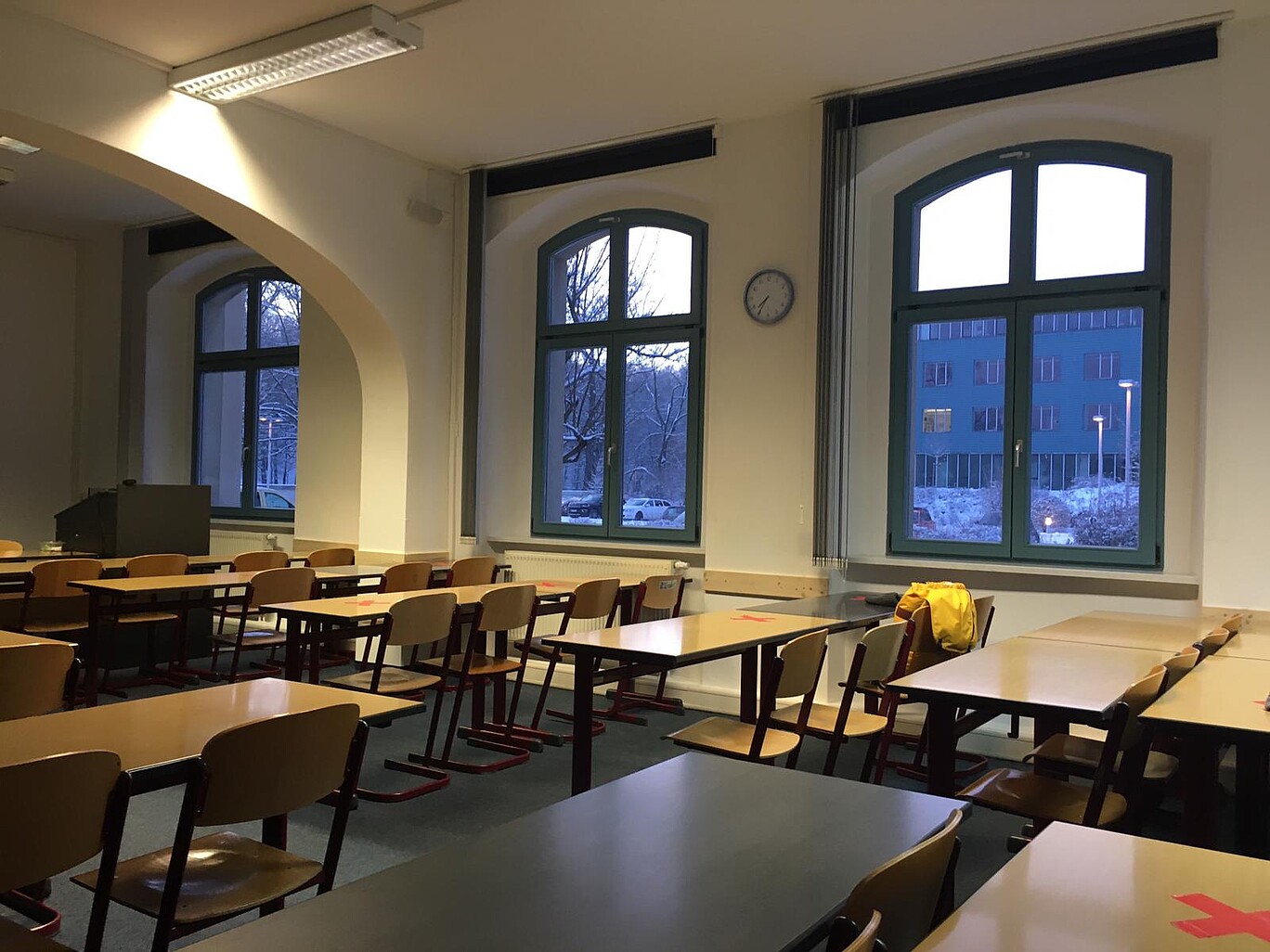
The hybrid winter semester 2020/2021 was also very special and new for the lecturers on our course. At the beginning of the semester, the course director, Prof. Dr. Saatkamp, saw the biggest challenge in instructing the students:
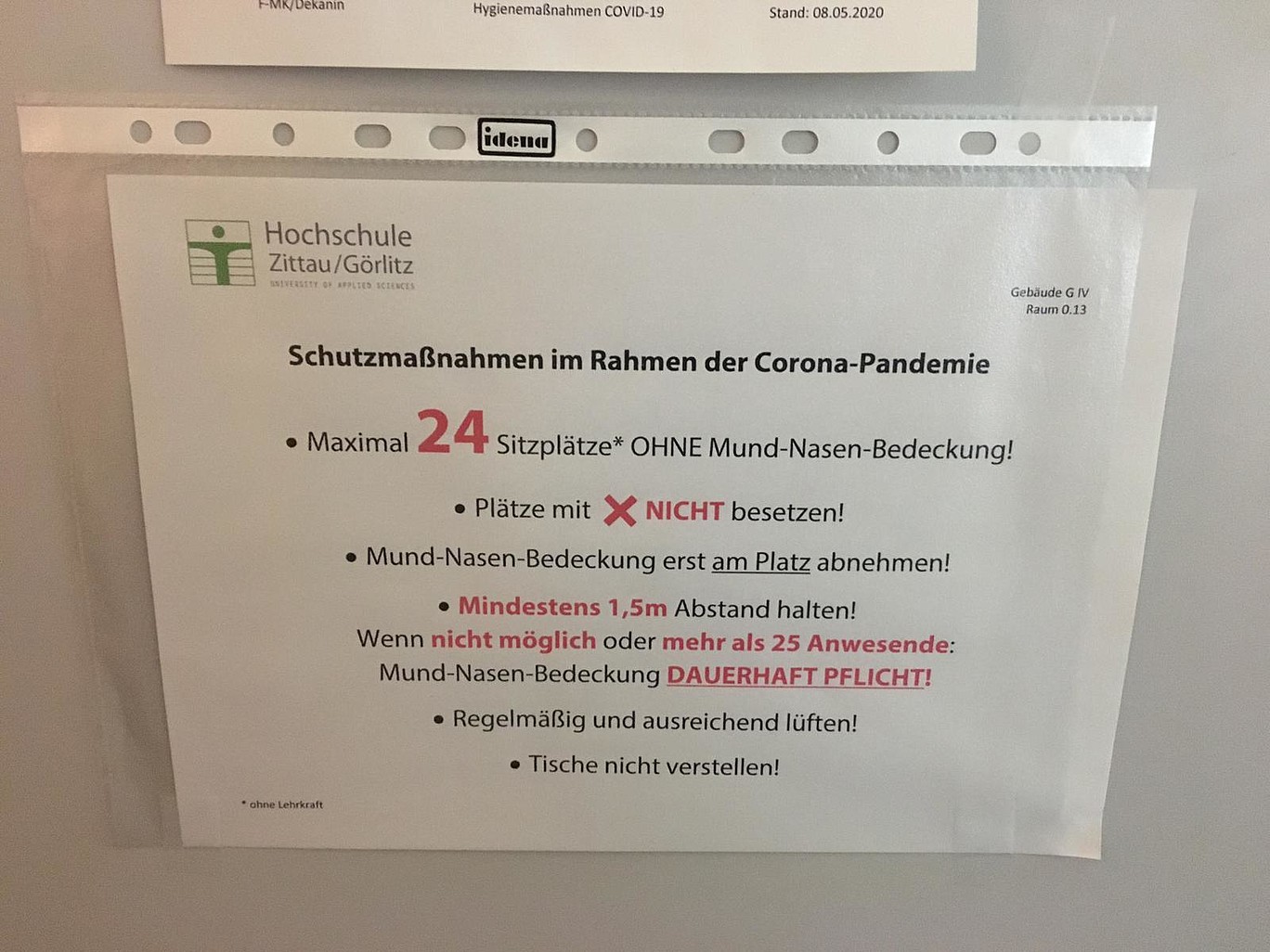
"...that the mask should always be put on as protection for everyone in case of doubt. It should only be taken off if the situation allows it."
In retrospect, however, he was confronted with far more challenges.
"We had to make a new decision every classroom lesson depending on the size of the class and room and think about how we were going to deal with the situation. Can the distance be maintained? Does the mask have to be put on? What about ventilation? And so on. The complicated implementation in every lesson was a big challenge for me. You always felt unsure whether you were doing the right thing."
Overall, he therefore draws a mixed conclusion about the past semester and the organization of hybrid teaching. However, he also saw opportunities in the form of hybrid teaching. Lectures could be recorded and uploaded if a course could not take place on that date. Students could then watch the recording and ask questions afterwards. He would like to continue using this element in the future.
"I also assume that the lecture recordings are useful for the students and have real added value. It gives students the opportunity to watch the recording again, also in terms of exam preparation."
Nevertheless, he prefers to teach in person, for example because of the interaction. Let's keep our fingers crossed that the next semester can take place primarily in person again!
Ms. Wauer, lecturer in health, nursing and medical terminology, was already looking forward to this semester. But did everything really go according to plan or did the teaching format occasionally cause problems? It came as a surprise to her that her lessons were a kind of double hybrid quite early on: not only were lectures and seminars partly face-to-face and partly online. Some of the face-to-face teaching also involved students sitting at the university as well as at home in front of their screens.
"That was a big challenge for me as a lecturer. As soon as you want to interact, it's difficult to address both the people at home and those sitting in the room. I was often unsure whether the technology would work at all and whether I would be understood at home. The mask was also a burden for me, because when I speak with a mask on from 8 a.m. to mid-afternoon every day, I really reach my health limits."
Nevertheless, she can also see many positive aspects of the past semester. For example, the students were often open to attempts to introduce new teaching methods and variety. The willingness to experiment was clearly noticeable. BigBlueButton also made it possible to carry out surveys and small tests every now and then to check whether everything had been understood. The students' understanding when there were problems with the technology etc. was always clearly noticeable. In their eyes, the balance between demands and consideration was rarely as strong as it was this semester.
As I already told you, there were some exciting projects going on this semester. These included the research project for students in the fifth semester on the topic of "innovative care options in inpatient care facilities in response to future changes in resident structures". As I took part in this project myself, I can tell you about it first-hand. Let's go!
Unfortunately, one major problem was the collection of primary data. In other words, it was quite difficult to find interview partners or people for the survey. The situation in the care and healthcare sector is very tense due to the pandemic, which was a major obstacle for us. Nevertheless, we did our best and were able to achieve promising results, as the working method was very disciplined in large parts. If you are interested in this topic, please get in touch with me or Ms. Wauer!
Another project ran this semester in the Public Health module for first-year students. Here, the students dealt with the research question "Health of students in Germany - What preventive measures can be implemented at our university during the pandemic?". In my last article from December 2020 (link can be found below), I already described the main topics of the research paper. In summary, Ms. Wauer could only draw positive conclusions from this project. She was particularly impressed by the determination of the new students:
"The students are at the seahorse stage and have courageously thrown themselves into the water, or rather let me throw them into the water."
The self-experiment is now complete and the results, like the various topics of the projects, are impressive and very diverse. The students will continue the experiment next semester in the "Neurobiology" module and this time evaluate it from a psychological perspective. So it remains exciting!
The semester is over, the projects are all finished, the exams have come to an end and the vacations are just around the corner (...finally). Therefore: Raise your cups! There's nothing left for me to say but to wish you a few relaxing weeks. Take care of yourself and your loved ones and stay safe and sound. May the summer semester 2021 be characterized by lightness and cheerfulness and that we can be together again in presence at the university.
Make the best of it!
Your Annelie Kolumna - roving reporter of the "Health care management" degree program