What you can put off until Tuesday, leave until Friday!
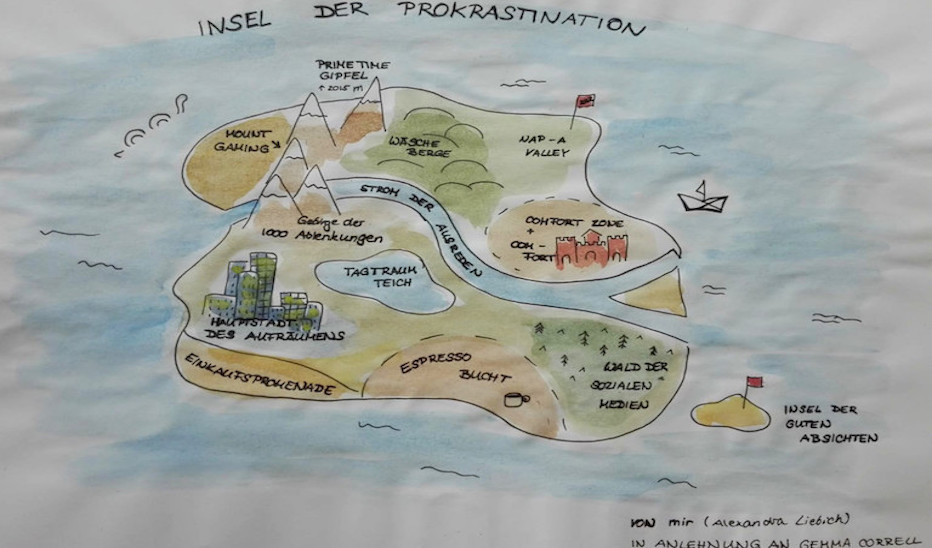
Procrastination is bad. That is common knowledge. Wikipedia also says "[Extreme procrastination] is a pathological disorder characterized by the unnecessary postponement [...] of tasks so that completion is impossible or only possible under pressure. "
Procrastinators don't get anything done, are lazy anyway and always end up watching cat videos. That seems to be the general consensus.
I, Alexandra, am a self-confessed procrastinator and actually feel quite comfortable with it. So I want to find out how we can use procrastination for ourselves and ask my fellow Touri students.
Julia has summed up the so-called "student syndrome" fantastically:
"If I know the exam is coming up in four weeks, it would be totally smart to start studying now. But I don't. Because I think to myself "I still have four weeks, that's enough". And if I only have one week left, I feel guilty but start doing other things, such as cleaning the apartment or sorting things out. Then when there are only five days left until the exam, I panic and actually start studying."
Lisa also says:
"Not that I'm happy about being the world champion in procrastination, but somehow you always manage to get everything done."
That gives us reason to hope, doesn't it? Procrastinating and passing exams at the same time. Admittedly, this also comes with a high level of emotional stress.
I was therefore delighted when I came across John Perry. The Stanford professor shares my opinion that procrastination can be productive and has even written a book about it. "The Art of Procrastination" takes away the guilty conscience of all members of the "I'll really do it tomorrow" faction and at the same time offers the opportunity to distract yourself from more important things.
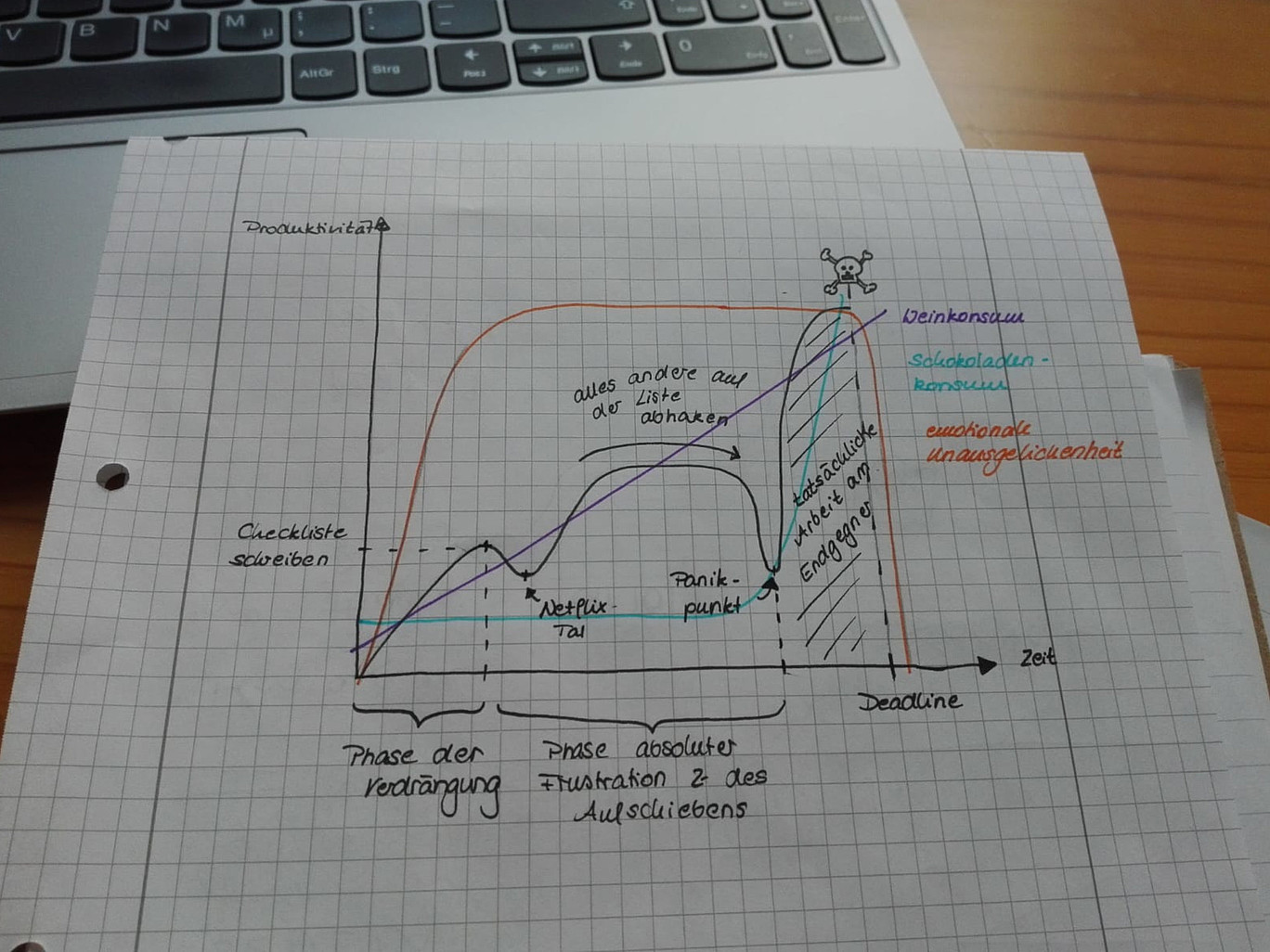
John Perry introduces us to the art of "structured procrastination". This is the principle that Julia already applies automatically: "When I procrastinate, I try to avoid unpleasant tasks. Things that I know I have to do sooner or later, but just don't feel like doing at the moment. Then I try to avoid them. It can actually be beneficial to put things off, then you do all the things you've been putting off."
To all the procrastinators in the world, I recommend combining our common "pathological disorder" with a strong penchant for checklists. Here's how it works for me:
Now you have 2 options:
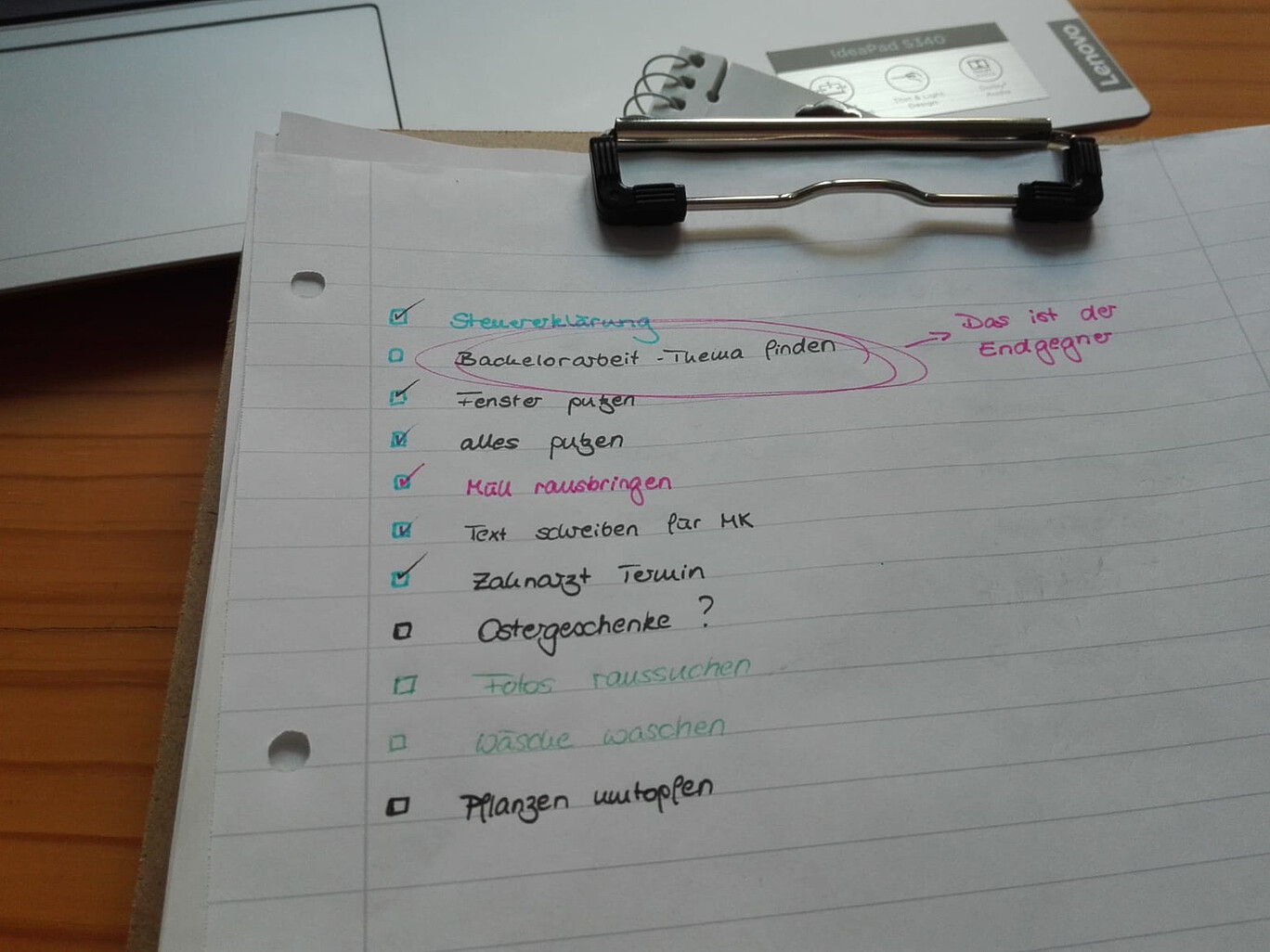
And that's a good way to get through the exam period. To make the next exam period a little sweeter, we have collected a few tips and tricks here.
In general, social media and Netflix are the enemy of every procrastinator. The only thing that usually helps is uninstalling it. Sophia has found out for herself:
"I can study most productively early, between 8.00 and 11.00 am. That's when I'm more focused and complete tasks that I know will be more difficult for me. But then I can put a tick in the box. [...] I'm also the kind of person who likes to procrastinate by cleaning or tidying. If I don't feel comfortable in the room I'm studying in, then I have to change that first. That's why I always rearrange my desk at exam time."
Lucy, on the other hand, tries to avoid procrastination by writing herself a study plan. It's perfectly fine not to study all the time. It is sometimes much more effective to concentrate on your work for a while and then do something completely different. Lucy says
"During the exam period, I met up with friends for coffee almost every day and we always found a reason to distract ourselves."
Even this distraction can be very productive! Sophia likes to meet up with friends to study
"Even if it's just to ask each other questions on a walk. Because whenever you have to explain something, you internalize it better. I think it's really important to discuss things with fellow students or to study together to make each other aware of gaps. It's also good to combine this with drinking coffee, cooking or going for a walk. It's not procrastination that leads nowhere."
Congratulations to you! You managed to read this text to the end and probably distracted yourself from more important things. So I hope it was able to help you a little or at least give you a good conscience.
Best wishes from self-proclaimed procrastination pro Alexandra
Do you need support with your studies? Click here for the counseling services of the HSZG
https://www.hszg.de/studium/dein-weg-durchs-studium/beratungsangebote