Students learn first-hand how events will be planned in the future
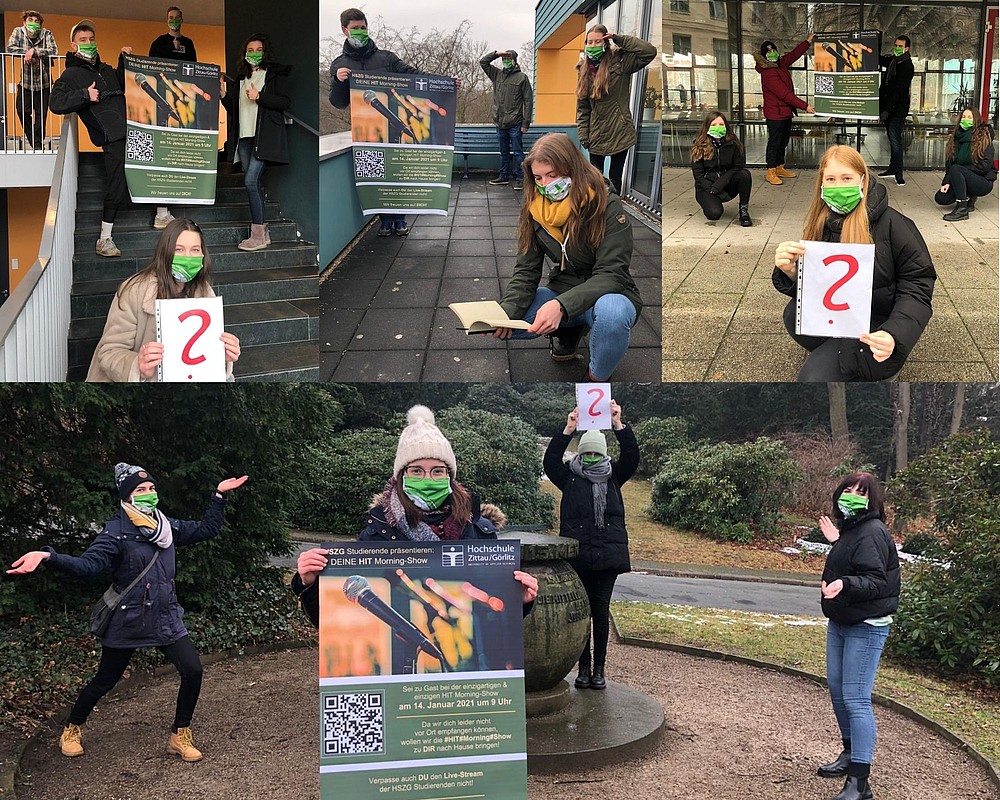
When I decided to take the elective module Event Management, the thought of a virus that would stop us from traveling and partying in the future was still a long way off. Like my fellow students, I was interested in how to professionally plan and organize a great event. Nevertheless - now we have the salad... or rather the virus and have to make the best of it. This makes the module all the more exciting, I thought to myself. After all, we should now take the opportunity to learn how to plan an event in a crisis-ridden, difficult situation. Anyone can do that under normal circumstances.
The module plan was adapted not so long ago to offer students the ideal mix of theory and practical teaching. At the beginning of the semester, the event managers are supposed to learn the theory and basics of the event industry in workshops they have developed themselves. In the weekly seminars, we taught each other the most important things about event planning, from the choice of location, technical equipment, catering and advertising to safety precautions and legal conditions. For the second time, a practical part of the module was that the entire course would be involved in the main idea and implementation of the annual university information day in January.
Based on the principle: "You paid attention in class? Good, then prove that you understood it!"
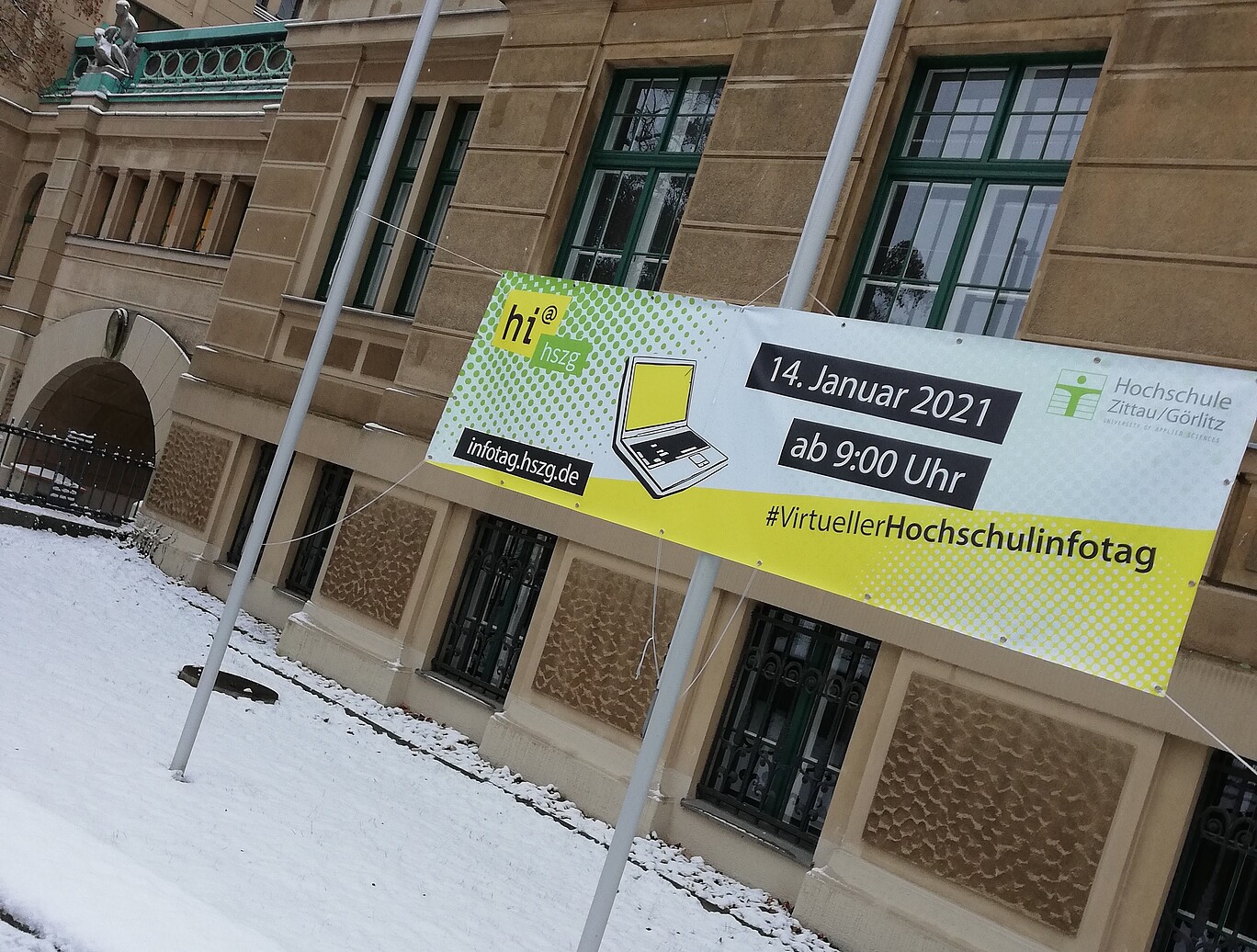
The goal was clear. A super interesting university information day (HIT for short) and a creative opening event, also known as a kick-off, to get as many prospective students as possible interested in the HSZG. All right. And where do you start?
Admittedly, all beginnings are difficult. It took us a while to really get the planning rolling. We formed smaller groups with different tasks, such as the technical team, a marketing team, a team that would be solely responsible for communicating with participating students and professors and - not to forget - a hygiene team!
In mid-October, we were still assuming that we would organize the HIT on campus as in previous years. However, due to various government regulations, we also planned to broadcast our event on the internet for all those who would not be on site. Organizing all of our tasks and responsibilities was sometimes more and sometimes less easy. In hour-long meetings, we often encountered frustration and despair. Over the weeks, we tinkered with our HIT concept step by step until we finally came up with the basic idea, which was as follows:
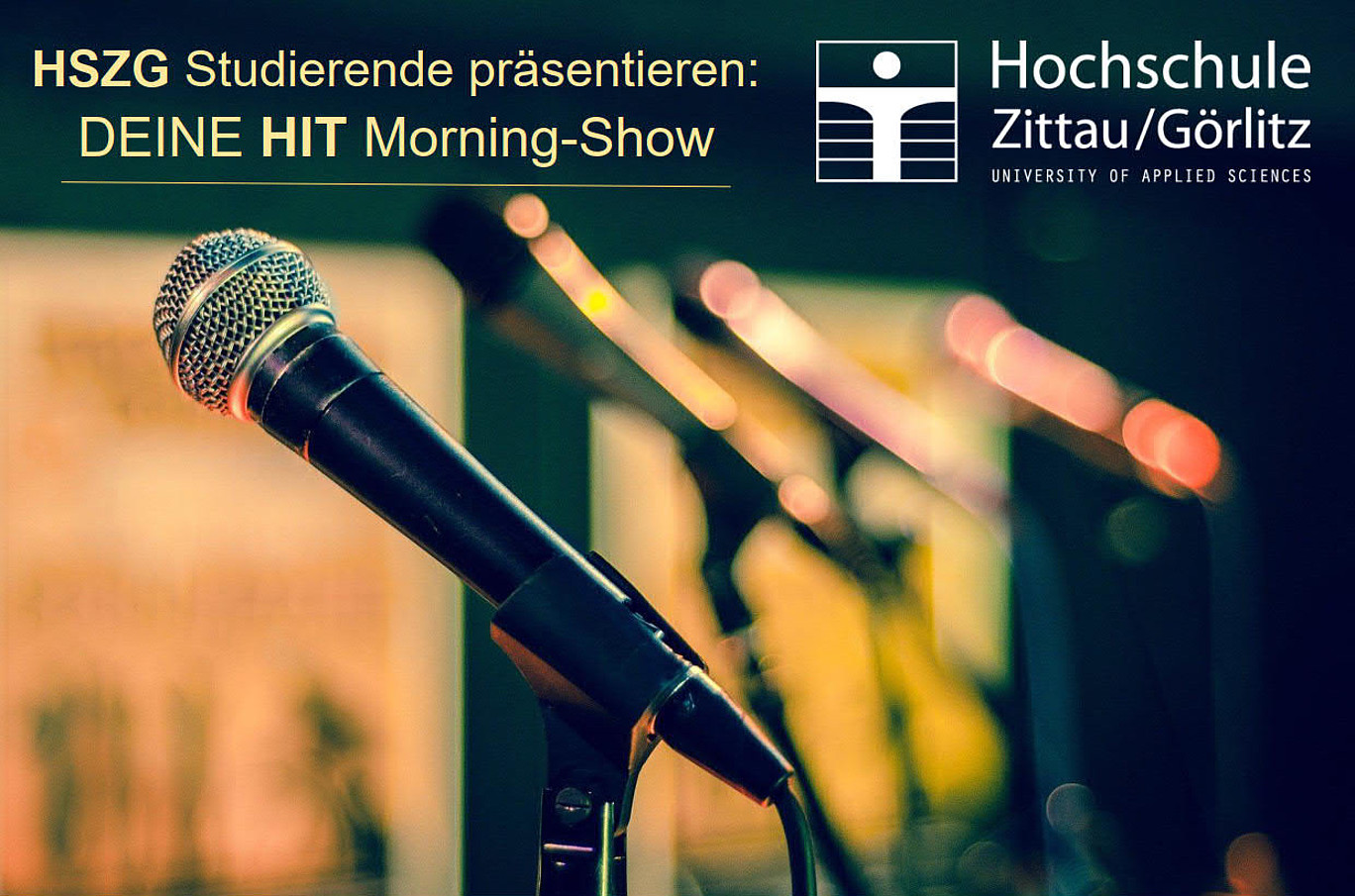
Students present: "Your HIT Morning Show"
We wanted to give our kick-off the flair of a well-known format from television, a morning show. Usually, celebrities and guests are invited to talk shop about current topics. So much for the plan.
Sometime at the beginning of December, when we had already planned and organized the basics, the announcement finally came that we had been expecting for a long time:
The HIT will be held entirely online, there will be no visitors on campus!
Well, at least we didn't have to start from scratch, as we had already prepared a lot for an online event.
The "main attraction" of the HIT, our morning show, would at least take place on campus and be broadcast via cameras and live stream for all viewers.
After about 3 months of planning, during which we changed the concept three times, had numerous discussions and lost a nerve or two, the time had finally come - we were live!
Spotlights on, cameras on the presenter, music off and ... we're live!
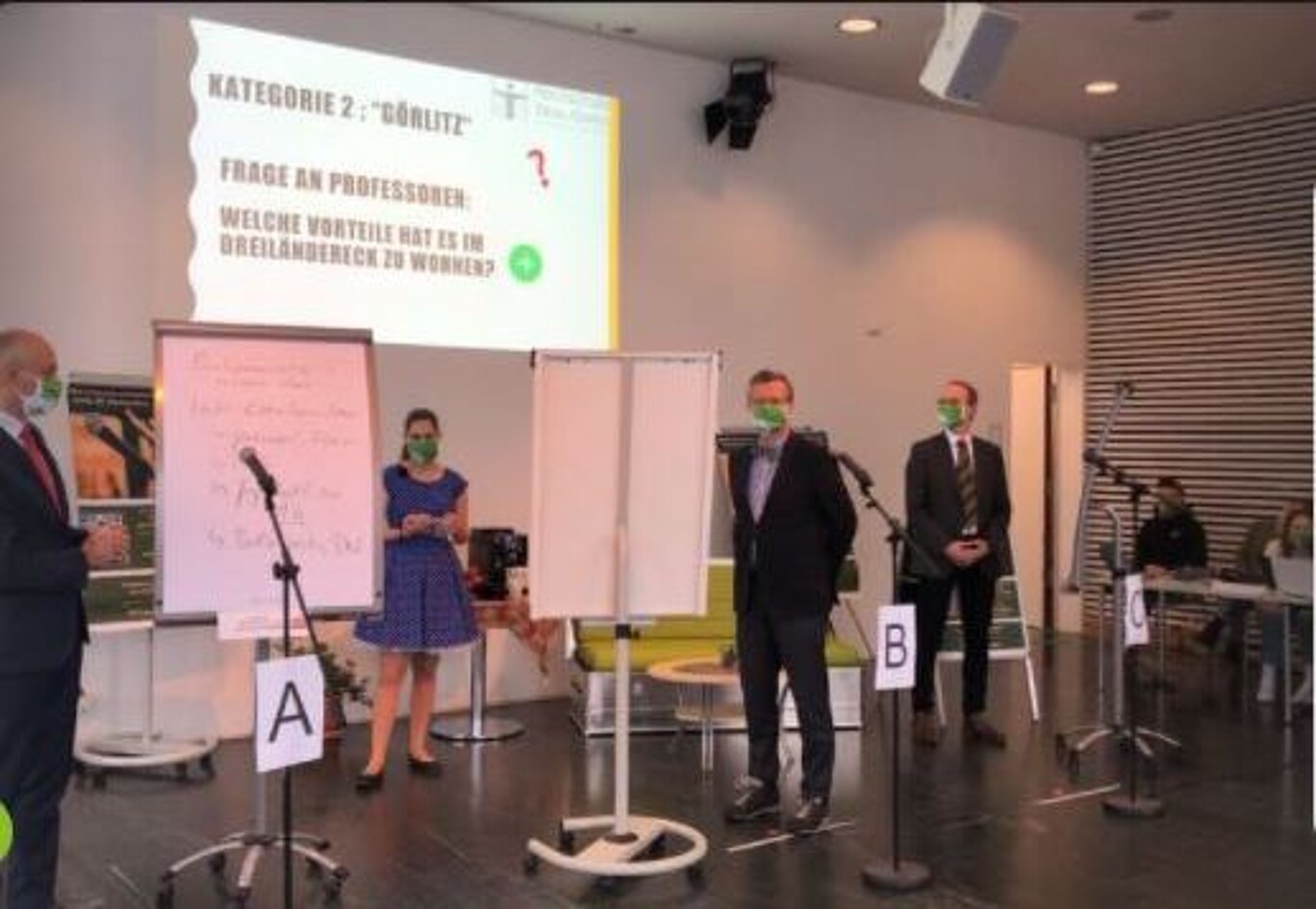
Our celebrities, i.e. professors and students representing each faculty, took turns in front of the camera and answered the presenter's questions about the university and Görlitz. Viewers were able to vote via the live stream to see which guest gave the most creative answer.
The show is going well and we are pleased to have more than 100 live viewers - a complete success!
What nobody sees: behind the camera, everything is planned down to the smallest detail, even down to the second. In one corner, signs are held up for the presenter, the camerawoman swivels the device around as the next guest enters the spotlight, another student clicks to the next PowerPoint slide, while our director watches the stopwatch and waves hand signals to the show participants... and all under the critical observation of our hygiene officer!
After the kick-off, some of us event managers were still busy looking after online chat rooms to inform visitors or assisting with the rest of the taster lectures.
At the end of the day, we are not only very proud of a good HIT, we are honestly also very proud of it.
About 2 weeks later, we event managers met again in the course and evaluated the university day in a de-briefing. We discussed what went well and what didn't and, above all, recorded tips and suggestions for improvement for future planners.
All in all, this module not only taught us how to plan an event, but also how not to be put off by critical circumstances and how to get the best out of the situation.
We learned how to react to (more or less) unforeseen changes, how to improvise and reschedule. We now know how much blood, sweat and tears... okay, a bit of an exaggeration - but how much effort and detail goes into planning a special event.
We were reminded again that communication with each other is the most important thing and that good cooperation can make great events happen, even in the current times.