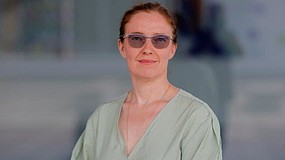
Carolin Renner spent an Erasmus semester abroad in Finland as part of her culture and management studies. Here she talks about her experiences.
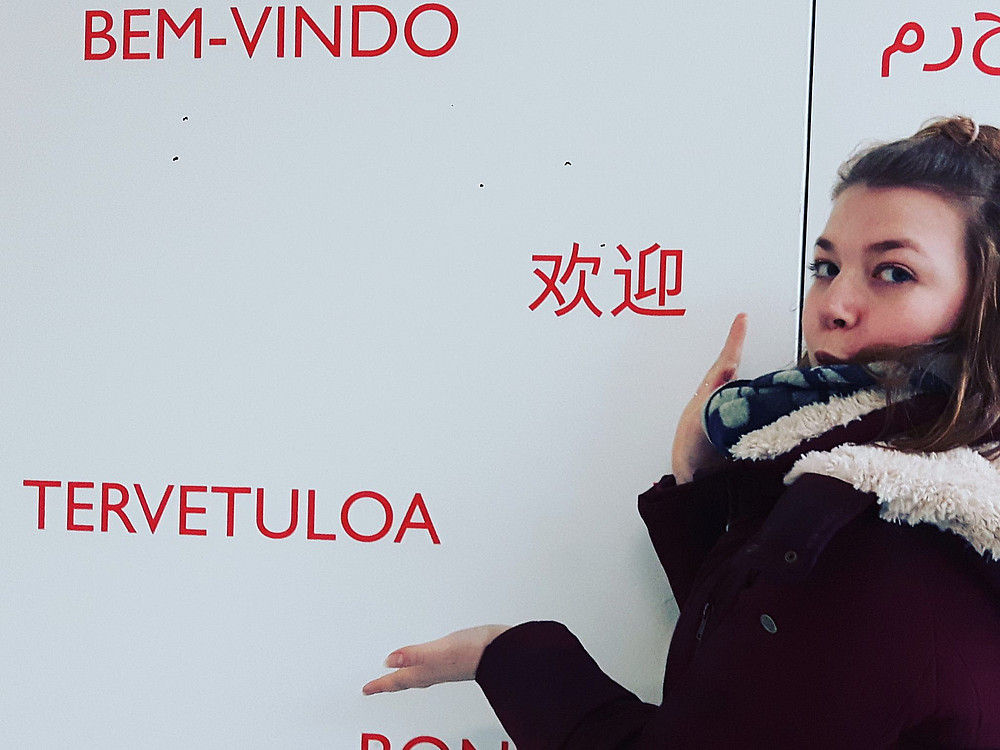
Author: Salimato Timm
Caro is now in her first Master's semester studying management of social change at the HSZG. However, she did her Bachelor's degree in culture and management at our faculty. Students on this course are required to spend their third semester abroad. Caro tells me why she chose Finland, what experiences she had and what motivated her to do her internship there too.
She spent her semester abroad at the Humanistinen ammattikorkeakoulu (Humak) in Jyväskylä, a student city in central Finland. She told me that the long and very complicated-looking name of the university can be translated as "Humanist University". Like the Zittau/Görlitz University of Applied Sciences, you can study culture and management here.
"I didn't think too much about where I actually wanted to go. I just thought that I wanted to get a bit further away from home. That's why I ruled out all of Germany's neighboring countries and because I like winter so much and think snow is great, I really wanted to go to one of the Nordic countries. Then I thought to myself: maybe I'll go to a country that people haven't heard so much about. Finland and the courses at Humak sounded interesting and there was also a bit of a thirst for adventure."

Caro applied for her semester abroad, which started in September, in December, as the Erasmus semester requires a lot of lead time for the organization. However, thanks to the very good support from the International Office , this was not difficult at all.
During her study visit, it was not difficult for Caro to find accommodation, as the Finnish university took care of this. She therefore lived in an apartment with four other Germans who had also come to Finland as Erasmus students.
Caro only had four modules at the university. Every day she worked intensively on one of them and the fifth day was set aside for self-study.
One module for Humak students was carried out in collaboration with students from the University of Jyväskylä. They simulated setting up a company, developing a product and then marketing it.
As there were eleven other Erasmus students at her university in addition to Caro, she made friends straight away. The group did a lot together. They were also able to get to know Finnish students, although this proved to be a little more difficult. Caro confirms the cool and somewhat reserved nature of the Finns from her own experience.
Most large cities have Facebook groups for newcomers. Meet-ups are planned there or you can take the initiative and post in them yourself. There are also such groups on the Couchsurfing platform or events are organized to network in the new city.
Caro says that she found it more challenging to study in English rather than in her native language. However, she also said that everything was manageable and none of the Erasmus students failed.
At university and in her everyday life in the city, Caro got on well with English. It was only good to speak a few words of Finnish when traveling in rural areas. Caro advises everyone, no matter which country you go to, to learn a few words and phrases in the local language.
"Even if it's just something like "hello", "thank you", "goodbye", "my name is" or asking for directions[...]. The locals are happy if you don't immediately identify yourself as a tourist and already know a few words."
During her stay, she fell in love with the country, started learning the language and knew that she would return for her internship in the fifth semester.
She only really learned Finnish when she was back in Germany.

Caro had hardly found out anything about Finland beforehand and was simply surprised by the country. The biggest culture shock for her was the high price level. She wasn't aware beforehand that the money she received from the Erasmus grant wouldn't even be enough to pay the rent. So she financed herself from her savings with additional financial support from her parents. In addition, she was rarely able to do things like shopping, partying or eating out or had to resort to alternatives.
In conclusion, Caro tells me that she found it very exciting to get to know a new country, a culture that was previously unknown to her, different people and a different education system. She can also imagine living and working in Finland, at least for a while, which would be very good.
"I would recommend everyone to do a semester abroad. You never know what to expect. There is a chance that it will be stupid, but the chance of having a really good time and gaining new experiences is definitely there and it is also very high. In general, a semester abroad is always worthwhile if you just want to get out and about. It was worth it for that alone."
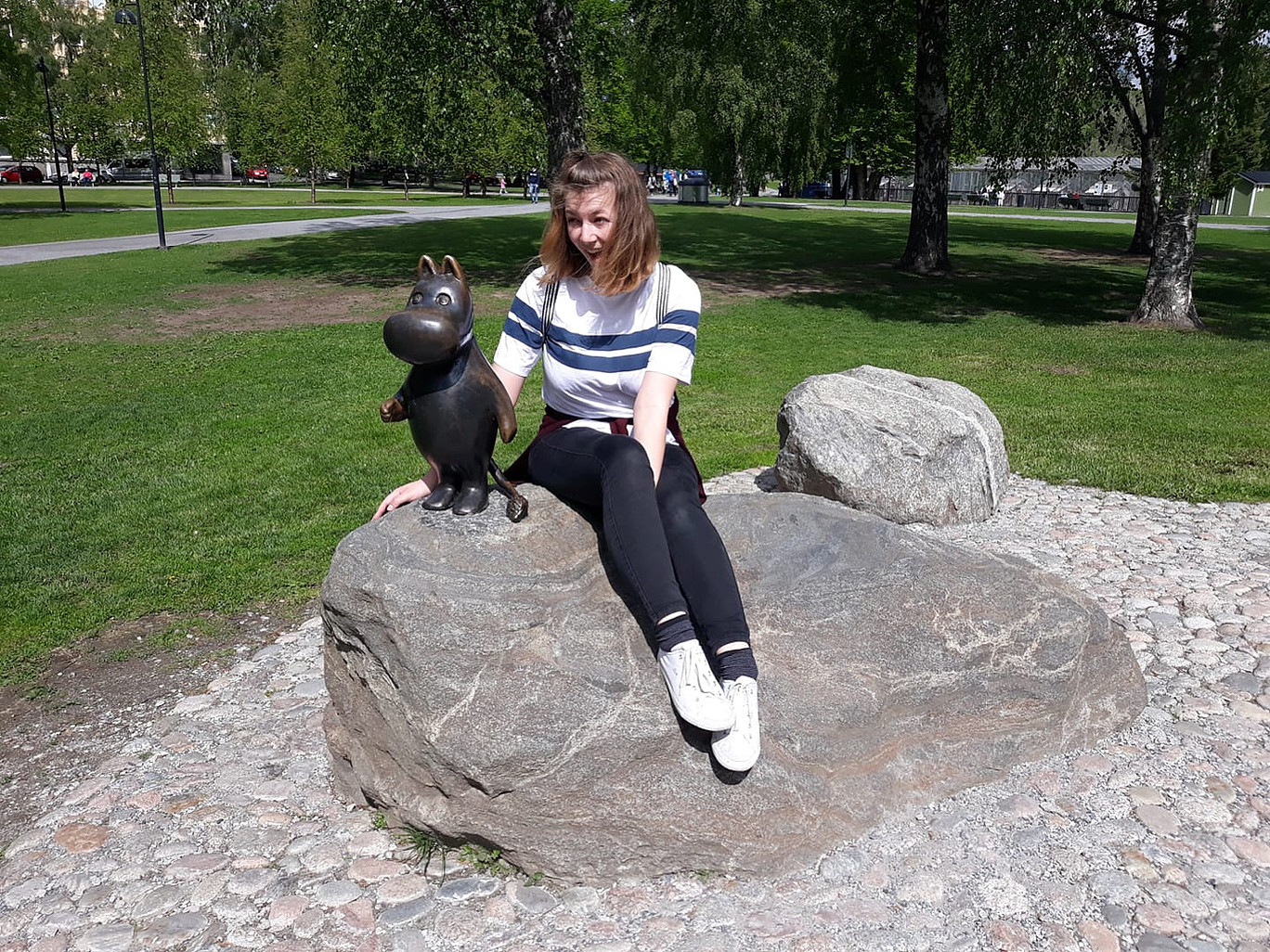
Although she missed the deadline for applying to the Goethe-Institut, it was no problem and she was accepted there anyway. Her application to the Leonardo office in Dresden, which takes care of Erasmus funding for internships, was also only received three months earlier. "But that could also be because there wasn't much interest in Finland," says Caro.
So she started her three-month internship at the Goethe-Institut in Helsinki. There she worked in the cultural department, where her main tasks consisted of organizing cultural events and managing the social networks and website. Caro was also heavily involved in a project. The aim was to give people with and without a migration background access to the film industry. The working language and working environment were German. However, she needed English to communicate with people from external institutions.
Caro enjoyed working at the Goethe-Institut and thinks it's good that German culture is represented in every country. However, she would choose a local organization for her next internship abroad.
"I would choose a local institution next time, because I think you get into even closer contact with the locals and can get to know the culture better."
Caro really appreciates the way of life and work in Finland. For example, there were no strict working hours, but flexitime. The team was generally very friendly and on Fridays we often sat together after work.